The best electric kettles for tea lovers do far more than boil water. They hold a steady temperature, pour with control, and turn an everyday ritual into something worth slowing down for. A kettle that heats green tea to 80 degrees instead of a rolling boil is the difference between a delicate, sweet cup and a bitter one you leave half finished.
Tea is sensitive to heat in a way coffee rarely is. White tea scorches above 85 degrees, green tea turns harsh near boiling, and black tea needs a full boil to open up properly. The best kettles answer with preset temperatures, hold functions, and spouts built for a slow, even pour.
This guide compares the kettle styles that genuinely serve tea drinkers, from precise gooseneck models to fast family-sized boilers. Each pick below is judged on temperature accuracy, pouring control, build quality, and everyday ease of use.
Key takeaways
- Variable temperature control matters more than wattage: the right heat for each tea type protects flavour.
- Gooseneck kettles give the most precise pour for loose leaf tea, while standard spouts are faster for everyday cups.
- Stainless steel and glass bodies last longest and keep water tasting clean.
- A keep-warm function is worth paying for if you brew more than one cup in a sitting.
- Choose capacity by household size: 0.8 to 1 litre suits one or two drinkers, 1.7 litres suits families.

Why Temperature Control Is the First Thing to Check
Water temperature shapes tea more than any other single factor. Too hot and delicate leaves release bitter tannins; too cool and the leaves never fully open, leaving the cup thin and flat. A kettle with a single on-off switch leaves this entirely to guesswork.
Variable temperature kettles solve the problem with presets matched to tea types. Green tea brews best between 75 and 85 degrees, white tea between 80 and 85, oolong between 85 and 95, and black tea at a full 100 degrees.
What Makes a Great Electric Kettle for Tea
A good tea kettle balances four qualities: precise heating, controlled pouring, safe and durable materials, and quiet, easy operation.
Temperature accuracy and hold functions
Look for presets in small steps, ideally one-degree or five-degree increments, and a hold function that keeps water at your chosen temperature for at least 30 minutes. This matters most for tea drinkers who brew a second or third cup. Without a hold function, the water cools and must be reheated, which wastes time and can overheat delicate leaves on the second pour. A live display lets you watch the water approach your target.
Pouring control and spout design
The spout determines how the water meets the leaves. A gooseneck spout narrows the stream to a thin, steady flow, letting you pour slowly and evenly over loose leaf tea. This gentle pour encourages the leaves to unfurl without the agitation that releases bitterness. A wide spout pours faster and suits filling a large teapot, but it gives up that fine control. The handle should stay cool, and the kettle should not feel top-heavy when full.
Materials and build quality
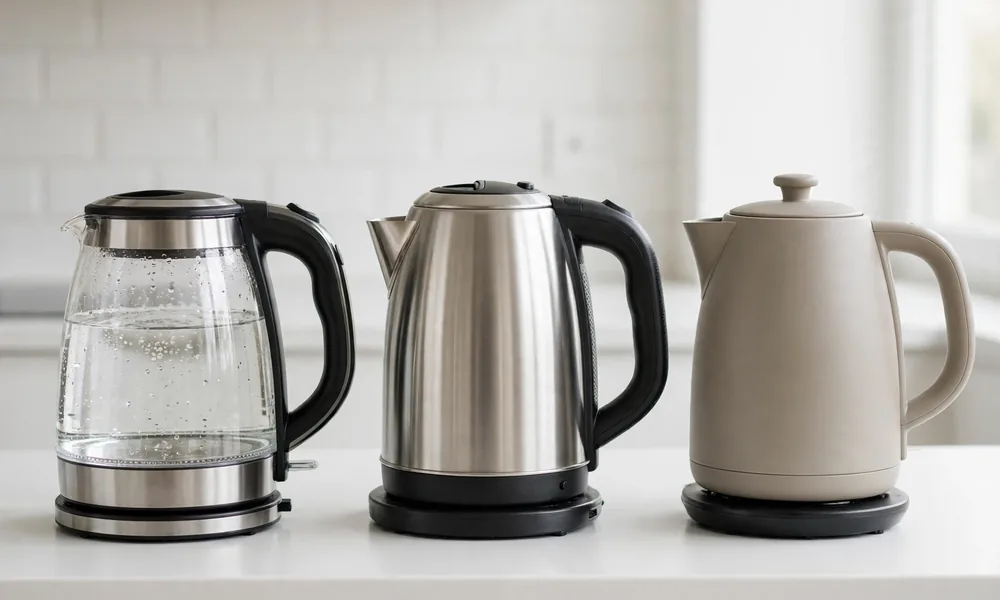
Stainless steel remains the safest all-round choice: it heats evenly, resists staining, and does not affect the taste of the water. Borosilicate glass looks beautiful and lets you watch the water heat, but it is heavier and more fragile. Ceramic-coated kettles offer a soft, quiet pour, though they can chip if knocked. Plastic bodies are light and cheap, yet they are the most likely to develop odours over time. A wide opening and a removable limescale filter make cleaning easy.

The Best Electric Kettles for Tea Lovers in 2026
The kettles below are grouped by the kind of tea drinker they suit best. The right choice depends on whether you brew delicate green teas, strong black teas, or a little of everything.
Best overall: the variable temperature gooseneck
A variable temperature gooseneck kettle is the strongest all-round choice for a serious tea drinker. It combines precise presets with a slow, controlled pour, covering everything from delicate white tea to robust black tea. The trade-off is speed: gooseneck kettles usually hold less water and heat slightly more slowly than wide-spouted models.
Best for green and white tea: the precision kettle
Green and white teas are the most temperature-sensitive of all, and they reward a kettle that can hold 75 to 85 degrees accurately. The difference between a green tea brewed at 80 degrees and one brewed at 95 is dramatic: the cooler cup is sweet and grassy, while the hotter cup is bitter and flat.
Best for families: the large capacity kettle
A 1.7 litre kettle with a fast boil suits households where several people drink tea at once. The best family models still offer a few temperature presets, even if they lack the fine control of a gooseneck. A 360-degree swivel base and a cool-touch handle are worth having.
Best for small kitchens: the compact kettle
Compact kettles holding 0.8 to 1 litre are ideal for small kitchens, desks, and single-person households. They heat quickly because there is less water to bring to temperature, and they take up little counter space. Look for at least two or three temperature settings and a keep-warm function, and check the minimum fill line before buying.
Best for the table: the glass kettle
A glass kettle earns its place at the table. Watching the water heat and the leaves unfurl is part of the pleasure of tea, and a glass body makes that visible. The best glass kettles pair a borosilicate body with a stainless steel base and a clear temperature display. They are heavier and need careful handling, but for slow weekend brewing they are hard to beat.
When you compare the broader market, our guide to the best electric kettles covers the full range of styles beyond tea-specific models, including fast boilers and budget picks worth knowing about.
Electric Kettle Comparison for Tea Lovers
The table below summarises the main kettle styles side by side.
| Kettle style | Best for | Temperature control | Capacity | Pour control |
|---|---|---|---|---|
| Variable temperature gooseneck | Loose leaf and precision brewing | Excellent, 1 to 5 degree steps | 0.8 to 1 litre | Excellent |
| Precision kettle | Green and white tea | Excellent, fine presets | 0.8 to 1.2 litres | Good |
| Large capacity kettle | Families and gatherings | Good, several presets | 1.7 litres | Good |
| Compact kettle | Small kitchens and single drinkers | Fair to good | 0.8 to 1 litre | Good |
| Glass kettle | Table brewing and slow rituals | Good | 1 to 1.7 litres | Good |
| Standard wide-spout kettle | Fast everyday cups | Basic, one or two settings | 1.5 to 1.7 litres | Fair |
Gooseneck or Standard Spout: Which Pours Better Tea
The gooseneck spout is the defining feature of a tea-focused kettle. Its narrow, curved neck slows the flow of water to a thin stream, giving you precise control over where the water lands and how fast it arrives. For loose leaf tea, a slow, even pour wets the leaves uniformly and produces a sweeter cup.
A standard spout pours faster and is easier to aim into a wide teapot or a tall mug. It is the better choice if you mostly brew tea bags, fill a large pot, or value speed over precision. A tapered spout offers a middle ground if you are unsure which style suits you.
How to Brew Better Tea With Any Kettle
Even the best kettle cannot rescue poor technique, but a few simple habits make a noticeable difference. Start with fresh, cold water rather than water that has been boiled and left standing. Reboiled water loses dissolved oxygen and tastes flat, which dulls the flavour of delicate teas.
Warm the pot first: a cold pot drops the water temperature the moment you pour. Measure your leaves rather than guessing: one teaspoon of loose leaf per cup, plus one for the pot, is a reliable starting point. Time your steep too: green tea needs two to three minutes, white tea three to five, oolong three to five, and black tea three to five depending on strength.

Choosing the Right Size and Features
Capacity is the most practical decision after temperature control. A kettle that is too large wastes energy heating water you will not use, while one that is too small forces you to boil twice. For one person, 0.8 litres is plenty. For two, 1 to 1.2 litres covers a pot and a refill. For families, 1.7 litres is the standard.
A concealed heating element is quieter and easier to clean than an exposed coil. Safety features matter too: automatic shut-off and boil-dry protection are worth confirming, along with a cool-touch handle and a stable base. If your household also uses a stovetop kettle for some brews, our roundup of tea kettles for home compares stovetop and electric options side by side.
Tea Kettle Buying Checklist
Use this checklist when you compare models.
- Variable temperature control with presets for green, white, oolong, and black tea.
- A keep-warm function that holds your chosen temperature for at least 30 minutes.
- A spout that matches your brewing style: gooseneck for loose leaf, wide spout for speed.
- A body made from stainless steel, borosilicate glass, or ceramic, with no plastic touching the water.
- Capacity matched to your household: 0.8 to 1 litre for one or two drinkers, 1.7 litres for families.
- Easy cleaning with a wide opening, a removable limescale filter, and a concealed heating element.
Caring for Your Electric Kettle
A kettle that is looked after lasts years longer and keeps your tea tasting clean. Descale regularly if you live in a hard water area: fill the kettle with equal parts water and white vinegar, boil it, leave it for twenty minutes, then rinse thoroughly.
Empty the kettle after each use rather than leaving water standing in it overnight, and wipe the outside dry. Replace a kettle when the temperature becomes unreliable, the lid no longer seals, or the body shows signs of damage.
Frequently Asked Questions
What temperature should I use for green tea?
Green tea brews best between 75 and 85 degrees Celsius. Water hotter than this releases bitter compounds from the leaves, while cooler water under-extracts them.
Is a gooseneck kettle worth it for tea?
Yes, if you brew loose leaf tea regularly. The narrow spout gives you a slow, controlled pour that wets the leaves evenly and improves extraction.
Can I use an electric kettle for all types of tea?
Yes. A variable temperature kettle can brew green, white, oolong, black, and herbal teas simply by changing the temperature setting.
How long does a keep-warm function last?
Most keep-warm functions hold water at your chosen temperature for 30 to 60 minutes. After that it switches off automatically.
What is the best kettle material for tea?
Stainless steel is the best all-round choice because it is durable, easy to clean, and does not affect the taste of the water.
How do I descale an electric kettle?
Fill the kettle halfway with equal parts water and white vinegar, boil it, and leave it to stand for twenty minutes. Then empty it, rinse thoroughly, and boil a full kettle of fresh water once before making tea.
For households that still enjoy a traditional stovetop brew alongside an electric kettle, our guide to tea kettles for gas stoves covers the safest and most practical stovetop models for everyday use.
The Bottom Line
The best electric kettle for a tea lover is the one that matches your tea, your habits, and your kitchen. A variable temperature gooseneck kettle is the strongest choice for loose leaf drinkers who care about precision, while a fast large-capacity kettle suits families who value speed. Whichever style you choose, prioritise accurate temperature control, a comfortable pour, and a body that keeps your water tasting clean.