
Why Bar Spoons Beat Regular Spoons in 2026
Why bar spoons beat regular spoons in 2026 is a question of length, balance and control. A bar spoon is the long, slender, twisted spoon that stirs cocktails in a tall mixing glass: it reaches the bottom, moves smoothly around the ice, and chills a drink without bruising it. A regular teaspoon is too short, too wide and too clumsy, and the difference shows in a Martini that is cloudy instead of clear and a Negroni that tastes harsh instead of silky.
The best bar spoons of 2026 are simple steel tools, thirty to forty centimetres long, with a twisted shaft and a small weighted end. They cost little, last for years, and change stirred drinks completely. This guide explains what makes a bar spoon different, how it compares with a regular spoon and a kitchen mixing spoon, which types are worth buying, and how to stir properly.
Key Takeaways
- A bar spoon is long, thin and twisted, built to stir in a tall mixing glass; a regular spoon is short, wide and built for a teacup.
- Stirring chills and dilutes gently, keeping a drink clear and silky; shaking is for citrus drinks, stirring is for spirit-only drinks.
- Thirty centimetres suits a standard mixing glass, forty suits a tall glass or pitcher.
- A teardrop end balances the spoon and helps it spin; a disc end layers drinks; a fork end picks up garnishes.
- Stir for thirty seconds, smoothly and quietly, and the drink will be cold, clear and perfectly diluted.

What Makes a Bar Spoon Different
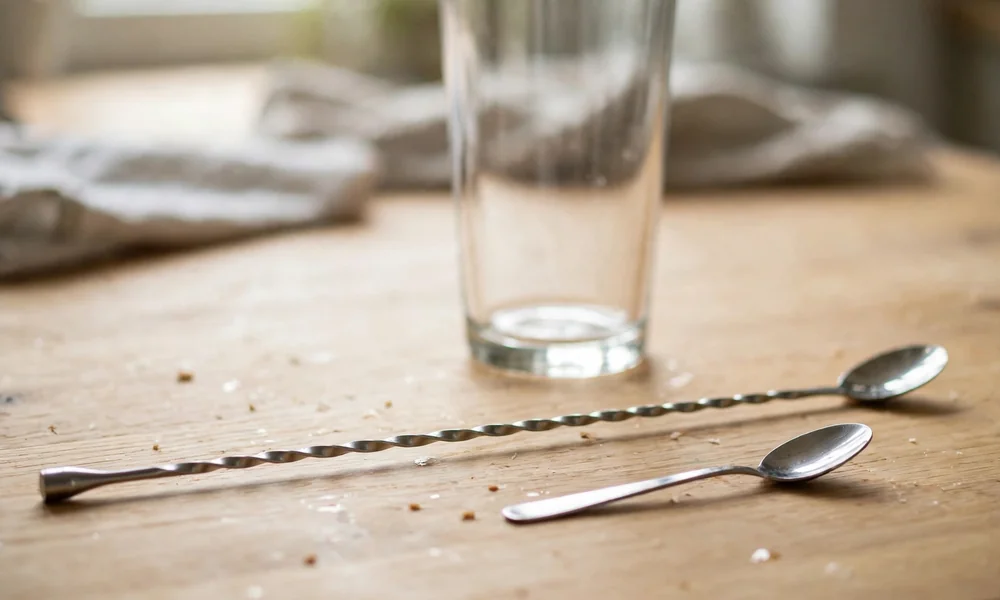
Three things set a bar spoon apart. First, length: at thirty to forty centimetres, it reaches the bottom of any mixing glass while your hand stays above the rim, so you can stir without your knuckles touching the ice. Second, the twisted shaft: the spiral lets the spoon spin smoothly between your fingers, so one gentle motion keeps the liquid moving in a steady circle instead of sloshing. Third, the small bowl: a bar spoon holds far less than a teaspoon, because it is made for stirring, not serving, and its narrow bowl slips between ice cubes without cracking them.
A regular spoon fails on all three counts. A teaspoon is about fourteen centimetres long, so it cannot reach the bottom of a mixing glass. Its flat, wide bowl catches on ice cubes and cracks them, which clouds the drink. And its straight handle cannot spin, so stirring becomes a choppy movement that splashes and aerates the drink.
Bar Spoon vs Regular Spoon
Put the two side by side and the difference is obvious. The bar spoon is twice as long, half as wide, and balanced around a weighted end. The regular spoon is built for a cup of tea: short, sturdy and made to scoop sugar. In a mixing glass the regular spoon is out of its depth, while the bar spoon moves the liquid without disturbing the ice.
The difference is also in the drink. A Martini stirred with a bar spoon comes out crystal clear, cold and silky, because the spoon moves the spirit around the ice in a smooth, silent circle. The same drink stirred with a teaspoon comes out cloudy, because the wide bowl chips the ice, and unevenly chilled, because the short handle cannot keep the liquid moving.
Bar Spoons vs Mixing Spoons: Not the Same Tool
A bar spoon is often confused with a kitchen mixing spoon, but the two are built for different worlds. A mixing spoon is a kitchen tool: short, broad and made from wood, silicone or steel, designed to stir thick sauces and stews in a saucepan. A bar spoon is a bar tool: long, thin and twisted, designed to stir cold liquid around ice in a tall glass. One moves heavy food, the other moves a delicate drink.
Mixing spoons are usually wood or silicone, because they must not scratch pans or melt in hot food. Bar spoons are almost always steel, because steel stays cold and slides smoothly past ice. If your stirring spoon lives in a crock by the stove, it is a mixing spoon, and our guide to mixing spoons covers the ones worth keeping there. If it lives beside the mixing glass, it is a bar spoon.
The Main Types of Bar Spoon
Japanese Bar Spoons
The Japanese bar spoon is the standard most bartenders reach for first. It is usually thirty centimetres long, with a tightly twisted shaft and a teardrop-shaped weight at the end. The teardrop balances the spoon so it spins easily, and the tight twist gives smooth, controlled rotation. Japanese spoons suit anyone who stirs Martinis, Manhattans and Negronis regularly and wants the most precise tool. Its only weakness is length: thirty centimetres is short for a tall pitcher.
European Bar Spoons
The European bar spoon is longer and heavier, often thirty-five to forty centimetres, with a flat disc at the end instead of a teardrop. The disc has a real job: it lets you layer drinks, pouring liquid slowly over the back of the disc so it floats on the drink below. European spoons suit taller mixing glasses and anyone who makes layered drinks or stirs in a pitcher. The extra length can feel unwieldy in a small mixing glass.
American Bar Spoons
The American bar spoon is the simplest of the three: a long twisted shaft with a small spoon bowl at one end and a fork, a muddler tip or a plain cap at the other. The fork end picks up olives, cherries and citrus twists, which makes it handy at a busy home bar where one tool does several jobs. American spoons are usually the cheapest, suiting beginners who want one versatile spoon. Their weakness is balance: without a weighted teardrop, they spin less smoothly.
Gold, Copper and novelty Finishes
Gold and copper bar spoons look beautiful on a bar cart and work like steel ones if the finish is good. The risk is the coating: cheap plated spoons flake or tarnish, and the flakes end up in the drink. Choose a solid finish from a known maker, and hand wash it. Novelty spoons are gifts, not tools. Buy steel first, and treat a gold spoon as a decorative second piece.

Bar Spoons Compared
| Type | Length | End | Best For | Spin |
|---|---|---|---|---|
| Japanese | 30 cm | Teardrop | Martinis, Manhattans, Negronis | Excellent |
| European | 35–40 cm | Disc | Tall glasses, layered drinks | Good |
| American | 30–35 cm | Fork or muddler tip | Versatile home bars | Fair |
| Gold or copper | 30 cm | Teardrop or disc | Display and light use | Good |
Japanese wins on spin, European on length and layering, American on versatility. If you buy one, buy a Japanese spoon in stainless steel, thirty centimetres, with a teardrop end.
How Long Should a Bar Spoon Be?
Length is the first choice, and it depends on your glass. Thirty centimetres suits a standard mixing glass and keeps your hand clear of the rim while the bowl reaches the bottom. Thirty-five suits a taller glass or a large shaker tin. Forty is for pitchers and punch bowls.
Longer is not always better. A forty-centimetre spoon in a standard mixing glass is hard to control, and a thirty-centimetre spoon in a pitcher leaves your knuckles in the drink. Measure your mixing glass and add ten centimetres: that is the length to buy.
How to Stir Like a Bartender
Fill the mixing glass two-thirds full with ice, add the spirits, and slide the bar spoon down the inside wall until the bowl rests near the bottom. Hold the shaft loosely between thumb and first two fingers, and push the spoon around the glass in a smooth circle, letting the twist spin it. The ice should move as one quiet mass, not rattle and crash.
Stir for about thirty seconds, or fifty turns, until the glass feels cold and frosted. A well-stirred drink is cold, silky and perfectly diluted. Strain into a chilled glass and garnish. The most common error is stirring too fast, which chips the ice and clouds the drink; the second is stopping too early, which leaves it warm and harsh. Slow, smooth and silent is the rule.
Mistakes to Avoid With a Bar Spoon
First, using a regular spoon, which clouds the drink and chills it unevenly. Second, stirring a drink that should be shaken: any cocktail with citrus juice, egg white or cream needs shaking, not stirring. Third, stirring in the middle of the glass instead of along the wall, which bashes the ice. Fourth, a dirty spoon: old syrup in the twist sours the next drink, so rinse it straight after use.
Fifth, a spoon too short for your glass, which puts your hand in the drink. Sixth, gripping the shaft too tightly: a tight grip stops the spoon spinning. Hold it loosely, let the twist do the work, and the spoon will almost stir itself.
Cleaning and Caring for Your Bar Spoon
Rinse a bar spoon straight after use, especially after syrups, because sticky residue hides in the twist and changes the taste of the next drink. Stainless steel spoons can go in the dishwasher, though hand washing keeps the finish clear. Dry it before storing. A good steel bar spoon lasts for years; replace it only if the shaft bends, which makes it wobble instead of spin.
Before You Buy: A Quick Checklist
- It is at least thirty centimetres long, so your hand stays above the rim of your mixing glass.
- The shaft is twisted, not smooth, so it spins easily between your fingers.
- The end suits your drinks: teardrop for balance, disc for layering, fork for garnishes.
- It is stainless steel, not cheap plating that flakes into the drink.
- The bowl is small and narrow, so it slips between ice cubes without cracking them.
- It feels balanced: hold it in the middle and it should sit level, not tip toward either end.
Frequently Asked Questions
Can I use a regular teaspoon instead of a bar spoon?
You can, but the drink will suffer: a teaspoon is too short, too wide and too straight to spin, so the drink comes out cloudy and unevenly chilled. A bar spoon costs little and fixes all three problems.
What length bar spoon is best for home use?
Thirty centimetres suits a standard mixing glass and covers most stirred drinks. If your glass is tall, or you stir in a pitcher, choose thirty-five.
Do I stir or shake a Martini?
Stir it. A Martini is spirits only, so stirring chills it gently while keeping it clear and silky. Shaking clouds it with ice chips and over-dilutes it. Stir for thirty seconds and strain into a chilled glass.
What is the teardrop end of a bar spoon for?
Balance: the weight helps the spoon spin smoothly. It also works as a small measure, roughly a quarter of a teaspoon, handy for a dash of syrup or bitters.
Is a bar spoon the same as a mixing spoon?
No. A mixing spoon is a short, broad kitchen tool for sauces and doughs, while a bar spoon is a long, thin, twisted tool for stirring cocktails around ice. They belong in different rooms.
How do I keep a bar spoon from scratching my glass?
Stir along the inside wall, not across the middle, and let the spoon glide rather than pressing it against the glass. A smooth, slow stir never scratches.
The Bottom Line
The best bar spoons of 2026 are the simple steel ones: a Japanese spoon, thirty centimetres long, with a twisted shaft and a teardrop end. It reaches the bottom of the glass, spins smoothly, and turns a stirred drink from cloudy and harsh to clear and silky. Pair it with a jigger that measures the perfect pour and a cocktail muddler for fresh fruit and herbs, and the three tools cover nearly every classic cocktail worth making.


