
How to Choose Cocktail Muddlers in 2026
How to choose cocktail muddlers in 2026 comes down to one question: what do you actually muddle? A cocktail muddler is the short, sturdy tool that presses fruit, herbs and sugar at the bottom of a glass, releasing juice and oils before the drink is built. It is the tool behind every good Mojito, Caipirinha and Whiskey Smash, and the tool most home bars buy badly, picking one too short, too rough or made from the wrong material.
The best cocktail muddlers of 2026 are not expensive and they are not complicated. They are the right length for your glass, heavy enough to do the work without force, and shaped so they press rather than shred. A good muddler turns a handful of mint and lime into a fragrant base in seconds. A bad one tears the mint, leaves the lime dry, and cracks within a month. This guide covers the types worth buying, how to tell them apart, and how to use one properly.
Key Takeaways
- A muddler presses, it does not grind: gentle pressure releases juice and oils, hard grinding releases bitterness.
- Wood is the classic choice for feel and grip, stainless steel is the easiest to clean, and silicone-tipped muddlers suit delicate herbs.
- Buy a muddler at least eight inches long, so your knuckles stay clear of the glass while you press.
- A flat or lightly textured head suits most drinks; a heavily toothed head is only for tough fruit and thick-skinned citrus.
- Muddling and shaking are different jobs: muddle first to build flavour, then shake or stir to chill and mix.
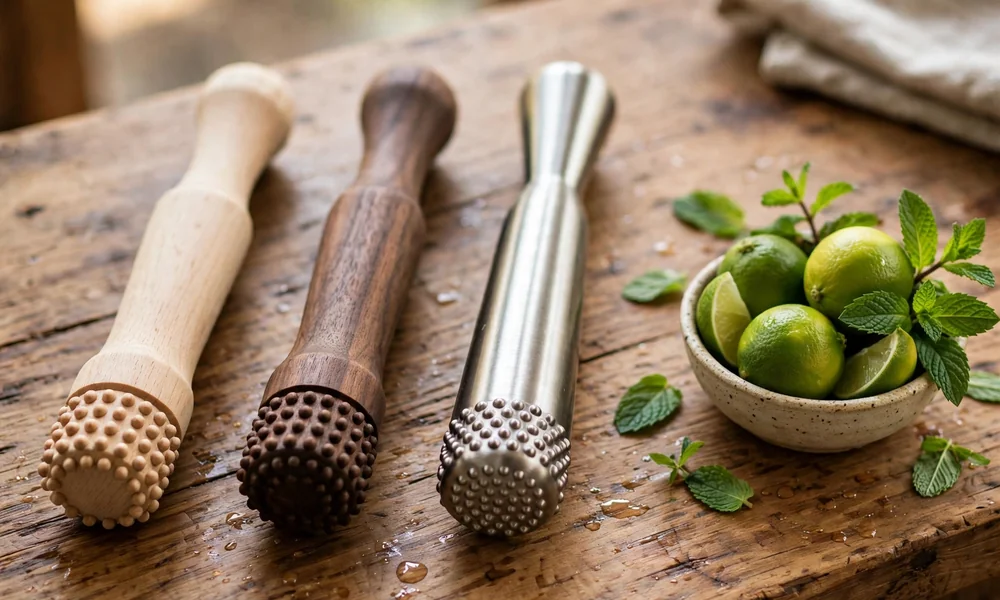
What a Cocktail Muddler Actually Does
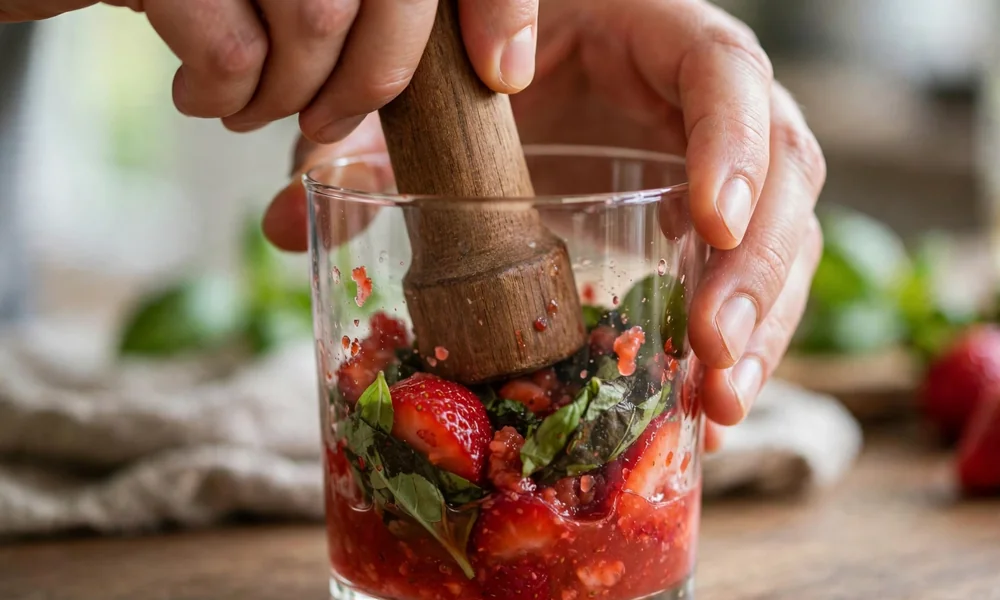
A muddler does one job: it presses flavour out of solid ingredients at the bottom of a glass. Place mint and lime wedges in a sturdy glass, press down with the flat end and twist gently, and the lime gives up its juice while the mint releases its oils. The sugar dissolves into the juice, making a fragrant base no shaking can create from whole ingredients.
The key word is press. A muddler is not a pestle and the glass is not a mortar. Grinding mint into a green paste tears the leaves and releases chlorophyll, which tastes bitter and grassy and turns the drink cloudy. Pressing bruises the leaves just enough to free the oils on their surface while leaving the leaf whole. The same is true of fruit: press a lime wedge until the juice runs, then stop, or you squeeze bitter oils from the pith into the drink.
Muddling vs Shaking: Two Different Jobs
Muddling and shaking are often confused because they happen in the same drink, but they do opposite things. Muddling builds flavour before the drink exists, pressing juice and oils out of fruit and herbs. Shaking chills, dilutes and mixes a finished set of ingredients, combining spirit, citrus and syrup into a cold, balanced drink. A Mojito is muddled first and then shaken or stirred, never the other way round.
Think of it as a sequence: muddle to extract, shake to combine. Do the muddling first, then add spirit and ice and shake. The tools work as a pair, but they are not interchangeable. Our guide to why bar spoons beat regular spoons covers the stirring tool that pairs with a muddler, and together the two tools handle nearly every classic cocktail that uses fresh fruit or herbs.
The Main Types of Cocktail Muddler
Wooden Muddlers
The wooden muddler is the classic, and still the best choice for most home bars. Beech and maple are light, smooth and comfortable, while walnut is denser and heavier, so its own weight helps press the fruit. Wood feels warm in the hand, grips well when wet, and is gentle on glass. Its weakness is care: wood must be hand washed and dried promptly, and left damp it can crack, stain or pick up odours.
Stainless Steel Muddlers
Stainless steel muddlers are the workhorses. They are heavier than wood, so they press with less effort, and they go straight into the dishwasher, which makes them the easiest muddlers to keep clean. Steel will not stain, absorb flavours or crack, and a well-made one lasts indefinitely. The trade-off is feel: steel is cold and hard, and a heavy steel muddler can chip a thin glass if you press carelessly. For a busy home bar, or anyone who values easy cleaning over tradition, steel is the practical pick.
Silicone-Tipped and Nylon Muddlers
Silicone-tipped muddlers have a soft, grooved head on a steel or plastic handle, and they are the gentlest option of all. The soft head presses without tearing, which makes them the best choice for delicate herbs such as mint and basil. They are also the safest for thin glassware, since the soft head cannot chip glass. Their weakness is power: a silicone head struggles with tough fruit such as thick-skinned limes and whole berries. Buy one as a second muddler for herbs, rather than your only muddler.
Two-Ended and Long Muddlers
Two-ended muddlers combine a flat pressing head on one end with a smaller, textured head on the other, so one tool handles both soft herbs and tough fruit. Long muddlers, usually ten to twelve inches, are made for tall glasses and large pitchers, reaching the bottom of a jug without your knuckles touching the rim. A two-ended muddler is a compromise: neither end is quite as good as a dedicated head. Start with a single-ended muddler of the right length for your usual glass.
Cocktail Muddlers Compared
| Type | Best For | Cleaning | Gentleness | Durability |
|---|---|---|---|---|
| Wooden (beech or maple) | Everyday Mojitos and Smashes | Hand wash only | Good | Good with care |
| Wooden (walnut) | Heavier pressing, classic feel | Hand wash only | Good | Very good |
| Stainless steel | Busy bars, easy cleaning | Dishwasher safe | Fair | Excellent |
| Silicone-tipped | Delicate herbs, thin glass | Dishwasher safe | Excellent | Good |
| Two-ended | Herbs and tough fruit in one | Depends on material | Good | Good |
Wood wins on feel, steel wins on cleaning, silicone wins on gentleness. If you buy one, buy wood, eight to ten inches, with a flat head.
How to Choose the Right Length and Head
Length decides whether muddling is comfortable or awkward. A muddler shorter than your glass forces your knuckles against the rim, so you press at an angle and lose control. Eight inches suits a standard rocks glass or shaker tin, ten inches suits a tall highball or a pint mixing glass, and twelve inches is for pitchers. Measure your usual glass and add two inches: that is the length to buy.
The head decides what the muddler can press. A flat head is the most versatile: it presses evenly, is easy to clean, and suits mint, citrus and soft fruit. A lightly textured head grips slippery lime wedges and stops them sliding around the glass. A heavily toothed head, with deep teeth or spikes, is a specialist: it breaks down tough-skinned fruit and whole spices, but it shreds mint and tears basil, so keep it away from delicate herbs. If you muddle mostly mint and lime, choose flat or lightly textured and leave the teeth on the shelf.
How to Muddle Properly
Start with a sturdy glass and ingredients cut small: lime wedges, torn mint leaves, a spoon of sugar. Place everything in the bottom of the glass, hold the muddler upright, and press down firmly but gently, then twist a quarter turn. Lift, move to a new spot, and press again. Four to six presses is enough: the lime juiced, the mint bruised but whole, the sugar dissolving. Stop there, add spirit and ice, and stir or shake.
Press straight down, not at an angle, and muddle before adding ice, because ice gets in the way of the head and dilutes the juice, and before adding the spirit, because the spirit does nothing for extraction. Done well, muddling takes ten seconds.
Mistakes That Ruin a Drink
The most common mistake is muddling too hard. Pressing mint into a paste releases bitter chlorophyll, turns the drink cloudy, and leaves black flecks in the glass. The second mistake is muddling too long: after six presses you are getting nothing new, only bitterness from the lime pith. Third, the wrong glass: always muddle in a sturdy rocks glass or shaker tin, never a thin wine glass or coupe.
Fourth, muddling dried or old herbs, which give up nothing no matter how hard you press. Fifth, forgetting the sugar: muddle fruit and sugar together so the sugar dissolves into the fresh juice. Sixth, a dirty muddler: old juice dried into a wooden head sours the next drink, so rinse it straight after use.
Cleaning and Caring for Your Muddler
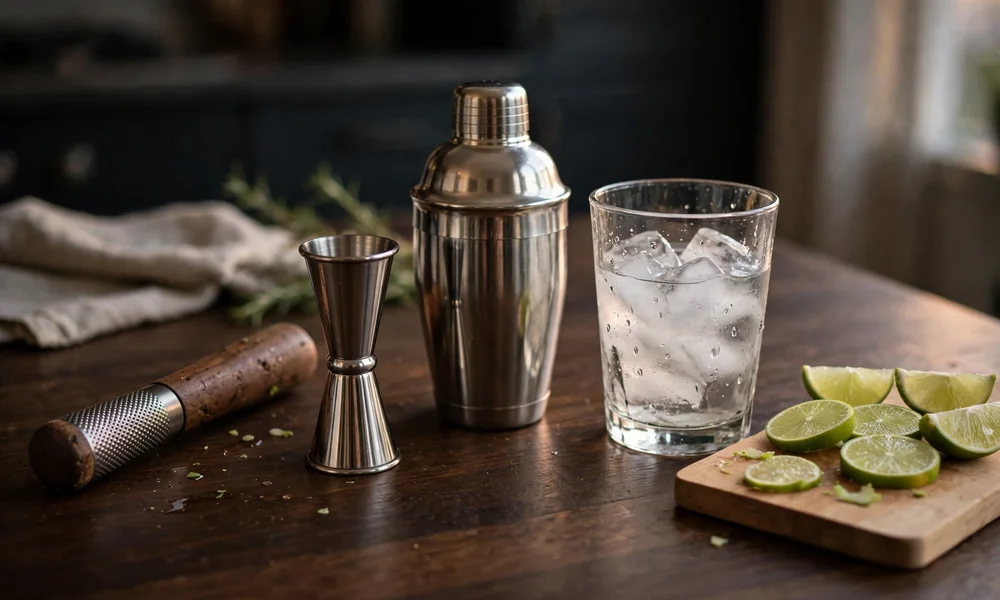
Rinse a wooden muddler straight after use, scrub the head gently, and dry it standing up. Never soak wood overnight or put it in the dishwasher: both raise the grain and split the head. Oil it monthly with food-safe mineral oil. Steel and silicone muddlers can go in the dishwasher; dry them before storing, and keep any muddler head-up in a jar, not loose in a crowded pot where the head gets dented.
Before You Buy: A Quick Checklist
- It is at least eight inches long, so your knuckles clear the rim of your usual glass.
- The head is flat or lightly textured, not heavily toothed, for mint and lime.
- It feels heavy enough to press with its own weight, without you forcing it down.
- The handle is smooth and comfortable to grip with wet hands.
- The material matches your habits: wood if you hand wash, steel if everything goes in the dishwasher.
- It fits your glass: long enough for tall glasses, short enough to control in a rocks glass.
Frequently Asked Questions
What is the best cocktail muddler for a beginner?
A wooden muddler in beech or maple, eight to ten inches long with a flat head. It is forgiving, comfortable and gentle on glass. Learn the press-and-twist motion with wood first.
Can I use a muddler in a shaker tin?
Yes, and many bartenders prefer it: a steel shaker tin is sturdy, easy to hold, and lets you muddle and shake in the same vessel. Muddle the fruit and herbs in the tin, add the spirit and ice, then shake. Avoid thin or delicate glassware for muddling.
Do I need a muddler if I have a shaker?
Yes, if you make drinks with fresh fruit or herbs. A shaker cannot press juice from a lime wedge or oils from mint leaves; it can only mix what is already liquid. A Mojito made without one always tastes thinner.
How do I stop mint turning bitter when I muddle it?
Press gently and briefly. Four to six soft presses with a quarter twist are enough. Never grind or twist hard. If the leaves look shredded or the drink tastes grassy, you pressed too hard or too long.
Is a wooden or steel muddler better?
Wood is better for feel and gentleness, steel is better for cleaning and durability. If you only buy one and you hand wash your bar tools, buy wood. If everything goes in the dishwasher, buy steel.
How long should a good muddler last?
A steel muddler lasts indefinitely. A wooden muddler lasts for years with basic care: hand wash, dry promptly, and oil monthly. Replace it when the head cracks, turns rough or smells sour after washing.
The Bottom Line
The best cocktail muddlers of 2026 are the simple ones: wood in beech or walnut, eight to ten inches long, with a flat or lightly textured head. It presses mint and lime without shredding them, and costs little. Pair it with a good shaker and a jigger that measures the perfect pour, and for the wider kit our guide to the best home bar essentials puts the muddler among the handful of tools that matter. Press gently, stop early, and the drinks will taste like the fruit and herbs in them.


