The humble mixing spoon does more work in a kitchen than almost any other tool, yet it is the one most of us grab without a second thought. A good one stirs thick bread dough without bending, scrapes a saucepan without scratching it, and sits comfortably in your hand through a long simmer. The wrong one snaps at the neck, melts against a hot pan, or leaves splinters in your soup. Choosing well is about matching the material, length, and shape to the way you actually cook.
Mixing spoons come in wood, bamboo, silicone, and stainless steel, and each material has a job it does best. Wood is gentle on pots and stays cool in the hand. Silicone handles heat and scrapes bowls clean. Steel is indestructible and perfect for heavy doughs. The spoons worth keeping in the crock are the ones that survive daily use, clean up easily, and feel like an extension of your arm. We tested the most common styles on real cooking jobs, from folding cake batter to stirring risotto, and the eight below earned a permanent place by the stove.
Key Takeaways
- One-piece wooden spoons are the safest everyday choice: no joints to trap food, gentle on every pan, and comfortable for long stirs.
- Match the spoon to the job — a long flat-edge spoon for saucepans, a silicone spoon for scraping bowls, and a sturdy steel spoon for heavy dough.
- Look for a handle at least 12 inches long so your knuckles stay clear of steam and hot pan edges.
- Avoid spoons with glued joints, hollow handles, or thin necks; they are the first to crack, loosen, or snap.
- Oil wooden spoons lightly every month and never soak them overnight, or they will split and harbour odours.
Why the Right Mixing Spoon Matters
A mixing spoon is the bridge between your hand and your food. When a sauce thickens or a dough comes together, the spoon tells you what is happening. A spoon that is too short forces your hand over a steaming pot; one that is too thin flexes under a heavy mixture; and the wrong material can melt, stain, or scratch the pan.
Most kitchens already own a drawer full of spoons, yet most cooks reach for the same one or two. That is the point of this guide: to identify the few mixing spoons that cover every job, so the rest can go. A well-chosen set of three or four — a wooden workhorse, a silicone scraper, and a steel heavyweight — will handle nearly everything a home cook makes.
The 8 Mixing Spoons Worth Keeping in the Crock
1. The Classic One-Piece Beechwood Spoon
This is the spoon every kitchen should own first. Carved from a single piece of beech, it has no joint to loosen and no glue to fail. The bowl moves a thick stew, the handle keeps your hand clear of the heat, and the wood stays cool even when the pot is simmering. It is gentle on non-stick and enamel and only gets better with age. If you buy one mixing spoon, buy this one.
2. The Long Olive Wood Spoon
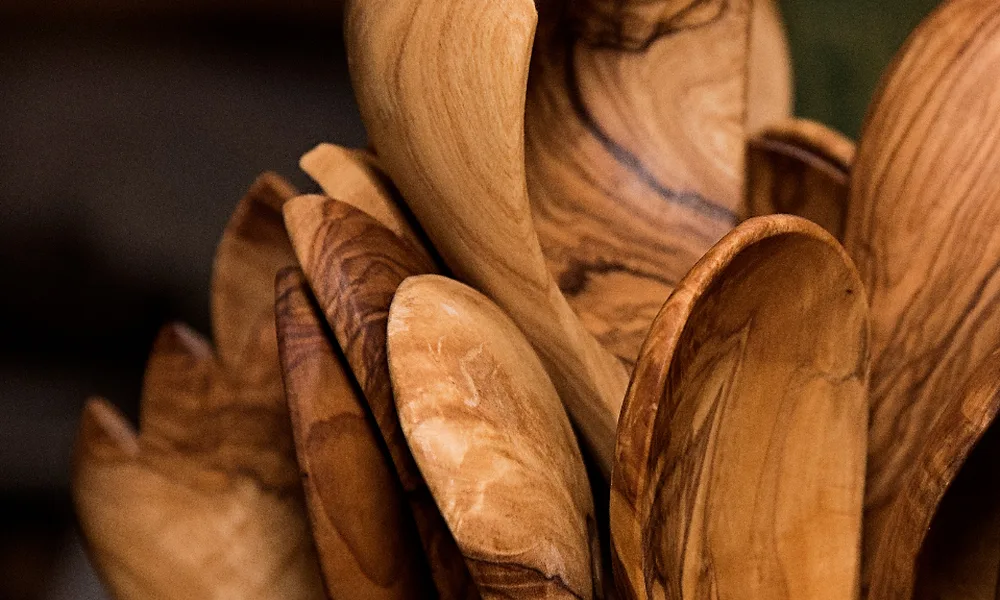
Olive wood is denser and harder than beech, with a beautiful grain. Its weight gives it a satisfying heft, and the hard surface resists staining from tomato sauce and turmeric far better than softer woods. The long handle suits tall stockpots. It costs more than beech, but an oiled olive wood spoon can last for decades.
3. The Flat-Edge Wooden Spoon
Most spoons have a rounded bowl, which leaves sauce untouched in the corners of a pan. A flat-edge spoon solves that: one straight side scrapes the base of a saucepan clean, so roux, custards, and risottos cook evenly without catching. It is the best upgrade for anyone who makes sauces regularly, and it still stirs soups and stews well. Look for a gently angled edge rather than a sharp corner, which can scratch.
4. The Silicone Spoon with a Wooden Handle
Silicone is the only spoon material that scrapes a mixing bowl truly clean, folding every last bit of batter back into the mix. This hybrid pairs a heat-resistant silicone head with a wooden handle, so you get the scraping power without the floppy, all-silicone feel. It survives temperatures that would scorch wood and goes straight into the dishwasher. It is the best spoon for baking, where nothing should be left behind.
5. The Stainless Steel Mixing Spoon
When a dough is stiff or a mixture is heavy, wood flexes and silicone folds. Steel does not. A solid stainless steel spoon powers through bread dough and thick cookie batter without bending, and it will never absorb odours or stains. It is also the easiest spoon to keep clean. The trade-off is noise and hardness, so keep it away from non-stick pans.
6. The Slotted Wooden Spoon
A slotted spoon is a mixing spoon and a strainer in one. The slots let liquid drain away while you lift out vegetables, dumplings, or poached eggs, and they help with stirring too: liquid flows through, so the spoon moves with less resistance. It is not the spoon for thick sauces, but for anything you lift out of liquid, it is indispensable. Choose wide, smooth slots that will not trap food.
7. The Small Wooden Spoon for Sauces and Dressings
Big spoons are clumsy in small jobs. A short, light wooden spoon — around ten inches — is perfect for whisking a vinaigrette in a jam jar, stirring melted butter, or mixing spices into yoghurt. Keep one by the stove for small jobs and your big spoons will last longer.
8. The Bamboo Mixing Spoon
Bamboo is light, strong, and naturally resistant to moisture, making it a practical everyday alternative to hardwood. It is lighter in the hand than beech or olive wood, so it suits long stirring sessions, and it is usually the most affordable option. It can be more brittle if very thin, but a well-made bamboo spoon is a reliable, low-maintenance workhorse.
Comparison Table
| Spoon | Material | Best For | Heat Resistance | Care |
|---|---|---|---|---|
| Classic Beechwood | Beech | Everyday stirring | Good | Hand wash, oil monthly |
| Olive Wood | Olive wood | Stockpots, serving | Good | Hand wash, oil monthly |
| Flat-Edge | Wood | Sauces, risotto | Good | Hand wash, oil monthly |
| Silicone Hybrid | Silicone and wood | Baking, scraping | Excellent | Dishwasher safe |
| Stainless Steel | Steel | Heavy doughs | Excellent | Dishwasher safe |
| Slotted Wooden | Wood | Lifting from liquid | Good | Hand wash, oil monthly |
| Small Wooden | Wood | Sauces, dressings | Good | Hand wash, oil monthly |
| Bamboo | Bamboo | Light everyday use | Good | Hand wash, dry quickly |
Wood, Silicone, Steel or Bamboo: Which Material Wins?
There is no single best material, only the best material for each job. Wood is the most forgiving: it will not scratch any pan, it does not conduct heat into your hand, and it feels alive in a way no other material does. Its weakness is maintenance — wood needs hand washing and occasional oiling, and it will stain if you leave it sitting in tomato sauce. Bamboo shares most of wood’s virtues with less upkeep, though it can feel lighter and less substantial.
Silicone wins on heat and hygiene: it survives hot pans, scrapes bowls clean, and goes in the dishwasher, but a thin silicone spoon folds under heavy dough. Steel wins on strength and cleanliness but is loud, hard, and wrong for delicate pans. The practical answer is to own one of each and reach for the right one. A good spoon collection works as a team with the rest of your kitchen, just as a well-chosen set of mixing bowls makes every job easier, because the bowl and the spoon are partners in the same task.
What to Look For When Buying Mixing Spoons
Length
Twelve to fourteen inches is the sweet spot for a main mixing spoon: long enough to keep your hand away from steam, short enough to control easily. Shorter spoons suit small pans, while anything over fifteen inches is best reserved for tall stockpots.
One-Piece Construction
A spoon carved or moulded from a single piece has no joint to loosen, no glue to dissolve, and nowhere for bacteria to hide. Two-piece spoons fail first, usually at the worst moment, so always check the neck before you buy.
Handle Comfort
Hold the spoon as you would while stirring. The handle should fill your palm without sharp edges and not slip when wet; a slight taper helps you steer without tiring your wrist.
Thickness and Strength
A good mixing spoon resists bending under a heavy mixture. Flex it gently in the shop: if the neck twists easily, it will not survive bread dough. Wooden spoons should feel solid and dense, and silicone heads thick enough to hold their shape.
Care Requirements
Be honest about how you wash up. If everything goes in the dishwasher, lean towards silicone and steel. If you hand wash, wood rewards you with a tool that improves with age. Either way, never soak wooden spoons overnight or leave them in a hot, empty pan.
6-Point Checklist Before You Buy
- It is one piece, with no glued or screwed joint at the neck.
- The handle is at least 12 inches long for a main stirring spoon.
- It feels solid and does not flex or twist when you press it.
- The bowl or head suits your cooking: flat edge for sauces, silicone for scraping, steel for dough.
- It matches your washing habits — dishwasher-safe if you never hand wash, wood if you do.
- It is comfortable to hold for several minutes without slipping or tiring your wrist.
Frequently Asked Questions
Are wooden mixing spoons hygienic?
Yes, when cared for properly. Wood has natural antimicrobial properties, and a spoon washed promptly, dried fully, and oiled occasionally stays clean and safe. Replace any spoon that develops deep cracks, since cracks trap moisture and food.
Can I put wooden spoons in the dishwasher?
You can, but you should not. Dishwasher heat and long soaking dry out the wood, raise the grain, and eventually split it. Hand washing takes seconds and keeps a spoon in good shape for years.
What is the best mixing spoon for non-stick pans?
Wood, bamboo, or silicone. All three are gentle on non-stick coatings, while steel will scratch them. A flat-edge wooden spoon is the best choice for sauces in a non-stick pan, since it scrapes the base without damaging the surface.
How do I stop wooden spoons from staining?
Rinse them straight after use, especially after tomato or turmeric, and rub occasionally with a cut lemon or bicarbonate of soda paste. A light coat of food-safe mineral oil once a month seals the surface and keeps stains from soaking in.
Do I need a slotted spoon as well as a solid one?
If you regularly lift food out of liquid — vegetables, dumplings, poached eggs — then yes, a slotted spoon earns its place. If you mostly stir sauces and batters, a solid spoon is enough.
How long should a good mixing spoon last?
A well-made wooden spoon lasts for years, often decades, with basic care. Silicone and steel last even longer. Replace a spoon when the neck loosens, the head cracks, or the surface turns rough and splintered.
Bottom Line
The mixing spoons worth keeping in the crock are the ones that do their job without fuss: a one-piece wooden spoon for everyday stirring, a flat-edge spoon for sauces, a silicone spoon for scraping bowls, and a steel spoon for the heavy work. Buy fewer, better spoons and look after them. If you are building out the rest of your cooking kit, a sturdy spatula covers the jobs a spoon cannot, and the right soup bowls complete the journey from stove to table. Start with the classic beechwood spoon, add the others as your cooking demands them, and your crock will hold only tools you actually reach for.