A baby’s first baths are small, slippery and surprisingly quick, and the shampoo you reach for matters more than the bottle suggests. A baby’s scalp is thinner and more delicate than an adult’s, their hair is fine and sparse, and their eyes are right where the water runs. The best baby shampoo of 2026 is therefore not the one with the strongest scent or the brightest bottle. It is the one that cleans gently, rinses away without a fight, and leaves bath time calm instead of tearful.
This guide looks at what actually separates a good baby shampoo from an ordinary one. There are no miracle ingredients here and no promises about curing anything. What follows is practical: how to read a label, how much to use, how to wash and rinse without getting soap in little eyes, and which type of formula suits which baby. If your baby has an ongoing scalp or skin concern, such as redness, flaking or irritation that does not settle, talk to your paediatrician rather than trying a new shampoo every week. A gentle wash can support healthy skin, but it cannot diagnose or treat a condition, and a doctor’s advice is worth far more than a new bottle.

What Makes a Baby Shampoo Different
An adult shampoo is built to strip oil, add volume or fight frizz, and it assumes the user can keep their eyes shut and rinse thoroughly. A baby shampoo assumes the opposite. It assumes the person being washed will wriggle, blink at the wrong moment and hate water running down their face. That is why the best baby shampoos are tear-free, which means they are formulated to sting far less if a little gets into the eyes, and why they use much milder cleansing agents than adult shampoos. They clean the fine hair and the scalp without removing the natural oils that keep a baby’s skin comfortable.
How to Choose: The Five Things That Matter Most
Start with tear-free. It is the single most useful thing on the label, and it is worth checking before anything else. A tear-free formula is designed so that accidental splashes cause far less stinging, which means one bad rinse does not turn the next bath into a battle. Tear-free does not mean you can pour shampoo into your baby’s eyes on purpose, and you should still shield their forehead with your hand when you rinse, but it removes the worst of the sting and keeps the mood of the bath intact.
Next, look at the ingredient list and keep it short. A short list is easier to understand and easier to blame if something does not agree with your baby. Look for gentle cleansers and simple moisturisers, and be wary of long lists of fragrances, colourings and preservatives that do nothing for a baby’s hair. If your baby has sensitive skin, a fragrance-free formula is the calmest choice, and it is the one most paediatricians suggest as a starting point. You can always add scent later through a lotion, and our guide to the best baby lotion of 2026 covers gentle moisturisers for after the bath.
Third, think about the bottle. This sounds trivial until you are holding a wet baby with one hand and trying to open a shampoo bottle with the other. A pump dispenser is the easiest option, because one press gives you a controlled amount and you never have to unscrew a cap with soapy fingers. A flip-top cap is the next best thing. Avoid bottles that need two hands to open, bottles with a narrow neck that glugs out too much at once, and travel sizes that tip over at the edge of the bath. The best bottle is the one you can use without looking at it.
Fourth, decide whether you want a shampoo on its own or a two-in-one wash. A two-in-one shampoo and body wash is convenient, especially for travel or for a quick bath, because one bottle does the whole job and there is less to pack. A separate shampoo is the better choice if your baby’s scalp needs something different from their body, or if you want a lighter formula on the hair and a richer wash on the skin. Neither is wrong. Many families keep a two-in-one for busy evenings and a separate shampoo for slower bath nights, and that split works well.
Finally, check the size and the price per wash rather than the price on the shelf. Baby shampoo is used in tiny amounts, so a large bottle lasts for months and the cost per bath is very small. A small bottle with a fancy label can cost far more per wash than a plain large bottle of the same quality. Buy the size that fits your bathroom shelf and your routine, and do not be tempted to stock up on a formula you have not tried yet. A baby’s skin can change, and a cupboard full of an unused shampoo is money sitting on a shelf.
The Best Baby Shampoo by Age and Hair Type
For newborns, less is more. In the first weeks, plain warm water is often enough, and shampoo is needed only once or twice a week, or when the hair actually looks dirty. When you do use shampoo, choose the mildest fragrance-free formula you can find and use a single small drop, no bigger than a pea. Massage it very gently with your fingertips, never your nails, and rinse with a cup of clean water poured slowly from the back of the head forward, keeping the flow away from the face.
Some babies develop flaky patches on the scalp, which parents often call cradle cap. It is common, and it usually settles on its own, but it can look worrying the first time you see it. A gentle shampoo and a soft brush can help loosen the flakes, and you should never pick at them. If the patches spread, look sore, or do not settle after a few weeks of gentle washing, ask your paediatrician before trying a medicated or special formula. A regular baby shampoo is not a treatment for a scalp condition, and guessing at treatments can make things worse.
A Calm Bath-Time Routine, Step by Step
Set everything out before the baby goes into the water. Lay the towel within reach, put the shampoo where you can press the pump with one hand, and fill the bath to the right depth and temperature first. Test the water with the inside of your wrist, which is more sensitive than your fingertips, and aim for comfortably warm rather than hot. A baby should never be left alone in the bath, not even for a moment, so gather everything in advance and keep your phone in another room.
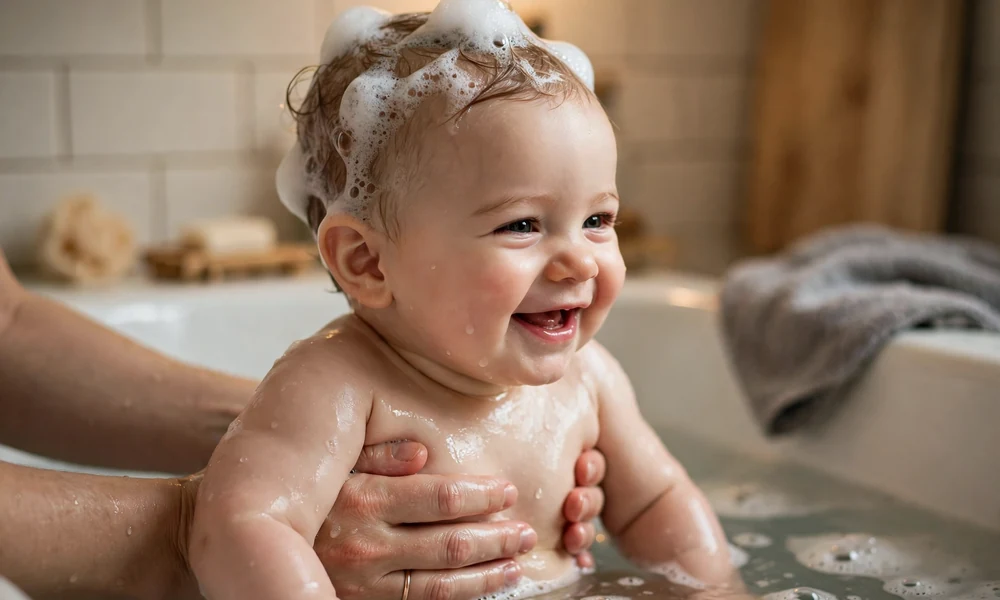
Wash the hair near the end of the bath, not the beginning. Let the baby settle into the warm water first, play for a few minutes and get used to the feeling of being wet. Then wet the hair with your hand or a small cup, add a pea-sized drop of shampoo to your palm, and massage it in with slow, gentle circles. Talk or sing while you wash, because your voice is the best distraction there is, and a baby who is listening to you is a baby who is not thinking about the water.
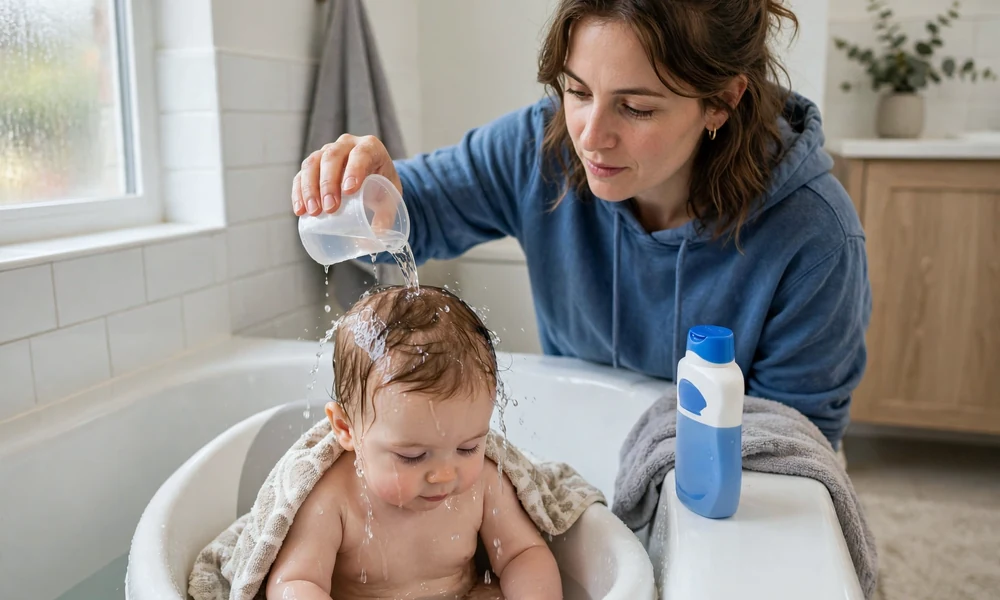
Rinse slowly and shield the face. Pour clean water from a cup over the back of the head, letting it run backward and away from the eyes, and use your free hand as a small visor across the forehead. One slow rinse is usually enough with a light baby shampoo, and a second rinse is only needed if the hair still feels slippery. Then lift the baby out, wrap them straight into a warm towel, and dry the hair by patting, not rubbing, which is gentler on fine hair and on the scalp.
What to Avoid When Buying Baby Shampoo
Avoid adult shampoo, however mild it claims to be. Adult formulas are made for adult scalps and adult hair, and they contain stronger cleansers and fragrances that a baby does not need. Even a gentle adult shampoo can sting the eyes and dry out a baby’s scalp, and the saving is never worth the tears. Keep a separate bottle for the baby, and keep it out of reach of older children who might pour it into the bath.
Avoid buying in bulk before you know the formula suits your baby. Every baby’s skin is a little different, and a shampoo that one family loves can irritate another baby’s scalp. Buy one bottle first, use it for two or three weeks, and watch for redness, dryness or flaking. If the skin stays calm and the hair looks clean and soft, that is your shampoo, and then you can buy the larger size with confidence. For the rest of the bath routine, our guide to the best baby wipes of 2026 covers gentle wipes for the moments between baths.
Storage, Travel and Getting Value from a Bottle
For travel, decant a small amount into a leak-proof travel bottle rather than taking the full-size bottle. A full bottle is heavy, it leaks in a suitcase, and you will only use a few drops a day. Label the travel bottle clearly, because baby shampoo looks identical to many other clear liquids, and pack it in a sealed bag. If you are flying, remember that liquids in hand luggage have size limits, so a small decanted bottle is the practical choice. For the wider world of hair care beyond the nursery, our guide to the best shampoos of 2026 covers formulas for every adult hair type.
Frequently Asked Questions
Is tear-free shampoo really tear-free? It is much gentler on the eyes than an ordinary shampoo, because it is formulated to sting far less, but it is not a licence to get shampoo in your baby’s eyes. You should still rinse carefully and shield the face. Think of tear-free as a safety net, not as a reason to be careless, and your baby’s eyes will thank you for the extra care.
When should I switch from baby shampoo to children’s shampoo? There is no fixed age. Most families switch when the child is a toddler and their hair becomes thicker, or when they start wanting a shampoo of their own. A children’s shampoo is a small step up in cleansing power, but a baby shampoo remains perfectly fine for as long as it works. Switch when the hair needs it, not when the calendar says so, and if in doubt, stay with the gentler formula a little longer.
The best baby shampoo is the one that makes bath time easy: a tear-free, fragrance-free formula in a pump bottle, used in a pea-sized amount and rinsed slowly away from the eyes. Choose the mildest option that suits your baby’s hair, watch how their scalp responds over a few weeks, and ask your paediatrician about anything that does not settle. Get those simple things right, and the shampoo becomes the least interesting part of the bath, which is exactly how it should be.