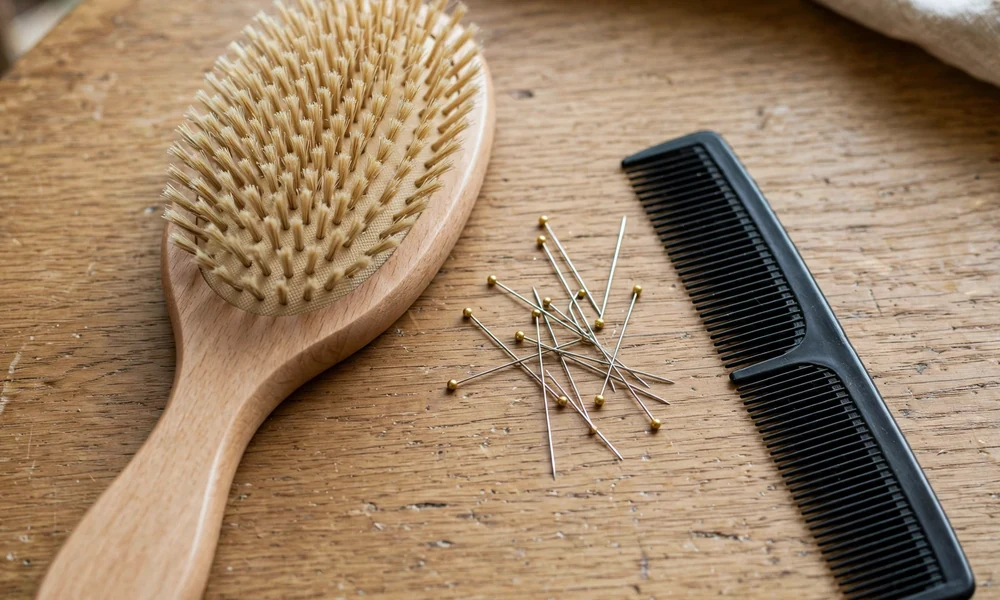
A grooming brush has one job: to keep a pet’s coat clean, tangle-free, and comfortable without hurting the skin underneath. The worst pet grooming brushes of 2026 fail at it in ways that leave a dog flinching at the sight of the brush, a coat full of mats the brush could not reach, and a floor covered in bristles that snapped off mid-groom. They are too harsh for sensitive skin, too weak for thick coats, or made from pins that bend, snap, and scratch. Owners buy them expecting a simple tool that turns ten minutes at the kitchen table into a calm routine, something that lifts loose hair and smooths the coat. What they get is a brush that pulls, a handle that cracks, or a head that falls apart after a month. A pet’s coat is its protection, and a brush that ignores that is not a bargain. It is a daily problem.

What Makes a Grooming Brush Bad
A good grooming brush does three things: it matches the coat it is used on, it reaches the undercoat without scratching the skin, and it survives daily use without falling apart. The worst ones fail all three. The most common failure is the wrong brush for the coat. A slicker brush suits medium and long coats, a pin brush reaches the undercoat of a long coat, and a bristle brush or rubber mitt suits a short coat, but the worst brushes pretend one design fits every dog. A harsh slicker on a short-coated dog leaves red marks on skin that barely needs brushing at all, while a soft bristle brush on a thick double coat skims the surface and leaves the undercoat matted underneath.
The second failure is the pins themselves. Cheap pins are made from thin wire that bends on first contact with a tangle, and bent pins scratch the skin in a way straight pins never do. Pins with no protective tips dig into the skin and leave red lines, while pins that are too short never reach the undercoat at all, so the coat looks brushed on top and mats underneath. A good brush has pins that flex rather than jab, tips that are rounded or coated, and a length matched to the coat depth. If the pins feel sharp against the back of your hand, they will feel worse against a dog.
Handles That Crack and Slip
A handle seems simple until it cracks halfway through a groom and leaves the owner holding half a brush and a nervous dog. Thin plastic handles snap under normal pressure, hollow handles flex and creak, and handles with no grip slip out of a hand that is holding a wriggling animal. The worst handles are also too small for a comfortable grip, so a ten-minute groom leaves the hand aching, and a handle that is uncomfortable to hold is a handle that will be dropped. A good brush has a solid, comfortable handle that fits the hand and stays put when it is wet with shampoo or slick with loose hair.
Weight and balance matter more than owners expect, and the worst brushes get both wrong. A heavy brush tires the hand quickly and makes the owner press too hard, which hurts the dog, while a brush that is head-heavy pulls forward and drags across the coat instead of gliding through it. A well-balanced brush feels light and controlled, with the weight in the hand rather than the head, so the owner can use a gentle touch and let the pins do the work. If a brush feels clumsy in the shop, it will feel worse after ten minutes of grooming a dog that will not sit still.
Bristles That Snap and Shed
Bristles are the working part of the brush, and cheap bristles fail in ways that make grooming worse than not grooming at all. Natural bristles that are too soft bend flat against a thick coat and do nothing, while synthetic bristles that are too stiff scratch the skin and snap off at the base. A brush that sheds bristles into the coat leaves the dog with plastic spikes tangled in its fur, and a brush that loses a quarter of its bristles in a month is a brush that was never built to last. The bristles should be firmly set, evenly spaced, and matched to the coat.
Rubber grooming mitts and gloves have their own version of the same problem. A mitt with nubs that are too hard feels like a punishment to the dog, while a mitt with nubs that are too soft does nothing but move hair around. Cheap rubber tears at the seams, loses its shape in the wash, and smells of chemicals when new. A good mitt feels like stroking to the dog and lifts loose hair effectively, but the worst ones are either too harsh to use or too gentle to matter, and a grooming tool that does neither is a waste of money and a waste of the dog’s patience.
The De-Shedding Trap
De-shedding brushes promise to solve the shedding problem with a single tool, and the worst ones create a worse problem than the one they solve. A de-shedding blade that is too sharp cuts the topcoat as well as the loose undercoat, leaving the coat thin, patchy, and damaged, and a dog that has been cut by its own brush will not sit still for grooming again. The blades are often made from cheap steel that dulls quickly, and a dull blade drags and pulls instead of cutting cleanly, which hurts the dog and leaves the coat ragged. A de-shedding tool should remove only the loose hair that is already falling out, but the worst ones strip the coat of healthy hair as well, and the damage takes months to grow back.
Overuse makes the problem worse, because owners who see hair coming off assume the tool is working, and they keep going until the coat is thin. A de-shedding brush used too often, or on the wrong coat type, thins a double coat so badly that the dog loses its insulation. Short-coated dogs should never be de-shedded at all, because they have no undercoat to remove, and a blade on a smooth coat does nothing but scratch the skin. Use a de-shedding tool rarely, gently, and only on a coat that truly needs it, and stop the moment the loose hair stops coming, because the hair after that is hair the dog still needs.
Brushes That Hurt the Skin
Skin damage is the failure that turns a dog against grooming permanently, and the worst brushes cause it in a single session. A slicker used with too much pressure leaves red lines and sore patches, and a dog that has been hurt by a brush will flinch, snap, or run away the next time it sees one. Puppies and older dogs are hurt most easily, because their skin is thinner and more sensitive, and a brush that is too harsh for them can undo weeks of patient training in seconds. The damage is not always visible: a brush that scratches the skin leaves tiny cuts that sting when shampoo touches them, and the dog learns to associate grooming with pain.

Technique matters, but the brush has to allow good technique in the first place. A brush with pins that are too stiff forces the owner to press hard, a brush with a head that is too large cannot reach behind the ears or under the collar, and a brush with no flex cannot follow the shape of the body. The right brush lets the owner work in small sections, from the skin outward, with a light touch and a steady rhythm. Our guide to the best pet grooming kits of 2026 covers the brushes and clippers that pair with a good wash, and the same calm, unhurried approach applies here, because a brush is only as good as the hand that holds it.
How to Spot a Bad Brush Before You Buy
The hand test takes a minute and saves a season of regret. Run the brush across the back of your hand with the pressure you would use on a dog, and if the pins scratch, catch, or feel sharp, the brush will hurt the dog. Check that the pins are evenly spaced, firmly set, and flex slightly under pressure rather than bending flat or snapping back. Look at the handle and check that it feels solid and comfortable, with no hollow flex or sharp edges. If the brush feels harsh, flimsy, or clumsy in the shop, it will be worse on a real dog, not better.
Coat type should drive the whole choice, and it is the one most owners get wrong. A double-coated dog needs a pin brush and a comb that finds mats early, a curly-coated dog needs a slicker and a comb, and a smooth-coated dog needs gentleness more than power. A rubber grooming glove suits dogs that dislike brushes, because it feels more like stroking than grooming, and a soft bristle brush is the quiet hero for a short coat, lifting dead hair and spreading the coat’s natural oils. Buy for the coat in front of you, not the brush on the packet, because the wrong brush for the coat is a brush that will hurt the dog or do nothing at all.
What to Buy Instead
The brushes worth buying share a short list of features, and none of them is expensive on its own. Pins or bristles matched to the coat type, tips that are rounded or coated, a solid, comfortable handle that fits the hand, and a head that is the right size for the dog. A brush with those four things will reach the undercoat, lift loose hair, and leave the coat smooth without hurting the skin, and a brush missing any one of them will fail at exactly that weak point. Pay for the pins and the handle first, because those are the parts that decide whether grooming is a pleasure or a punishment.
Routine matters as much as the brush, and a short session beats a long one every time. Brush before the bath, not after it, because brushing first removes loose hair and tangles, and it stops the wash turning a small knot into a mat. Work in small sections, always brushing in the direction the coat grows, and check the skin underneath for redness or soreness after each session. A good dog shampoo pairs with a good brush, and the two together keep a coat healthy with far less effort than either one alone. Clean the brush after every use, because a brush full of old hair cannot groom a clean coat.
The Bottom Line
The worst pet grooming brushes of 2026 share a pattern: pins that scratch, bristles that snap, handles that crack, and a design that ignores the coat it is meant to groom. None of those failures is hard to spot before buying, and none of them is worth the saving, because a brush is the one tool that touches a pet’s skin every day. Buy for the coat, test the pins on your own hand, and replace a brush the moment its pins bend or its handle cracks. A dog that enjoys being brushed is a dog with a healthy coat, and a good brush is what makes that possible.