
Most pets do not hate being groomed. They hate the tools. A stiff brush dragged across a sensitive belly, a metal comb catching a knot, a noisy dryer in a small bathroom — any of those can turn a five-minute tidy-up into a wrestling match. A grooming glove changes the whole feeling of the job. To your dog or cat it feels like stroking. To you it feels like control: loose hair lifts off the coat, dirt comes away with it, and the animal stays calm enough for you to finish. They are the easiest way to keep a coat healthy between baths and cut down on sofa hair, without a trip to the groomer.
This guide covers the gloves that actually work: ones that lift loose fur, fit properly, stay comfortable, and survive regular washing. Short coats, long coats, heavy shedders, nervous cats, muddy dogs — there is a glove here for each of them, with a clear note on where each one falls short.
How a grooming glove actually works
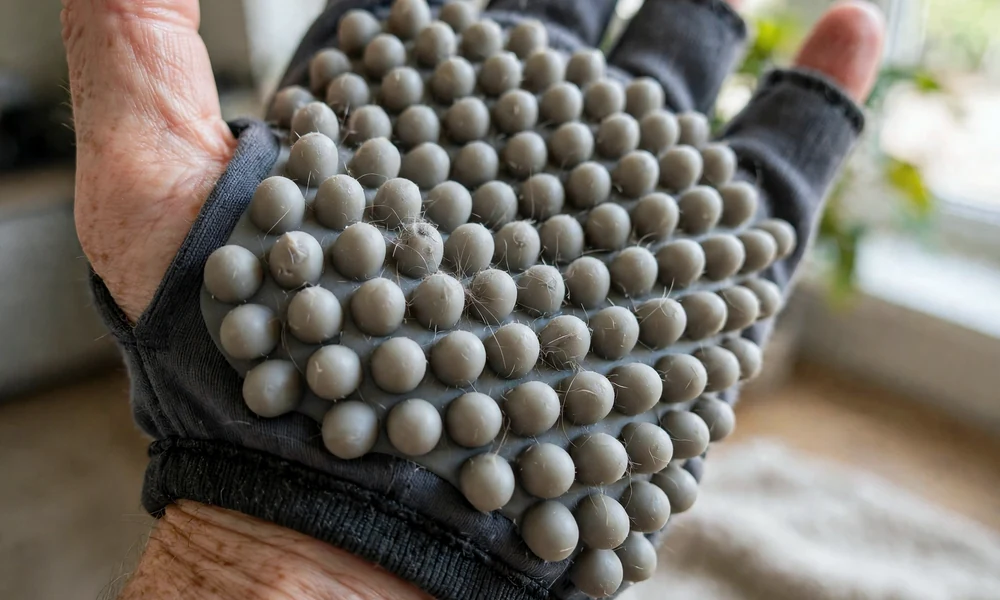
A grooming glove is usually silicone, rubber, or soft mesh, with hundreds of small nubs on the palm and fingers. Stroke your pet as normal and the nubs catch loose, dead hair and hold it until you peel it off. The better gloves mix two nub lengths: short, firm ones that reach the undercoat, and longer, softer ones that massage the skin and spread natural oils through the coat.
That massage matters. Gentle pressure increases blood flow and spreads oil along the hair shaft, which gives a coat its shine. A glove also lets you feel knots, mats, dry patches, lumps, ticks, and sore spots that a brush handle hides.
What to look for before you buy
Fit comes first, and it is where most cheap gloves fail. A glove that is too loose slides around, so the nubs drag instead of gripping, and your hand tires quickly. A glove that is too tight cuts off circulation. Look for an adjustable wrist strap, a stretchy mesh back, and a size range that covers your hand properly. Many gloves come in one size only, fitting an average adult hand and nobody else. Also check the stitching and the join between the glove and the strap: cheap gloves split there first, while a well-made glove survives months of washing and daily use without coming apart at the seams.
Nub design matters more than the number of nubs. Very long, very soft nubs feel lovely but do almost nothing on a thick double coat. Very short, very stiff nubs pull hair well but can scratch thin-skinned cats and older dogs. The best all-round gloves mix the two: firm nubs in the centre of the palm for deshedding, softer ones on the fingers for faces, bellies, and legs. Think about water too: dry-only gloves go soggy in the bath, while waterproof ones double as a bath glove. Finally, check how hair comes off: on the best gloves you peel one layer away, while on the worst it wraps around every nub.
The best pet grooming gloves of 2026
1. Best overall: the five-finger silicone deshedding glove
This is the glove to buy if you only buy one. Five separate fingers give you far more control than a mitt, so you can work around ears, paws, and tails without pressing too hard. The silicone nubs are firm enough to pull loose undercoat from a shedding retriever but soft enough for a cat’s belly.
2. Best for heavy shedders: the long-nub deshedding glove
If your house looks dusted with fur every spring and autumn, this is the glove for you. The nubs are longer and slightly firmer, angled to reach through a thick topcoat into the loose undercoat beneath. On double-coated dogs it lifts an impressive amount of hair in one session, which means less hair on the furniture and in the car.
3. Best for cats: the soft-nub cat grooming glove
Cats are the hardest customers in grooming. They will tolerate stroking, and they will not tolerate being scraped. This glove is built around that fact: short, rounded, very soft nubs that feel like a firm stroke rather than a tool, a light and flexible fit, and no stiff edges to catch on a cat’s skin. Most cats accept it within a session or two. It will not strip a heavy undercoat, but for regular gentle grooming it is the kindest option here.
4. Best for bath time: the waterproof shampoo glove
Bathing a dog with bare hands means shampoo everywhere except in the coat. This waterproof glove solves that: you work the shampoo in with the nubs, which lifts dirt and loose hair at the same time, and the glove keeps your hands from going wrinkled and sore. The wrist seals well, the glove rinses clean, and as a bath tool it earns its place, even if it is slightly heavier than a dry glove.
5. Best mitt: the easy-on grooming mitt
Not everyone likes five separate fingers. A mitt is faster to put on and take off, it suits larger hands, and it is a good choice if you have arthritis or limited grip, because you do not have to work each finger into its own pocket. A good mitt still has a proper wrist strap and a palm full of firm nubs, and covers a wide area quickly, ideal for big dogs — though you lose some precision around paws and ears.
6. Best for long coats: the double-sided long-coat glove
Long coats tangle, and a single-sided glove either glides over the top or catches and pulls. This double-sided glove has a gentle, wide-spaced nub side for detangling and smoothing, and a firmer, denser side for lifting loose hair once the coat is smooth. Used gentle side first, firm side second, it works through long coats without the yanking that makes animals dread grooming.
7. Best for small pets: the small-hand and small-pet glove
Small dogs, puppies, kittens, and rabbits need a smaller tool, and a standard glove on a small animal is like grooming with an oven mitt. This smaller glove has shorter fingers, a narrower palm, and softer nubs, so you can groom a small pet without covering its whole body with one stroke.
8. Best budget glove: the simple silicone grooming glove
You do not need to spend much to get a decent grooming glove. This simple silicone design does the basics well: a comfortable fit, a palm of medium-firm nubs, a strap that stays put, and hair that peels off easily. It will not match the best gloves on a heavy shedder, and your hand gets warm on a long session. But for a short-coated dog, or anyone trying glove grooming before buying a pricier model, it is excellent value.
9. Best for sensitive skin: the extra-soft massage glove
Older dogs, rescue animals, and pets with dry or sensitive skin need a gentler touch, and this glove is designed for them. The nubs are very short, very rounded, and very soft, so the glove feels like a massage rather than a groom. It still lifts surface hair and dust and spreads natural oils through a dry coat. It will not deshed a thick coat, but for a nervous or sore animal it rebuilds trust.
10. Best two-in-one: the glove and brush combination
Some owners want one tool that does everything, and this combination glove is the closest to that. One side is a nubbed glove for stroking and deshedding, the other is a bristle pad for smoothing and finishing, so you can switch sides without putting the glove down. It is bulkier than a plain glove, but useful for a full session: deshed with the nub side, then flip and smooth the coat. It pairs well with a proper pet grooming kit for the tools a glove cannot replace.

How to use a grooming glove properly
Start with a calm pet and a dry coat, unless you are using a waterproof bath glove. Let your pet sniff the glove first, then stroke the way you would with your bare hand: long, gentle strokes in the direction the hair grows, from neck to tail, with light pressure. Work in sections, peeling collected hair away so the nubs stay effective, and use almost no pressure on the face and ears.
Short sessions beat long ones, especially at first. Five minutes, three or four times a week, will do more for a coat than one long session that ends with a stressed animal. Stop while it is still going well. If you find a knot, hold its base with your free hand and work it gently with your fingers or a comb, and if you find a lump, sore patch, or tick, stop grooming that area.
Afterwards, peel the hair off, rinse the glove with warm water and a little mild soap, and leave it to dry fully. A clean, dry glove lasts far longer than one left damp in a drawer.
Gloves versus brushes: which is better?
Neither tool replaces the other completely. A glove is better for daily maintenance, for nervous animals, for spreading oils, and for feeling the skin underneath the coat. A brush or comb is better for detangling a matted coat, for reaching deep into a very thick undercoat, and for finishing a long coat to a smooth shine. Use both: the glove for regular grooming and the brush for the jobs the glove cannot do.
Common mistakes to avoid
The most common mistake is pressing too hard. A grooming glove works with light, repeated strokes, not with force. Pressing hard flattens the nubs, irritates the skin, and makes the animal pull away. Let the nubs do the work, and if hair is not coming off, try more strokes rather than more pressure. The second mistake is grooming a wet coat with a dry glove, which can tangle the hair and pull uncomfortably. Dry the coat first, or use a proper waterproof glove in the bath.
Skipping the belly, legs, and tail is another mistake: mats form there and ticks hide there. And do not expect one glove to suit every animal in the house — a firm glove perfect for a labrador will be too much for a kitten.
Keeping the rest of the routine simple
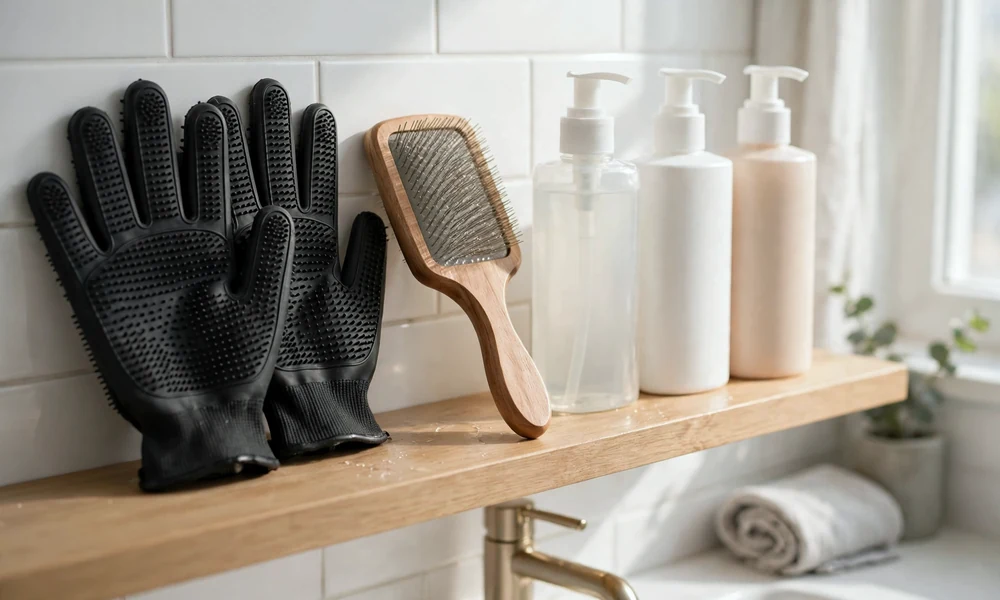
A glove is only one part of keeping a pet clean and comfortable. Build a simple routine: glove a few times a week, bath when the coat needs one, and keep drying quick and calm. A good pet shampoo and a soft pet towel are the two companions that make the glove routine complete.
The verdict
The best pet grooming gloves of 2026 are the ones your pet actually lets you use. For most households, that means the five-finger silicone deshedding glove at the top of this guide: comfortable, effective on most coats, easy to clean, and gentle enough for regular use. Heavy shedders need the longer-nub version, cats need the soft-nub version, and bath time is easier with the waterproof version. Use it lightly, use it often, and keep it clean. Your pet’s coat will be healthier, your house will have less hair in it, and grooming will stop being a chore that both of you dread. Start with short, calm sessions and let your pet get used to the feeling, and the glove will quickly become part of the daily routine.


