
A planted tank is a different kind of aquarium. The water looks clearer, the fish look calmer, and the whole tank feels alive in a way that bare glass and plastic decorations never manage. Aquarium plants do real work too: they soak up waste, give fish somewhere to hide, soften the light, and help keep algae in check. But some need strong light and injected carbon dioxide, some take over in a month, and some are not truly aquatic and rot within weeks. The best aquarium plants of 2026 stay healthy in an ordinary home tank, look good for months, and ask very little of the person keeping them.

What Makes a Good Aquarium Plant
The first thing to judge is how much light a plant honestly needs. Low-light plants grow well under the basic light that comes with most aquarium kits, while high-light plants stall and melt away unless the tank has a strong dedicated plant light. Low-light plants suit most people, and the best light for a planted tank is covered in our guide to the best aquarium lights of 2026. The second thing is growth speed. Fast growers outcompete algae but need trimming; slow growers ask for almost nothing and keep their shape for months. A good tank mixes both: fast growers at the back, slow growers at the front and on the wood.
The third thing is how the plant feeds. Some feed mainly through their roots and need a rich substrate or root tabs, while others feed from the water itself and grow happily attached to wood or rock. Root feeders suit proper aquarium soil, while water-column feeders suit plain gravel, so pick the tank and substrate first — see our guide to the best aquariums of 2026 for tanks that suit planted setups. The fourth thing is size at full growth: a plant that looks small in the shop pot can grow to fill half a tank. Finally, toughness: a good plant survives a missed water change and a nibbling fish.
1. Java Fern
Java fern is the plant most beginners should start with. It grows slowly, needs only low light, and feeds from the water, so it does not care what substrate is on the tank floor. Its long, crinkled leaves tolerate a wide range of temperatures and water hardness. The one rule is never to bury its rhizome, the thick horizontal stem the leaves grow from. Tie it or glue it to wood or rock with cotton thread or aquarium-safe glue, and let its dark roots grip the surface over a few weeks. A buried rhizome rots, and a rotting rhizome kills the whole plant. Tiny plantlets on older leaves can be picked off and reattached for a free second plant.
2. Anubias
Anubias is the toughest plant on this list and the best choice for a tank with fish that dig or nibble. Its thick, dark green leaves are too tough for most fish to eat, and it grows so slowly that algae rarely gets a grip on it. Like java fern, attach it to wood or rock, never bury it; strong light invites algae on its slow leaves. Anubias comes in several sizes, from the tiny Anubias nana petite for a nano tank to the large Anubias barteri, which can anchor the middle of a big tank. One anubias tied to driftwood lasts for years on clean water and weekly changes.
3. Amazon Sword
The Amazon sword is the classic background plant, and it earns its place by growing big, bold and fast in an ordinary tank. A single healthy sword can reach forty centimetres tall, with broad leaves that shelter tall fish and hide the back wall. It is a heavy root feeder, so it needs either nutrient-rich substrate or a root tab pushed into the gravel beside it every month or two. With that one bit of feeding, it grows steadily in low to medium light and does not need injected carbon dioxide. It fills back corners fast, but buy it only for tanks of at least seventy litres, and trim outer leaves that shade the plants behind.
4. Java Moss
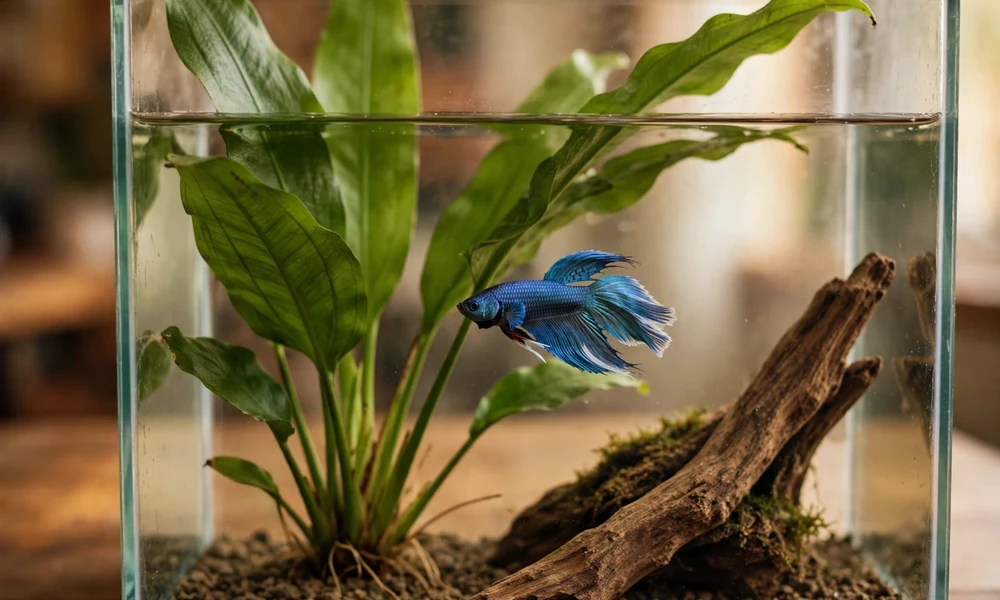
Java moss looks like nothing much in the shop bag, and that is exactly why people underestimate it. Given wood or rock to cling to, it forms a soft green carpet that fish love: fry hide in it, shrimp graze on it, and bettas rest in it. It grows in almost any light and water, with no fertiliser, making it one of the most forgiving plants a beginner can own. Tie a thin layer to wood with thread, keep it trimmed so the inner layers do not die back from lack of light, and it will spread steadily. Left alone it grows into a shaggy ball, so a small pair of aquarium scissors every few weeks keeps it neat.
5. Vallisneria
Vallisneria, often sold as vallis or eelgrass, is the best plant for a tall background that needs almost no attention. Its long ribbon-like leaves grow straight up from the substrate, swaying gently in the filter current, and a single plant sends out runners that produce new plants along the tank floor. Within months, a small group forms a green curtain across the back, hiding heaters and pipes. It grows in low to medium light, feeds through its roots, and prefers harder water, which suits many tap-water tanks. The leaves can reach the surface and trail along it, so trimming the tallest ones keeps light reaching the plants below. Its dense leaves also shelter newborn fry in livebearer tanks.
6. Cryptocoryne
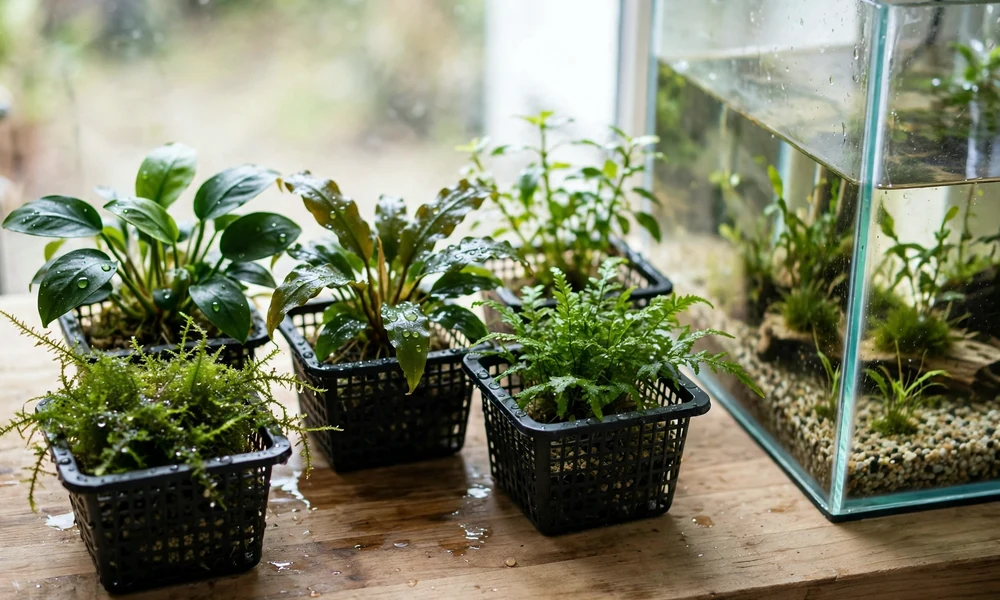
Cryptocoryne, or crypts, are the quiet achievers of the planted tank. They grow slowly, stay compact, and come in greens, bronzes and browns that add colour without needing strong light or carbon dioxide. Wendtii is the easiest and suits the front or middle; parva is a tiny carpet for nano tanks. Crypts have one famous quirk: when they are moved or the water changes suddenly, they sometimes drop most of their leaves in what keepers call crypt melt. It looks like the plant has died, but the roots are alive, and new leaves grow back within a few weeks. Plant a crypt once, in its final spot, and leave it alone.
7. Hornwort
Hornwort is a floating or loosely planted stem plant that grows faster than almost anything else in this list, and that speed is its greatest strength. It pulls waste from the water, discourages algae, and gives shy fish instant cover. It needs no substrate at all: drop it in and let it float, or weigh a bunch down in a corner. It is also cheap and helps keep a new cycling tank safe while the filter matures. It has two drawbacks: it sheds fine needles when the water changes suddenly, and it grows so fast it needs thinning every week or two, or it will shade the plants below it.
8. Dwarf Hairgrass
Dwarf hairgrass is the plant that turns a bare tank floor into a lawn, and the most rewarding carpeting plant a beginner can try. Planted in small clumps a few centimetres apart, it sends out runners that fill the gaps, and within two or three months the substrate disappears under a soft green carpet that shrimp and small bottom fish love to graze over. It grows best in medium light with fine substrate, plus a root tab or a little liquid fertiliser. The key is planting small: one big clump planted whole grows slowly and can rot in the middle, while ten small clumps spread out knit together into a lawn.
9. Water Wisteria
Water wisteria is the best fast-growing stem plant for a beginner who wants visible progress in the first week. Its finely divided leaves change shape with the conditions — feathery and fine in strong light, broader in dim light — and a stem cut from the top can simply be pushed back into the substrate to start a new plant. It grows quickly in low to medium light and keeps algae down by using up waste first. It needs regular trimming, or it will reach the surface and shade everything beneath it, but the trimmings are the easiest way to fill a tank cheaply: every cutting is a free plant.
10. Marimo Moss Ball
The marimo moss ball is not really a plant in the usual sense — it is a ball of algae that grows into a soft green sphere — but it is one of the easiest and most charming things you can put in an aquarium. It needs almost no light, substrate, fertiliser or carbon dioxide, and the current rolls it around, keeping it round. A moss ball suits any tank, from a betta tank to a large community setup, and it is safe with every fish. Care is simple: take it out during water changes, rinse it gently in old tank water, give it a light squeeze, and roll it between your hands to keep it round.
How to Plant Them
With the tank running, rinse each plant in tank water and pick off dead leaves. For stem plants and swords, push the roots into the substrate with tweezers and pull the plant up just enough that the crown, where the leaves meet the roots, sits above the substrate — a buried crown rots. For java fern, anubias and moss, attach them to wood or rock instead and never bury them. A good filter keeps the water moving gently past the leaves, which is why the filter matters as much as the light — see our guide to the best aquarium filters of 2026. Add a root tab beside heavy root feeders, dose fertiliser lightly weekly, and give eight hours of light a day.
Mistakes to Avoid
The most common mistake is buying plants that are not truly aquatic. Some shops sell houseplants such as mondo grass and aluminium plants as aquarium plants; they look green for a few weeks underwater, then rot and foul the tank. The second mistake is too much light. Twelve hours of strong light does not make plants grow twice as fast; it grows algae, which then smothers the slow plants. Eight hours is enough. The third mistake is moving plants around: every move costs a plant weeks of growth, and crypts in particular punish it by dropping their leaves. Change a quarter of the water weekly and trim what outgrows its space.
The Verdict
The best aquarium plant for most people in 2026 is java fern, because it survives almost anything, costs very little, and looks good from the first day. Anubias is the toughest, the Amazon sword is the best for filling a big tank fast, and dwarf hairgrass is the best carpet for a patient keeper. A good first tank needs only three or four plants from this list: one on wood, one fast grower at the back, and a carpet or moss ball on the floor. Buy from a shop that keeps its plants submerged and lit, not dry on a shelf, and rest new plants in a bucket of tank water for a day before they meet your fish.


