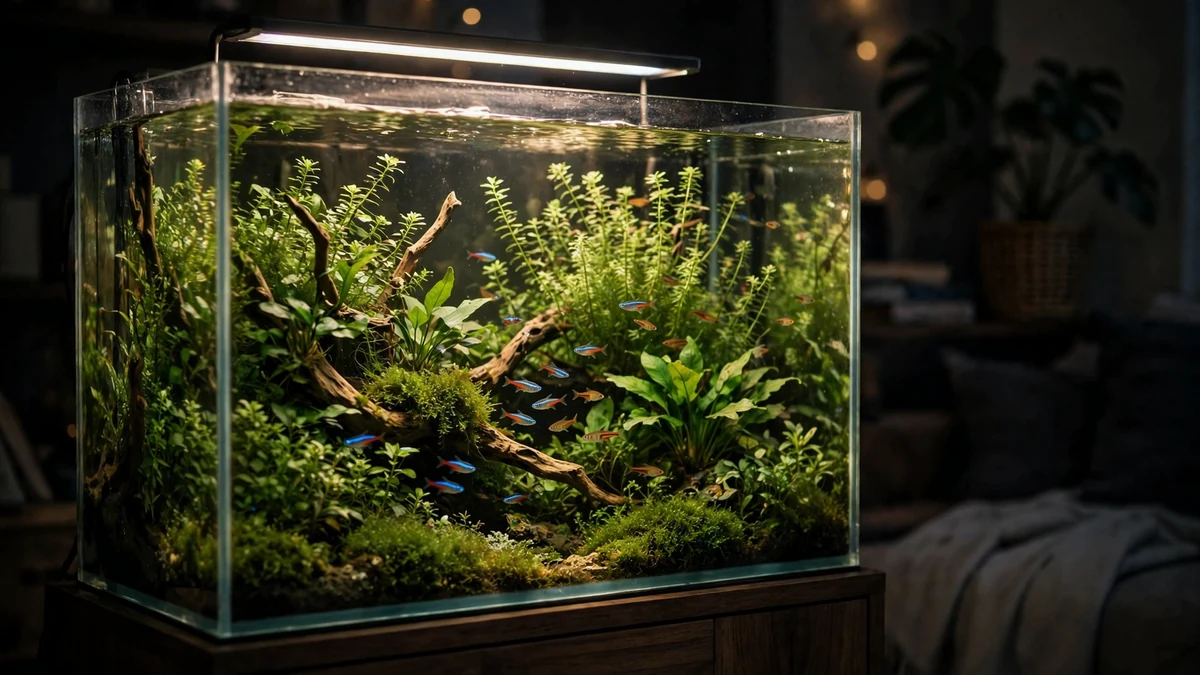
An aquarium light does far more than let you see your fish. It sets the mood of the whole tank, it decides whether your plants grow or slowly fade, and it keeps the daily rhythm that fish depend on. A good light makes colours look richer, keeps plants healthy, and turns an ordinary glass box into the best-looking thing in the room. A bad light does the opposite. It washes everything out, encourages algae, stresses the fish, and leaves plants reaching for a brightness that never comes. The best aquarium lights of 2026 are not the brightest ones, and they are not the most expensive. They are the lights that fit the tank, suit the plants and fish inside it, and run quietly day after day without fuss.
What an Aquarium Light Actually Does
Fish do not need bright light the way plants do, but they do need a steady day and night. In nature, light tells fish when to feed, when to rest and when to breed, and a tank that flips between darkness and harsh brightness with no pattern in between unsettles them. A good aquarium light gives a gentle dawn, a steady day, and a slow dusk, so the fish can settle into a rhythm.
For plants, light is food. Without enough of the right kind they weaken, lose leaves and die back. Too much light is just as bad, because it feeds algae faster than it feeds plants, and a tank overrun with green fuzz on the glass is usually a tank with too much light, or light left on for too long. Light also decides how the tank looks: the same fish can look dull under a cold, harsh light and vivid under a warm, balanced one.
The Main Types of Aquarium Light
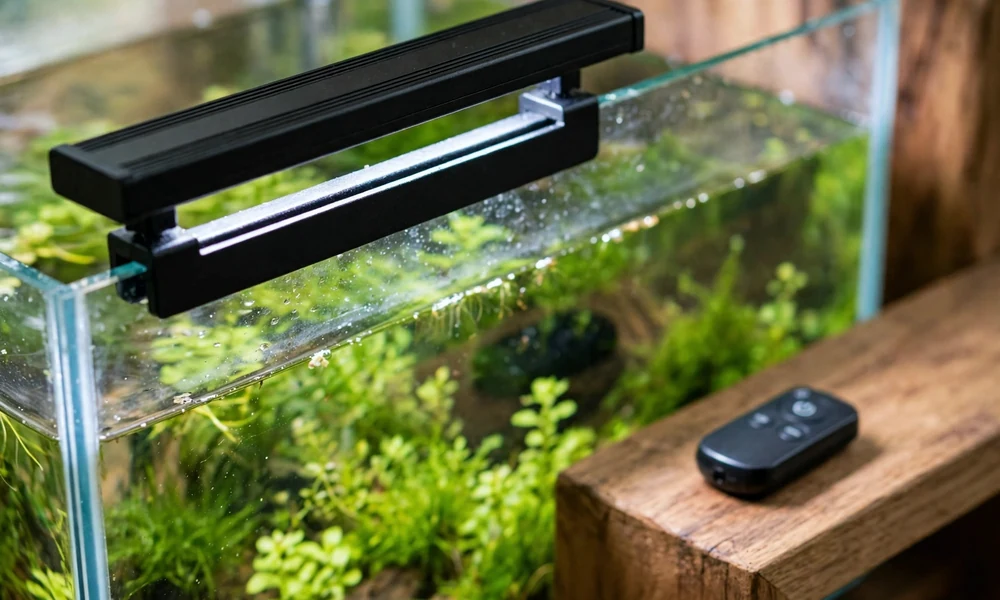
LED light bars are the most common choice in 2026, and for most tanks they are the best one. A slim bar sits across the top of the tank, spreads light evenly from one end to the other, and uses very little electricity. Good bars let you adjust the brightness and the colour, so you can tune the light to your tank. They run cool, they last for years, and they come in lengths to match almost any tank.
Clip-on lights are smaller lamps that clamp to the rim of the tank, and they suit small tanks, nano tanks and tanks with an unusual shape. They are easy to move and aim, and cheap enough to replace without thinking twice. Their weakness is coverage: one small lamp leaves the corners of a wide tank dim. They shine on small tanks, though, where a full-length bar would be overkill, and they are the natural choice for a desktop tank or a breeding tank that needs its own light.
Plant grow lights are LED bars built for planted tanks, with a spectrum weighted toward the red and blue wavelengths that plants use most. They make plants grow faster and look lusher, and they bring out the reds in red plants that ordinary white light leaves looking brown. The trade-off is that they also grow algae faster if the tank is not balanced, so they suit tanks where the plants are established and the owner keeps an eye on the timer. For a heavily planted tank, a grow light is worth the extra money. For a tank with plastic plants, it is money wasted.
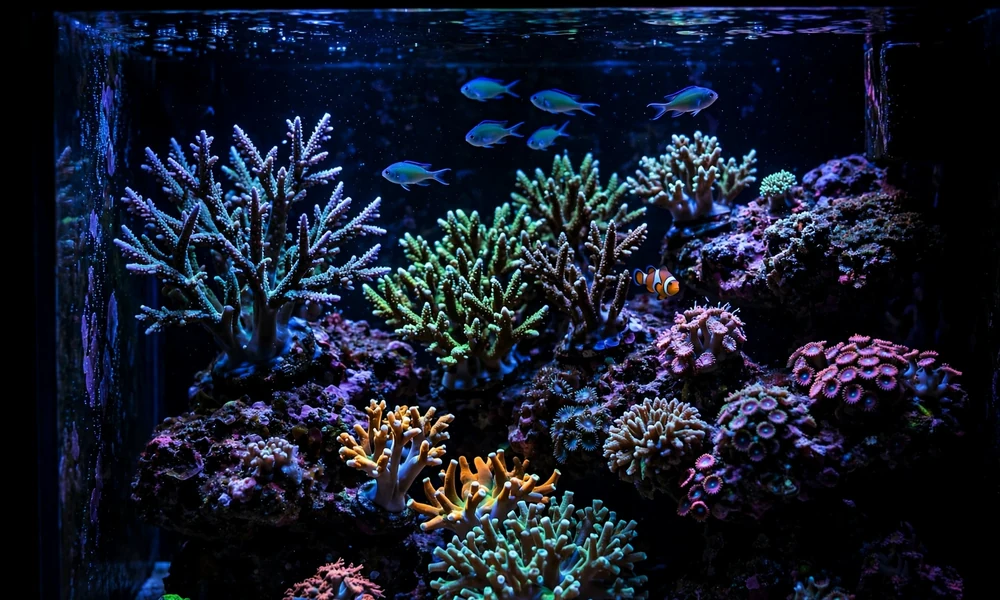
Reef lights are the heavyweights, built for saltwater tanks with corals. Corals need strong, blue-weighted light to feed the tiny algae that live inside them, and reef lights deliver far more power than a freshwater bar. They are also the most expensive lights in this guide, and they run hotter, so they need good airflow above the tank. A reef light on a freshwater tank is a waste of power and a fast route to an algae bloom. But for a reef tank, there is no substitute, and the right light is the difference between corals that grow and corals that slowly bleach.
How to Choose the Right Light
Start with the size of the tank. A light that is too short leaves dark corners, and a light that is too long hangs over the edges and spills light into the room. Measure the tank from rim to rim and choose a bar that matches. Depth matters too: a deep tank needs a stronger light to reach the plants at the bottom, while a shallow tank can get away with a gentler one. Our guide to the best aquariums of 2026 covers tank sizes and shapes, and it is worth choosing the tank and the light together rather than treating them as separate purchases.
Next, decide what lives in the tank. A fish-only tank needs the least light of all, because the fish need a day-night rhythm, not a sun. A planted freshwater tank needs more, and the more demanding the plants, the more light they ask for. A reef tank needs the most of all. Buying a reef light for a tank of guppies is like buying a floodlight for a reading lamp: it will work, but the algae will arrive before the fish have settled in.

Brightness is usually given in lumens. As a rough guide, a low-light planted tank does well on around twenty to thirty lumens per litre, while a demanding planted tank may want twice that. A dimmable light is worth paying for, because it lets you start low and raise the brightness slowly, watching how the plants and the algae respond.
Spectrum matters more than most people expect. White light around 6500K looks like daylight and suits most freshwater tanks, showing fish and plants in natural colours. Warmer light, around 3000K, looks cosy but can make plants look yellow. Cooler, bluer light suits reef tanks and makes fluorescent fish colours pop, but it can make a freshwater tank look cold and clinical.
A timer is not a luxury, it is the single most useful feature an aquarium light can have. Fish and plants need a consistent day, and a timer gives them one without relying on anyone remembering to switch the light on and off. Eight to ten hours of light a day suits most tanks, with planted tanks at the higher end and fish-only tanks at the lower. A built-in timer that also ramps the light up and down is better still, because it avoids the sudden shock of a light snapping on in a dark room.
Lighting Schedules and Algae
Algae is the first sign that the lighting is wrong, and it is almost always a sign of too much light, or light left on for too long. A new tank with a new light is the most vulnerable, because the plants have not yet grown enough to use the light, and the algae are happy to use it instead. The fix is simple and it works: shorten the day to six hours, dim the light by a third, and give the plants a few weeks to catch up. When the plants are growing well, the light can go back up slowly.
Outdoor ponds play by different rules, because the sun does the lighting and no lamp can compete with it. If you keep fish outside as well as inside, the equipment that matters is the pump and the filter, not the light, and our guide to the best pond pumps of 2026 covers the pumps that keep outdoor water clear and healthy. Indoors, though, the light is entirely in your hands, and that is both the freedom and the responsibility of keeping a tank.
Reef Tanks and Planted Tanks
Reef lighting deserves its own thought, because the stakes are higher. Corals are far more sensitive to light than freshwater plants, and a light that is too weak will starve them while a light that is too strong will bleach them. New reef keepers should start with the light at half power and raise it a little each week, watching the corals for signs of stress. A coral that closes up or loses colour is telling you the light is too strong. Patience here is not optional: a reef tank takes months to settle, and the light should be the last thing you rush.
Planted tanks reward a different kind of patience. Fast-growing stem plants will tell you within a week whether the light is right: new growth that is compact and green means the light is good, while long, pale stems reaching upward mean the plants are starving for light. If the plants are growing well but the glass keeps going green, the light is a little too strong, or on a little too long, and a small cut to either will usually fix it.
Growing plants under glass is a pleasure that goes beyond the aquarium. If you enjoy the planted side of the hobby, a glass garden on the desk or the shelf is a natural next step, and our guide to the best terrariums of 2026 covers enclosed gardens that bring the same green calm into a room without any water at all. The lighting lessons carry over: the same balance of brightness, spectrum and hours decides whether the plants thrive or fade.
Mistakes to Avoid
The most common mistake is leaving the light on too long. A tank is not a shop window, and twelve or fourteen hours of light will grow algae faster than it grows plants. Eight to ten hours is enough for almost every tank, and a new tank should start at six. The second mistake is buying on brightness alone. A very bright light with the wrong colour will make the tank look washed out and grow algae, while a moderate light with the right spectrum will make the same tank look beautiful.
The third mistake is mounting the light badly. A bar that sits directly on a glass lid can trap heat and warm the water below it, and a clip-on aimed at the front glass will light the room more than the tank. Give the light a little air above the water, aim it down into the tank, and check the water temperature for a few days after fitting a new light. A light that warms the tank by more than a degree or two is too close, too strong, or both.
The Bottom Line
There is no single best aquarium light for everyone, because the best light depends on the tank, the plants and the fish. An LED bar is the best choice for most freshwater tanks, because it spreads light evenly, sips electricity and lasts for years. A clip-on suits small and nano tanks. A plant grow light earns its keep in a heavily planted tank. A reef light is essential for corals and a waste of money anywhere else. The best aquarium light of 2026 is the one that fits your tank, matches what lives inside it, and gives a steady, gentle day that the fish and plants can rely on.
The simplest way to choose is to start low and watch. Fit the light, set the timer to eight hours, dim it to two-thirds, and watch the tank for two weeks. If the plants are growing and the glass stays clean, you have found the right setting. If the plants are reaching and pale, turn it up a little. If algae appears, turn it down.