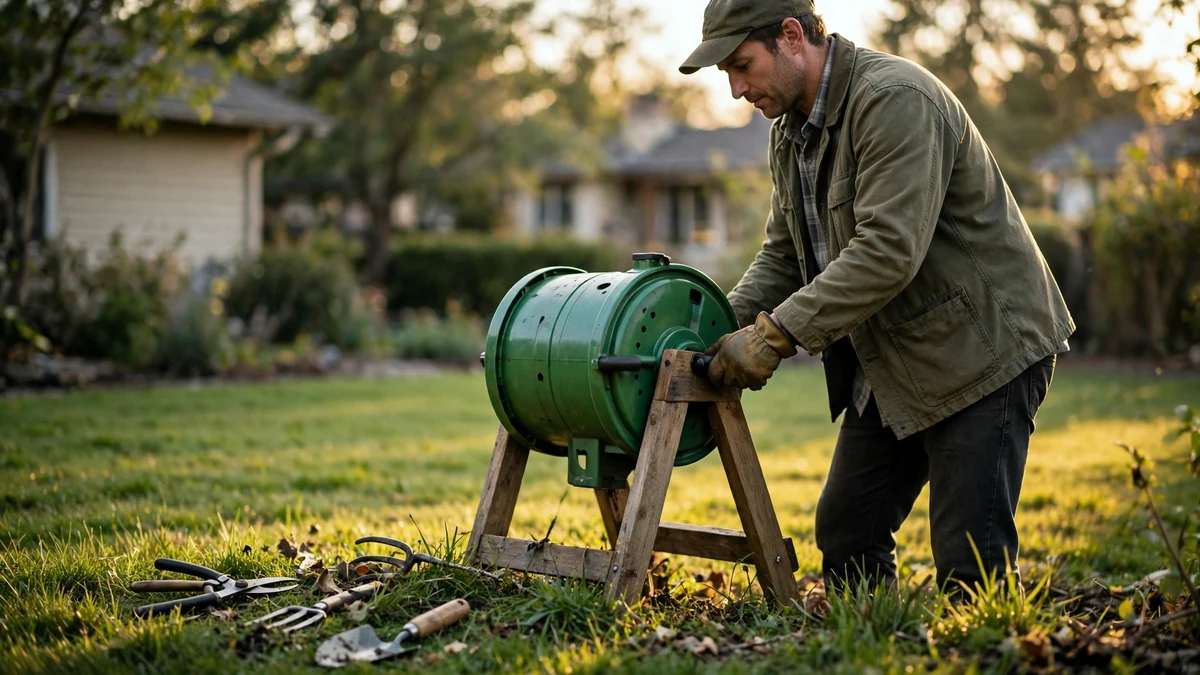
A compost tumbler is the fastest honest route from kitchen scraps and garden waste to dark, crumbly compost you can actually use. Unlike a static bin that sits and waits, a tumbler spins, so the pile gets the air it needs without you digging through it with a fork every few days. The result is compost in weeks, with fewer smells, flies, and no rats in the heap. The wrong one, though, is a heavy drum you cannot turn when it is full, a lid that leaks in the rain, or a frame that buckles under a season of wet leaves. We compared capacity, drum design, frame strength, turning effort and airflow, and the ten below are the ones worth your money in 2026.
Every tumbler here was judged on the same things that matter in a real garden: how easily it turns when fully loaded, how well it keeps the pile hot and damp, how simple it is to load and empty, and how long its materials are likely to survive outdoors. Prices run from compact single drums for small gardens to large dual-chamber models for serious composters, so there is a pick here for a balcony gardener and for someone feeding a whole vegetable patch.
What Makes a Good Compost Tumbler
Start with capacity. A tumbler rated at 40 gallons sounds generous until you realise you cannot fill it to the brim and still turn it, so the working capacity is always smaller than the headline number. For a small household, 30 to 40 gallons is usually enough, while a family that cooks at home and has a garden to clear will want 60 gallons or more. Dual-chamber models split that volume in two, but the two chambers are the whole point: one side cures while the other fills, so you always have finished compost on the way.
The drum decides how fast the pile breaks down. Dark drums absorb heat from the sun, which keeps the microbes working, and internal fins mix the contents each time you turn it. A sliding door is easier to load through than a small round hatch, and a door that locks shut matters, because a drum that pops open mid-spin throws compost across the lawn. Aeration holes are essential, but they should be small and well placed, or rain will soak the pile into a cold, slimy mess.
The frame is where cheap tumblers fail. A full drum of wet compost is heavy, often 100 pounds or more, and a flimsy steel tube frame will bend or wobble under that load. Look for thick-gauge steel or a sturdy galvanised frame with wide feet, and check that the axle and bearings run smoothly. A handle or crank makes turning far easier than gripping the drum itself, and a gear-driven model is worth the extra money if your strength is limited.
Placement matters as much as the product. A tumbler needs a level spot with a few hours of sun, close enough to the kitchen door that you will actually use it, but far enough from the house that a warm pile does not bring smells to the patio. It also needs room to spin, so leave clearance around the drum. If you are starting from scratch, a guide to the best compost bins is a useful comparison, because a static bin suits some gardens better than a tumbler.
The 10 Best Compost Tumblers of 2026
1. Best Overall: Dual-Chamber 65-Gallon Tumbling Composter
The dual-chamber 65-gallon tumbler is the one we would buy first. Two 32-gallon chambers sit on a powder-coated steel frame, and the batch system means you fill one side while the other cures undisturbed, so finished compost arrives on a steady cycle. The drums are black recycled plastic, which heats up well in the sun, and the sliding doors are large enough to load with a bucket. Turning is easy thanks to a long handle and smooth bearings, even when both chambers are full.
2. Best Budget: Single-Drum 40-Gallon Compost Tumbler
The single-drum 40-gallon tumbler proves you do not need to spend much to compost well. It is a simple barrel on a steel A-frame, with a locking lid, aeration holes and a grip handle moulded into the drum. Capacity is modest, so it suits a one- or two-person household, and it works best if you keep a separate small pile for scraps while a batch cures. The frame is lighter than premium models, so site it on flat ground. For the price, it turns easily and heats up fast.
3. Best for Large Gardens: 80-Gallon Heavy-Duty Dual Tumbler
An 80-gallon dual tumbler is the workhorse for a big garden. Each chamber holds enough for a serious clear-out of leaves, grass clippings and kitchen waste, and the reinforced frame with wide feet stays stable under a full load of wet material. The drums have deep internal mixing bars, so five or six turns properly blend the pile, and the large doors make emptying easy into a wheelbarrow below. It needs muscle to turn when full, but nothing smaller will keep up with a lot of waste.

4. Best Compact: 30-Gallon Space-Saving Tumbler
The 30-gallon compact tumbler is made for small gardens, patios and allotments where a big drum would dominate the space. It sits low on a sturdy frame, spins smoothly, and holds enough for a small household’s peelings, coffee grounds and garden trimmings. The smaller drum actually turns more easily than a large one, which makes it a good choice if you want compost without the workout. You will empty it more often, but for a modest garden it is the right size.
5. Best Tumbling Design: Gear-Driven Rotating Composter
A gear-driven tumbler is the answer if you have ever wrestled with a heavy drum that would not budge. A simple gear mechanism multiplies your effort, so a full drum turns with a gentle push on the handle instead of a heave. The frame is built to take the extra torque without flexing. It costs more than a basic barrel, but for anyone with a bad back it is the difference between composting and giving up.
6. Best for Hot Composting: Insulated Dual-Chamber Tumbler
An insulated tumbler holds heat far better than a thin-walled drum, which matters if you want genuinely hot compost. Double-walled panels keep the pile cooking through cool nights, so the contents break down faster and weed seeds are more likely to be killed off. The two chambers run the usual fill-and-cure cycle, and the doors seal well, which keeps the moisture in. It is heavier and pricier, but in a cooler climate it can cut weeks off the composting time.
7. Best Easy-Empty: Bottom-Drop Compost Tumbler
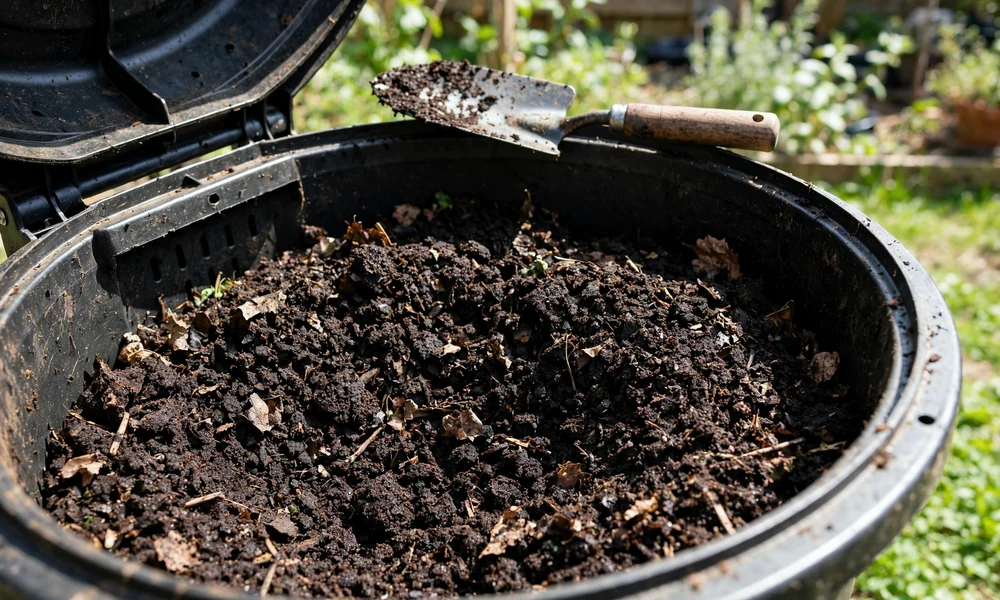
The bottom-drop tumbler solves the most annoying part of composting: getting the finished stuff out. Instead of scooping through a side door, you rotate the drum so the door faces down and the compost drops straight into a wheelbarrow or bucket below. The frame is tall enough to fit a barrow underneath. If you have ever spilt half a load scooping sideways, this design is a revelation.
8. Best for Beginners: Simple Two-Chamber Starter Tumbler
The starter tumbler is the one to buy if you have never composted before. It keeps everything obvious: one chamber to fill, one to cure, a big door you cannot get wrong, and a handle that turns with one hand when the drum is half full. The size is forgiving: big enough to make real compost, small enough not to overload. It is the most likely to still be in use a year from now.
9. Best Heavy-Duty: Steel-Frame 70-Gallon Tumbler
The steel-frame 70-gallon tumbler is built for gardeners who treat composting as a serious job. The galvanised frame is thicker than most, the axle runs on proper bearings, and the drum is made from tough UV-resistant plastic that will not go brittle in the sun. It holds a large batch, turns smoothly under load, and shrugs off being left outside all winter. It needs a firm, level base, but once in place it is a buy-once tool.
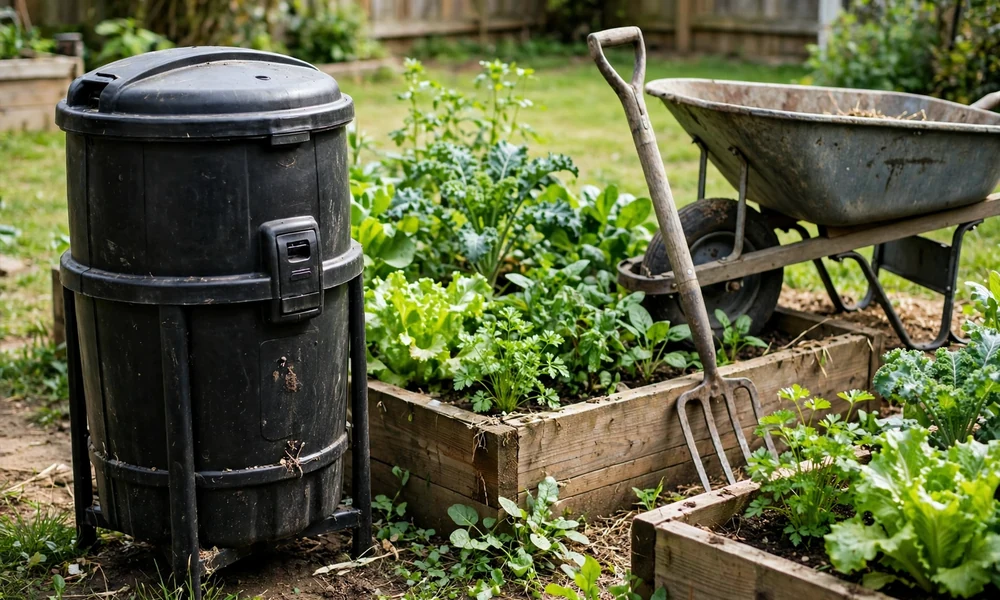
10. Best for Small Households: 25-Gallon Tabletop-Height Tumbler
The 25-gallon tabletop-height tumbler is the smallest pick here, and it is perfect for a couple, a flat with a shared garden, or anyone whose waste is mostly kitchen scraps. It sits at a comfortable height for loading without bending, turns with a flick of the wrist, and makes a modest but steady supply of compost for pots and planters. It will not feed a vegetable patch, but for herbs, containers and a few beds it is plenty.
Mistakes to Avoid
The most common mistake is adding too much of one thing. A drum full of grass clippings turns into a slimy mat, and a drum full of dry leaves sits there doing nothing, so mix green and brown material in roughly equal parts and add a handful of soil now and then to introduce microbes. The second mistake is forgetting to turn it: a tumbler only beats a static bin if you spin it two or three times a week. The third is letting the pile dry out or get soaked; it should feel like a wrung-out sponge, and a sour smell means add dry browns and turn it more. And if you still find yourself reaching for a fork to aerate a static pile, a guide to the best compost turners covers the hand tools that make that job far easier.
Frequently Asked Questions
How long does compost take in a tumbler? In warm weather with regular turning and a good green-to-brown mix, a batch can be ready in four to eight weeks. In cold weather, or if the pile is rarely turned, expect two to four months.
Do compost tumblers smell? A healthy tumbler smells faintly earthy. A bad smell usually means the pile is too wet or too green, so add dry leaves or shredded cardboard and turn it more often until the smell clears.
Can I put meat and dairy in a compost tumbler? It is best not to. Meat, dairy and cooked food attract rats and flies and can carry pathogens that a home tumbler may not get hot enough to kill. Stick to vegetable scraps, fruit, coffee grounds, eggshells, leaves and grass.
Where should I put a compost tumbler? On level ground with a few hours of sun, close enough to the kitchen to use easily, with room around it to spin. A spot near the beds is ideal, because the finished compost is heavy to carry far, and raised garden beds are one of the best places to use it.
Do tumblers work in winter? They slow down, but a full drum in a sunny spot keeps working through a mild winter, especially an insulated model with fresh green material added.
The Verdict
The best compost tumbler is the one that matches how much waste you make and how often you will turn it. For most households, the dual-chamber 65-gallon tumbler is the safest single purchase: it keeps a steady cycle of finished compost coming, it turns easily, and it is built to last. Go bigger for a large garden, smaller or gear-driven for limited space or strength. Keep the mix balanced, turn it a few times a week, and a good tumbler will quietly turn your scraps into the best soil your garden has ever had.