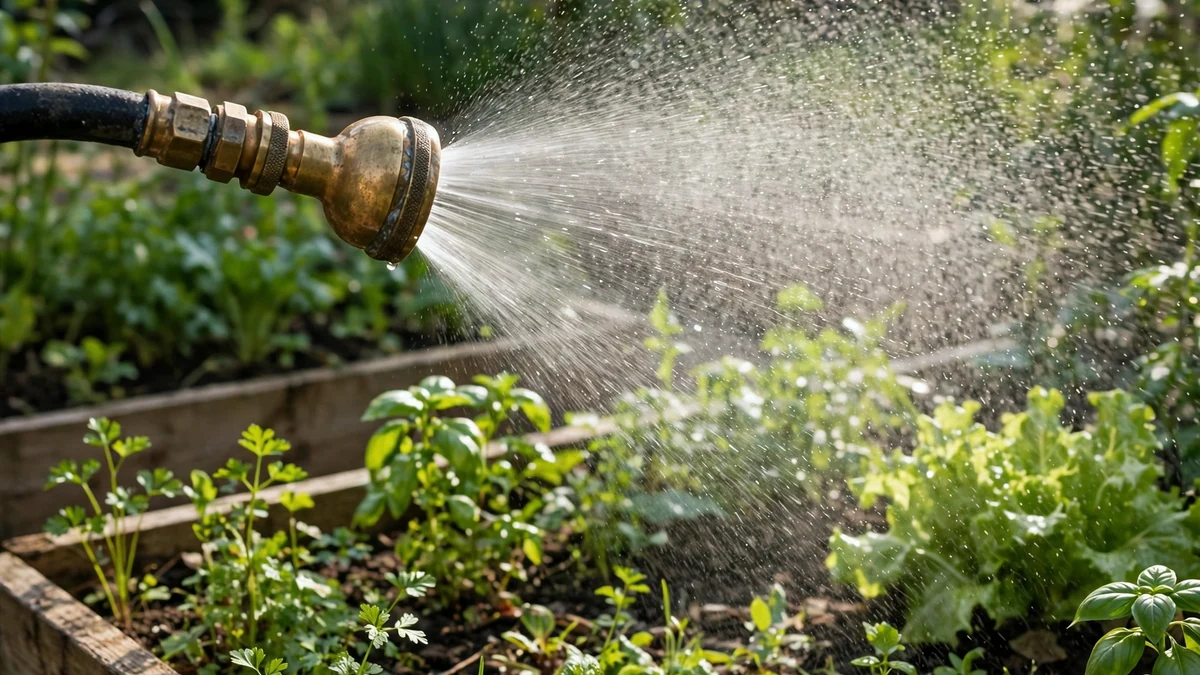
A hose nozzle is a small fitting that decides how water leaves the hose, and that one decision changes everything about watering. The same hose can drench a flower bed, mist a tray of seedlings, or blast mud off a patio, depending only on the nozzle at its end. A good nozzle gives you that control without a fight: the spray changes with a simple twist or squeeze, the flow stays steady, and the grip stays comfortable even when your hands are wet. The best hose nozzles of 2026 are not the ones with the most settings on the dial. They are the ones that hold a steady spray, seal properly, feel solid in the hand, and keep working season after season.

What Makes a Hose Nozzle Good
The first thing to judge is the seal. A nozzle that drips at the connection wastes water and soaks your shoes, and a leak there usually gets worse, not better. Look for a proper rubber washer inside the coupling and a coupling that threads on smoothly by hand. Brass couplings tend to thread more cleanly than plastic ones, and they are less likely to cross-thread after a season in the sun. If the coupling wobbles or the washer sits crooked, the nozzle will leak from the first day.
The second thing is spray control. The best nozzles change pattern with one hand, while the water is running, without forcing you to put the hose down. A dial that clicks firmly into each setting is better than one that drifts between patterns. A thumb lever or trigger that holds its position without constant squeezing is better than one you must grip hard for the whole session.
The third thing is the quality of the spray itself. A shower pattern should fall like even rain, not in a few heavy streams with dry gaps between them. A mist should be fine and soft enough for seedlings, without turning into a dribble. A jet should reach across a lawn in a tight, straight stream.
The Main Spray Patterns Explained
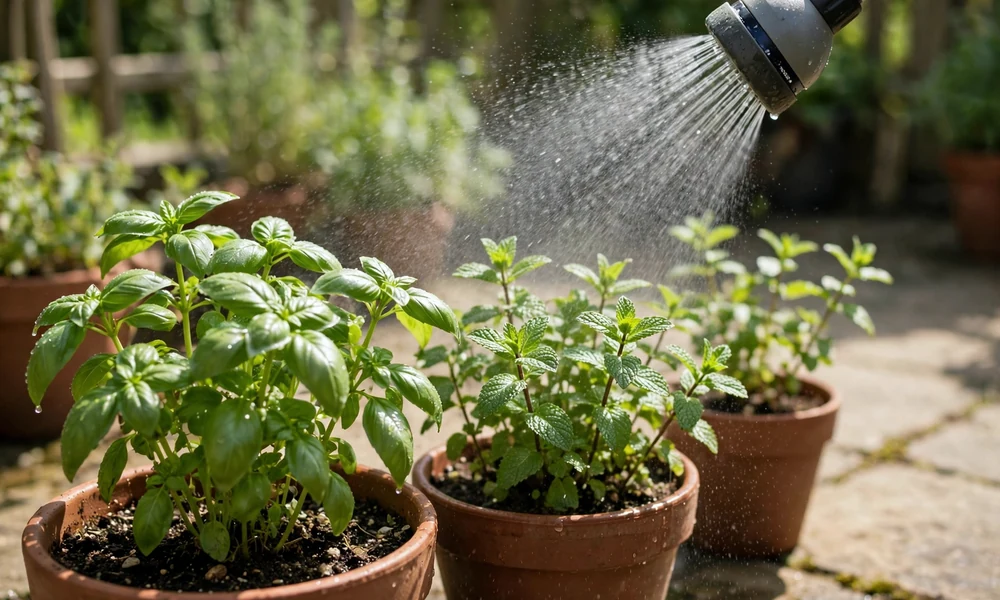
Most good nozzles offer between five and ten patterns, but a few do nearly all the real work. The shower pattern is the everyday setting: a wide, gentle rain that soaks soil without washing it away, ideal for beds, borders and vegetables. The mist pattern is finer still, made for seedlings and delicate leaves that would bruise under a heavier spray. The flat pattern spreads water in a fan, useful for a row of plants or rinsing a wide surface. The cone pattern throws a ring of spray that covers a circle of ground quickly, good for lawns.
The jet pattern is the strong one, a narrow, powerful stream for cleaning. It washes mud off boots and rinses a patio, but it is far too strong for plants, and it can strip soil from roots or shred tender leaves in seconds. The soaker setting sits between shower and jet: a steady, low-pressure flow that fills a watering can or soaks the base of a shrub without splashing.
Brass, Metal and Plastic: Which Material Lasts
Brass nozzles are the traditional choice, and they remain the most durable for most gardens. Solid brass resists corrosion, handles being dropped on concrete, and keeps its threads true after years of use. A brass nozzle feels heavy in the hand, and it can get hot in strong sun, so run water through it for a few seconds before aiming it at tender plants.
Metal nozzles made from zinc alloy or aluminium sit in the middle. They are lighter than brass and often cheaper, with a similar solid feel, but their coatings can chip and the metal underneath can corrode if the nozzle lives outdoors all year. A zinc nozzle kept in a shed between uses can last a long time; the same nozzle left on a wall reel through winter rain will age much faster.
Plastic nozzles are the lightest and cheapest, and the best of them are genuinely good. A well-made plastic nozzle with a rubberised grip is comfortable, never gets hot in the sun, and will not corrode. The weakness is strength: thin plastic cracks if dropped or stepped on, and cheap plastic threads wear quickly, so the nozzle starts leaking after a season or two. Plastic suits a light user with pots on a balcony.
Thumb Control, Trigger and Twist
Twist nozzles are the simplest design: turn the head one way for a fine spray and the other for a jet. They have few moving parts, so there is little to break, and they suit people who set one pattern and water a whole bed with it.
Trigger nozzles use a handle you squeeze, often with a lock that holds the flow on. They give the most control, because you can start and stop the water instantly, and feather the flow for a delicate pot or open it fully for a lawn. The lock matters: a trigger that must be held down the whole time tires the hand quickly, while a good lock lets you water with a relaxed grip.
Thumb-control nozzles use a lever on top of the handle, moved with the thumb of the same hand that holds the nozzle. They are a good middle ground: one-handed, easy to adjust while watering, and with fewer parts than a trigger. The lever should move smoothly through its whole range, not jump from nothing to full blast.
Choosing a Nozzle for Each Job
For vegetable beds and flower borders, the shower and mist patterns matter most, and a nozzle that holds a steady, even shower will do most of the work. For pots and containers, a gentle pattern and fine flow control matter more than reach: pots dry out fast, but they also flood fast, so a nozzle that can deliver a slow, soft stream without blasting soil out of the pot is worth more than a powerful jet.
For lawns, coverage matters. A cone or flat pattern that throws water evenly over a wide area will water a lawn faster than a narrow shower. This is also where a good sprinkler earns its place: a nozzle is best for spot watering and edges, while a sprinkler covers a whole lawn evenly without you standing there. The two tools work together, and a garden with both is easier to water than a garden with only one.
For washing patios, cars and garden furniture, the jet pattern does the work, and a strong, tight jet will clean faster than a weak one. But a hose nozzle is not a pressure washer. A pressure washer delivers far more cleaning power for ingrained dirt and moss, while a nozzle jet is enough for dust, mud and loose leaves. Using a nozzle jet on a car is fine if the stream is not too harsh; using it to strip paint is asking for damage.
Matching the Nozzle to the Hose
A nozzle is only as good as its fit on the hose. Most garden hoses use a standard coupling size, but older hoses and expandable hoses can differ, and a nozzle that does not match will leak no matter how good it is. Keep the rubber washer that comes with the nozzle: it makes the seal, and a worn or missing washer is the most common cause of a drip at the connection. A spare washer costs almost nothing and saves a trip back to the shop.
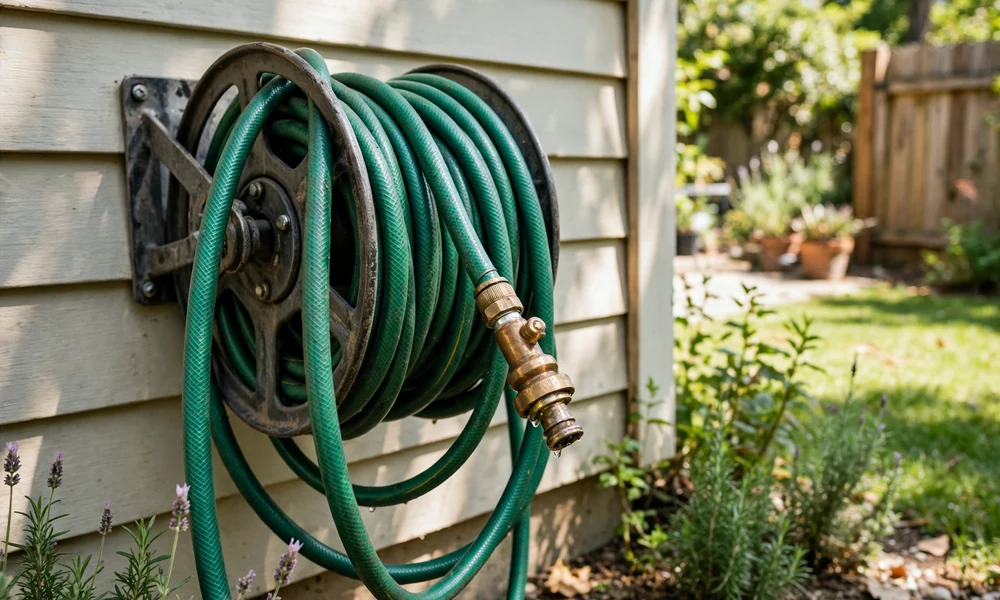
The hose itself matters too. A kinked or very long hose reduces pressure before the water even reaches the nozzle, so a jet that should reach across the garden falls short, and a shower comes out patchy. If your nozzle sprays weakly, check the hose first: unkink it, and make sure the tap is fully open. A good garden hose that holds its shape and delivers steady pressure makes any nozzle work better, and a poor hose will make even the best nozzle look bad.
Common Mistakes to Avoid
The most common mistake is leaving the nozzle on full jet for plants. A jet strips soil, damages roots and bruises leaves, and it wastes water by running off the surface instead of soaking in. Watering slowly, with a shower or mist, lets the water sink into the soil where roots can reach it. The second mistake is watering in the heat of the day with a fine mist, which evaporates before it reaches the soil; early morning or evening watering gets far more water to the roots.
The third mistake is buying on the number of patterns alone. Ten patterns sound better than five, but if the dial is stiff, the seals are thin and the coupling leaks, those ten patterns are worth nothing. The fourth mistake is leaving the nozzle in the sun all summer and out in the frost all winter. Sun makes plastic brittle and rubber washers hard, and frost can crack a nozzle that still has water inside it. A nozzle stored in a shed will last years longer than one left on the lawn.
Care, Cleaning and Winter Storage
A nozzle needs very little care, but a little goes a long way. Rinse it after use if you have been watering with fertiliser, because residue can clog the fine holes in a mist or shower head. If the spray turns patchy, soak the head in white vinegar for an hour, then rinse it: limescale is the usual cause, and vinegar dissolves it without damaging brass or plastic. Do not poke the holes with a pin unless you have to, because a widened hole changes the spray pattern for good.
Before winter, disconnect the nozzle, drain it fully, and store it indoors. A nozzle left connected to a hose that freezes can crack, and a frozen washer will never seal properly again. Check the washer each spring and replace it if it looks flattened or cracked. A new washer is the cheapest repair a nozzle will ever need, and it is often all a leaking nozzle requires.
How to Choose the Best Hose Nozzle for You
Start with your garden, not the shelf. A small balcony with a few pots needs a light, gentle nozzle with fine flow control, and plastic is fine. A medium garden with beds, pots and a lawn needs a metal or brass nozzle with a good shower, a mist and a jet, and a trigger or thumb control you can use for an hour without aching. A large garden, or a household that also washes cars and patios, needs a solid brass nozzle with a strong jet and a coupling that will not leak after years of use.
Then check the three things that matter most: the seal, the spray and the grip. The coupling should thread on smoothly and sit tight with no drip. The shower should fall evenly, the mist should be fine, and the jet should reach. The grip should feel comfortable when wet, and the control should move with one hand. If a nozzle passes those three tests, the number of patterns on the dial is a detail, not a decision. The best hose nozzle of 2026 is the one that makes watering feel easy, keeps the water where you aim it, and is still working the same way next summer.