
Best Aquariums 2026
There is a particular quiet that falls over a room when a sea turtle glides past the glass. Children stop mid-sentence, adults put their phones down, and for a minute everyone is simply watching. That is the test a great aquarium has to pass, and in 2026 the best ones pass it easily: clear water, healthy animals, tanks big enough for the creatures inside them, and staff who can tell you what you are looking at. The water is the star, and everything else is in service to it.
This guide covers the best aquariums of 2026 in both senses of the word. First, the great public aquariums worth planning a day around, from the vast reef tanks to the shark tunnels that make children gasp. Then the best home aquariums: the planted freshwater tanks and reef setups that actually work in a living room. Both kinds reward the same things — clean water, honest scale, and patience.
Key Takeaways
- The best public aquariums give their animals room: wide tanks, varied depths, and quiet corners where shy species can hide.
- A shark tunnel or a big reef tank is the heart of a great visit, and it is worth timing your day around feeding times and quieter morning hours.
- For a home aquarium, a planted freshwater tank is the best starting point: forgiving, beautiful, and far easier to keep stable than a reef tank.
- Filtration matters more than decoration, because clear water and steady chemistry are what keep fish healthy week after week.
- Buy the tank your room can actually hold, then stock it slowly — most home aquarium failures come from too many fish too soon.
How We Judged
We judged public aquariums the way a visitor experiences them, on an ordinary weekday rather than a quiet press morning. The first test was the animals: were the fish active and alert, the water clear, the tanks clean, and the species behaving the way they would in the wild?
The second test was the visit itself. Could you see the main tanks without fighting a crowd, did the walkways flow in a sensible order, and were the signs actually informative? The best aquariums teach you something without lecturing you, and they give children somewhere to touch, peer and ask questions.
Best Overall: The Great Public Aquariums
The best public aquariums of 2026 share one quality that is obvious the moment you walk in: scale done properly. The main reef tank is not a fishbowl with a few bright fish; it is a whole underwater landscape, deep enough for a turtle to cruise through, wide enough for a school of blue tangs to turn together, and lit so the coral colours read true. You can stand in front of it for twenty minutes and keep noticing new things.
What separates the great aquariums from the merely good ones is what happens away from the main tank. The smaller galleries matter just as much: a seahorse display where the animals cling to swaying seagrass, a jellyfish room kept dark and quiet so the slow pulse of the bells holds your attention.
Good aquariums also look after their animals in ways you can see. The water is clear because the filtration is serious, not because the glass was just wiped. The fish have hiding places and the tanks have varied depth, so shy species can retreat and bold ones can show off. Keepers are visible, doing real work, and happy to answer questions.
Best for Families: Shark Tunnels and Touch Pools
For families, the best aquariums are the ones built around a single unforgettable moment, and nothing delivers that moment like a shark tunnel. Walking through a clear tube while reef sharks pass overhead is the kind of experience children talk about for weeks, and the best tunnels are long enough and quiet enough to let it land. The good ones keep the lighting low and the walkway slow, so nobody is rushed through by the crowd behind them.
Touch pools are the other family essential. A well-run touch pool lets children feel a starfish or a ray under the watchful eye of a keeper who knows how to keep both the animals and the children safe. The best aquariums rotate the animals out regularly and keep the water shallow and clean.
Families should also look for aquariums with proper rest areas and a sensible route. If you are planning a coastal family trip around an aquarium visit, our guide to Myrtle Beach’s best museums for first-time visitors starts with the aquarium, which is the best first stop for families there.

Best Home Aquarium: A Planted Freshwater Tank
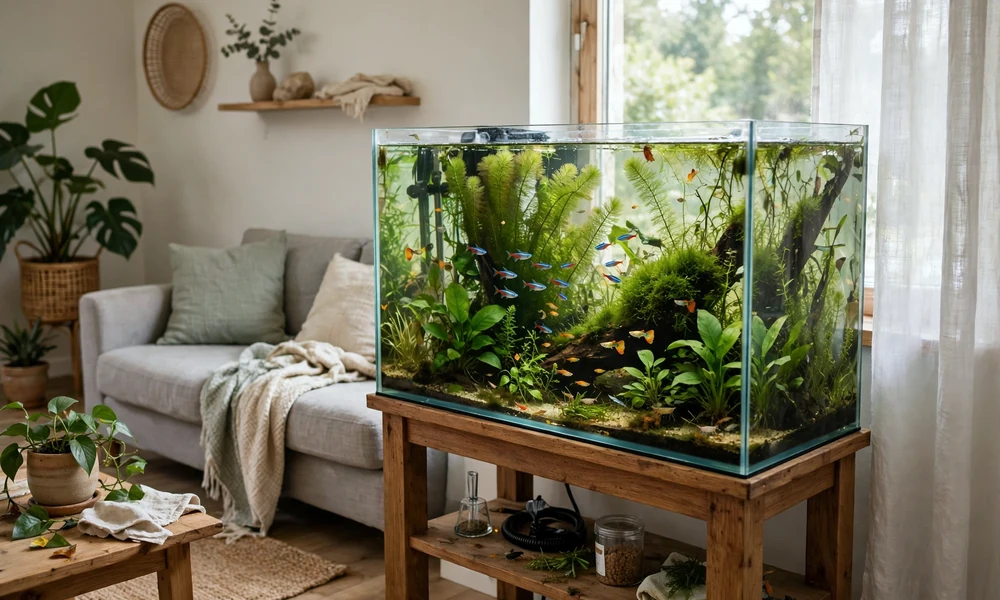
If you want an aquarium at home, start with a planted freshwater tank. It is the most forgiving setup a beginner can buy, and the most beautiful when it is done well. Live plants do real work: they absorb waste, oxygenate the water, and give shy fish somewhere to hide. A tank with healthy plants largely looks after itself, provided you give it decent light and leave it alone most of the time.
Size matters more than anything else. A tank of around 75 to 120 litres is the sweet spot for a first setup: large enough that the water chemistry stays steady, small enough to fit on a proper stand in a normal living room. Smaller tanks look tempting, but their water changes fast, and a small mistake becomes a big problem overnight.
Stock slowly. Add a few hardy fish first, wait a fortnight, test the water, and only then add more. Most home aquarium failures come from filling the tank on day one, before the filter has built up the bacteria that keep the water safe. Choose small, peaceful community fish — tetras, rasboras, guppies — and let the plants grow in around them.
Best Reef Tank: A Saltwater Aquarium for Committed Keepers
A reef tank is the most spectacular home aquarium there is, and the most demanding. The reward is a living piece of coral reef: clownfish nestled in an anemone, soft corals swaying in the current, colours that no freshwater tank can match. The price is attention. Saltwater is less forgiving than freshwater, and a reef tank asks for regular testing, careful feeding, and a filter system that costs more than the tank itself.
The best reef setups start with the same rule as freshwater: buy the biggest tank you can comfortably afford and house. A reef tank of 150 litres or more holds its temperature and chemistry far more steadily than a small one, and stability is everything in saltwater.
Start with hardy species and build up slowly. Clownfish are the classic first reef fish for a reason: tough, personable, and happy in a tank with an anemone to host in. Add corals gradually, beginning with soft corals that tolerate a beginner’s learning curve, and leave the delicate stony corals until the tank has been running well for months.

Choosing the Right Aquarium
Whether you are choosing a public aquarium to visit or a tank to buy, the same question decides it: does the place or the tank put the animals first? For a visit, look at the size of the main tanks relative to the animals inside them, the clarity of the water, and whether the species on display are active and behaving naturally. For a purchase, look at the glass thickness, the quality of the seals, and the filter that comes with the tank, because those are the parts that fail first on cheap setups.
Glass or acrylic is the first choice for a home tank. Glass is cheaper, resists scratches, and stays clear for years, but it is heavy. Acrylic is lighter, clearer, and far harder to crack, but it scratches easily and costs more. For most homes, a well-made glass tank is the right call, and the money saved is better spent on a good filter and decent lighting.
Filtration is where the money should go. A filter that turns the whole tank volume over four or five times an hour, with room for biological media, will keep the water clear and the fish healthy far better than a flashy light or an ornate decoration. If you are planning a trip that pairs an aquarium with other family attractions, our guide to Gatlinburg’s best museums for first-time visitors puts Ripley’s Aquarium of the Smokies at the top of its list, and it is worth the visit on its own.
Visiting Tips: Tickets, Timing and Crowds
The best aquarium visit is a planned one. Buy tickets online where you can, because the best aquariums sell timed entry on busy weekends and the queue at the door can eat an hour of your day. Weekday mornings are the quietest time in almost every aquarium, and the first hour after opening is when the animals are most active and the light in the big tanks is at its best.
If you are travelling with children, check what the aquarium offers beyond the tanks: keeper talks and feeding demonstrations that cost nothing extra and turn a walk past glass into a real education. And if your trip includes a beach stay, our guide to the best beach resorts for families pairs well with an aquarium day, since many of the best coastal aquariums sit a short walk from the sand.
Mistakes to Avoid
The most common mistake at a public aquarium is trying to see everything at a sprint. Visitors rush from tank to tank, take a photograph of each one, and leave remembering none of them. Slow down. Pick the three or four exhibits that matter most to you, give each one real time, and let the rest be a pleasant walk. The photographs will be better too, because you will have waited for the turtle to turn toward you instead of snapping the first blurry fin.
At home, the most common mistake is overfeeding. Fish need far less food than beginners think, and uneaten food is the fastest way to foul a tank. Feed a small pinch once a day, watch it disappear within a couple of minutes, and skip a day each week. The other home mistake is buying fish before the tank is ready: a new tank needs a few weeks for the filter bacteria to establish themselves, and adding fish on day one is the fastest route to a tank full of sick animals.
The Verdict
The best aquariums of 2026, public and home alike, reward the same virtues: space, clean water, and patience. The great public aquariums give you a whole underwater world to walk through, and the best of them are worth planning a trip around. The best home aquariums give you a living landscape in your own room, and the planted freshwater tank is the place to start.
If you visit one aquarium this year, choose a big one with a proper reef tank and a shark tunnel, go early, and stay for the feeding. If you keep one aquarium at home, choose a planted freshwater tank of a sensible size, stock it slowly, and give it ten minutes a week. The turtle, the reef, the quiet room: that is what you are really buying.


