
A garden can look perfect in the morning and thirsty by the afternoon. Leaves droop, soil cracks, and plants that were thriving yesterday suddenly look tired. A hose or sprinkler often lands on leaves and paths instead of roots, and much of it evaporates before it does any good. A drip irrigation kit works the other way round. It delivers water slowly, drop by drop, straight to the soil around each plant, where the roots can actually use it. The best kits of 2026 fit your garden, run reliably, and keep plants watered evenly through the hottest weeks.
What a Drip Irrigation Kit Does
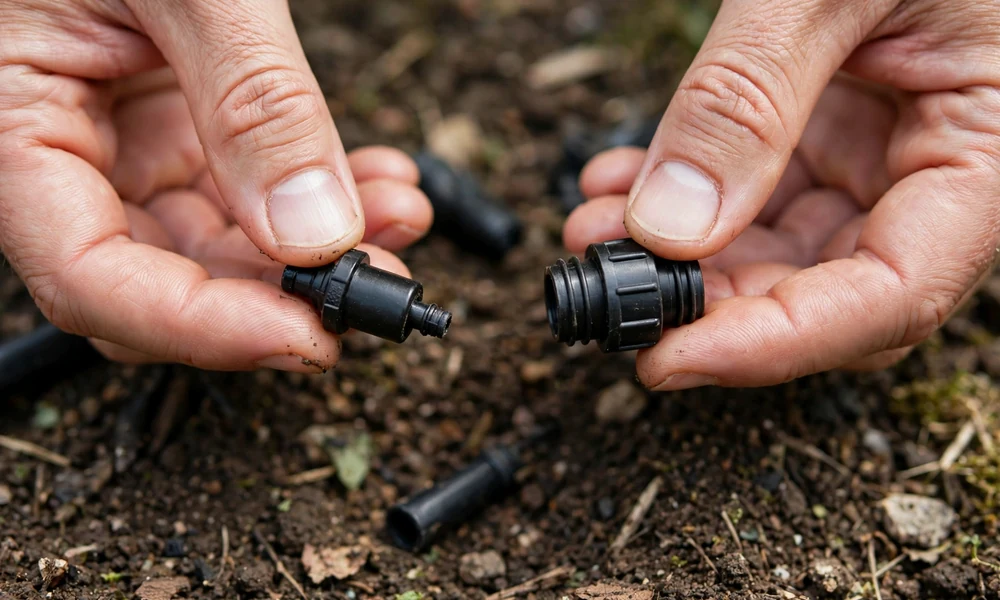
A drip irrigation kit is a set of parts that moves water from a tap to your plants in a controlled, slow trickle. The heart of the system is the tubing, usually black plastic pipe that runs along the ground beside your beds and borders. Small emitters sit in or on the tubing at regular intervals, and each one releases water at a steady, low rate, often just a litre or two per hour. Connectors join lengths of tubing, stakes hold the lines in place, and a filter keeps grit out of the emitters. Many kits also include a timer, so the water turns on and off by itself.
The slow delivery is the whole point. When water arrives drop by drop, it soaks down into the soil instead of running off the surface or pooling in puddles. Roots grow deeper because the moisture reaches further down, and the plants become tougher in dry weather. The surface of the soil stays drier between waterings, which means fewer weeds, because weed seeds on the surface get less water to germinate with. Leaves stay dry too, which matters more than most gardeners realise, because wet leaves are where many common plant diseases start.
A good kit also saves a surprising amount of water. A sprinkler can lose a large share of its water to wind and evaporation, especially on a hot, breezy day, and a hose can flood one spot while leaving the next bed dry. Drip lines put almost all of their water exactly where it is needed, at the base of the plant.
The Main Types of Drip Kit
Emitter kits are the most common kind, and the best choice for most vegetable gardens and flower beds. They use small drippers spaced along the tubing, often every thirty centimetres or so, and each dripper waters one plant or one spot in the bed. Some emitters release a fixed amount of water, while others can be adjusted, so you can give a thirsty tomato more water than a neighbouring herb that prefers drier soil. Emitter kits are flexible, easy to extend, and simple to repair, because a blocked emitter can be swapped in seconds.
Soaker hose kits work differently. Instead of separate emitters, the hose itself is porous, and water seeps out along its whole length. They are simple to lay out, because you just snake the hose through a bed and turn the tap on, and they suit long, straight rows of plants very well. Their weakness is control: you cannot easily give one plant more water than another.
Gravity-fed kits are made for gardens without a mains tap nearby, or for gardeners who collect rainwater. They run from a raised water butt or tank, and the height of the tank creates enough pressure to push water through the lines. They need low-pressure emitters and short runs of tubing, but they are a clever solution for an allotment or a corner of the garden far from the house. Our guide to the best rain barrels of 2026 covers the tanks that pair well with a gravity-fed drip kit, so you can store rainwater and use it slowly through dry weeks.
How to Choose the Right Kit
Start by measuring your garden. Walk your beds and borders with a tape measure, and work out how much tubing you need to reach every plant you want to water. A small patio with a few pots needs a very different kit from a vegetable plot with four long raised beds. Most kits state how many metres of tubing they include and how many plants they cover, and it is worth believing those numbers rather than stretching a small kit across a large garden. A kit that is too small will leave plants at the far end dry.
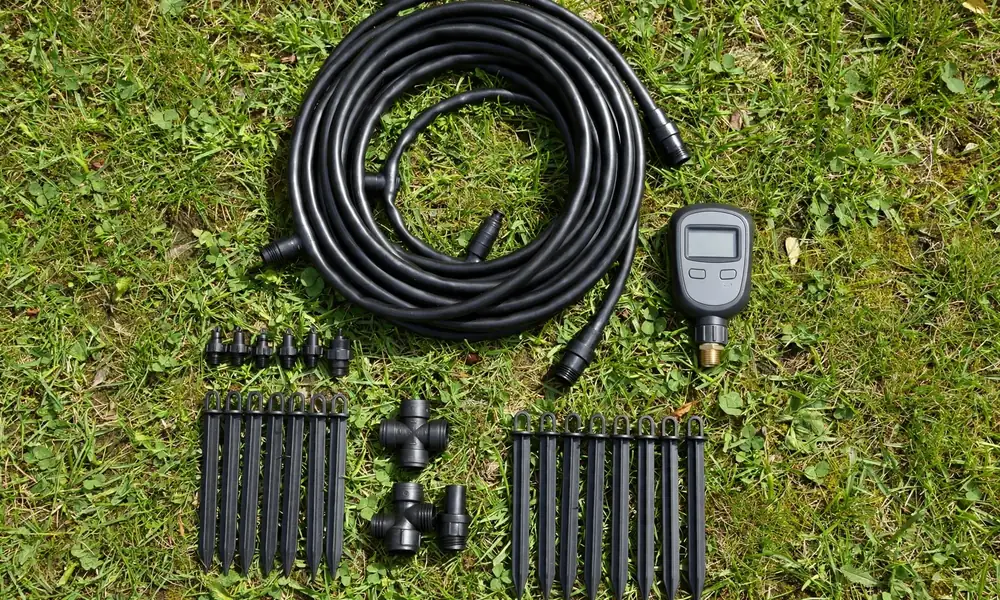
Next, think about your water pressure. A tap-fed kit needs enough pressure to push water to the far end of the lines, but too much pressure can blow fittings off or make emitters spray instead of drip. Many kits include a pressure regulator, which keeps the pressure steady, and if your kit does not include one, it is worth adding one. If your water is hard or full of grit, a filter matters even more, because a single grain of sand can block a tiny emitter.
Consider the timer, because it is the part that decides whether the system actually saves you time. A battery-powered digital timer is best for most people, because it waters at the same time each day, even when you are at work or on holiday, and it can be set to water early in the morning, when evaporation is lowest. Look for clear buttons and a rain-delay setting.
Think about the plants you grow, because different plants want different amounts of water. Tomatoes, cucumbers and courgettes are thirsty, and they do best with two emitters each, or with emitters that release more water per hour. Herbs such as rosemary, thyme and lavender prefer drier soil, and they can suffer if they are watered as often as the vegetables. A kit with adjustable emitters lets you match the water to the plant, instead of giving every plant the same drink whether it wants it or not.
Setting Up a Drip Kit
Setting up a drip kit is a satisfying afternoon job, and it needs no special tools. Start by laying the main tubing along the beds, following the route you planned, and cutting it to length with scissors or a sharp knife. Push the fittings together firmly, and use stakes to pin the tubing to the ground every metre or so, so it does not shift when the soil is watered. Place an emitter beside each plant, close to the stem but not touching it, so the water lands on the soil where the roots spread.
Connect the kit to the tap through the filter and the pressure regulator, then turn the water on slowly and walk the lines. Look for leaks at every joint, and push any loose fitting home firmly. Check that every emitter is dripping, and clear or replace any that stay dry. It is normal for the far end of a long line to start a little later than the near end, but after a few minutes the flow should be steady all the way along.
Run the system for a full watering cycle and check the soil afterwards. Push a finger into the soil a few centimetres from an emitter, and it should feel damp several centimetres down, not just wet on the surface. If the top is wet but the soil below is dry, run the system for longer, or add a second emitter to that plant. If the soil is soggy and water is pooling, shorten the watering time.
Drip Kits for Vegetable Gardens
Vegetable gardens are where drip irrigation earns its keep. Vegetables grow fast, they drink a lot, and they suffer quickly when watering is uneven, with split tomatoes, bitter cucumbers and stunted beans all tracing back to dry spells between waterings. A drip kit keeps the moisture steady, which is exactly what vegetables need, and it leaves the leaves dry, which helps keep blight and mildew at bay. For a vegetable plot, choose an emitter kit with enough tubing to run a line down every row, and place emitters about thirty centimetres apart, so each plant gets its own water supply.
Raised beds suit drip lines particularly well, because the lines sit neatly along the bed and the soil in a raised bed drains faster than ground-level soil, so it benefits from slow, regular watering. If you grow in raised beds, our guide to the best raised garden beds of 2026 looks at beds that hold their shape, keep soil in place, and leave room for drip lines along each row. Measure the beds before you buy a kit, because a kit sized for a small patio will not stretch across four long beds.
When a Sprinkler or a Hose Is Better
Drip is not the answer for every garden job. A lawn needs even coverage over a large area, and a drip line cannot do that, so a sprinkler is the right tool for grass. A new seedbed also needs gentle, even moisture across the whole surface, which a fine sprinkler or a watering can does better than single drips. And for a quick job, such as washing down a patio or watering a single pot, a hose is faster than setting up a drip line.
If you do keep a hose for those jobs, choose one that is easy to handle and does not kink every time you move it, because a kinked hose is the fastest way to lose patience with watering. Our guide to the best garden hoses of 2026 covers hoses that stay flexible, reach across a garden without dragging, and connect cleanly to a tap, so the hose works with your drip kit rather than against it.

Mistakes to Avoid
The most common mistake is watering too little, too often. Short, daily dribbles wet only the top of the soil, and the roots stay shallow, so the plants suffer the moment a hot day arrives. It is better to water deeply and less often, so the moisture reaches down and the roots follow it. The second mistake is forgetting the filter, which leads to blocked emitters and dry plants that look like they are being watered when they are not. The third is laying the lines and then never checking them, because a kink, a leak or a blocked emitter can undo the whole system while the timer keeps running faithfully on schedule.
The Bottom Line
The best drip irrigation kit of 2026 is the one that fits your garden, your water supply and your plants, and that you can set up and forget without worry. For most vegetable gardens, that means an emitter kit with a filter, a pressure regulator and a digital timer. For pots and small patios, a compact container kit will do the job. For a garden far from a tap, a gravity-fed kit from a rainwater tank is the clever answer. Whichever kind you choose, the result is the same: plants that are watered steadily, soil that stays moist where it matters, and a garden that looks after itself while you get on with enjoying it.
The simplest way to choose is to measure your beds, check your water pressure, and pick the kit that covers your plants without stretching. Set it up on a calm afternoon, test it for a week, and adjust the timer until the soil feels damp a few centimetres down after each cycle. Once it is running well, the plants will simply grow on water delivered exactly where they need it.


