Why the Best Camping Lights in 2026 Work as a System, Not a Single Lamp
The best camping lights in 2026 do not come in a single box. One bright lamp is never enough. A lantern lights the table but not the path to the toilet block. A headlamp lights the path but blinds everyone at the table. The campsite needs both, plus something fixed inside the tent, and the trick is choosing lights that work together instead of competing with each other.
This guide treats camp lighting as a system. It compares the five kinds of light worth packing, explains brightness and colour in plain numbers, and sets out a simple plan for a weekend trip, so every corner of camp has the right light at the right time.
Key Takeaways
- Think in zones, not in lamps: cooking, tent, path and table each need a different kind of light.
- A lantern lights the whole camp, a headlamp lights where you look, and a tent light stays fixed where you sleep.
- Warm light around 2700K is kindest after dark and attracts fewer insects than cool white.
- For most tents, 100 to 300 lumens spread across the ceiling is plenty; more only creates glare.
- Plan power like food: one charge or one set of spare batteries per light, per trip, plus a backup.
Camping Lights Are a System, Not a Single Lamp
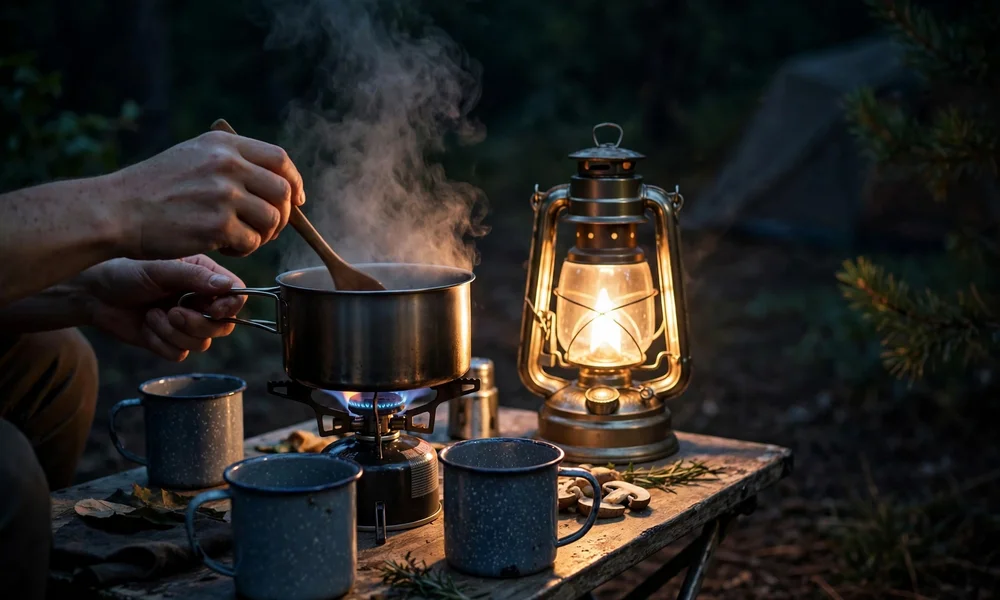
A campsite after dark has four jobs for light, and no single lamp does all four well. The cooking area needs bright, even light so nobody chops a finger or serves undercooked food. The tent needs soft, fixed light for reading and finding things without waking anyone. The path between them needs a moving pool of light that follows your feet. And the table needs warm, low light that lets people see each other without glare. Buy one lamp and you will cover one of those jobs and improvise the rest. Buy a system and the evening runs itself.
The system does not need to be expensive or heavy. Three lights cover almost every trip: a lantern for the table, a headlamp for moving around, and a fixed light inside the tent. A short string of warm lights finishes it.
The Five Types of Camping Light, Compared
Every camping light falls into one of five types. Each has a job it does best and a job it does badly, which is why the comparison matters more than any single brightness number.
| Type | Best job | Brightness | Power | Weight |
|---|---|---|---|---|
| Lantern | Lights the whole camp | 200 to 600 lumens | USB-C or batteries | 300 to 900 g |
| Headlamp | Hands-free light that follows your eyes | 200 to 400 lumens | USB-C or batteries | 50 to 100 g |
| Tent light | Fixed, even light inside the tent | 100 to 300 lumens | USB-C or batteries | 50 to 200 g |
| String lights | Warm glow over the table and tent | 100 to 200 lumens | USB or battery | 80 to 150 g |
| Flashlight | A bright beam for searching and signalling | 300 to 1,000 lumens | USB-C or batteries | 100 to 200 g |
Lanterns: Light for the Whole Camp
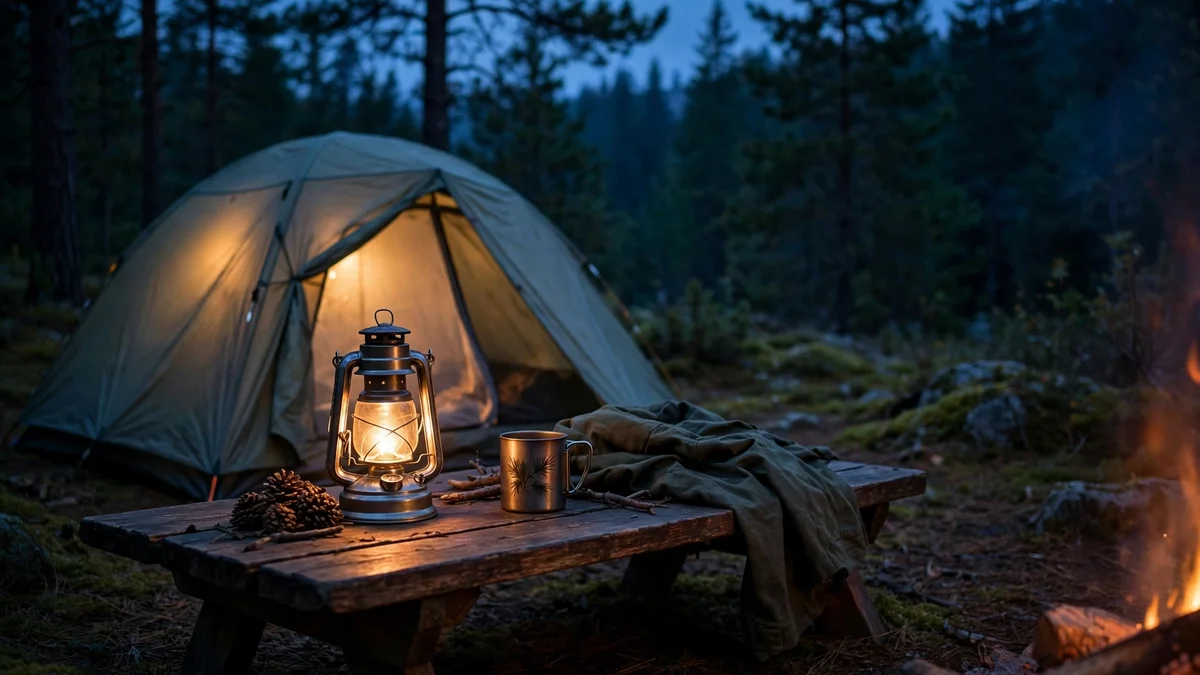
A lantern is the light the camp gathers around. It throws light in every direction, so one lamp on the table lights the cooking area, the card game and the faces around it. The best ones give 250 to 600 lumens, run for a full evening on medium, and offer a warm setting that feels like candlelight without the flame. A rechargeable lantern that charges by USB-C and doubles as a power bank earns its weight twice over. For the full roundup, our guide to the best camping lanterns compares nine lanterns for 2026, from featherweight backpacking models to bright family lanterns.
Hang a lantern inside the tent and it works as a stopgap, but it swings when you move and throws light straight into your eyes. Keep the lantern at the table, where its wide spread is an advantage, and let a fixed light do the tent work.
Headlamps: Light That Follows Your Eyes

A headlamp is the only light that points wherever you look, which makes it the most useful lamp you will own at camp. It lights the path to the toilet block, the inside of a dark rucksack, and the guy ropes you would otherwise trip over, all while both hands stay free for cooking, pitching a tent or carrying a child. For most campers, 200 to 400 lumens, a comfortable strap and at least 20 hours on low is the sweet spot. Our guide to the best headlamps explains how to choose one for hiking, running, camping and work.
A red-light mode is worth having: it preserves your night vision and does not blind the people around you. And a lockout mode matters more than it sounds, since a lamp that switches itself on inside a rucksack arrives flat.
Tent Lights: Light That Stays Put
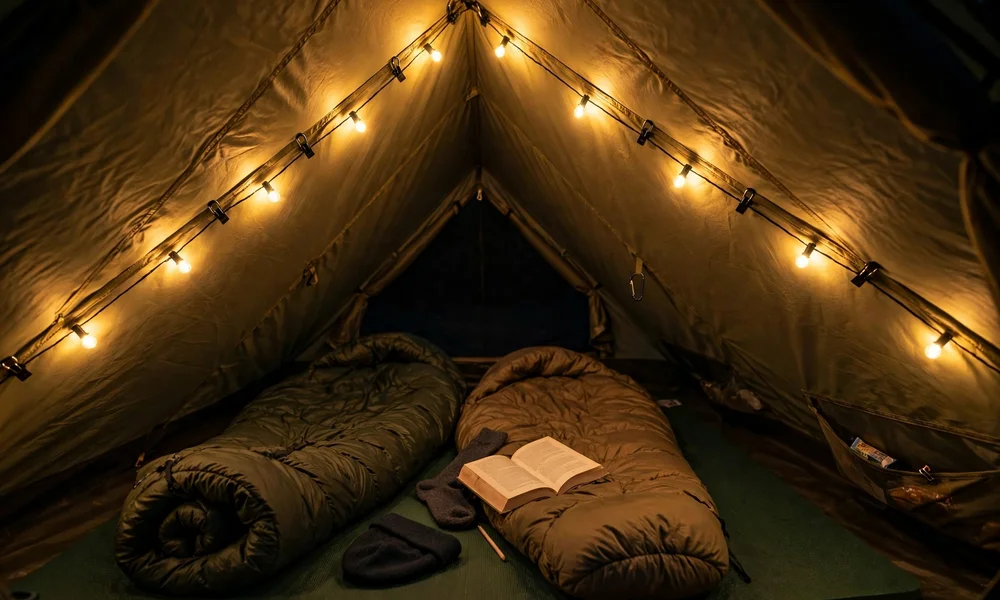
A tent light is any light designed to be fixed inside the tent and left there: string lights clipped along the ceiling, small puck lights on the gear loft, and magnetic strips stuck to the poles. Because it stays put, it spreads light evenly across the whole interior instead of throwing a single bright pool. For most tents, 100 to 300 lumens spread across the ceiling is plenty. Our guide to the best tent lights shows how to light a tent properly, from string lights to clip-on pucks.
Hang lights high and spread them out for an even glow, and keep a dim red mode for late nights. Warm white light around 2700K is the kindest inside a tent, easy on tired eyes and less attractive to insects than cool white.
String Lights, Path Markers and the Finishing Layer
String lights are the finishing layer, not the foundation. A short string draped over the table or around the tent porch gives a warm, scattered glow that makes the whole pitch feel welcoming, and it costs almost nothing in weight. Keep them low and warm. A couple of small marker lights or glow sticks along the path to the toilet block stop the midnight stumble, and a dim light by the tent door means nobody has to feel for the zip in the dark.
Brightness and Colour: The Numbers That Matter
Lumens measure how much light a lamp gives out, and the right number is lower than most people expect. A small two-person tent needs only 100 to 200 lumens spread across the ceiling, while a large family tent might need 300 to 400. More than that bounces off pale tent fabric and creates a harsh glare. At the table, 200 to 600 lumens from a lantern is plenty for cooking and eating. On the trail, 200 to 400 lumens from a headlamp lights the ground clearly. Judge a light by its brightness and runtime on medium and low, the settings you will actually live with.
Colour temperature matters just as much. Warm white light, around 2200K to 3000K, feels like candlelight: soft, relaxing and kind to tired eyes. Cool white, above 4000K, feels like a hospital corridor and attracts far more insects through the mesh door. Choose warm for the tent and the table, and save cool white for searching for something lost in the grass.
Power and Runtime: Planning the Whole Trip
Manufacturers usually quote runtime on the lowest setting, which can mislead, so check the runtime on medium, the setting you will actually use. A lantern that runs for ten hours on medium covers a full evening. A headlamp that runs for days on low is worth more than a bright one that dies on night two. Most lights now charge by USB-C, so one cable charges your phone, your power bank and your lights. A model that also takes standard batteries is safer for long trips.
Pack power like food: one full charge or one set of spare batteries per light, plus a small power bank and one backup light for the whole camp. A lantern that dies on night two is worse than a dimmer one that keeps going, so test every light at home before the trip, on the settings you plan to use.
A Lighting Plan for a Weekend Trip
Friday evening, set the lantern on the table and hang the tent lights before dark, while you can still see the clips and seams. Saturday, the headlamp does the work: it goes on for the walk to the water tap, the cooking, and the late-night trip to the toilet block, while the lantern stays at the table and the string lights stay over the porch. Sunday, pack the lights first, while there is still daylight to find them, and dry any damp lights before they go back in the bag. A light packed away wet grows mould in its seals, and a lantern left on a wet table rusts at the base.
Mistakes That Leave Campers in the Dark
The most common mistake is buying brightness instead of a system: one 1,000-lumen lamp that blinds everyone and dies in two hours. The second is cool white light everywhere, which feels harsh and draws insects. The third is forgetting the backup: a single light with a dead battery ends the evening. The fourth is hanging lights too low, so bare bulbs shine straight into people’s eyes instead of onto the table or the tent floor. The fifth is leaving lights on all night.
Camping Lights Buying Checklist
- Lantern: 250 to 600 lumens, warm setting, 10 hours on medium, USB-C charging.
- Headlamp: 200 to 400 lumens, comfortable strap, red mode, lockout mode.
- Tent light: 100 to 300 lumens, warm white, clips or magnets that fit your tent.
- String lights: warm, battery or USB, with a timer or dimmer.
- Power: one cable, one power bank, spare batteries, and a backup light.
- Test everything at home, on the settings you will actually use.
Frequently Asked Questions
How many lumens do I need for camping?
For most trips, a lantern of 250 to 600 lumens, a headlamp of 200 to 400 lumens, and a tent light of 100 to 300 lumens cover everything. More than that creates glare rather than better light.
Are lanterns or headlamps better for camping?
Neither replaces the other. A lantern lights the whole camp for cooking and eating, while a headlamp lights where you look when you move around. Pack both.
What colour light is best for camping?
Warm white, around 2200K to 3000K, is kindest on tired eyes and attracts fewer insects than cool white. Save cool white for searching.
How long should a camping light last?
Look for at least eight to ten hours on medium for a lantern, and days on low for a headlamp.
Can I use fairy lights while camping?
Yes, for the tent or the table, as long as they are battery or USB powered and warm white. Keep them away from bedding and never leave damaged wires in use.
Do I need a backup light?
Yes. One spare headlamp or small flashlight for the whole camp covers a dead battery or a dropped lantern.
The Bottom Line
The best camping lights in 2026 are not the brightest ones. They are the three lights that work together: a lantern for the table, a headlamp for moving around, and a fixed light inside the tent, with warm string lights to finish. Plan the zones, buy warm, check the runtime on medium, and carry a backup. Get that right and the dark stops being a problem and starts being the best part of the trip.


