
A granola bar is the snack you reach for when you want something quick, portable and at least a little bit wholesome. It fits in a bag, survives a hike, and promises oats, nuts and energy in a neat rectangular package. Yet some granola bars are closer to a biscuit than a breakfast, packed with syrup and sugar and gone in four bites, leaving you hungry again within the hour. The best granola bars in 2026 are the ones that actually fill you up, and the difference between a bar that works and one that does not comes down to a handful of things you can check before you buy.
Key Takeaways
- A filling granola bar has at least 5 grams of protein and 3 grams of fibre, with sugar under 8 grams per bar.
- Oats and nuts should head the ingredient list; if syrup or sugar appears in the first three ingredients, the bar is mostly sweetener.
- Chewy bars suit hiking and lunchboxes because they hold together, while crunchy bars suit snacking at a desk or with a hot drink.
- Protein bars and granola bars overlap, but a true granola bar is built on oats, not on protein powder and sweetener.
- Check the bar’s weight as well as its numbers: a 25 gram bar cannot fill you the way a 45 gram bar can.
What Actually Makes a Granola Bar Filling?
Feeling full after a snack is not about calories alone. A 200 calorie bar of pure sugar will leave you hungry in twenty minutes, while a 200 calorie bar built on oats, nuts and protein can carry you for two hours. The difference is how slowly your body breaks the bar down, and that comes down to three nutrients: protein, fibre and fat. Protein is the most satiating of the three, fibre slows everything down, and the healthy fats in nuts stretch the feeling of fullness further.
Oats are the quiet hero of a good granola bar. Rolled oats bring beta-glucan, a soluble fibre that forms a gentle gel in the stomach and slows digestion, which is why a bowl of porridge keeps you full far longer than a bowl of sugary cereal. A bar that lists oats first and contains a visible amount of whole rolled oats will behave very differently from one where oats are a minor ingredient behind rice crisps and syrup.
Protein vs Sugar: The Numbers That Matter
The single most useful comparison on a granola bar label is protein against sugar. Protein keeps you full; sugar gives a quick lift and then a crash. A bar with 8 grams of protein and 5 grams of sugar is built to sustain you, which is why the boundary between granola bars and protein bars is thinner than the packaging suggests. A bar with 2 grams of protein and 14 grams of sugar is a sweet snack wearing a health halo, and it will behave like one.
Sugar is where most granola bars go wrong. The label may say honey, maple syrup, brown rice syrup, agave or fruit juice concentrate, but your body treats them all as sugar. A little sweetness is fine, and a small amount of syrup helps the oats bind and toast, but when two or three sweeteners appear in the first five ingredients, the bar is built around sugar rather than oats and nuts. Keep sugar under 8 grams per bar where you can, and compare bars by sugar per 100 grams when serving sizes differ.
Chewy vs Crunchy: Which Texture Suits You?
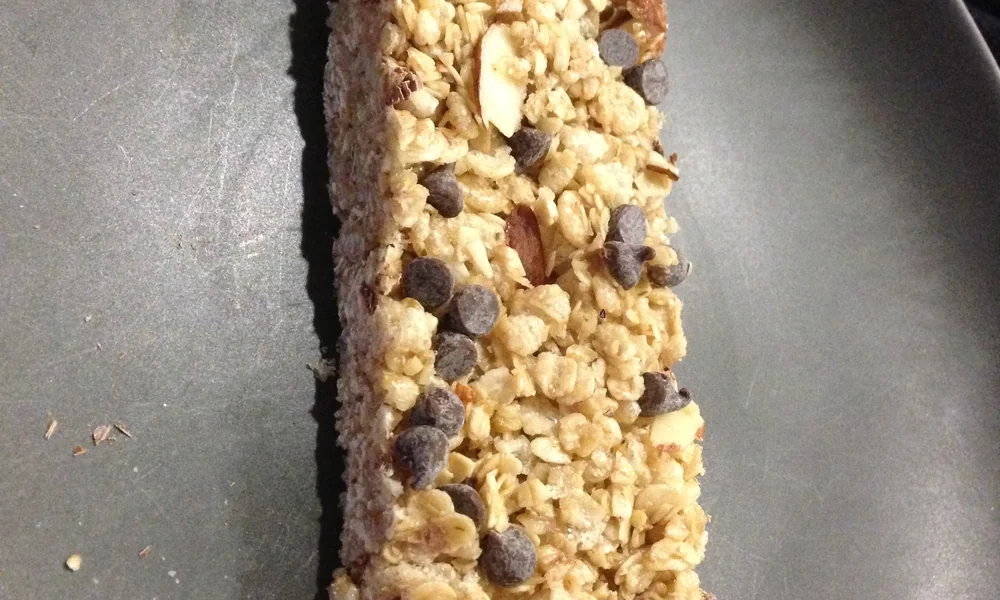
Granola bars come in two broad textures, and the choice matters more than most people realise. Chewy bars are bound with syrup or honey and pressed together, so they bend rather than snap. Crunchy bars are baked until crisp, so they break with a snap and scatter crumbs. Neither is automatically better, but they suit different moments.
Chewy bars are the practical choice for carrying around. They hold together in a bag, survive being sat on, and can be eaten one-handed on a walk without leaving a trail of crumbs. For hiking, cycling and lunchboxes, chewy is almost always the better bet, and it is no accident that most bars sold for outdoor use are chewy.
Crunchy bars suit slower moments. They are satisfying with a cup of tea or coffee, they feel lighter, and the crisp texture makes a small bar feel like more of a treat. The downside is fragility: a crunchy bar in a bag often arrives as crumbs, and eating one on the move is a messy business. Crunchy bars also tend to be drier, so keep a drink nearby.
Granola Bars Compared
| Bar type | Best for | Typical protein | Typical sugar | Watch out for |
|---|---|---|---|---|
| Nut and oat bars | Everyday snacking, staying full | 5–10 g | 4–8 g | Peanut-heavy blends with little else |
| High-protein bars | After exercise, meal replacement | 12–20 g | 3–8 g | Artificial sweeteners, chalky texture |
| Chewy fruit bars | Hiking, lunchboxes, children | 2–5 g | 8–14 g | Dried fruit pushing sugar up |
| Crunchy oat bars | Desk snacking, with a hot drink | 3–6 g | 6–10 g | Mostly puffed rice, few nuts |
Nuts, Oats and the Ingredients That Matter
Nut variety matters. Almonds bring crunch and vitamin E, cashews bring a buttery softness, peanuts bring affordable protein, and walnuts bring omega-3 fats. A bar with two or three different nuts is usually more interesting and more nutritious than one built on a single cheap nut. Watch for bars where peanuts dominate the list while almonds and cashews appear only as flavouring on the front of the packet.
Dried fruit adds sweetness and chew, but it is also concentrated sugar. Raisins, cranberries and dates are common, and a small amount is fine, but a bar studded with sweetened cranberries and date paste can carry as much sugar as a chocolate bar. Unsweetened dried fruit is better, and fruit should support the oats and nuts rather than replace them. Chocolate chips follow the same rule: a few dark chocolate chips add pleasure, but a chocolate coating turns a snack into a confection.

How to Read a Granola Bar Label in Thirty Seconds
Start with the weight of the bar, printed near the nutrition panel. A 40 to 50 gram bar is a proper snack; a 25 gram bar is a bite. Then look at protein, fibre and sugar in that order. You want protein of 5 grams or more, fibre of 3 grams or more, and sugar under 8 grams. If all three check out, the bar is probably worth eating.
Next, read the first five ingredients. Oats should be first, followed by nuts, seeds or dried fruit. Count the sweeteners: honey, syrup, sugar, agave and fruit juice concentrate all count, and more than one in the top five is a warning sign. Then check the allergen note, especially if you are buying for children or for a shared lunchbox, since most granola bars contain nuts and many are made in factories that handle peanuts, gluten and milk.
Finally, look at the price per bar rather than the price per box. Multipacks look cheap until you divide by the number of bars, and single bars at a till can cost twice as much as the same bar bought in a box. Buying a box of a bar you already like is almost always the cheapest way to keep a good snack in the cupboard.

Granola Bars vs Other Portable Snacks
Granola bars compete with a crowded shelf of portable snacks, and it helps to know where they stand. Against trail mix, a granola bar wins on tidiness and portion control, since a bag of trail mix is easy to eat by the handful without noticing. Trail mix wins on ingredient transparency, because you can see exactly what is in it, and on freshness, since nuts kept whole stay fresh longer than nuts ground into a bar.
Against loose granola, the bar wins on portability and loses on flexibility. Granola in a bowl with milk or yoghurt is a better breakfast, because you control the portion and add fresh fruit, while a bar is a snack designed to be eaten as it comes. The two are cousins rather than rivals, and the same label rules apply to both: oats and nuts first, sugar kept in check, short ingredient list.
Checklist: Choosing a Granola Bar
- Protein of 5 grams or more per bar, and 8 grams or more if it is a meal or hike snack.
- Sugar under 8 grams per bar, with no more than one sweetener in the first five ingredients.
- Fibre of at least 3 grams per bar, from oats, nuts and seeds rather than added fibre.
- Oats listed first, followed by nuts, seeds or dried fruit, with a short, recognisable ingredient list.
- Bar weight of 40 grams or more for a proper snack, and chewy texture if it has to survive a bag.
- A flavour you actually enjoy, at a price per bar that makes sense bought by the box.
Frequently Asked Questions
Are granola bars healthy?
Some are, and some are not. A bar built on oats and nuts with 5 grams of protein, 3 grams of fibre and under 8 grams of sugar is a genuinely good snack. A bar built on syrup with 2 grams of protein and 14 grams of sugar is closer to a biscuit. Read the label rather than trusting the picture on the packet, and the answer becomes obvious.
How many granola bars can I eat a day?
One bar a day is a sensible snack for most people, and two is fine on an active day, for example one before a long walk and one after. Granola bars are calorie dense, usually 180 to 250 calories each, so eating several a day on top of normal meals can add up quickly. Treat them as a snack or a light meal, not as a free extra.
Are granola bars good for weight loss?
They can help, because a filling bar stops you reaching for a second snack, but only if you choose a high-protein, high-fibre bar and count it as part of your day. A sugary bar is more likely to leave you hungry and reaching for something else within the hour. Portion size matters too: one proper bar beats two small sweet ones.
What is the difference between a granola bar and a protein bar?
A granola bar is built on oats and nuts, with protein coming mainly from those ingredients, while a protein bar is built around added protein powder and usually contains 12 grams of protein or more. The two overlap, and many bars sit in between. If oats head the ingredient list, it is a granola bar; if protein powder does, it is a protein bar.
Are granola bars good for children?
They can be a useful lunchbox snack, but check the sugar and the school’s nut policy first. Choose a bar with moderate sugar, real oats and a flavour your child likes, and keep the portion to one bar. Seed-based bars are the usual choice for nut-free schools, and a bar should never replace a proper lunch.
Do granola bars go off?
They keep well, usually for several months in a cool, dry cupboard, because the sugar and low moisture preserve them. Once a bar tastes stale, soft when it should be crisp, or rancid and paint-like, throw it away. Nuts go off before oats do, so a bar past its date with a bitter taste has stale nuts, and no amount of hunger makes it worth eating.
The Bottom Line
The best granola bars in 2026 are the ones that treat oats and nuts as the main event and sugar as a supporting player. Look for 5 grams of protein, 3 grams of fibre and under 8 grams of sugar, choose chewy for the bag and crunchy for the desk, and buy a box of a bar you genuinely enjoy.


