Best Squeegees for Streak-Free Windows in 2026
The best squeegees for streak-free windows in 2026 do one simple job better than any cloth, spray or paper towel ever will: they pull dirty water off the glass in a single clean pass and leave nothing behind. The difference shows the moment the sun hits the pane, because streaks are not dirt you missed, they are water you left behind.
Most people blame the cleaner when their windows dry cloudy, or they blame the glass. Nine times out of ten the real culprit is the tool: a cloth pushes water around and absorbs only part of it, and the part it leaves behind dries into the smears you were trying to remove. A squeegee blade, wiped dry between strokes, takes the water off completely.
Key Takeaways
- A squeegee beats a cloth because it removes the water instead of spreading it, and streaks are mostly water left to dry.
- Rubber quality matters more than the handle: a soft, sharp, undamaged blade is what makes the finish streak-free.
- Match the channel width to the pane: a 12-inch squeegee suits most home windows, while very large panes need 14 to 18 inches.
- Wipe the blade dry after every stroke and work top to bottom in overlapping passes, keeping a dry edge at all times.
- Clean in the shade or on a cloudy day, because sun dries the soapy water before the blade reaches it and causes the streaks you are trying to avoid.
Why a Squeegee Changes Window Cleaning Completely
Window cleaning has two stages and only one of them gets any attention. The first stage is loosening the dirt, which is what sprays and soapy water do, and the second stage is removing the dirty water, which is where most cleaning fails. A cloth tries to do both jobs at once and gets worse at both as it gets wetter. A squeegee separates the jobs: the washer loosens the dirt, the squeegee removes the water, and a dry cloth finishes the edges.
The other advantage is speed. A large window that takes ten minutes of careful cloth wiping takes two minutes with a squeegee, and the result is better, not worse. That matters because window cleaning is a job people put off, and a job that takes twenty minutes gets done every month while a job that takes an hour gets done twice a year.
The Squeegee Types Worth Knowing
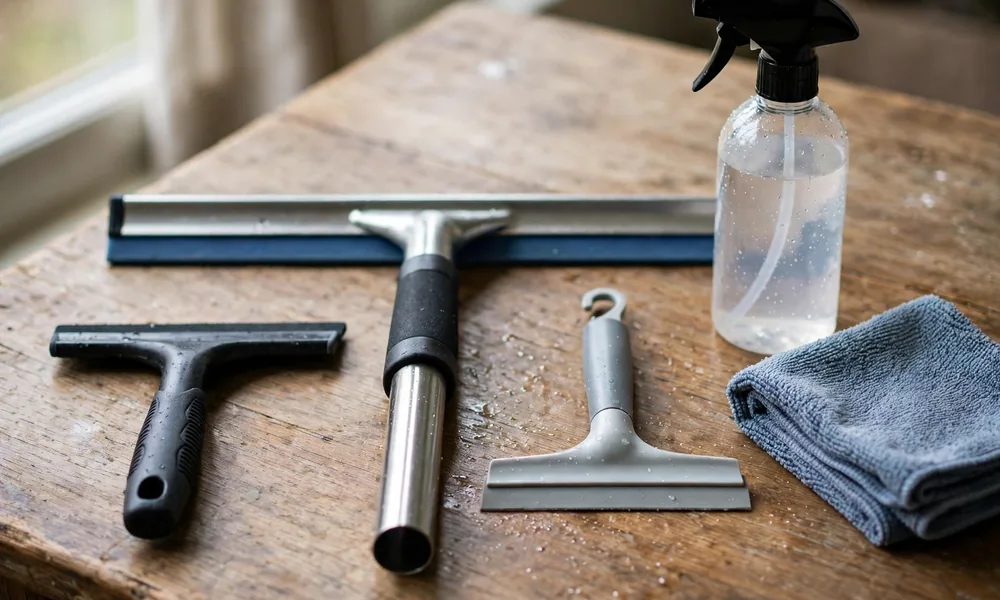
Every squeegee is a variation on the same idea, a rubber blade held in a metal or plastic channel with a handle, but the variations matter more than they look. The blade does the work, the channel holds it straight, and the handle decides whether you can reach the glass comfortably.
Handheld squeegees for everyday windows
The classic handheld squeegee is the right starting point for most homes. It is a short handle with a channel of ten to fourteen inches, light enough to use one-handed and small enough to store in a cupboard. The best ones have a brass or stainless steel channel that holds the rubber dead straight, because a channel that flexes lets the blade skip and leaves lines. If you clean your windows once a month or more, this is the squeegee to own first.
Professional channel squeegees for large panes
Wide channel squeegees, from fourteen to eighteen inches, are built for big panes: patio doors, picture windows, conservatory glass and shopfronts. The wider the blade, the fewer strokes a pane needs, and fewer strokes mean fewer chances to leave a line. The trade-off is control. A wide blade is harder to keep flat on a narrow pane, so for a house full of standard windows it is a second tool, not a first.
Shower squeegees for daily use
A shower squeegee is a smaller, lighter tool with a suction hook or a stand, and it earns its keep in a completely different way. Used for thirty seconds after every shower, it stops limescale and soap scum from building up on the glass, which means the deep clean that takes an hour becomes a quick wipe that takes five minutes. The blade is usually silicone rather than natural rubber, which suits the constant damp. It is the cheapest squeegee you will buy and the one that saves the most cleaning time over a year.
Extension-pole squeegees for high windows
High windows are where most people give up and hire someone, but a squeegee on an extension pole changes the calculation. A lightweight telescopic pole of three to six metres lets you clean first-floor windows from the ground, and the squeegee head pivots so the blade stays flat against the glass. The technique is harder than handheld work, because you cannot feel the pressure through a long pole, so start with light pressure and let the blade do the work.
Squeegees Compared
| Squeegee type | Best for | Watch out for | Price in 2026 |
|---|---|---|---|
| Handheld, 12-inch | Most home windows | Cheap channels that flex | Low to mid |
| Wide channel, 14–18-inch | Patio doors, large panes | Hard to control on narrow panes | Mid |
| Shower squeegee | Daily shower screens | Silicone blades wear faster | Low |
| Extension-pole squeegee | High and hard-to-reach windows | Pressure is hard to judge | Mid to high |
| Two-in-one washer-squeegee | Quick whole-window cleans | Washer sleeve needs washing | Mid |
What Makes a Blade Streak-Free
The rubber is the whole secret, and it is the part most buyers ignore. A good blade is soft enough to follow the tiny curves of the glass and sharp enough to cut the water cleanly, and it stays that way because the rubber is a single clean edge with no nicks, chips or curls. Run your fingertip along the edge before each clean: if you feel a nick, that nick will draw a line of water down every pane until the blade is replaced or reversed.
Natural rubber is the professional choice because it is soft and grippy, but it wears faster and needs replacing every few months. Synthetic and silicone blades last longer, but they can be slightly harder on imperfect glass. Either can give a streak-free finish: replace the blade the moment it stops performing, and keep a spare in the cupboard.
How to Squeegee a Window Without Streaks
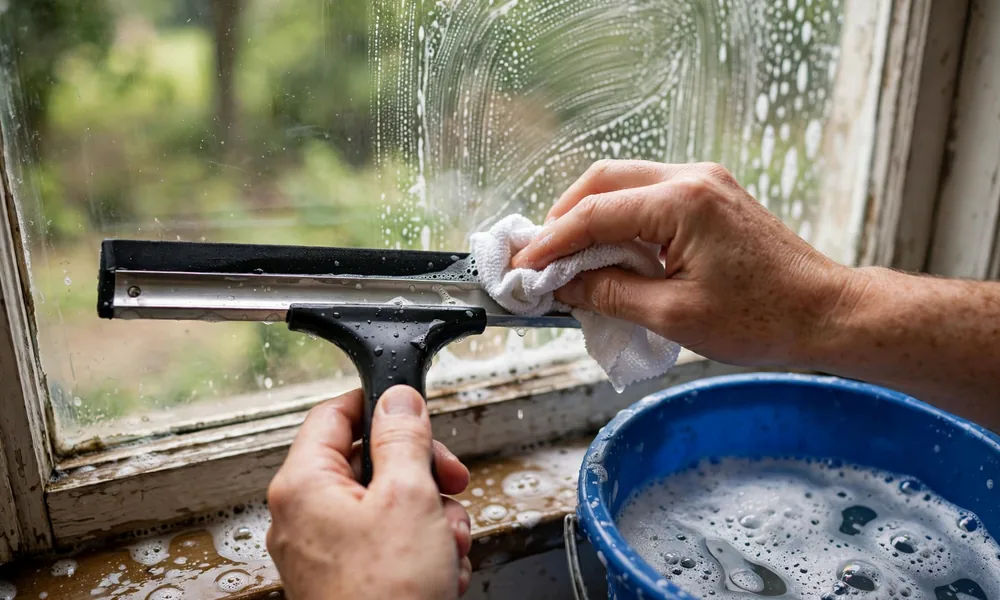
Technique matters as much as the tool, and it is a skill you learn in one afternoon. Wash the glass with a sponge or washer sleeve in warm water with a drop of washing-up liquid, working the whole pane including the edges. Then start at the top corner, pull down in a straight line, and wipe the blade dry after every stroke. Overlap each stroke by a couple of centimetres, and finish by wiping the edges and sill with a dry cloth.
The two mistakes that cause almost every streak are easy to avoid once you know them. The first is a wet blade: a blade that still carries water from the last stroke deposits that water as a line, so dry it every time, without exception. The second is cleaning in direct sun, because the soapy water dries on the glass before the blade reaches it, and dried soap is a streak that needs a second clean to remove.
Matching the Squeegee to the Job
Small windows, mirrors and car windscreens suit a short squeegee of eight to ten inches, because a long blade cannot turn in a small space. Standard home windows suit the twelve-inch handheld. Patio doors and conservatories suit a fourteen or eighteen-inch channel, or a pole squeegee if the glass is high.
The rest of the cleaning kit matters too, because a squeegee is only one part of a streak-free finish. The washer sleeve does the loosening, the bucket holds the soapy water, and a clean dry cloth finishes the edges and catches drips. A dirty cloth spreads the dirt the squeegee just removed, so it deserves the same care as the blade. Our guide to the best microfibre cloths for cleaning without chemicals in 2026 covers the cloths that finish the job properly, and the best vs worst glass cleaners of 2026 explains which sprays help and which ones leave a film. A cleaning caddy that carries everything in one trip in 2026 means the squeegee, cloths and spray all arrive at the window together.
The Mistakes That Leave Streaks Behind
The first mistake is pressing too hard. A squeegee works on a light, even touch, and pressing hard bends the blade and leaves a band of water behind. The second mistake is skipping the blade wipe, the single most common cause of streaks. It feels like a waste of time to dry the blade after every stroke, but each undried stroke draws a line, and removing those lines takes longer than the wiping ever would.
The third mistake is using too much soap: a few drops in a bucket of warm water is enough, while a generous squirt leaves a soapy film that dries cloudy. The fourth is storing the squeegee blade-down in a bucket or drawer, which bends and nicks the edge. Hang it blade-up or lay it flat, out of the sun, and replace the rubber at the first sign of wear.

Your Squeegee Checklist
- Measure your widest panes first, then choose a channel width that fits them with room to turn at the edges.
- Check the blade edge with your fingertip before every clean, and replace the rubber at the first nick or curl.
- Wipe the blade dry after every stroke, and keep a clean dry cloth in your other hand for the edges.
- Use only a few drops of soap in warm water, and clean in the shade or on a cloudy day.
- Work top to bottom in overlapping straight passes, and check the pane from an angle in bright light.
- Store the squeegee blade-up or flat, out of the sun, with a spare blade in the cupboard.
Frequently Asked Questions
What size squeegee is best for home windows?
A 12-inch squeegee suits most standard home windows. Use an 8 to 10-inch blade for small panes, mirrors and cars, and a 14 to 18-inch channel for patio doors and very large panes.
Why does my squeegee leave streaks?
Almost always the blade: a nick, a curl or a worn edge draws a line of water down the pane, or the blade was not wiped dry between strokes. Check the edge, replace damaged rubber, dry the blade after every stroke, and avoid cleaning in direct sun.
How often should I replace a squeegee blade?
With monthly home use, a natural rubber blade lasts about three to six months, while silicone lasts longer. Replace it the moment it leaves lines, feels hard, or shows nicks.
Do I still need glass cleaner if I use a squeegee?
For most windows, warm water with a few drops of washing-up liquid is enough, and the squeegee does the finishing. Glass cleaner helps on greasy panes, such as kitchen windows, but use it sparingly, because too much leaves a film.
Can I use a window squeegee on a shower screen?
Yes, and a quick squeegee after every shower is the best way to stop limescale building up. A small silicone shower squeegee kept in the bathroom is easier for daily use than a full-size window squeegee.
Is a squeegee better than a microfibre cloth for windows?
For removing water, yes: a squeegee takes the water off the glass completely, while a cloth absorbs only part of it and spreads the rest. The two work best together, with the squeegee doing the main pass and a clean dry cloth finishing the edges.
The Bottom Line
The best squeegees for streak-free windows in 2026 are not the most expensive ones. They are the ones with a straight channel, a soft sharp blade, and a size that fits the panes you actually clean. Buy a good twelve-inch handheld squeegee, keep a spare blade in the cupboard, wipe the blade dry after every stroke, and clean out of direct sun.