
A mop decides whether your hard floors look freshly cleaned or faintly grubby, and the difference shows up the moment the light hits them. The mops that clean floors without the streaks in 2026 are not the most expensive ones on the shelf. They are the ones with a flat, dense pad that stays in contact with the floor, a wringer that leaves the head damp rather than dripping, and a handle long enough to work without stooping.
Most mops fail in the same quiet way. The head holds too much water, so it leaves puddles that dry into streaks. The pad is too thin, so it pushes dirty water around instead of lifting it. This guide explains which wet mops leave floors streak-free, how to match one to your floors, and how to use it so the clean actually lasts.
Key Takeaways
- Dampness decides the finish: a mop wrung until it is barely damp leaves floors streak-free, while a soggy mop leaves puddles that dry into grey trails.
- A thick microfibre pad matters more than the handle, because dense fibres trap dirt and grease instead of pushing dirty water across the floor.
- Flat mops suit most homes, spin mops suit large tiled areas, and string mops suit rough floors and heavy spills.
- Sweep or vacuum first, always: a mop cannot pick up crumbs and pet hair, so loose dirt must be gone before the wet work starts.
- Rinse the pad often and change the water when it turns grey, because mopping with dirty water is what puts the streaks back.
Why Most Mops Leave Streaks
A streak is dried dirty water. When a mop head carries more water than the floor can absorb, the excess pools in low spots, along grout lines and at the edges of the room. As it dries, the dirt suspended in that water settles back onto the surface in thin grey lines. The fault is not the floor. It is the amount of water left behind. A second rinse in clean water, followed by a pass with the wrung-out pad, is usually enough to lift what the first pass loosened.
The second cause is a dirty pad. A microfibre pad can only hold so much grime before it starts giving it back. After a few passes across a grubby kitchen floor, the pad is full of grease and dust, and every further stroke spreads a thin film of it. The rinse water needs changing, and the pad needs wringing until it feels damp, not wet, before it goes back on the floor.
The third cause is the wrong cleaner. Too much floor soap leaves a sticky residue that attracts dust and shows every footprint. A capful in a full bucket is usually enough, and plain warm water is often better on sealed wood and laminate, where soap film is the main source of streaks.
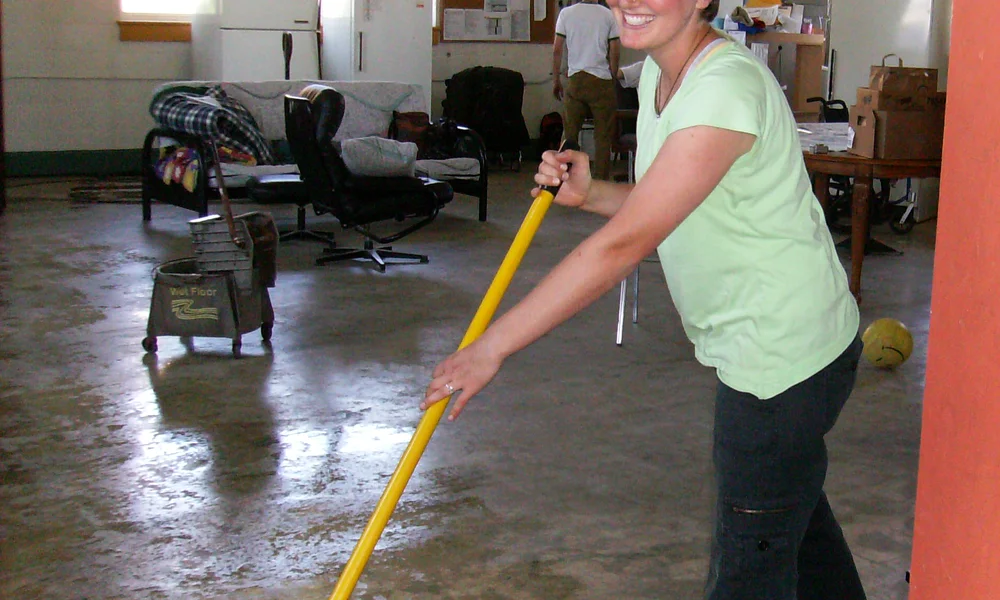
The Main Types of Wet Mop
Every wet mop does the same job, but the head shape and the wringing method change how well it does it. The right type depends on your floors, the size of the rooms, and how much bending you are willing to do.
Flat Mops
A flat mop has a rectangular head with a washable microfibre pad that clips or slides on. It is the best all-round choice for tiles, sealed wood and laminate, because the whole pad stays flat against the floor through every stroke. The wide head covers ground quickly, it slides under low furniture, and the pad comes off for the washing machine. A spare pad in the cupboard means the mop is always ready, even when the first pad is still in the wash.
Spin Mops
A spin mop pairs a round microfibre head with a bucket that spins the head dry. You pump the handle or press a foot pedal, the basket whirls, and centrifugal force throws the water out. It is the best choice for large tiled areas, because you can wring the head nearly dry without touching it, and the floor dries in minutes.
String Mops
A string mop is the old-fashioned bundle of cotton or synthetic strands on a stick, wrung by hand or in a wringer bucket. It holds more water than any other mop, which makes it the best choice for rough floors, quarry tiles and heavy spills, where a flat pad would snag or dry out. The downside is control: a string head is hard to wring evenly, so it leaves more water behind and needs a second pass with a dry pad on smooth floors.
Sponge Mops
A sponge mop has a rectangular sponge head and a lever that squeezes it dry. It picks up spills fast and works well on smooth vinyl and small bathrooms, where its narrow head fits between the toilet and the bath. The sponge wears out faster than a microfibre pad, though, and a torn sponge leaves bits behind.
Steam Mops and the Rest
Powered mops sit outside this guide. A steam mop heats water into steam and suits sealed tiles and stone, but steam and unsealed wood do not mix, and a steam mop needs power and heat-up time. Judge a wet mop on its own terms: pad, wringer and reach.
The Best Mops of 2026 at a Glance
Use these picks to narrow your choice, then check the table to compare them side by side.
Best Overall: A Wide Flat Mop with Thick Pads
For most homes, the best mop is a wide flat mop with a swivelling head and at least two thick washable microfibre pads in the box. It cleans tiles and sealed wood equally well, it reaches under sofas and into corners, and the spare pad means one can be in the wash while the other is in use.
Best for Large Tiled Floors: A Spin Mop and Bucket Set
If your home is mostly tile, a spin mop earns its keep. The spinning basket wrings the round head drier than any hand wringer, so big tiled floors dry streak-free in minutes rather than half an hour. A stainless steel basket lasts longer than a plastic one and spins more smoothly.
Best for Wood and Laminate: A Flat Mop with a Fine Pad
Wood and laminate want the least water of any floor, so the best mop for them is a flat mop with a fine, dense pad and a wringer that leaves it barely damp. The pad should glide rather than drag, and the head should be light enough to lift easily at the end of each stroke. A barely damp pad lifts dust and dried spills without letting moisture into the seams.
Best Budget: A Simple String Mop with a Wringer Bucket
The cheapest good mop is still a string mop with a basic wringer bucket. It costs little, it holds up to rough use, and the wringer does the hard work of squeezing the head dry. It is the right buy for garages, porches and utility rooms, and for anyone who mops a floor that gets properly dirty.
Best for Small Homes: A Compact Flat Mop
A small flat or a flat mop with a short handle suits flats and small kitchens, where a spin bucket has nowhere to live. The head should still be wide enough to cover ground, around thirty centimetres, and the pad should still come off for washing.
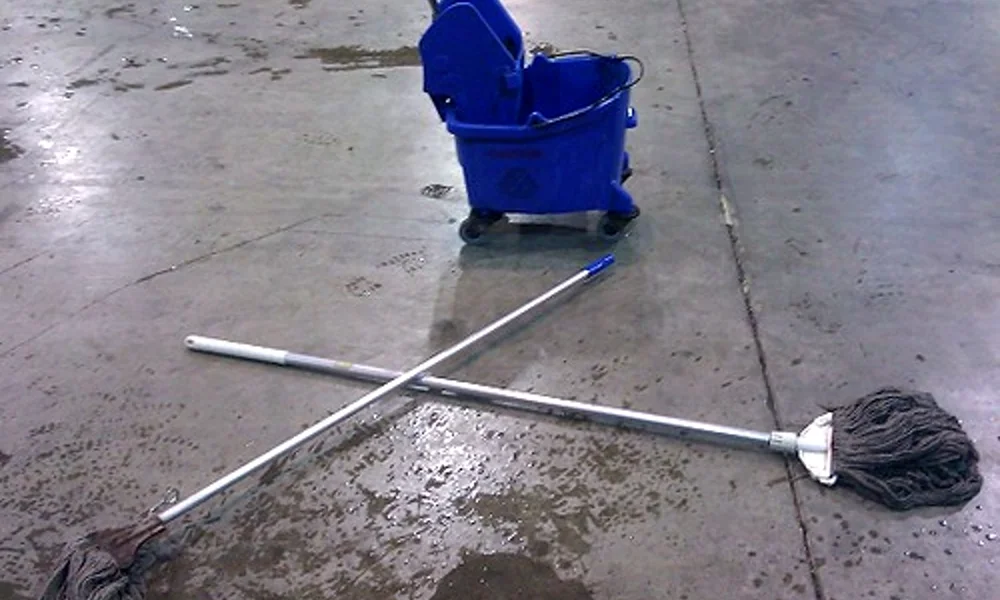
Mops Compared
Use this table to narrow your choice, then read on to see which type suits your floors.
| Pick | Best For | Wringing | Typical Price |
|---|---|---|---|
| Best overall flat mop | Mixed hard floors, family homes | Hand or lever wringer | $25–$50 |
| Best spin mop | Large tiled areas | Spin basket | $40–$80 |
| Best for wood | Sealed wood, laminate | Lever, barely damp | $30–$55 |
| Best budget string mop | Rough floors, heavy spills | Wringer bucket | $15–$30 |
| Best compact | Flats, small kitchens | Hand wring | $20–$40 |
What to Avoid
A mop that cannot be wrung dry is the worst buy of all, whatever the price. If the head stays sodden after wringing, the floor will stay wet, the streaks will follow, and the room will take half an hour to dry.
Thin, single-use pads are the second trap. They feel cheap and they clean cheaply, sliding over dirt instead of lifting it, and they cost more over a year than two washable pads.
Finally, do not mop a dirty floor. A mop is a wet-cleaning tool, not a sweeper, and pushing it across crumbs, pet hair and grit just grinds the grit into the floor and fills the pad in seconds. Sweep first with a broom, or vacuum, and the mop will do the job it was made for. The same rule applies after sweeping: use a dustpan that actually picks up the pile, or the dirt you swept up ends up back on the floor the moment you start mopping.
Buying Checklist
- Check the wringer first: the head should come out damp, not dripping, after one wring.
- Feel the pad: thick, dense microfibre lifts dirt, while thin pads only push water around.
- Match the head to the floor: flat for smooth floors, string for rough tiles, fine pad for wood.
- Measure the handle: it should reach your chin so you can mop standing upright.
- Count the spare pads: two washable pads in the box beat one, because one is always in the wash.
- Check storage: the mop should stand upright or hang on a hook, with the head off the floor.
Frequently Asked Questions
How often should I mop hard floors?
High-traffic kitchens and hallways need mopping once or twice a week, while bedrooms and little-used rooms manage with once a fortnight.
Why does my floor look streaky after mopping?
Streaks come from dirty water drying on the floor, so the fix is a drier mop head, cleaner rinse water, and less detergent. Wring the head until it is barely damp, change the water when it turns grey, and use a capful of cleaner at most.
Can I use a mop on laminate flooring?
Yes, but only a barely damp flat mop, because laminate swells when water gets into the seams. Never pour water on a laminate floor, never use a steam mop on it, and dry any standing water straight away.
How do I wash mop pads?
Machine-wash microfibre pads at forty degrees without fabric softener, because softener coats the fibres and stops them trapping dirt. Air-dry them rather than tumble-drying, and replace a pad when it goes flat, thin or smelly, usually after a few months of weekly use. Hang the head to dry between uses, because a damp head left in a dark bucket starts to smell within a day.
Is a spin mop better than a flat mop?
A spin mop wrings drier and suits large tiled floors, while a flat mop is lighter, stores smaller and suits mixed floors and wood.
Do I need floor cleaner, or is water enough?
Warm water alone lifts most everyday dirt, and it leaves no residue behind, which is why it gives the most streak-free finish.
The Bottom Line
The best mop is the one that leaves your floors dry and streak-free with the least fuss, and for most homes that is a wide flat mop with thick washable pads and a wringer that works. Sweep first, wring the head until it is barely damp, change grey water, and use less soap than you think. Do that, and the floor will dry clean, with no grey trails waiting in the morning light.


