
The corners are where a broom earns its keep. Crumbs drift there, dust settles along the skirting board, and pet hair gathers where two walls meet. The brooms that actually sweep the corners in 2026 are the ones with an angled head and dense, flagged bristles that stay in contact with the floor right up to the edge, instead of skipping over the dirt and flicking it sideways.
Most brooms fail in the same place: bristles too soft, too sparse, or cut straight across, so the middle works and the edges do nothing, and the dirt ends up in a thin line along the wall. This guide explains which shapes reach corners, which bristles trap fine dust, and how to match a broom to your floors.
Key Takeaways
- An angled head matters most for corners: one side of the bristles is longer, so it reaches into the angle where a straight head cannot.
- Flagged synthetic bristles trap fine dust on smooth floors, while stiff natural bristles bite into rough concrete and outdoor surfaces.
- Bristles must stay dense and straight: soft, splayed bristles scatter dirt sideways and leave a line along the skirting board.
- Match the broom to the floor: a light indoor broom for wood and tile, a heavy push broom for garages and patios.
- Store a broom hanging up or bristle-up, never leaning on its bristles, or the tips bend and it will never sweep a corner clean again.
Why Corners Defeat Most Brooms
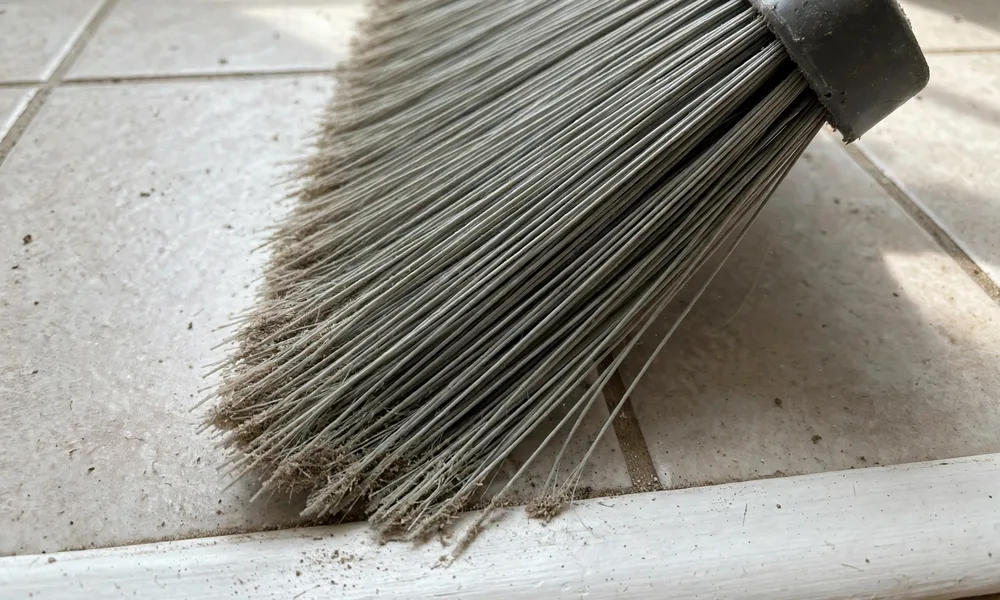
A corner is a small geometry problem. A straight broom head meets the angle so only a few bristles touch the wall at a time; push it in and the bristles fold, splay, or skate, and the dust stays put. The broom looks as though it is sweeping, but the corner is untouched.
An angled head cuts the bristles on a diagonal, so the long side reaches into the corner while the short side stays on the open floor. Hold the broom against a wall in the shop: if the tips touch the floor evenly along the angle, it will sweep a corner; if only the middle touches, it will not.
The Brooms That Sweep Corners at a Glance
| Broom type | Best for | Corner reach | Weakness |
|---|---|---|---|
| Angled synthetic broom | Indoor wood, tile, laminate | Excellent | Too soft for rough concrete |
| Natural straw broom | Patios, rough floors, garages | Good | Sheds fibres when new |
| Wide push broom | Garages, workshops, large floors | Poor in tight corners | Clumsy in small kitchens |
| Hand broom and dustpan set | Quick clean-ups, stairs, cars | Very good on small spots | Small head, slow on big rooms |
| Soft lobby broom | Large smooth halls | Fair | Bristles fold on grit |
Angled Indoor Brooms: The Everyday Winner
For most homes, the angled synthetic broom is the right first broom: a diagonal head, dense flagged bristles, and a handle long enough to sweep standing upright. It picks up crumbs, flour, pet hair, and fine dust on wood, tile, and laminate in a few steady passes, and reaches into corners without twisting your wrist.
The flagged tips make the difference on smooth floors: each bristle splits into fine fibres that catch dust the way a cloth does, instead of flicking it into the air. A broom with blunt, unflagged bristles moves crumbs well enough but leaves a faint grey film behind. Run your thumb across the tips before you buy: flagged bristles feel soft and feathery, blunt ones like stiff wire.
Natural Straw Brooms: For Rough Floors and Outdoors
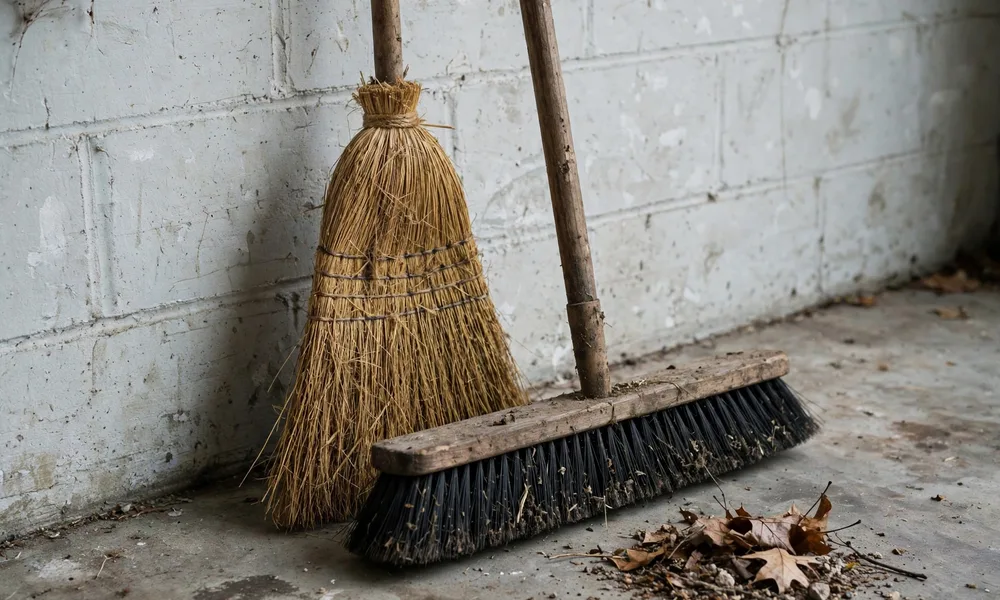
A straw broom is the oldest design still in daily use, and on the right surface nothing beats it: tightly bound natural fibre, stiff enough to dig grit out of textured concrete, shift dried mud off a patio, and sweep leaves without folding flat. Kept dry, a well-made one lasts for years at the back door, in the garage, and on the garden path.
Straw brooms are less useful indoors: they shed loose fibres for the first few weeks, are too stiff for polished wood, and cannot trap fine dust like flagged synthetic bristles. Buy one with fibres bound tightly and evenly, and keep it under cover, hung bristle-up.
Push Brooms: For Big Open Floors
A push broom is built for area rather than accuracy: a head half a metre wide or more, stiff bristles, and it clears a garage, a workshop, or a large patio in a handful of passes. On concrete, nothing else moves sawdust, gravel, and dried leaves as quickly; the weight of the head does the work.
The trade-off is corners: a wide, straight head cannot get into a tight angle, and it bumps into cupboards and chair legs in a small room. Use a push broom for the open middle of the floor and a small angled broom for the edges. When you buy one, check the handle socket is solid, because a loose socket is the most common way a good push broom fails.
Hand Brooms and Dustpan Sets
The hand broom is the broom you reach for most often. It lives by the back door or under the kitchen sink, and deals with the crumbs under the table, the mud by the door, and the dust on the stairs in thirty seconds. A good one has firm bristles, a compact head, and a handle long enough to use without crouching.
The dustpan is half of this tool, and it decides whether the sweep actually ends: a thin rubber lip sits flat and lets the finest crumbs ride up, while a thick rigid edge leaves a line of dust behind. Our guide to the dustpans that pick up every crumb in 2026 covers which lips and handles work best.
Bristles, Head, and Handle: The Three Checks
Bristles decide what a broom picks up: dense, flagged synthetic bristles for smooth indoor floors and fine dust; stiff, coarse bristles for rough surfaces and heavy dirt. Whatever the material, they should be dense, straight, and firmly fixed. Pull gently on a few in the shop: if they come out, the head will shed at home. Press the head against the floor: the tips should spread evenly and spring back, not fold flat or splay sideways.
The head decides how much floor each sweep covers and how well it reaches edges: angled for corners, wide and straight for open floors, small for stairs and tight spots. It should have some weight, because a head that is too light skips and chatters, while one that is too heavy tires your arms. Let it rest on the floor: it should sit flat, bristles touching evenly along their whole length.
The handle decides whether sweeping feels easy or like a chore: long enough to sweep standing upright, thick enough to grip comfortably, and fixed firmly with no wobble. The test is your own posture, not the number on the packet. Twist it gently in the shop: a broom that wobbles on day one will snap within a season.
Brooms vs Vacuums: When a Broom Wins
A broom is a manual tool, and that is its strength: silent, needing no charging, ready in five seconds. For a quick sweep of a kitchen, a hallway, or a patio, it is faster than getting a vacuum out of its cupboard. It is also the right tool for grit, leaves, and sawdust, which can clog a vacuum, and for small spaces where a vacuum head cannot fit.
A vacuum wins on deep cleaning: dust in carpet pile, pet hair woven into a rug, and fine particles a broom cannot trap. The two tools are not rivals; most homes need both. Use the broom daily for the visible dirt, and the vacuum weekly for the dirt you cannot see. Our guide to the best vacuum cleaners in 2026 covers which powered machines suit which floors.
How to Sweep a Corner Properly
Technique matters as much as the tool. Start with the head flat, bristles touching evenly, and sweep in short, controlled strokes toward the corner, not away from it: short strokes gather a compact pile, while long, fast ones flick dirt sideways and into the air. Work along the skirting board first, pulling dust out of the corner, then gather the pile to sweep into the dustpan.
Keep the head low and the handle at a shallow angle, so the bristle tips stay in contact with the floor; lift the handle too high and the broom skips. Sweep slowly enough that the dust stays on the floor. When the pile is gathered, hold the dustpan flat with your foot, sweep the pile in with two or three gentle strokes, and lift the pan level so nothing spills.
Buying Checklist: Six Checks Before You Pay
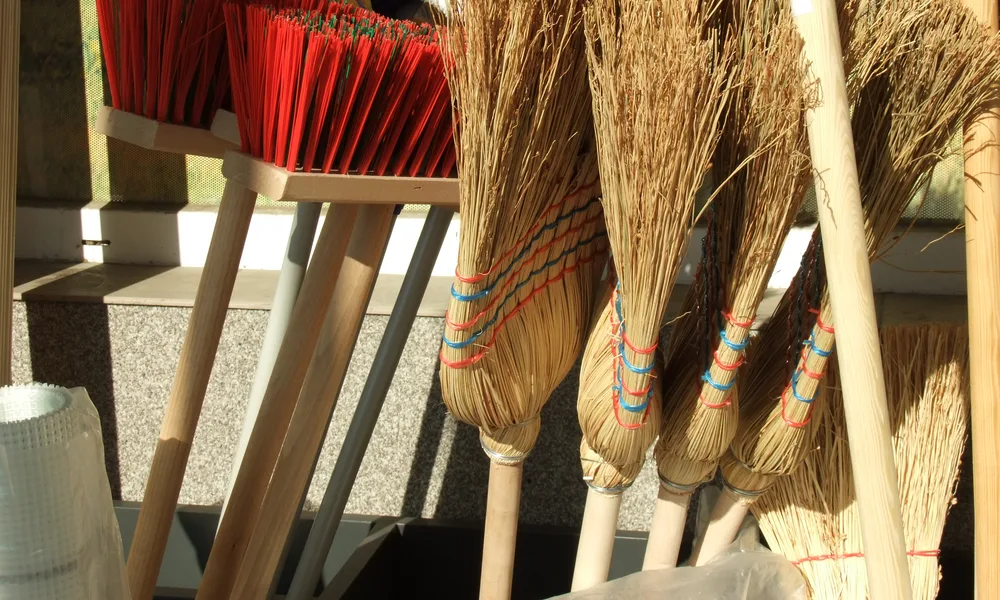
- Press the head against a flat floor: the bristles should touch evenly, the long side reaching into a corner.
- Part the bristles and check the density: no gaps in the middle, and no bristles that pull out with a gentle tug.
- Stand upright with the broom in sweeping position: your back should stay straight, and the grip should not slip in a damp hand.
- Twist the handle gently at the joint: it should feel solid, with no wobble, creak, or play.
- Match the bristles to the floor: flagged synthetic indoors, stiff natural or coarse synthetic for rough and outdoor floors.
- Check how it stores: a hole in the handle or a hook lets you hang it bristle-up, which keeps the bristles straight.
Frequently Asked Questions
Which broom is best for corners?
An angled synthetic broom with dense, flagged bristles: the diagonal cut lets the long side reach into the corner while the rest of the head stays on the floor, and the flagged tips trap fine dust instead of flicking it sideways.
Are natural straw brooms better than synthetic ones?
On rough floors and outdoors, yes: straw is stiff enough to shift grit and dried mud and lasts for years when kept dry. Indoors, no: synthetic flagged bristles trap fine dust far better, and straw sheds fibres for its first few weeks.
Why does my broom leave a line of dust along the wall?
Usually because the bristles are splayed, too soft, or cut straight across, so only the middle of the head touches the floor. A broom stored leaning on its bristles bends within weeks, and bent tips leave a line however carefully you sweep. Hang it bristle-up and the problem stops.
How long should a broom last?
A good indoor broom should last two to three years of daily use, a straw or push broom longer if kept dry and stored properly. Replace it when the bristles stay splayed after washing, the head sheds bristles, or the handle wobbles at the joint.
Can I use the same broom indoors and outdoors?
You can, but you should not: an indoor broom used on rough concrete wears its flagged tips to stubs within a month, and an outdoor broom used on polished wood scratches the finish. Keep one broom for smooth indoor floors and another for rough outdoor ones.
How do I look after a broom?
Shake it out after use, rinse the bristles when they get dusty, and let it dry bristle-up. Never store it leaning on its bristles, and never leave it standing in water. A quick rinse once a week keeps the bristles clean.
Bottom Line
The brooms that actually sweep the corners in 2026 are not the most expensive ones: angled, dense-bristled brooms that keep their tips on the floor right up to the wall, with a handle long enough to sweep standing upright and a head matched to the floor. Buy the angled synthetic broom for the kitchen and hall, add a straw or push broom for the rough floors outside, and store both hanging up. Once the floor is swept, our guide to how to pick a steam mop that actually lifts grime in 2026 covers the tool that finishes what a broom starts.


