
A good bucket is the most underrated tool in the house. It carries the water for the mop, the suds for the car, the soil for the garden and the tools for the job, and it does all of it without asking for attention. The best buckets of 2026 are the ones that carry a full load without spilling, cracking or tipping over, and the difference between a good one and a bad one shows up the first time you carry it across a room.
Most buckets fail in the same few ways. The handle digs into your hand, the plastic flexes and sloshes water over the rim, or the base is so narrow that the whole thing tips when you bump it. A bucket that carries the load without the spills is not the biggest or the cheapest one on the shelf. It is the one with a comfortable handle, a wide stable base, thick walls that do not bow under weight, and a rim you can grip when you pour.
Key Takeaways
- Handle comfort decides whether a full bucket is carryable: a wide, moulded grip spreads the weight, while a thin wire handle cuts into your hand within seconds.
- A wide base beats a tall narrow body every time, because a bucket that stands steady does not tip when you bump it or set it down on uneven ground.
- Thick, rigid plastic carries a full load without bowing.
- Match the bucket to the job: a wringer bucket for mopping, a wide general bucket for the car and garden, and a heavy-duty builders bucket for rubble and mixing.
- Pour from low down with the bucket steady, because most spills happen when a full bucket is lifted high and tipped too fast.
What a Good Bucket Actually Has to Do
A bucket has one job, and it is harder than it looks: hold water, carry it somewhere, and pour it out where you want it. The walls have to be stiff enough that a full load does not bow them outward, because a bowing wall changes the shape of the water inside and sends it over the rim with every step. The base has to be wide and flat so the bucket stands on its own, even on a slope or a soft lawn. The handle has to take the full weight comfortably, because a bucket of water weighs around ten kilograms.
The rim matters more than most people expect. A rolled or reinforced rim gives you something to grip when you lift a bucket out of a sink or tip it to pour, and it stops the top edge splitting when the bucket is dropped. A 10-litre bucket is the sweet spot for most homes, and two trips beat one spill.
The Main Types of Bucket
A mop bucket, a general bucket, a builders bucket and a collapsible bucket are built for different jobs.
Mop Buckets With Wringers
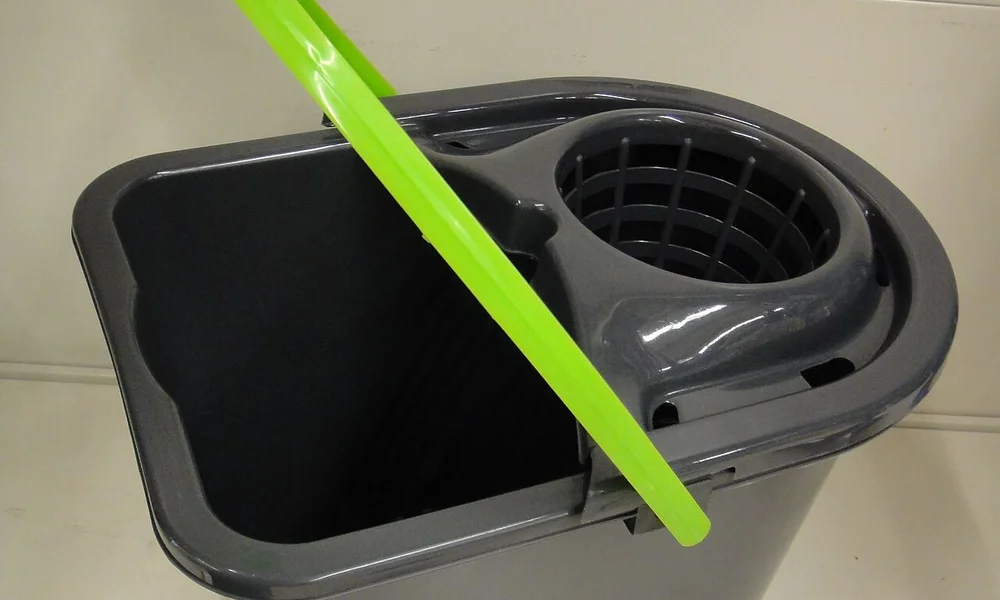
A mop bucket with a wringer is the right choice for anyone who mops hard floors regularly. The wringer sits over the bucket and squeezes the mop head until it is damp rather than dripping, which is what stops floors drying in streaks. The best wringers are the press-down or spin type, with a basket wide enough for a flat or string mop head and a mechanism that does not jam after a month. If you already have a mop you like, check the wringer fits its head before you buy. Our guide to the mops that clean floors without the streaks explains which mop heads work best with a wringer bucket, and why dampness decides the finish.
General-Purpose Buckets
The general-purpose bucket is the one every home needs: a round or slightly tapered plastic bucket of 10 to 15 litres, with a sturdy carry handle and a flat base. It is the bucket for washing the car, carrying cleaning water, soaking laundry, watering plants and holding tools while you work. The best ones are made from thick polypropylene with a reinforced rim and handle mounts moulded into the body rather than riveted on, because rivets are the first thing to fail. A plain, sturdy general bucket will outlast a fancy one, and it costs a fraction of the price.
Heavy-Duty and Builders Buckets
A builders bucket is built to carry rubble, mix plaster and cement, haul soil and survive being dropped. It is made from thick, flexible plastic or rubber, with a reinforced base and a heavy-duty handle, and the flexibility matters: a rigid builders bucket cracks in cold weather and shatters when it is dropped full, while a flexible one bends and bounces. For home use, one builders bucket in the garage is worth having even if you never mix cement, because it is the bucket you reach for when the job is dirty, heavy or sharp-edged and you do not want to ruin a good household bucket.
Collapsible Buckets
A collapsible bucket folds flat when it is empty, which makes it the right choice for caravans, boats, small flats and anyone short on storage. The weakness is the walls: a collapsible bucket will never be as stiff as a solid one, so it sloshes more when you carry it full, and the folding joints are the first place to leak after a year or two of hard use. Treat it as a second bucket for travel and tight storage, not as your only bucket, and never fill it to the brim if you have to carry it any distance.
The Best Buckets of 2026
For mopping, a 15-litre rectangular mop bucket with a press wringer is the pick: it holds enough water for a whole floor, the wringer leaves the mop damp rather than dripping, and the flat sides sit neatly against the wall.
For general use, a 12-litre round bucket in thick polypropylene with a moulded grip handle is the one to buy. It is light enough to carry full, stiff enough not to bow, and cheap enough that you can keep one in the kitchen and one in the garage.
Whichever type you buy, check the handle mounts and the base before anything else, because those are the two places a cheap bucket fails first.
Buckets Compared
| Type | Typical size | Best for | Weakness |
|---|---|---|---|
| Mop bucket with wringer | 12–15 litres | Mopping hard floors | Bulky to store; wringer can jam |
| General-purpose plastic | 10–15 litres | Car, garden, cleaning | No wringer; thin ones bow |
| Builders bucket | 14–20 litres | Rubble, mixing, heavy loads | Heavy; overkill indoors |
| Collapsible silicone | 5–10 litres | Travel, small flats, boats | Sloshes; joints can leak |
Where Buckets Fail
Buckets fail in predictable places, and knowing them saves you buying the same bad bucket twice. The handle mounts go first: thin plastic around the pivot cracks, rivets pull through, and wire handles bend until the bucket hangs crooked and sloshes. The base goes next, especially on buckets dragged across concrete, because the bottom wears thin and then splits.
Spills are the other failure, and they are usually the carrier’s fault, not the bucket’s. A bucket filled to the brim will spill on the first step, because water needs room to move. A bucket carried by a thin handle swings as you walk, and every swing sends a wave over the rim. A bucket set down on a slope tips, and a bucket left on a wet floor slides. Rinse the bucket after use and store it upside down so it dries out.
How to Carry a Full Bucket Without Spilling
Carrying a full bucket without spilling is a technique, not a talent. Fill the bucket to three-quarters at most, leaving a hand’s width of space below the rim so the water has somewhere to go when it moves. Grip the handle in the middle, keep your arm straight and the bucket close to your leg, and walk slowly, because every quick step sends a wave across the surface. If the handle is thin, wrap it with a cloth to spread the weight.
For a heavy bucket, use two hands: one on the handle and one under the base or on the rim, which steadies the load and stops the swing entirely. Pour slowly from low down, tipping the bucket with your free hand bracing the base, and never pour from shoulder height. If you are carrying cleaning supplies as well as water, put the bottles in the bucket and carry them together, or use a caddy for the bottles and the bucket for the water. Our guide to the cleaning caddies that carry everything in one trip covers the best way to move a whole cleaning kit at once, and our guide to the best spray mops is worth reading if you want to mop without carrying a bucket of water at all.

Buying Checklist
- Check the handle first: a wide moulded grip, strong mounts, and no flex when you lift the empty bucket by the handle.
- Measure the base: wide and flat, so the bucket stands steady on tiles, grass and slopes without tipping.
- Press the walls: thick rigid plastic that does not bow when you squeeze it, with a reinforced rim you can grip to pour.
- Match the size to your strength: 10 to 12 litres for most homes, 15 litres only if you can carry it full without strain.
- Check the fit: the bucket must fit under your tap, in your sink and on your storage shelf, or you will not use it.
- Look for a pouring lip or spout.
Frequently Asked Questions
What size bucket should I buy for mopping?
A 12 to 15 litre mop bucket suits most homes. It holds enough water to mop a whole floor without refilling, and it is still light enough to carry when full.
Why does my bucket keep tipping over?
It is almost always the base. A narrow or rounded base tips on the slightest bump, and a bucket that is tall for its width is unstable by design. Choose a bucket with a wide, flat base, fill it to three-quarters rather than the brim, and set it down on flat ground, never on a slope or a step.
Are expensive buckets worth it?
Usually, yes, up to a point. A mid-priced bucket from a known maker has thicker plastic, stronger handle mounts and a better rim than a bargain one, and it will last years instead of months.
Can I use a builders bucket for mopping?
You can, but it is not ideal. A builders bucket has no wringer, so you will be wringing the mop by hand, and it is heavier and wider than a household bucket, which makes it awkward in a small kitchen. Keep a builders bucket for heavy and dirty jobs, and a mop bucket for the floors.
How do I stop a bucket handle hurting my hand?
Use a bucket with a wide moulded grip, which spreads the weight across your palm. If the handle is thin wire or narrow plastic, slip a short length of garden hose or foam pipe insulation over it, or wrap it with a cloth.
How long should a bucket last?
A good plastic bucket kept out of the sun and rinsed after use lasts five years or more. Sunlight is the main killer: ultraviolet light makes plastic brittle, so a bucket left outside all summer will crack far sooner than one stored in a shed or cupboard.
The Bottom Line
The best bucket is the one matched to the job and built to survive it: a 15-litre wringer bucket for mopping, a 12-litre thick-walled general bucket for the car and garden, and a flexible builders bucket for the heavy, dirty work. Do that, and the most underrated tool in the house will carry the load without the spills for years.


