Top Kitchen Scissors for Everyday Prep in 2026
The best kitchen scissors are the tool you reach for a dozen times a day without thinking: snipping herbs over a pan, opening a bag of rice, trimming fat from chicken, cutting twine, slicing a pizza into neat portions. A good pair cuts cleanly with one squeeze, sits comfortably in the hand, and comes apart for washing. A bad pair crushes what it should cut, slips in a wet hand, and goes dull within months. This guide covers the kitchen scissors worth buying in 2026, the designs that last, and how to choose the right pair for everyday prep.
Kitchen scissors are not ordinary scissors. They are built for food: thicker blades, stronger pivots, handles shaped for wet hands and long sessions. The best pairs are really a small multi-tool, with a notch for cracking nuts or opening bottles, and blades strong enough for poultry.
Key Takeaways
- Take-apart blades are the single most useful feature: they make proper washing and sharpening possible.
- Micro-serrated edges grip slippery food like raw chicken skin and herbs far better than smooth blades.
- Full stainless steel construction resists rust and survives years of daily washing.
- Large, soft-grip handles with a finger rest suit long prep sessions and wet hands.
- A pair that feels balanced and opens smoothly in the shop will still feel good after a year of use.
What Makes Kitchen Scissors Good
A good pair of kitchen scissors cuts with a shearing action: the two blades slide past each other, and the food is parted cleanly at the point where they meet. A bad pair pushes the food aside instead, crushing herbs into a wet mess and tearing chicken skin. The difference comes down to three things: how tightly the blades meet, how sharp the edges are, and how strong the pivot is.
The pivot is the heart of the tool. A screw pivot can be tightened as the blades wear, keeping the cut clean for years. A rivet pivot is cheaper, but once it loosens, the blades wobble and the cut goes ragged.
Blade thickness matters too. Thin blades slice herbs beautifully but flex on bone and thick packaging. Thick blades power through poultry joints but feel clumsy on delicate work. The sweet spot for an everyday pair is a medium blade, around 2 to 3 millimetres thick, with a slight curve that keeps the tips in contact as you cut.
Blade Types: Straight, Serrated and Micro-Serrated
Straight blades cut cleanest on herbs, paper-thin vegetables and anything where a neat edge matters. They glide through parsley and chives without bruising them, and they are the easiest to sharpen at home with a whetstone or a ceramic rod. Their weakness is grip: on wet, slippery food like raw poultry skin, a smooth blade can slide instead of bite.
Serrated blades solve the grip problem. The teeth bite into slippery surfaces and hold them while the cut completes, which is why they excel on chicken, fish skin and tough packaging. They leave a slightly rougher edge on delicate herbs, and they are harder to sharpen at home, since each tooth needs individual attention.
Micro-serrated blades are the middle ground, and for most kitchens they are the best choice. The fine teeth are small enough to cut herbs cleanly and large enough to grip slippery food. Many of the best kitchen scissors sold today use a micro-serrated lower blade with a straight upper blade, combining the grip of one with the clean cut of the other.
One Blade or Two?
Some kitchen scissors have one serrated blade and one straight blade, which is the most versatile combination. Others serrate both blades for maximum grip on tough jobs. If you buy one pair, choose the mixed design.
Handles, Hinges and Comfort
Kitchen scissors are used with wet, greasy hands, often for long stretches, so the handle matters as much as the blade. Soft-grip handles made from textured rubber or silicone stay secure when wet, while hard plastic handles can slip at the worst moment. Look for handles with a slight finger rest or a thumb loop large enough for a gloved hand.
Size is personal. A blade of around 20 to 22 centimetres overall suits most hands and most jobs. Smaller pairs are nimble for herbs and precision work but struggle with poultry. Larger pairs power through bone but feel heavy after ten minutes of herb prep. If you cook a lot, two pairs in different sizes beat one compromise pair.
Left-handed cooks should check before buying. Many kitchen scissors are shaped for right hands, with the blades arranged so a right-handed squeeze brings them together. True left-handed pairs reverse the blade order. Ambidextrous pairs with symmetrical handles are a decent compromise, but a proper left-handed pair is noticeably better if you use scissors daily.
What Kitchen Scissors Should Do Beyond Cutting
A good pair earns its drawer space by doing more than cutting. The notch between the handles usually cracks nuts and opens bottle caps. The serrated section near the hinge grips jar lids and small bones. Some pairs include a flat screwdriver tip on the handle end, or a fish scaler on the blade spine. These extras are genuinely useful, but they should never come at the cost of the basic cut.
Poultry is the real test. A pair that can separate a chicken joint, trim fat and spatchcock a bird without flexing or slipping is a pair worth keeping. The hinge should stay tight, the blades should not twist apart under load, and the handles should not dig into your palm.
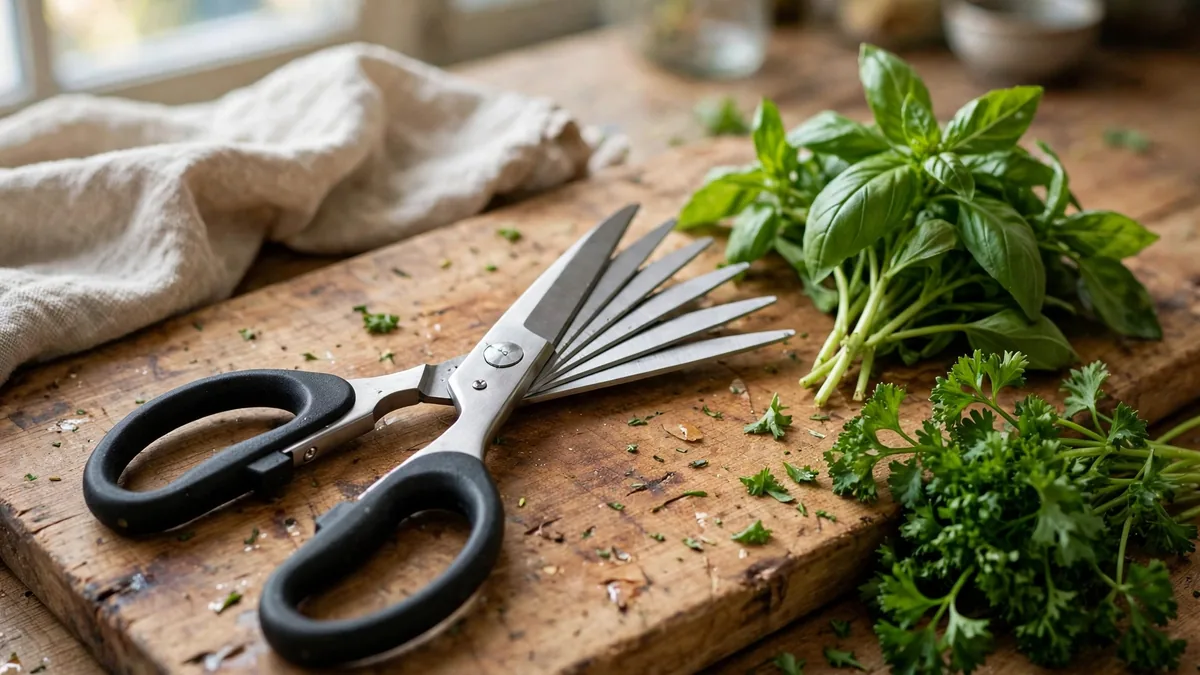
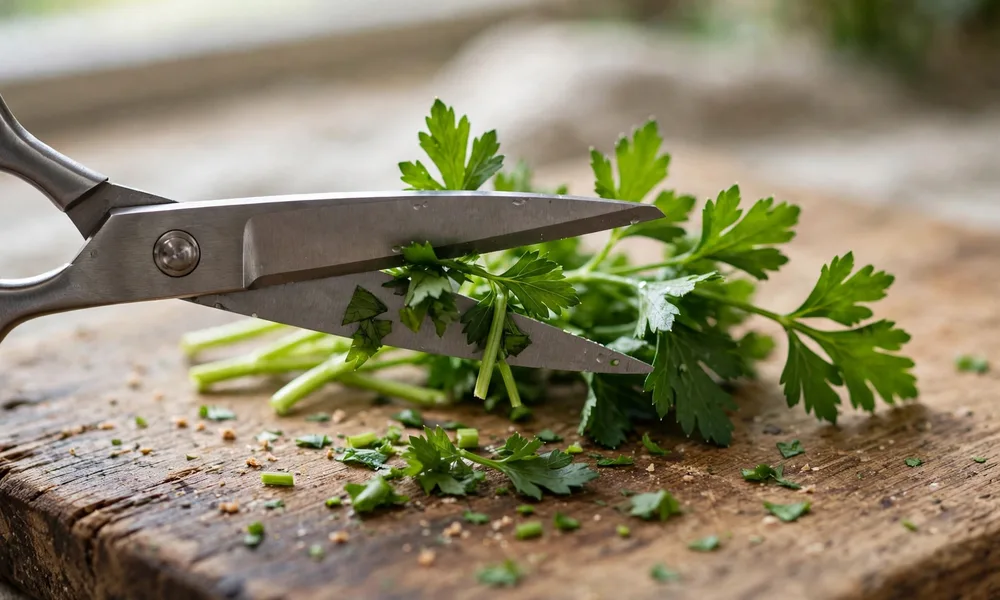
Herbs are the other test. Snip a bunch of parsley over a board: the cut pieces should fall cleanly, with no bruised, darkened edges and no stems pulled out of the bunch. A pair that passes both the poultry test and the herb test is a rare and valuable tool. For context on the wider kitchen kit, our head-to-head best vs worst knives of 2026 covers the blades your scissors work alongside, and the best knife sets for beginners guide pairs well with a first good pair of shears.
Kitchen Scissors Comparison
| Type | Best At | Edge Life | Cleaning | Best For |
|---|---|---|---|---|
| Take-apart, micro-serrated | Herbs and poultry | Excellent | Easy, blades separate | Everyday all-round use |
| Straight-blade shears | Clean herb cuts | Good | Easy to sharpen | Delicate prep, keen cooks |
| Heavy-duty poultry shears | Bones and joints | Excellent | Needs thorough drying | Spatchcocking, butchery |
| Compact herb scissors | Quick herb snips | Good | Simple rinse | Small kitchens, garnish work |
| Budget all-purpose | Packaging, twine | Short | Basic wash | Occasional use, spares |
The table makes the trade-off plain: the pairs that do everything well cost more, while the cheapest pairs are fine for light jobs and frustrating for heavy ones. For most kitchens, the take-apart micro-serrated pair is the right answer, with a heavy-duty pair added later if you break down poultry often.
How to Test Kitchen Scissors Before You Buy
If you can try a pair in a shop, a few quick checks tell you most of what you need. Open and close them slowly: the action should be smooth, with no grinding and no loose wobble at the pivot. Hold a sheet of paper and cut a slow curve: a good pair cuts cleanly without the paper folding between the blades. Snip a sprig of herbs if the shop allows it: the cut should be neat, with no crushed stems.
Check the take-apart mechanism. On the best pairs, the blades separate with a firm twist past the open position, and they click back together just as firmly. The mechanism should feel deliberate, not flimsy.
At home, run the two real tests. First, snip herbs over a board and look at the cut edges: clean and green means a good edge, dark and bruised means a crushing cut. Second, trim fat from a chicken thigh: the blades should bite immediately and cut in one smooth squeeze, without the skin sliding out of the blades.
Care, Cleaning and Sharpening
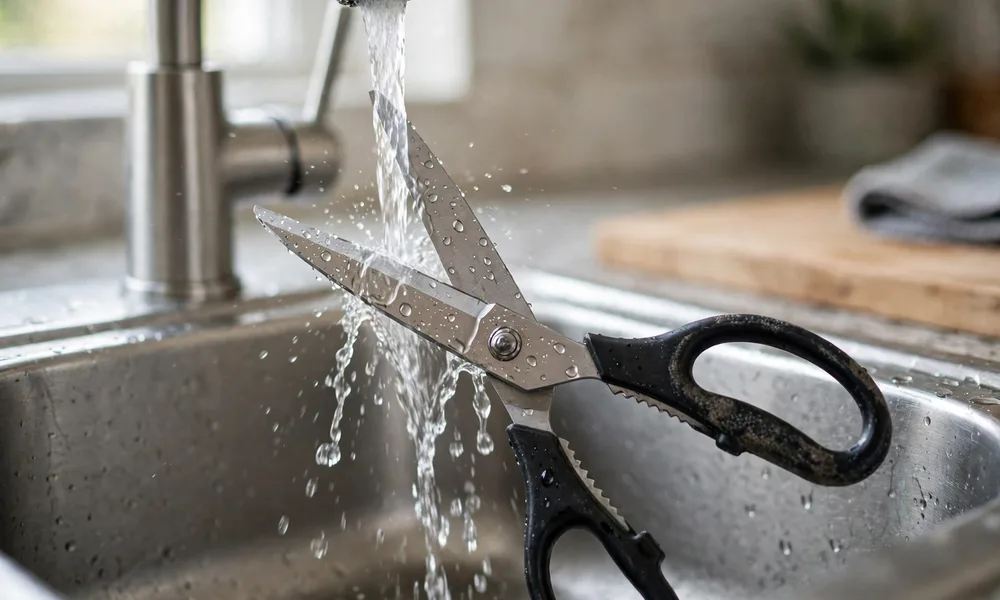
Kitchen scissors touch raw meat, so cleaning matters more than with any other kitchen tool. Take-apart blades are the answer: separate them, wash both sides in hot soapy water, dry them thoroughly, and click them back together. Fixed-blade pairs trap food at the pivot, where it can harbour bacteria no amount of rinsing reaches.
Washing and Drying
Hand wash after every use involving raw meat, and dry immediately. Stainless steel resists rust, but water left at the pivot will stain and eventually pit even good steel. A quick wipe with a tea towel takes seconds. Dishwashers are acceptable for all-steel pairs, but the heat can loosen handles over time and dull the edge against other cutlery.
Sharpening
Straight blades sharpen easily with a whetstone or a ceramic rod, following the existing bevel on one side only. Micro-serrated blades are harder: the flat side can be lightly honed, but the serrated side needs a tapered ceramic rod or a professional. A well-tended pair can last a decade, and keeping fresh herbs close at hand helps too: our guide to the best herb gardens for the kitchen shows how to grow the herbs your scissors will be snipping.
Before You Buy: A Six-Point Checklist
- Choose take-apart blades so you can wash and sharpen both sides properly.
- Pick micro-serrated edges for grip on slippery food, or straight edges for the cleanest herb cuts.
- Look for a sturdy screw pivot you can tighten, not a rivet that loosens over time.
- Check the handles: soft grip, room for your fingers, and secure when wet.
- Match the size to your hands and your cooking, around 20 to 22 centimetres suits most people.
- Plan to hand wash and dry after raw meat, and sharpen or replace when the cut goes ragged.
Frequently Asked Questions
Are expensive kitchen scissors worth it?
Yes, more than with most kitchen tools. A good pair costs a little more but cuts cleanly for years, comes apart for washing, and can be sharpened. A cheap pair goes dull within months, cannot be tightened, and ends up crushing food instead of cutting it.
Can kitchen scissors cut through bone?
Heavy-duty poultry shears can cut through small bones and joints, including a chicken backbone for spatchcocking. Lightweight everyday scissors cannot, and forcing them will spring the pivot. Use the right pair for the job.
How do you sharpen kitchen scissors?
Straight blades sharpen on a whetstone or ceramic rod, following the bevel on one side only. Micro-serrated blades need a tapered ceramic rod on the serrated side, or a professional service. Take the blades apart first so you can reach the full edge.
Should kitchen scissors go in the dishwasher?
All-steel pairs can, but hand washing is better. Dishwasher heat can loosen handles over time, and rattling against other cutlery dulls the edge. Hand wash after raw meat, dry immediately, and the pair will last far longer.
What is the difference between kitchen scissors and poultry shears?
Poultry shears are heavier, with thicker blades, a stronger pivot and often a bone notch, built specifically for cutting through joints and bone. Everyday kitchen scissors are lighter and more versatile, better for herbs, packaging and general prep. Many cooks own both.
How long should kitchen scissors last?
A well-made stainless pair that is hand washed, dried and sharpened occasionally should last ten years or more. A budget pair may be fine for a year or two, then dull beyond easy recovery and need replacing.
The Bottom Line
The best kitchen scissors in 2026 are the take-apart, micro-serrated, full stainless pairs that cut cleanly, wash properly and stay tight for years. They are the pair you will reach for every day, for herbs, poultry, packaging and a dozen small jobs in between. Buy the pair that fits your hand, passes the paper and herb tests, and comes apart for cleaning, then look after it: wash it, dry it, and sharpen it when the cut goes ragged.