
Which Zester Grates Citrus Finest in 2026?
Which zester grates citrus finest in 2026 is a question of edges, not effort. The finest zester takes off feathery threads of zest and leaves the bitter white pith behind, so a lemon cake tastes bright and a cocktail smells of orange before the first sip. The wrong one tears off thick strips, drags bitter pith into the bowl, or clogs after three strokes and turns a two-minute job into a chore.
Zesters look like the simplest tool in the kitchen drawer, and that is exactly why they are easy to buy badly. The differences hide in the teeth: how fine they are, how they are cut, how the blade is shaped, and whether the handle gives you control when your hands are damp and the fruit is cold from the fridge.
Key takeaways
- A fine rasp-style zester grates the finest zest — feathery threads with no bitter pith.
- Sharp, etched teeth cut cleanly; dull or stamped teeth tear the peel and clog quickly.
- Zest only the coloured skin, and stop as soon as white pith shows, or the flavour turns bitter.
- A long, flat blade gives the most control, while a short one suits small hands and tight drawers.
- Rinse a zester under running water straight after use, or dried zest glues itself into the teeth.
Why the finest zest matters
Zest is flavour at its most concentrated. The coloured skin of a lemon, lime, or orange holds the fruit’s aromatic oils, and a pinch of fine zest can lift a whole dish — a cake, a salad dressing, a marinade, a cocktail. But zest is also unforgiving: the white pith underneath is bitter, and one careless stroke can spoil the batch.
The difference shows up in three places. First, the flavour: fine zest releases its oils evenly through a dish, while thick strips sit in lumps and the pith they carry adds bitterness. Second, the texture: feathery zest disappears into a batter, while coarse shreds stay visible and chewy. Third, the work itself: a sharp zester takes a lemon in seconds, while a dull one needs pressure, and pressure is what pushes you through the skin into the pith.
The main types of zester
Every zester falls into one of three families, defined by the blade. Each has a clear strength, a clear weakness, and a job it does best. Most serious cooks own at least two: a fine rasp for everyday citrus and a channel knife or peeler for garnishes and cocktails.
Rasp and microplane zesters
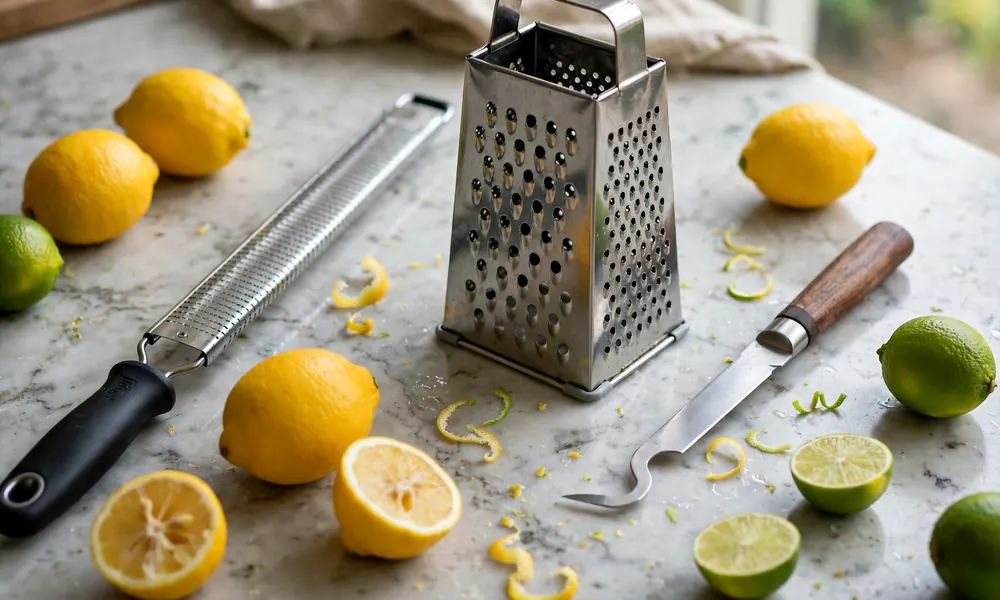
Rasp zesters, the long flat blades with hundreds of tiny etched teeth, are the best choice for the finest zest. The teeth are razor sharp and cut the coloured skin into feathery threads, leaving the pith untouched if you use a light touch. They work fast on lemons, limes, oranges, and even hard cheese, nutmeg, and garlic, which makes them the most versatile tool in the drawer. The best rasp blades are made from a single piece of steel with teeth etched at a slight angle, so each tooth slices rather than tears, and the blade stays rigid under pressure. A rasp with a comfortable handle and a cover for the blade is the safest version to keep in a busy drawer, and it is the one most professional kitchens reach for first. Keep the cover on whenever the zester is not in use.
Box and paddle graters
Box graters with a fine side, and flat paddle graters, are the everyday workhorses. They are stable, easy to hold, and the fine side grates a respectable zest, though coarser than a rasp. A paddle grater laid over a bowl catches the zest neatly, and a box grater stands on its own, which is handy when your other hand is holding the fruit. A paddle grater with a fine side and a curved shape that sits over a bowl is a good middle ground: it catches the zest neatly, it is easy to rinse, and it handles cheese and chocolate just as well as citrus.
Channel knives and peelers
Channel knives and Y-peelers take a different approach: instead of grating, they cut the zest into long, thin strips or curls. That is exactly what a cocktail garnish or a candied peel needs, and a good channel knife makes a perfect twist in one pull. They are also the best tool for removing wide strips of peel for infusing oils or syrups.
Comparison table
| Zester type | Fineness of zest | Pith risk | Speed | Cleaning | Best for |
|---|---|---|---|---|---|
| Rasp / microplane | Finest | Lowest | Fastest | Rinse or brush | Cakes, dressings, everyday citrus |
| Box grater, fine side | Medium | Moderate | Good | Needs a brush | Everyday grating, cheese |
| Paddle grater | Medium-fine | Moderate | Good | Easy rinse | Zest over a bowl, small jobs |
| Channel knife | Strips, not fine | Low if careful | Fast | Easiest | Cocktail twists, garnishes |
| Y-peeler | Wide strips | Higher | Fast | Easiest | Peel for infusions, candied peel |
| Rotary grater | Medium | Moderate | Slow | Hardest | Hard cheese, not citrus |
How to zest so only the good part comes off
Technique decides the result more than the tool does. Hold the fruit firmly in one hand and the zester in the other, and draw the fruit across the blade in one light, even stroke — never saw back and forth, which tears the skin and pushes you into the pith. After each stroke, turn the fruit a little so you are always working on fresh coloured skin. — never saw back and forth, which tears the skin and pushes you into the pith. After each stroke, turn the fruit a little so you are always working on fresh coloured skin.
What makes a zester grate fine and what makes it tear
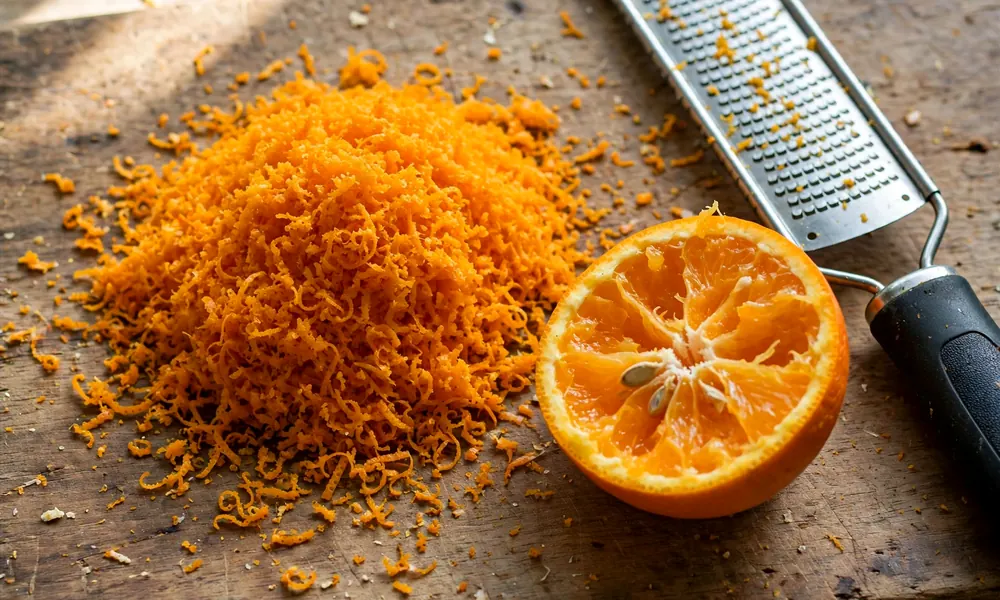
Fineness comes down to four things: tooth sharpness, tooth size, blade stiffness, and pressure. Etched teeth are cut into the steel at an angle and stay sharp for years; stamped teeth are punched out and dull quickly, tearing the peel instead of slicing it. Smaller teeth make finer zest, and a stiff blade that does not flex keeps the teeth at a constant angle to the fruit.
Choosing the right size and handle
Size decides how much control you have. A long rasp blade of about 20 centimetres gives the longest stroke and the fastest work, and the handle stays well clear of your knuckles. A shorter blade suits small hands and crowded drawers, but it means more strokes and more chances to slip into the pith.
Common mistakes that spoil the zest
The most common mistake is zesting the whole fruit in one place. The skin is thin, and three strokes on the same spot will reach the pith. Turn the fruit constantly and work around it. The second mistake is zesting after juicing: a juiced lemon is soft and collapses under the blade, so the teeth sink into the pith. Always zest first, then juice — the fruit keeps its shape and the zest stays clean.
Cleaning and care
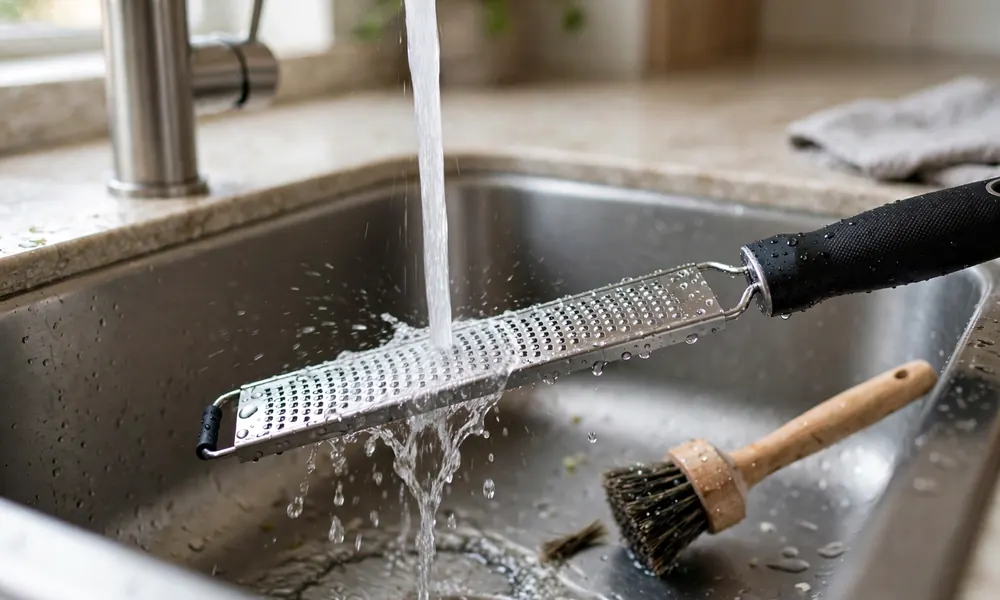
Cleaning is where a zester lives or dies. Rinse a rasp zester under running water straight after use, stroking a brush along the teeth in the direction they point — never against them, which dulls the edge and risks a cut. Dried zest glues itself into the teeth and is almost impossible to shift once it has set, so never leave a used zester in the sink to soak.
When to replace your zester
Even the best zester wears out. Replace a rasp when the teeth feel smooth, when it tears the peel instead of cutting it, or when it needs real pressure to take anything off. Replace a box grater when the fine side is clogged with bent teeth that no brush will clear, and a channel knife when it skips across the skin instead of biting.
Zesters and the rest of your citrus kit
A zester never works alone. The finest zest is wasted if the juice it joins is badly extracted, and the bowl it lands in decides how evenly it mixes through a batter. A good juicer pulls more juice from the same fruit with less effort — see our guide to the best juicers. The zest is usually whisked into something, and a wide bowl makes that easy while a narrow jug leaves clumps, so our guide to the best mixing bowls is a useful companion read. And when zest is only one step in a bigger prep, the machine doing the heavy work matters too — our guide to the best food processors covers the one that earns its counter space.
Checklist: buying a zester
- Pick a rasp-style zester with fine, etched teeth for the finest, cleanest zest.
- Choose a long blade of about 20 centimetres for the longest, most controlled strokes.
- Check the teeth are sharp and the blade is stiff, with no flex when you press it.
- Prefer a soft, non-slip handle and a blade guard for safe drawer storage.
- Make sure it rinses clean under running water, with no corners where zest can hide.
- Own two tools: a rasp for fine zest and a channel knife for garnishes and twists.
Frequently asked questions
Which zester makes the finest zest?
A rasp-style zester with fine, etched teeth: it cuts the coloured skin into feathery threads and leaves the bitter white pith behind. A box grater’s fine side is coarser, and a peeler or channel knife makes strips, not fine zest.
How do I stop my zester from taking the bitter pith?
Use a light stroke, turn the fruit after each pass, and stop the moment white pith shows. Zest cold fruit straight from the fridge — the skin is firmer and the blade is less likely to dig through it — and never press hard.
Should I zest before or after juicing a lemon?
Always zest first. A juiced lemon is soft and collapses under the blade, so the teeth sink into the pith. Zesting first keeps the fruit firm, the zest clean, and the juice undiminished.
Can I use a zester for garlic, ginger, and nutmeg?
Yes — a rasp zester is excellent for all three, and for hard cheese and chocolate too. Use a light touch on garlic and ginger, and rinse the blade between different foods so flavours do not carry over.
How do I clean a clogged zester?
Rinse it under running water straight after use, stroking a small brush along the teeth in the direction they point. Never leave a used zester to dry with zest in the teeth — once it sets, it is very hard to shift.
Do I need a separate zester if I have a box grater?
For fine zest, yes. A box grater’s fine side tears more than it cuts, giving coarser shreds with more pith risk. A rasp zester is cheap, fast, and noticeably better — it is the one grating upgrade most kitchens notice immediately.
The bottom line
The zester that grates citrus finest in 2026 is a long rasp-style zester with fine, etched teeth and a non-slip handle. Zest cold fruit with a light stroke, turn the fruit after every pass, stop the moment white pith shows, and rinse the blade straight after use. It is a small tool, but the one that decides whether your cooking tastes bright or bitter — and a sharp rasp is the difference between zest that lifts a dish and zest that spoils it.


