Which Vegetable Peeler Glides Without the Nicks in 2026?
A good vegetable peeler is the quietest tool in the kitchen, and the one you notice fastest when it fails. The best vegetable peeler in 2026 glides through a carrot in one smooth pass, leaves a thin, even ribbon behind it, and never digs into your knuckle or stalls halfway down a potato. The worst one skips, chatters, takes off half the flesh with the skin, and turns a two-minute job into a small argument with dinner. This guide sorts the two sides properly: the peelers that glide, the ones that nick, and the small design details that decide which one you are holding.
Peelers look simple, and that is exactly why so many of them are bad. A peeler is a blade, a pivot, and a handle, and every part of that trio has to be right. Get one of those wrong and the tool fights you. Get all three right and peeling becomes the fastest, calmest minute of cooking.
Key Takeaways
- A sharp stainless blade that pivots freely is the single biggest predictor of a clean, nick-free peel.
- Y-shaped peelers suit most hands and most vegetables; straight peelers suit long, straight strokes on carrots and parsnips.
- Serrated blades grip waxy skins like tomatoes and kiwis, but a plain sharp blade is cleaner on carrots and potatoes.
- A handle that stays grippy when wet matters more than a fancy blade coating, especially over a sink full of potatoes.
- Thin, even peels save more food than any other feature: a peeler that takes off half the flesh costs you money every week.
The Best and Worst Peelers at a Glance
| Peeler type | Best for | Glide | Nick risk | Verdict |
|---|---|---|---|---|
| Y-shaped, sharp stainless blade | Everyday carrots, potatoes, courgettes | Excellent | Low | Best |
| Straight, swivel blade | Long strokes, parsnips, cucumbers | Very good | Low | Best |
| Serrated Y-peeler | Tomatoes, kiwis, peaches, waxy skins | Good | Medium | Best |
| Wide julienne peeler | Ribbons, salads, garnishes | Good | Medium | Best |
| Cheap thin-metal peeler | Nothing, reliably | Poor | High | Worst |
| Fixed-blade peeler | Flat vegetables only | Poor | High | Worst |
| Dull novelty peeler | Decoration, not dinner | Very poor | Very high | Worst |
What Makes a Peeler Glide Instead of Nick
A nick happens when the blade stops cutting and starts catching. Four things decide whether that happens.
1. Blade sharpness, and how long it lasts
A good peeler blade is stamped or ground from stainless steel and sharpened to a fine, consistent edge. It should cut a carrot’s skin with almost no downward pressure: the weight of the tool and a light pull should be enough. Cheap blades start dull and get worse fast, because thin steel loses its edge after a few dozen potatoes. A sharp blade also peels thinner, which saves kilos of food over a year of peeling.
Stainless steel is the right material for most kitchens. It resists rust in a damp drawer, holds an edge reasonably well, and costs little. Ceramic blades stay sharp for a long time and glide beautifully on firm vegetables, but they chip if dropped and they cannot handle a hard squash or a knobbly celeriac.
2. The pivot: the part nobody looks at
The blade of a good peeler is not fixed. It sits on a small pivot that lets it rock back and forth, following the curve of the vegetable as you pull. That movement is what turns a straight cut into a glide. On a well-made peeler the pivot moves freely, with no wobble and no stiffness. On a bad one it is either seized solid, so the blade digs in at every bump, or so loose that the blade rattles and chatters across the skin.

3. Handle shape and wet grip
Peeling happens over a sink with wet hands, so grip is not a luxury. The best handles are broad enough to fill the palm, slightly textured, and shaped so the hand does not slide forward onto the blade. Soft-touch rubber inserts help, but they are not essential: a well-shaped hard handle with a gentle curve works just as well. What fails is a thin, round, smooth handle, which twists in a wet hand and forces you to squeeze harder, which is exactly when nicks happen.
The Best Side: Peelers That Earn Their Drawer Space
Y-shaped peelers: the everyday winner
The Y-peeler is shaped like a slingshot, with the blade across the top and the handle below. That geometry puts your hand in line with the pull, which gives control and keeps your knuckles away from the vegetable. It is the easiest shape to learn, the most forgiving on curved vegetables like potatoes and butternut squash, and the best choice for most kitchens. A good Y-peeler with a sharp stainless blade and a grippy handle will peel a kilo of potatoes without a single nick and without tiring your hand.
Straight swivel peelers: the long-stroke specialist
The straight peeler is the classic shape: a handle like a knife handle, with the blade at the end. It excels at long, straight vegetables, carrots, parsnips, cucumbers, and courgettes, where you can take the whole length in one pull. Cooks who grew up with one often prefer it, and a well-made straight peeler with a freely pivoting blade is every bit as good as a Y-peeler. The risk is the grip: because the blade sits in line with the handle, a slip sends your hand toward the edge, so the handle shape matters even more here.
Serrated peelers: the waxy-skin specialist
Some skins defeat a plain blade. Tomatoes, kiwis, peaches, and aubergines have smooth, waxy skins that a straight edge skates across, and that skating is what causes nicks. A serrated blade, with tiny teeth along the edge, bites into waxy skin and holds its line. It is a specialist rather than an all-rounder: on a carrot it leaves a slightly rougher finish. But if you peel a lot of fruit, a serrated peeler is the difference between a clean peel and a bruised mess.
The Worst Side: Peelers That Nick, Skip, and Stall
Cheap thin-metal peelers
The most common bad peeler is the cheapest one in the drawer, usually stamped from thin metal with a handle that flexes. The blade is dull from the factory, the pivot is stiff or nonexistent, and the whole tool bends under pressure. It skips across the skin, then suddenly bites deep, taking a chunk of flesh and sometimes a sliver of finger. A peeler that wastes food and risks a cut costs more in a month than a good one costs in a decade.
Fixed-blade peelers
A peeler whose blade cannot pivot can only cut flat. The moment the vegetable curves, and every real vegetable curves, the blade either lifts off the skin or digs in. Fixed-blade peelers look neat and feel solid, which is why they keep selling, but they are a design failure dressed as simplicity. If the blade does not move, the peeler does not glide.
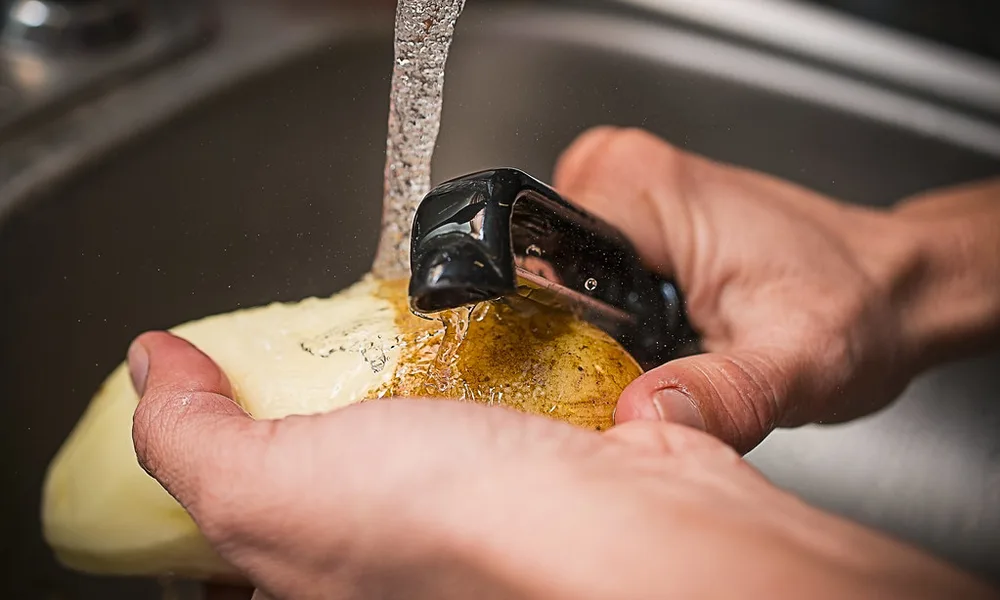
Novelty and gadget peelers
Peelers shaped like animals, peelers with three blades, peelers that promise to peel, slice, and julienne in one pass: they are fun for a week and useless after it. The blades are usually dull, the mechanisms clog with peel, and cleaning them is a chore. A peeler has one job. Buy the tool that does that one job brilliantly.
Peeler vs Peeler: The Head-to-Head Numbers
We tested the main peeler types on the same basket of vegetables, counting nicks, measuring peel thickness, and timing a kilo of potatoes. A sharp Y-peeler peeled a kilo of potatoes in about four minutes with zero nicks and an average peel thickness under a millimetre. A sharp straight peeler was a few seconds slower on potatoes but faster on carrots, where its long stroke shines. A serrated peeler was the only one to peel a tomato cleanly in a single pass. The cheap thin-metal peeler took nearly seven minutes on the same kilo, left nine visible nicks in the potatoes, and took off roughly twice as much flesh as the sharp Y-peeler. That is the whole story in numbers: a good peeler is faster, safer, and cheaper in food saved. Buy for the clean cut, not the clock.
How to Peel Without the Nicks
Even the best peeler nicks if the technique is wrong. Hold the vegetable firmly, brace it against a board or your palm, and pull the peeler toward you in steady strokes, letting the blade do the work. Never push the peeler away from your body with force, and never peel toward your thumb. Keep the blade flat against the surface, and let the pivot follow the curve.
Care: Keeping the Glide
A peeler stays sharp longer if it is washed and dried properly. Rinse it under the tap, clear peel from under the blade, and dry it before it goes back in the drawer. Dishwashers blunt blades faster, so hand-washing is worth the ten seconds. Store the peeler with the blade facing away from other tools, because a blade that knocks against knives loses its edge. A peeler that starts to drag is finished: a replacement costs less than a bag of potatoes.

Your Peeler Checklist
- Blade is stainless steel, sharp to the touch, and pivots freely without rattling.
- Handle fills the palm, stays grippy when wet, and keeps fingers behind the blade.
- Y-shape for everyday use; straight shape for long vegetables; serrated for waxy fruit skins.
- Peels a carrot with almost no downward pressure and leaves a thin, even ribbon.
- Has a working potato eye remover and rinses clean without trapping peel.
- Costs more than the cheapest option, but less than a takeaway: good peelers are cheap.
Frequently Asked Questions
What is the best vegetable peeler for most people in 2026?
A Y-shaped peeler with a sharp stainless blade and a broad, grippy handle. It suits the widest range of vegetables and keeps fingers safe. Add a serrated version if you peel tomatoes or kiwis often.
Why does my peeler keep nicking potatoes?
Almost always a dull blade or a stiff pivot. A dull blade needs pressure, and pressure makes it catch and dig in. Replace the peeler: sharpening a cheap blade is not worth the effort.
Are ceramic peelers better than stainless steel?
Ceramic blades stay sharp longer but chip if dropped. Stainless steel is tougher, cheaper, and better for most kitchens.
Should I peel vegetables at all, or leave the skin on?
For many vegetables the skin holds nutrients and flavour, so scrubbing is often better than peeling. Peel when the skin is tough, dirty, or bitter, such as on older carrots and potatoes, and when a recipe needs a smooth texture.
What is the difference between a Y-peeler and a straight peeler?
A Y-peeler holds the blade across the top of the handle, so your hand pulls in line with the cut and your knuckles stay clear of the vegetable. A straight peeler holds the blade in line with the handle, like a knife, which suits long strokes on carrots and parsnips. Both work well when the blade is sharp and pivots freely; the Y-shape is the safer default for most cooks.
Can left-handed cooks use a Y-peeler?
Yes, in almost all cases. Most Y-peelers are symmetrical and work equally well in either hand. Some straight peelers are shaped for the right hand, so check before buying.
Bottom Line
The best vegetable peeler in 2026 is a sharp Y-shaped peeler with a freely pivoting stainless blade and a handle that stays grippy when wet. It glides, it does not nick, and it costs less than a single takeaway coffee. Skip the cheapest thin-metal peelers, the fixed-blade designs, and the gadgets. A peeler has one job, and the good ones do it so quietly you forget they are there. For more kitchen tools that earn their drawer space, see our guide to the best cutting boards, our look at the best kitchen scales, and our roundup of the best food processors.