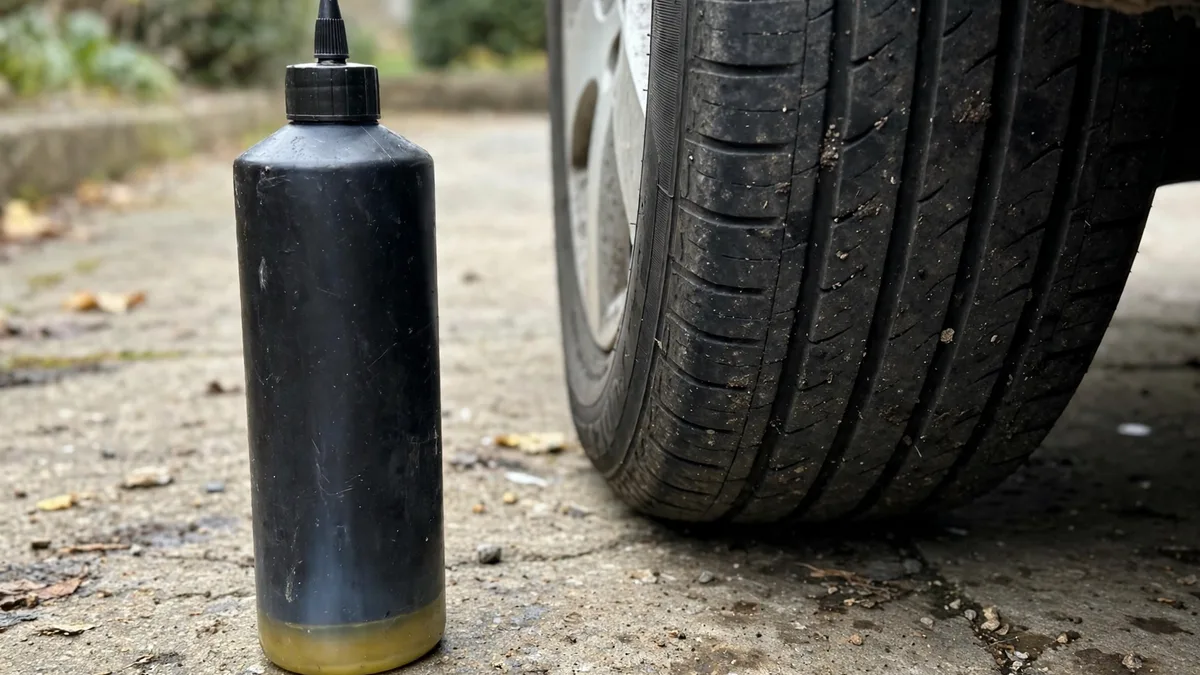
The best tyre sealants in 2026 are the small bottles that turn a slow puncture into a minor delay instead of a ruined journey. A tyre sealant is a liquid, usually latex-based, that you pour or inject into a tyre through the valve. Once inside, it coats the inner surface, and when a nail or screw punctures the tread, air pressure pushes the liquid into the hole, where fibres and particles in the mix clot together and plug the leak. It is not magic, and it is not a permanent repair, but for the small holes that cause most slow punctures, it works well enough to get you home or to a garage without changing a wheel at the roadside.
Key takeaways
- A tyre sealant seals small tread punctures from inside the tyre; it does not repair sidewalls, large cuts, or damaged rims.
- Preventive sealants go in before a puncture, while emergency sealants are used after one, and the two are not interchangeable.
- Most sealants handle holes up to about 6 millimetres in the tread, and none should be treated as a permanent repair.
- Always check the pressure after using a sealant, and get the tyre inspected or replaced as soon as you reasonably can.
- A sealant is not a substitute for a spare wheel, a pump, or a gauge, and it works best as part of a small roadside kit.
How a tyre sealant actually works
Inside the bottle, a tyre sealant is a thin liquid carrying tiny fibres, rubber particles, and sealing agents. When you inject it through the valve and drive a short distance, centrifugal force spreads it in a thin layer around the inside of the tread. It stays liquid while the tyre is intact, doing nothing at all, which is exactly the point. The moment a sharp object pierces the tread, escaping air carries the liquid toward the hole. The fibres snag on the edges of the puncture, the particles pack in behind them, and the mix sets into a flexible plug that slows or stops the leak.
It also helps to understand what a sealant is not. It is not an inflator, and it is not a gauge. An inflator adds air to a tyre, and a gauge measures the pressure already inside it. A sealant does neither of those jobs on its own, although some emergency kits combine a sealant canister with a small compressor, so the two jobs arrive in one box. If you want to know whether the tyre is holding pressure after a sealant has done its work, you still need a gauge, and the best tyre pressure gauges will tell you in seconds whether the repair is holding or the tyre is still losing air.
Preventive sealants and emergency sealants
Preventive sealants are put into healthy tyres before anything goes wrong, most often in bicycles, motorbikes, lawn equipment, and off-road vehicles. The liquid sits inside the tyre for months, ready to seal a puncture the moment it happens, often before the rider even notices. Emergency sealants, by contrast, are used after a puncture, when the tyre is already losing air. You connect the bottle or canister to the valve, squeeze or pump the liquid in, inflate the tyre, and drive gently so the sealant spreads and finds the hole.
The main types of tyre sealant compared
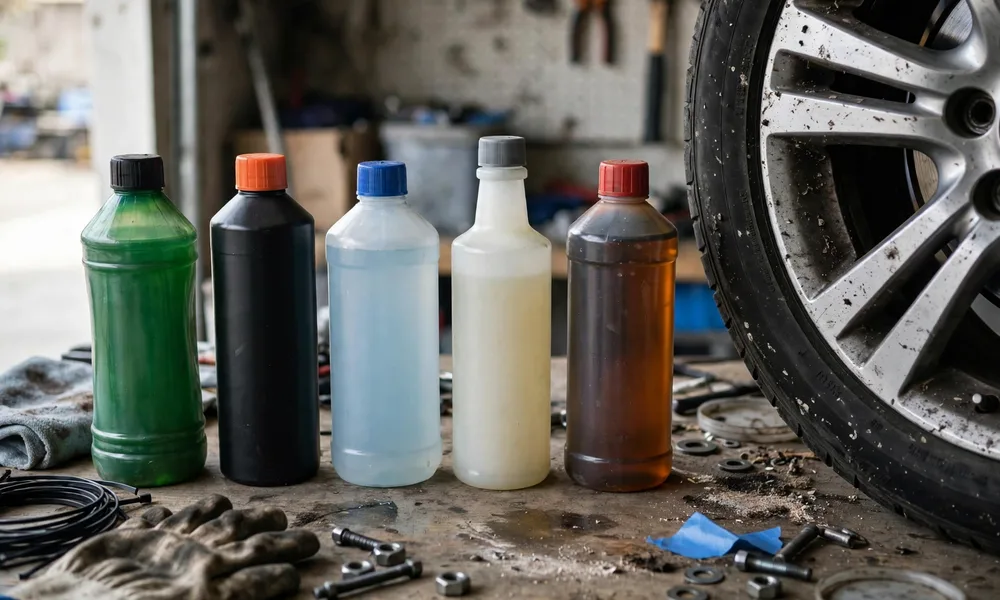
Most tyre sealants fall into three broad groups, and the right one depends on your vehicle, your climate, and whether you want protection before a puncture or a rescue after one. Latex-based sealants are the most common, and they are the ones most drivers will meet first. Fibre-based sealants use longer fibres for larger holes, and are popular with off-road drivers and cyclists. Aerosol sealant-and-inflator kits are the emergency option, combining a can of sealant with a propellant that partly inflates the tyre in one step.
| Sealant type | Best for | Strength | Weakness |
|---|---|---|---|
| Latex-based liquid | Cars, vans, everyday driving | Seals small tread holes cleanly | Dries out over time inside the tyre |
| Fibre-based liquid | Off-road, bikes, rough surfaces | Handles slightly larger holes | Can clog valves if overused |
| Aerosol sealant and inflator | Emergency roadside rescue | Seals and partly inflates in one step | One use only, limited range |
| Preventive tubeless sealant | Cyclists, motorbikes | Seals punctures before you notice | Needs topping up every few months |
What to look for before you buy
Start with the size of the tyre the sealant is made for. A bottle that treats one car tyre will not treat four, and a bottle made for a bicycle will barely coat the inside of a car tyre. The label should state the tyre sizes or the number of tyres it covers, and if it does not, choose another product. A sealant that is spread too thin will not seal anything, and one that is over-applied will pool, unbalance the wheel, and make a mess for the next person who removes the tyre.
How much to use and how long it lasts
For a car tyre, a typical dose is between 300 and 500 millilitres, depending on the tyre size and the product. Bicycle tyres need far less, often 60 to 120 millilitres, and a motorbike falls somewhere in between. Always follow the dose on the bottle rather than guessing, because too little will not seal and too much will slosh around and unbalance the wheel. After injecting the sealant, drive for a few miles at low speed so it spreads evenly, then check the pressure.
The mistakes that ruin a sealant repair
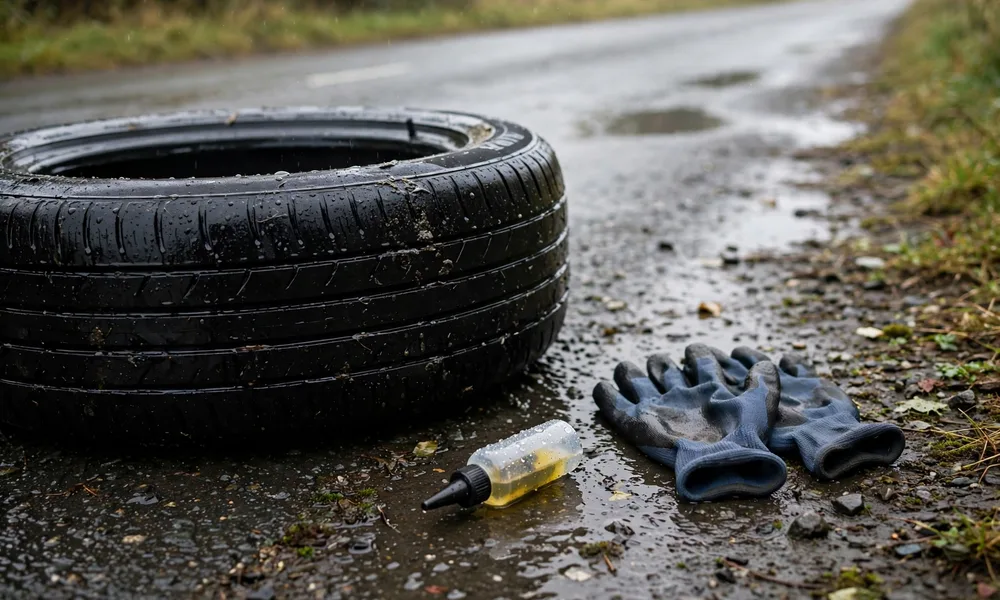
The most common mistake is driving on a flat tyre before using the sealant. Once a tyre has been driven flat, the sidewall is damaged, the rim may have cut into the rubber, and no sealant can make it safe again. If the tyre is completely flat, stop, and do not drive on it. Use the sealant only when the tyre still holds some air, or when the puncture is slow enough that the tyre is soft but not flat on the rim.
Sealant, repair kit, inflator, or spare wheel
A sealant is one tool in a small family of puncture solutions, and it helps to know where it sits. A tyre repair kit, usually a set of plugs, reamers, and sticky cords, repairs a hole from the outside by pushing a plug into it. That is a hands-on repair, and it needs more skill and more confidence than a bottle of sealant, but it can be more durable. A sealant is easier and faster, and it works from the inside, but it is messier and less permanent. Neither one is a substitute for a proper internal repair at a garage.
An inflator, meanwhile, does a different job entirely. The best tyre inflators pump air into a tyre, which is what you need after a sealant has plugged a hole and the tyre needs topping up. A sealant without an inflator is only half a solution, because a punctured tyre has lost air, and sealing the hole does not put the air back. That is why many drivers carry both, or buy a kit that combines them. A gauge then tells you whether the pressure is right, and a spare wheel is the fallback when none of the above is enough.
Cyclists face the same trade-offs on a smaller scale. Tubeless bike tyres use sealant as standard, and a good pump is still essential, because a sealant will not inflate a tyre. The best bike pumps are the ones that move enough air quickly and grip the valve first time, which is exactly what you want when you are standing on a country lane with a soft tyre. For a car driver, the equivalent is a compact inflator in the boot, next to the sealant, next to the gauge, so the whole kit is in one place when it is needed.
How to use a tyre sealant step by step
Next, shake the bottle well, connect the hose to the valve, and squeeze or pump the sealant in. Replace the valve core if you removed it, put the cap back on, and inflate the tyre to the correct pressure, using the pressure on the door jamb or fuel flap, not the number on the tyre sidewall. Then drive gently for two or three miles, no faster than 30 miles per hour, so the sealant spreads and seals. Stop, check the pressure again, and top it up if it has dropped.
Tyre sealant checklist
- Check the sealant matches your tyre size and valve type before you buy it.
- Keep the bottle, hose, valve tool, and instructions together in the boot.
- Never drive on a tyre that is flat on the rim, and never treat a sealant as a permanent repair.
- Leave a nail or screw in place until the sealant is inside the tyre.
- Inflate to the correct pressure after sealing, and check it again after a few miles.
- Tell the tyre fitter the tyre contains sealant, and get the tyre inspected promptly.
Frequently asked questions
Does tyre sealant work on all punctures?
No. It works on small holes in the tread, usually up to about 6 millimetres, caused by nails and screws. It does not work on sidewall damage, large cuts, torn rubber, or damaged rims, and it cannot fix a tyre that has been driven flat.
How long does a tyre sealant repair last?
An emergency sealant is a temporary fix, often limited to around 50 miles at low speed, and the tyre should be inspected or replaced promptly. A preventive sealant inside a healthy tyre can last three to six months before it needs topping up, but it is still not a permanent repair.
Will sealant damage my tyre pressure sensors?
Most modern sealants are labelled sensor-safe and will not harm the sensors inside the wheel. Older or cheaper formulas can coat a sensor and cause false warnings, so check the label before you buy, and tell the fitter if sealant has been used.
Can I use sealant in a tyre with a slow leak but no visible nail?
Yes, if the leak is small and in the tread area, the sealant may find and plug it as the tyre turns. Check the pressure regularly afterwards, because a leak with no visible cause can also be a faulty valve or a corroded rim, which sealant will not fix.
Is sealant better than a spare wheel?
It is faster and easier, and it takes up less space, but it is not better in every situation. A spare wheel works on damage a sealant cannot fix, and it is the safer choice for a large puncture, a sidewall cut, or a long journey. Many drivers carry both.
Can a tyre with sealant in it be repaired properly?
Sometimes. A small tread puncture can often be repaired from the inside with a plug and patch, but only if the tyre is otherwise sound and the sealant has not damaged it. A fitter needs to see the tyre, clean out the sealant, and judge whether a proper repair is safe.
The bottom line
The best tyre sealants in 2026 are the ones that are easy to use at the roadside, honest about the size of hole they can seal, safe for your sensors, and sold as a complete kit with a hose and clear instructions. They will not fix every puncture, and they will never replace a proper repair, but for the small tread punctures that cause most slow leaks, they are the fastest way to get moving again. Keep a bottle in the boot, keep an inflator and a gauge beside it, and remember the rule that matters most: seal it, check it, and get it looked at soon.