Key Takeaways
- The best bike racks in 2026 carry whole bicycles, on a car or in storage — not the same thing as roof racks, which carry cargo on a car roof.
- Start with how you will use it: a hitch rack for regular trips, a roof-mounted carrier for occasional use, and a wall or floor rack for storage.
- Platform hitch racks hold bikes by the wheels and are the easiest to load, while hanging racks hold bikes by the frame and are cheaper and lighter.
- Check the weight limit before you buy, especially for e-bikes, which are far heavier than ordinary bikes.
- Security matters: buy a rack with a locking hitch pin and cable locks, because a bike on a rack is an easy target at a service station.
The best bike racks in 2026 make it easy to take your bike wherever you want to ride. A good rack loads in two minutes, holds your bikes steady at motorway speed, and lets you get to the trail or the coast without wrestling a wheel into the boot. Measure your bikes and your car before you order, because a rack that does not fit is a rack you will return.
Before anything else, it helps to be clear about what a bike rack is. A bike rack is a frame or platform designed to carry whole bicycles, either on a car or in storage at home. That is different from a roof rack, which is a set of bars and a cargo carrier that sits on the roof of a car and carries luggage, kayaks, or boxes, not bikes.
The same distinction applies to the other ways of holding a bike. A bike stand holds a bicycle upright in one place. A bike basket carries shopping on the front or back of the bike itself while you ride. A rack is different again: it carries the whole bike somewhere else, on your car or on your wall, so the bike can travel with you or be stored out of the way.
What Makes a Bike Rack Different?
The first difference is the load. A bicycle is long, awkward, and heavy, with wheels that spin and handlebars that snag, and a rack has to hold all of that steady while you drive at speed. The best racks grip the bike at two or three points, so it cannot swing, bounce, or twist, and they keep the bikes far enough apart that they do not scratch each other.
The second difference is the fitting. A car bike rack has to attach to something solid: a tow bar, a set of roof bars, or the boot lid. Each fitting has its own limits, and the wrong one is a common and expensive mistake. A roof-mounted carrier needs roof bars, and lifting a heavy bike onto a roof is hard work.
Hitch, Roof, Boot or Wall: Which Suits You?
Hitch racks are the best choice for most drivers who carry bikes regularly. They slide into the tow bar receiver, tilt out of the way so you can open the boot, and hold the bikes low enough to load without lifting them over your head.
Roof-mounted bike carriers suit drivers who already have roof bars and carry bikes occasionally. They keep the back of the car free, they do not block the number plate or the lights, and they are the cheapest way to carry a bike on a car that already has bars. The drawback is the lift: hoisting a fifteen-kilo bike onto a tall car roof is hard, .
Boot-mounted racks are the cheapest option, strapping to the tailgate of a hatchback or estate with hooks and straps. They need no tow bar and no roof bars, they fold flat for storage, and they suit occasional use on a small car. Wall and floor racks are for storage at home: they hold bikes upright in a garage or hallway and free up space.
The Main Types of Bike Rack
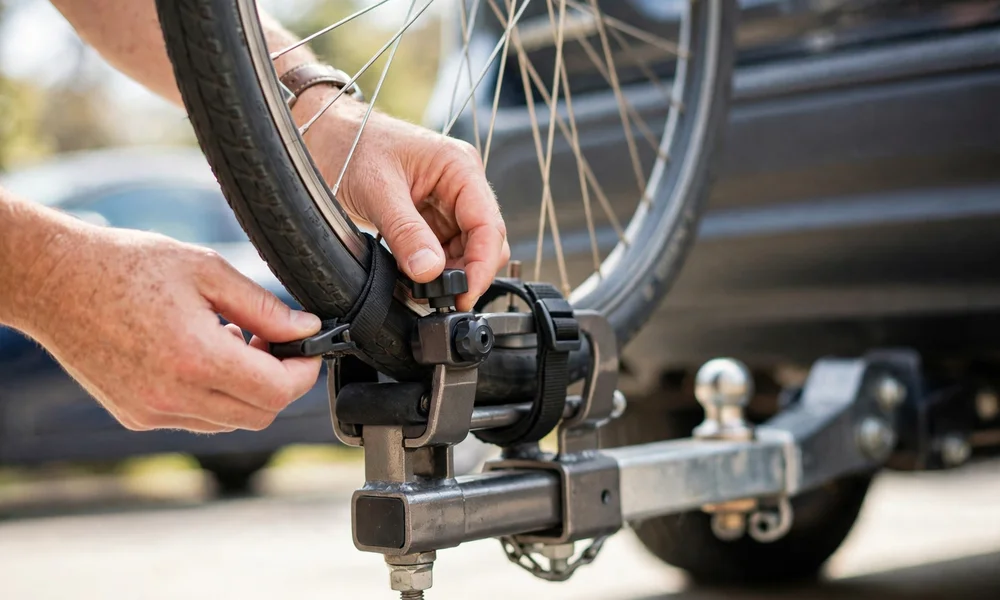
Platform hitch racks are the premium choice for car transport. Each bike sits in its own wheel tray, held by an arm that clamps the front wheel, so nothing touches the frame and bikes of different sizes fit easily. They load at waist height, they tilt for boot access, and the best ones carry e-bikes up to thirty kilos each.
Hanging hitch racks are lighter, cheaper, and simpler. The bikes hang from two arms by their top tubes, held with rubber cradles and straps, and the whole rack folds flat when it is not in use. They suit lighter bikes and occasional use, and they are the right choice if you want to spend less and your bikes are not heavy.
Roof-mounted carriers bolt to roof bars and hold one bike each, usually by the front fork or by the frame and wheels. They are stable at speed, they leave the rear of the car free, and they are the best option if you already have roof bars and only carry one or two bikes.
How We Judged Them
We judged each rack on stability first, because a rack that wobbles will damage your bikes and your car whatever it costs. We loaded each rack with real bikes, drove at motorway speed, and checked for sway, rattle, and any movement at the hitch or the straps.
Weight capacity and security came next. A rack should state its limit clearly and hold it honestly, especially for e-bikes, and it should come with a locking hitch pin and a cable lock so the bikes cannot be lifted off at a stop. A good rack should still feel solid after a season of use, not just on the first trip.
Comparison Table
| Rack | Type | Bikes | Max weight | Price |
|---|---|---|---|---|
| Thule EasyFold XT 2 | Platform hitch | 2 | 30 kg per bike | Around £650 |
| Thule VeloCompact 2 | Platform hitch | 2 | 25 kg per bike | Around £450 |
| Yakima HangOver 4 | Hanging hitch | 4 | 20 kg per bike | Around £400 |
| Saris Bones EX 3 | Boot-mounted | 3 | 15 kg per bike | Around £280 |
| Steadyrack Classic | Wall storage | 1 per rack | 25 kg per bike | Around £70 |
The Best Bike Racks in 2026
Thule EasyFold XT 2: Best Overall
The Thule EasyFold XT 2 is the best bike rack here, and the one most drivers should buy if they carry bikes regularly. It is a platform hitch rack that loads at waist height, folds flat for storage, and tilts so you can open the boot with the bikes still on. Each bike is held by its wheels, so carbon frames are safe, and it is rated for e-bikes up to thirty kilos each.
Thule VeloCompact 2: Best Platform Rack for Less
The Thule VeloCompact 2 is a lighter, cheaper platform hitch rack that keeps most of the EasyFold’s strengths. It holds two bikes by their wheels, tilts for boot access, and loads easily at waist height, and it is rated for bikes up to twenty-five kilos each, which covers most ordinary bikes and many lighter e-bikes.
Yakima HangOver 4: Best for Four Bikes
The Yakima HangOver 4 is the pick for families and groups who need to carry four bikes at once. It is a hanging hitch rack with padded arms that hold each bike by its top tube, and it is built for mountain bikes, with wide spacing so the bikes do not clash.
Saris Bones EX 3: Best Boot-Mounted Rack
The Saris Bones EX 3 is the best boot-mounted rack here, and the right choice if you have no tow bar and no roof bars. It straps to the tailgate of a hatchback or estate, holds three bikes, and folds flat when it is not in use. The articulated feet spread the load across the boot lid, and the rubber cradles protect the frames.
Steadyrack Classic: Best for Storage at Home
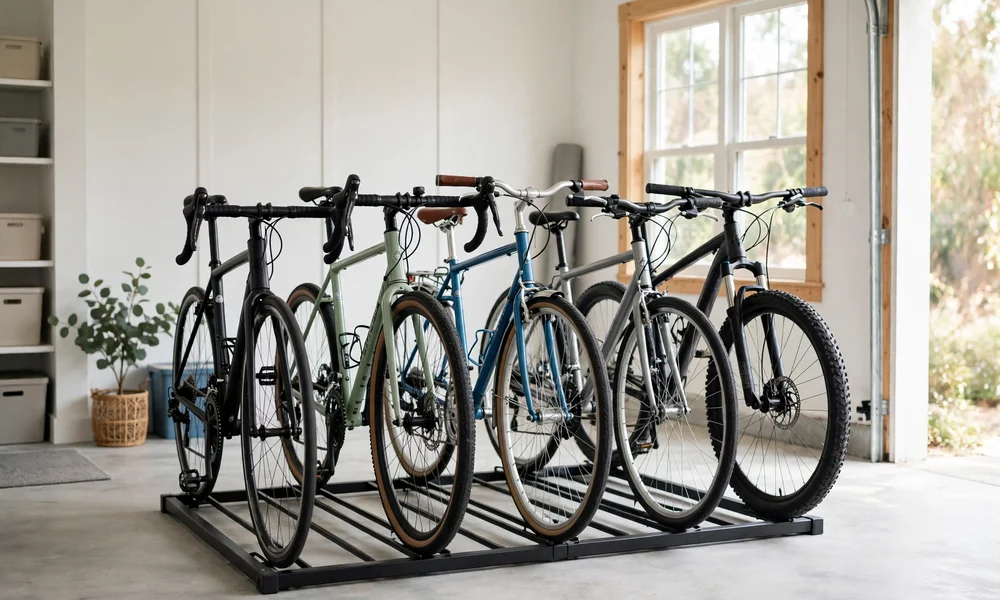
The Steadyrack Classic is the best wall rack for storage, and the right buy if your problem is space at home rather than transport. It mounts on a garage or hallway wall, holds one bike vertically by its front wheel, and pivots so bikes can be stored close together.
Weight Limits, Security and Fitting: What to Look For
Check the weight limit before you buy anything. Ordinary bikes weigh twelve to fifteen kilos, but e-bikes weigh twenty to thirty kilos, and many racks are not rated for them. Add the weight of all the bikes together and compare it with the rack’s total limit, then check the tow bar’s own limit, which is often lower than the rack’s.
Security is the part most buyers forget until a bike disappears. Buy a rack with a locking hitch pin, so the rack cannot be removed from the car, and a cable lock, so the bikes cannot be lifted off the rack. Check too that the rack does not block the number plate or the lights: a light board is required by law in many places when the rack covers the rear lights.
What to Check Before You Buy
- Fitting: tow bar, roof bars or boot lid — and whether your car has the one the rack needs.
- Weight limit: per bike and in total, including your e-bikes.
- Loading: can you load a bike alone at waist height?
- Frame contact: platform racks hold wheels, hanging racks hold frames.
- Security: locking hitch pin and cable lock included.
- Boot access: does the rack tilt so you can open the boot?
Frequently Asked Questions
Do I need a tow bar for a bike rack?
Only for a hitch rack, which is the best type for regular use. If you have no tow bar, a boot-mounted rack straps to the tailgate and a roof-mounted carrier bolts to roof bars, and both work well for occasional use.
Can a bike rack carry an e-bike?
Yes, but only if the rack is rated for it. E-bikes weigh twenty to thirty kilos, far more than an ordinary bike, so you need a platform hitch rack rated for at least twenty-five kilos per bike.
Will a bike rack scratch my car or my bikes?
It can, if the rack is cheap or badly fitted. Platform racks are the safest for bikes, because they hold the wheels and never touch the frame.
Is it legal to drive with bikes on a rack?
Yes, as long as the number plate and lights are visible. If the rack covers them, you need a light board with a number plate, which plugs into the car’s electrics.
How many bikes can a rack carry?
Most car racks carry two or three bikes, and some hanging racks carry four. Wall and floor racks hold one bike each, so you buy one per bike.
What is the difference between a bike rack and a bike stand?
A rack carries whole bikes somewhere else, on a car or on a wall for storage, while a stand holds a bike upright in one place so you can work on it or park it tidily.
The Bottom Line
The best bike rack for most drivers in 2026 is the Thule EasyFold XT 2, because it loads at waist height, holds bikes by their wheels, and handles e-bikes without fuss. If you want the same idea for less, buy the Thule VeloCompact 2. If you carry four bikes, buy the Yakima HangOver 4. Whichever you choose, start with your car and check the weight limits. For the rest of your cycling setup, see our guides to the best bike racks for cars, the best bike stands, and the best bike baskets.