The best bike stands in 2026 are the ones that hold your bike rock steady while you work on it. A bike stand is a frame that holds a bicycle upright and off the ground, either clamped by the seat post so the wheels spin freely for repairs, or cradling a wheel so the bike stands tidily in a hallway or garage. The best ones are stable, easy to set up, and fit the bikes you actually own. The worst ones wobble, tip over, or slowly damage your frame. This guide explains what separates the two, so the stand you buy is one you reach for every time.
Anyone who does their own bike maintenance knows the frustration of working without a stand. Cleaning a chain with the bike upside down, adjusting gears while the bike leans against a wall, or fixing a puncture with the wheel still on the ground all take twice as long and do half as good a job. A decent stand turns a chore into a quick task: the bike sits at working height, both wheels spin freely, and both hands are free. It also keeps the bike safe between rides, standing upright instead of leaning against a wall where it can fall.

Key Takeaways
- The best bike stands hold the bike steady without wobbling, even when you are pushing hard on a pedal or a bolt.
- Repair stands clamp the seat post and lift the bike to working height, while display stands simply hold a wheel to keep the bike upright.
- Check the weight rating and the clamp size before buying, because a stand that cannot hold your bike is useless.
- A wide tripod base matters more than the weight of the stand itself for real stability on uneven floors.
- Foldable stands save space, but only buy ones with a positive lock that clicks firmly into place.
What a Bike Stand Actually Is
A bike stand is a frame that holds a bicycle upright without a wall, a person, or a kickstand to lean on. There are two main kinds. A repair stand, also called a work stand, clamps the bike by the seat post and lifts it to working height, so you can spin the wheels, clean the chain and adjust the gears with both hands free. A display stand, also called a floor stand, stays on the ground and cradles a wheel, keeping the bike upright for storage.
It helps to be clear about the neighbours, because the names overlap. A bike rack is a frame for carrying whole bicycles on a car, a completely different job, and our guide to bike racks for cars covers that. A workbench is a flat, steady surface where you do jobs at the right height, and our guide to workbenches explains those. A sawhorse is a pair of supports that turn a sheet of timber into a work surface. A bike stand is none of these: it holds a bicycle itself, whether you are repairing it or parking it indoors.
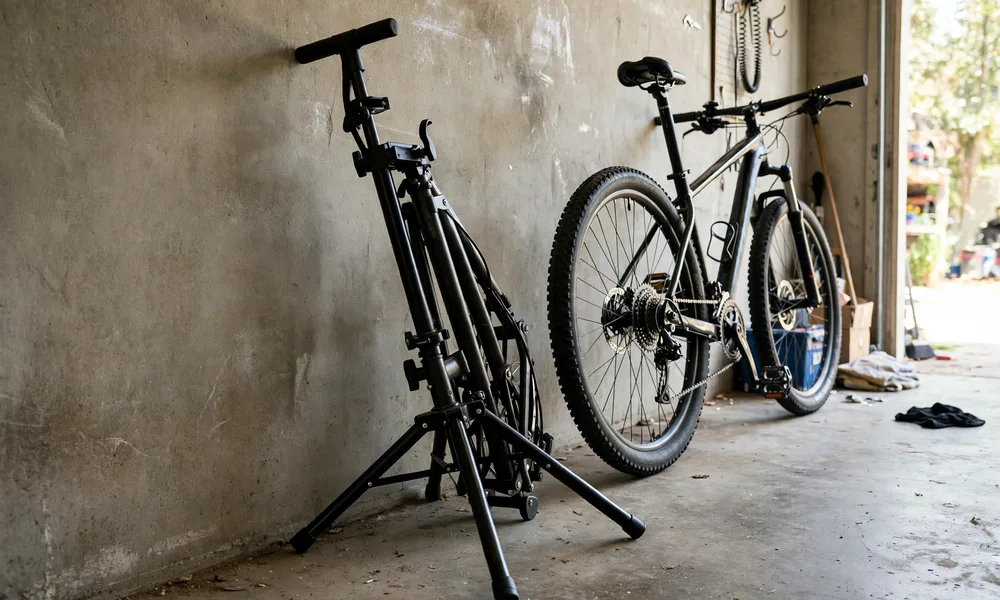
Tripod stands have three legs that fold away for storage and suit most home mechanics. Wall-mounted and bench-mounted stands bolt to something solid and suit a permanent workshop, but they cannot move. For most riders, a folding tripod repair stand is the right first buy, and a display stand is the right second buy if bikes crowd the hallway.
How We Judged the Bike Stands
We judged every stand on the same five things. First, stability: does it stay put when you push on a pedal or lean on the handlebars? Second, weight capacity: does it hold a heavy electric bike as well as a light road bike? Third, clamp quality: does the clamp grip the seat post firmly without marking it? Fourth, ease of use: can one person set it up and fold it away without a fight? Fifth, build quality: do the legs, hinges and locks survive years of use? A stand that tips over is worse than no stand at all.
The Best Bike Stands of 2026
The Home Mechanic Tripod: The Stand for Most Riders
The best tripod repair stand for home use is the one that disappears into a corner when you are done. It folds to a slim bundle, opens in seconds, and holds a bike up to about 30 kilograms at a comfortable working height. Look for a clamp with soft rubber jaws and a quick-release lever, and a height adjustment that locks with a solid collar rather than a flimsy pin. It stays steady when you are wrestling a stuck bottom bracket.
The Heavy-Duty Stand: For E-Bikes and Mountain Bikes
Electric bikes and downhill mountain bikes are heavy, and a light stand will flex or tip under them. The heavy-duty stand uses thicker tubing, a wider tripod base and a stronger clamp, and it is rated for 35 kilograms or more. It weighs more and costs more than the home mechanic stand, and it folds less neatly, but it holds a heavy bike without complaint. If your bike weighs more than 25 kilograms, this is the stand to buy.
The Wall-Mounted Stand: For a Permanent Workshop
Some riders have a dedicated workshop and never need to move the stand. For them, a wall-mounted or bench-mounted stand is the best choice. It bolts to the wall or the workbench once, and the arm swings out to hold the bike at exactly the right height, every time. There is no tripod to trip over and no legs taking up floor space. The downside is obvious: it only works in that one spot.
The Display Stand: For Hallways and Garages
Not every stand is for repairs. The display stand exists to keep a bike upright and out of the way, and it does that job with a small frame that cradles a wheel. The best display stands work with most tyre widths, from narrow road tyres to wide mountain bike tyres, and they fold flat when not in use. They cost far less than a repair stand and take up almost no space. If your hallway is a forest of leaning bikes, a row of display stands will transform it.

Bike Stands Compared
| Stand type | Weight rating | Best for | Weak point |
|---|---|---|---|
| Tripod repair stand | Up to 30 kg | Home repairs | Needs floor space |
| Heavy-duty stand | 35 kg or more | E-bikes and mountain bikes | Heavy and bulky |
| Wall-mounted stand | Up to 30 kg | Permanent workshops | Cannot move |
| Display stand | Up to 25 kg | Storage and hallways | Not for repairs |
The Worst Bike Stands of 2026
The worst bike stands share the same faults, and they are easy to spot before you buy. The first is a narrow tripod base: legs that splay only a little will tip the moment you push on a pedal. The second is a clamp with hard metal jaws and no rubber lining, which marks or crushes a seat post. The third is a height adjustment that slips under load, so the bike slowly sinks while you work. The fourth is thin tubing that flexes visibly when a bike is clamped.
There is also a weight trap worth knowing about. Some stands advertise a high weight rating but only achieve it with the bike perfectly balanced, which never happens in real use. A stand rated for 30 kilograms may struggle with a 25-kilogram electric bike once you start turning the cranks. When in doubt, buy a stand rated well above your bike’s weight, and test it with a firm push on the handlebars before you trust it.
Setting Up Your Bike Stand So It Works
Setting up a repair stand well takes a minute and saves a dropped bike. Open the tripod legs fully and check that all three feet touch the floor. If the floor is uneven, adjust the legs until the stand does not rock. Raise the clamp to about chest height, then open the jaws and offer the bike up by the seat post. Clamp the seat post, never a carbon frame tube, because the clamp can crush carbon. Tighten the clamp until the bike is firm, then give the handlebars a gentle push. If the stand rocks or the bike slips, lower it and start again.
Then use the stand properly. Keep the bike level, not tilted, so oil and cleaner do not run where they should not. Spin the wheels before you start work, to check that nothing rubs the stand. And when you finish, wipe the clamp jaws clean, because grit on the jaws will scratch the next seat post you clamp.
Checklist: Buying a Bike Stand
- Weigh your bike first, then buy a stand rated well above that weight, not just equal to it.
- Check the clamp fits your seat post diameter, especially if you ride a dropper post or an aero post.
- Look for a wide tripod base and rubber feet, so the stand stays put on smooth garage floors.
- Choose a clamp with soft rubber jaws and a quick-release lever for fast, safe mounting.
- Test the height adjustment under load, and avoid stands that slip or creep downwards.
- Fold the stand away after use, and check the locks and hinges once a season for wear.
Frequently Asked Questions
Can a bike stand damage my frame?
It can, if you clamp the wrong part. Always clamp the seat post, never a frame tube, and never clamp a carbon frame. Use a clamp with soft rubber jaws and tighten it only as much as needed.
What weight rating do I need?
Buy a stand rated at least 5 kilograms above your bike’s weight. A road bike of 10 kilograms is fine on any stand, but an electric bike of 25 kilograms needs a heavy-duty stand rated for 35 kilograms or more. The rating matters most when you push on the bike during repairs.
Are folding stands as stable as fixed ones?
A good folding tripod stand is stable enough for home repairs, and it packs away. A wall-mounted stand is more rigid, but it cannot move. For most riders, the folding stand is the better buy, because it works in the garage, the garden, or at a race.
Can I use a repair stand on a dropper seat post?
Yes, but with care. Clamp the lower, fixed part of the dropper post, never the moving upper shaft, and do not over-tighten. Some riders use a dummy post or a clamp adapter instead, which avoids the dropper entirely.
Do display stands fit all tyre widths?
Most display stands adjust to fit tyres from 25 millimetres to over 60 millimetres, but the cheapest ones only suit narrow road tyres. Check the stated tyre width range before buying, and measure your tyres if you ride a mountain bike or a fat bike.
Is a bike stand worth it if I only ride occasionally?
Yes, even for occasional riders. A stand makes cleaning, puncture repair and gear adjustment far quicker, and a display stand keeps the bike safe between rides. The cheapest useful repair stand costs less than a single shop service. Our guide to bike pumps pairs well with a stand for home repairs.
The Bottom Line
The best bike stands in 2026 are stable, strong enough for your bike, and easy to set up. Buy a folding tripod repair stand rated well above your bike’s weight, clamp the seat post with soft rubber jaws, test it with a firm push before you trust it, and fold it away when you are done. A good stand turns maintenance from a chore into a quick job, and it keeps your bike safe between rides. That is money well spent on any bike you care about.