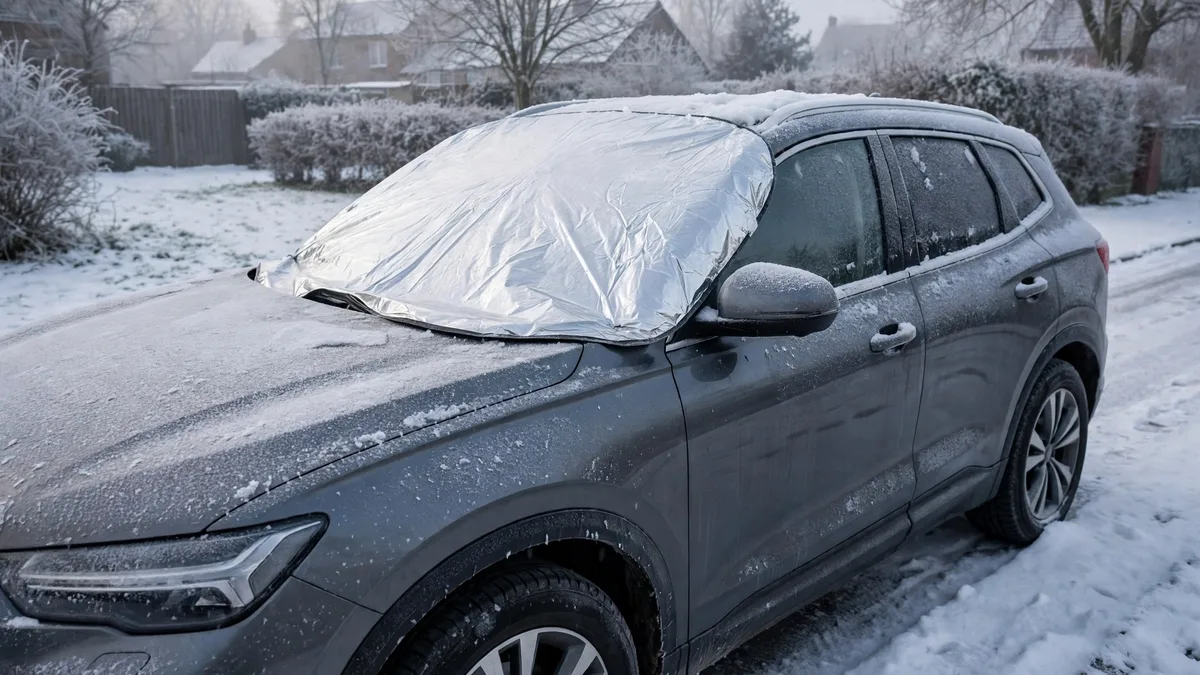
The best windshield covers in 2026 are the ones that save you from scraping frost on a freezing morning and from climbing into an oven on a hot afternoon. A windshield cover is a shaped sheet, usually with a reflective or waterproof face, that fits over the outside of the front windscreen and is held in place by the wipers, the doors, or magnets. It sits between the glass and the weather, so frost, snow, and ice form on the cover instead of the windscreen, and in summer it reflects the sun before the heat can build up inside the car. Peel it off in the morning, shake off the frost, and the glass underneath is clear.
Key takeaways
- A windshield cover sits outside on the glass, while a sunshade sits inside, and the two solve different problems.
- Frost and snow covers stop ice bonding to the windscreen, so you peel the cover off instead of scraping the glass.
- Fit matters more than brand: a cover that is too small leaves the edges exposed, and one that is too large flaps in the wind.
- Reflective covers help in summer too, by bouncing sunlight off the glass before heat builds up inside the car.
- Always remove the cover before driving, and never drive with any part of it still on the windscreen.
How a windshield cover actually works
Frost forms when moisture in the air meets a surface colder than freezing, and a car windscreen on a clear winter night is one of the coldest surfaces around. The glass radiates heat into the sky, its temperature drops below freezing, and water vapour settles on it as a thin, hard layer of ice that bonds to the glass. Scraping it off takes time, and on a cold morning it takes patience too. A cover breaks that chain by putting a barrier between the glass and the damp night air, so the frost forms on the cover, not the windscreen.
Windshield cover or sunshade: the key distinction
A windshield cover and a sunshade are often confused, but they are different products that live in different places. A windshield cover sits outside, on the glass, held by the wipers, magnets, or straps that tuck into the doors. A sunshade sits inside, behind the glass, usually a folding panel that props up against the windscreen from the cabin. The cover stops frost and snow before they reach the glass, because it is on the outside; a sunshade cannot do that, because the frost is already on the outside of the glass by the time the sunshade matters.
The main types of windshield cover compared
Windshield covers come in four main forms, and the right one depends on your climate, your car, and how much effort you are willing to spend fitting it in the dark. A magnetic cover sticks to the metal around the windscreen with magnets sewn into the edges, and it is the fastest to fit. A strap cover uses flaps that tuck into the front doors, which holds it firmly in wind but takes longer to fit. A wiper-tuck cover slides under the wiper blades, which is simple but can lift in strong wind. A full all-season cover combines a waterproof frost face with a reflective sun face, and it is the most versatile option.
| Cover type | Best for | Strength | Weakness |
|---|---|---|---|
| Magnetic cover | Quick winter mornings | Fastest to fit and remove | Magnets grip poorly on some cars |
| Strap cover | Windy areas, overnight parking | Stays put in strong wind | Slower to fit, straps can leak |
| Wiper-tuck cover | Occasional frost, mild climates | Simple, light, cheap | Lifts in wind, covers less glass |
| All-season cover | Frost in winter, heat in summer | One cover for the whole year | Bulkier to fold and store |
What to look for before you buy
Start with the size of your windscreen, not the size of your car. Windscreens vary more than most drivers realise, and a cover made for a small hatchback will leave the top corners of a large SUV exposed, which is exactly where frost gathers. Measure the width and height of the glass, and compare them with the cover’s stated size, allowing a few centimetres of overlap on every side. A cover that is slightly too large is better than one that is slightly too small, because the excess can be tucked away, while a gap cannot be fixed.
Will a cover fit my car?
Most covers are sold in sizes, usually small, medium, large, and extra large, and the size chart is based on the windscreen, not the car model. A tall, upright windscreen on a van needs a different shape from a raked, sloping windscreen on a sports car, even if the two cars are the same width. Check the shape as well as the size, and if the seller lists compatible models, use that list, but measure anyway, because trim levels and model years change the glass.
How to fit a windshield cover properly
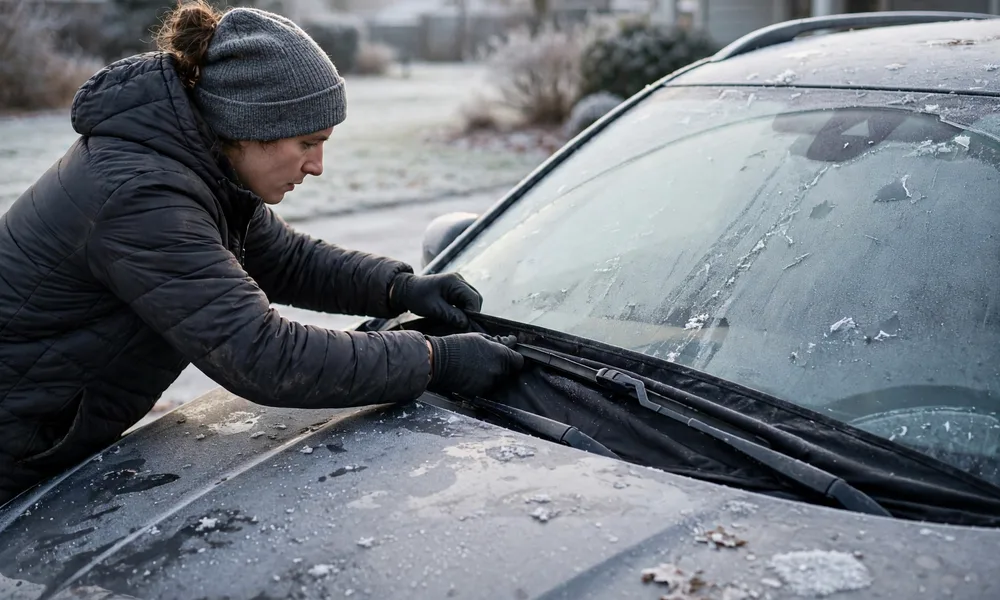
Fitting a cover takes less than a minute once you have done it twice, but the first time is worth doing in daylight. Start with a clean, dry windscreen, because grit trapped under a cover will scratch the glass when the wind moves it. Lay the cover over the glass with the right face outwards: the waterproof or reflective face goes outside, and the soft face goes against the glass. If the cover is reversible, the frost face usually goes out in winter and the reflective face goes out in summer, and the label should say which is which.
Windshield cover, car cover, and ice scraper: what each one does
A windshield cover is not a car cover, and the two should not be confused. A car cover wraps the whole vehicle, bodywork, roof, and glass, and it is meant for cars that are parked for days or weeks, often outdoors, to protect the paint from dust, rain, and sun. A windshield cover protects one piece of glass, and it is meant for overnight parking and daily use, fitted in a minute and removed in seconds. If you only want a clear windscreen in the morning, a car cover is far too much work, and if you want to protect the whole car for a month, a windshield cover is far too little.
An ice scraper is the tool a cover replaces, and the two are best understood as a pair. The best ice scrapers clear a frozen windscreen in minutes, and they are the fallback for the morning you forget the cover, or the night the frost is heavier than forecast. A cover saves you the scraping on most mornings, and a scraper saves you on the rest, so keeping both in the car is sensible, not wasteful. The cover does the daily work, and the scraper handles the exceptions.
The same logic applies to the rest of the glass. A cover protects the windscreen, but the side windows and the rear window still frost up, and they still need clearing before you drive. The best windshield wipers will clear rain and light snow from the glass once you are moving, but they are not a substitute for clearing the windows before you set off, and they will not clear a windscreen that is still covered in ice. A cover, a scraper, and good wipers are three parts of the same winter routine, and each one does a job the others cannot.
Summer heat, and the glass you drive behind
In summer, a windshield cover earns its keep in a different way. Park a car in full sun, and the cabin temperature climbs fast, because sunlight passes through the glass and heats the dashboard, the seats, and the steering wheel, which then radiate that heat back into the air. A reflective cover breaks that chain by bouncing the sunlight off before it reaches the glass, and the difference inside the car is noticeable, especially on the steering wheel and the seats, which are the first things you touch. A dash cam mounted behind the glass still needs a clear view, so the cover must always come off before you drive.

Windshield cover checklist
- Measure your windscreen before buying, and allow overlap on every side.
- Choose a waterproof face for winter and a reflective face for summer, or an all-season cover with both.
- Fit the cover with a clean, dry windscreen, and check every edge is held down.
- Remove the cover before driving, and never drive with any part of it on the glass.
- Dry the cover when you can, and store it in its bag in the boot so it is there when you need it.
- Keep an ice scraper in the car for the mornings the cover was not fitted or the frost beat it.
Frequently asked questions
Will a windshield cover stop all frost?
On most nights, yes, the windscreen underneath will be clear or nearly clear. On a very hard frost, a little ice may still form at the edges where the cover does not reach, but the main glass will be clear, and the edges are quick to scrape. A cover that is too small is the usual cause of edge frost.
Can a windshield cover damage the glass or paint?
Not if it is used properly. A soft inner face will not scratch clean glass, but grit trapped under the cover can, so always fit it on a clean windscreen. Magnets can mark paint if they drag across it, so lift them off rather than sliding them, and keep the cover dry when stored.
Do magnetic covers work on every car?
No. Magnets need exposed steel around the windscreen, and some cars use aluminium, plastic, or trim that will not hold them. Check your car’s bodywork before buying a magnetic cover, and choose a strap cover if you are unsure, because straps work on any car with doors.
Can I leave a windshield cover on for days?
You can, but it is not ideal. A cover left on for days can trap moisture underneath, and in warm weather it can stick to the glass. It is designed for overnight use, so take it off, dry it, and refit it if you need it again the next night.
Is a windshield cover better than remote heating?
It is cheaper and it uses no fuel or battery, and it stops the frost forming rather than melting it afterwards. Remote heating is more convenient, because the car does the work, but it takes time and energy, and it does not help with snow. Many drivers use both: a cover on the coldest nights, and heating on the rest.
What size windshield cover do I need?
Measure the width and height of your windscreen, and choose a cover that is a few centimetres larger on every side. Size charts based on car models are a useful guide, but measuring is more reliable, because the same model can have different glass in different years and trim levels.
The bottom line
The best windshield covers in 2026 are the ones that fit your windscreen, stay put in wind, peel off without a fight, and fold away small enough to live in the boot. They save you the worst job on a winter morning and the hottest seat on a summer afternoon, and they do it with no power, no moving parts, and no fuss. Measure the glass, pick a cover with a waterproof face for frost and a reflective face for sun, fit it on a clean windscreen, and keep an ice scraper in the car for the mornings it does not cover. That is the whole routine, and it works.


