Top Ice Scrapers for Frosty Mornings in 2026
The best ice scrapers for frosty mornings in 2026 are the ones that clear a windscreen in minutes without scratching the glass, freezing your hands, or falling apart by February. The best ice scrapers turn a miserable chore into a quick job: a few firm strokes, a clear patch of glass, and you are on your way while the neighbours are still chipping away with a credit card. This guide compares the main types, explains what actually matters when you buy one, and shows you how to clear a frozen windscreen properly.
Key Takeaways
- A long-handle scraper with a brush is the best ice scraper overall in 2026, because it clears frost and sweeps snow off the roof in one tool.
- A wide, stiff blade clears a windscreen fastest, while a narrow blade is better for side windows, mirrors, and tight corners.
- Scrape frost with short, firm strokes and let the blade do the work, because pressing harder only tires your arm and risks scratching the glass.
- Always clear every window, the mirrors, and the roof before driving, since a small peephole is not enough to drive safely.
- Keep a compact scraper in the car at all times, because frost forms overnight and the morning you need one is never the morning you planned for.
The Best Ice Scrapers of 2026 at a Glance
| Scraper Type | Best For | Blade | Weakness |
|---|---|---|---|
| Long-handle brush combo | Best overall, daily winter use | Wide, 4 to 5 inches | Too long for a glovebox |
| Compact pocket scraper | Spare in the car, emergencies | Narrow, 3 to 4 inches | Short reach, cold hands |
| Wide-blade scraper | Thick frost, large windscreens | Extra wide, 5 to 6 inches | Awkward on curved glass |
Ice Scraper vs Snow Shovel: A Different Tool for a Different Job
An ice scraper and a snow shovel look like cousins, but they solve different problems. A snow shovel moves bulk snow off a driveway or a path, with a long handle and a broad blade built to push and lift weight. An ice scraper removes a thin, hard layer of frost or ice bonded to glass, with a short, stiff blade that bites into the frozen layer and peels it away in flakes. You would never clear a driveway with an ice scraper, and you should never attack a windscreen with a snow shovel. The two jobs often arrive together: snow falls, the temperature drops, and by morning the car is covered in snow with ice underneath. Brush the loose snow off first, then scrape the ice that remains. A long-handle scraper with a brush does both jobs in one tool. If you want the full picture of the bigger tool, our guide to the best snow shovels of 2026 covers the driveway side of winter properly.

The Main Types of Ice Scraper
The Long-Handle Brush Combo: Best Overall
The long-handle scraper with a brush on the other end is the best ice scraper for most drivers in 2026. The handle is usually twenty-four to thirty-six inches long, so you can reach the middle of the windscreen and across the roof without climbing onto the car. One end carries the scraper blade, the other a brush for sweeping loose snow off the roof, bonnet, and boot. Clearing the roof matters: snow left on the roof slides onto the windscreen the first time you brake. The best combos have a telescopic handle, a blade wide enough to clear a good strip per stroke, and a brush head soft enough not to scratch paint. The weakness is size: a full-length combo will not fit in a glovebox, so it lives in the boot or behind a seat.
The Compact Pocket Scraper: Best Spare
A compact ice scraper is the size of a large phone, and its job is to be there when you need it. It fits in a door pocket, a glovebox, or a coat pocket, and it costs so little there is no excuse for not owning one. The blade is usually three to four inches wide, enough for a windscreen if you are patient, but the short handle means cold fingers on a bitter morning and slower work on a large windscreen. The best compact scrapers have a comfortable grip, a toothed edge for breaking up thick ice, and a small notch for clearing the wiper blades. Buy one as a spare, keep it in the car all winter, and let the long-handle combo do the daily work.
The Wide-Blade Scraper: Best for Thick Frost
A wide-blade scraper is the specialist for heavy frost and thick ice. The blade is five to six inches across, and it clears a broad strip of glass with every stroke, so on a morning when the whole windscreen is coated in thick frost, it can halve the time the job takes. The blade is usually stiff, hard plastic that holds its edge, and the handle is shaped for a firm two-handed grip. The trade-off is manoeuvrability: a wide blade is awkward on curved glass, around the edges of the windscreen, and on small side windows, where a narrower blade follows the curve better. It is the best second tool if you live somewhere with hard winters, but not the best first tool for most drivers.
What Actually Matters When You Buy an Ice Scraper
The blade is the first thing to judge. A good blade is stiff, hard, and holds a clean, straight edge. It should bite into frost on the first stroke, not skate across the surface or bend under pressure. Most blades are hard plastic, which is safe for glass when clean and undamaged. Metal blades cut ice faster, but a single grain of grit under a metal edge can scratch a windscreen, and a scratch is permanent. For most drivers, hard plastic is the safer choice, and a toothed edge is useful for breaking up thick ice before the smooth edge clears it away.
The handle is the second thing to judge. A handle that is too short forces your hand close to the cold glass. One that is too thin is hard to grip with gloves on. Smooth plastic becomes slippery when wet. The best handles are long enough to reach across the windscreen, thick enough to grip with a gloved hand, and textured or rubberised so they stay put when your gloves are damp. Reach matters too: the middle of the windscreen is hardest to reach from the driver’s door, and a telescopic handle solves that while still fitting in the boot.

How to Clear a Frozen Windscreen Properly
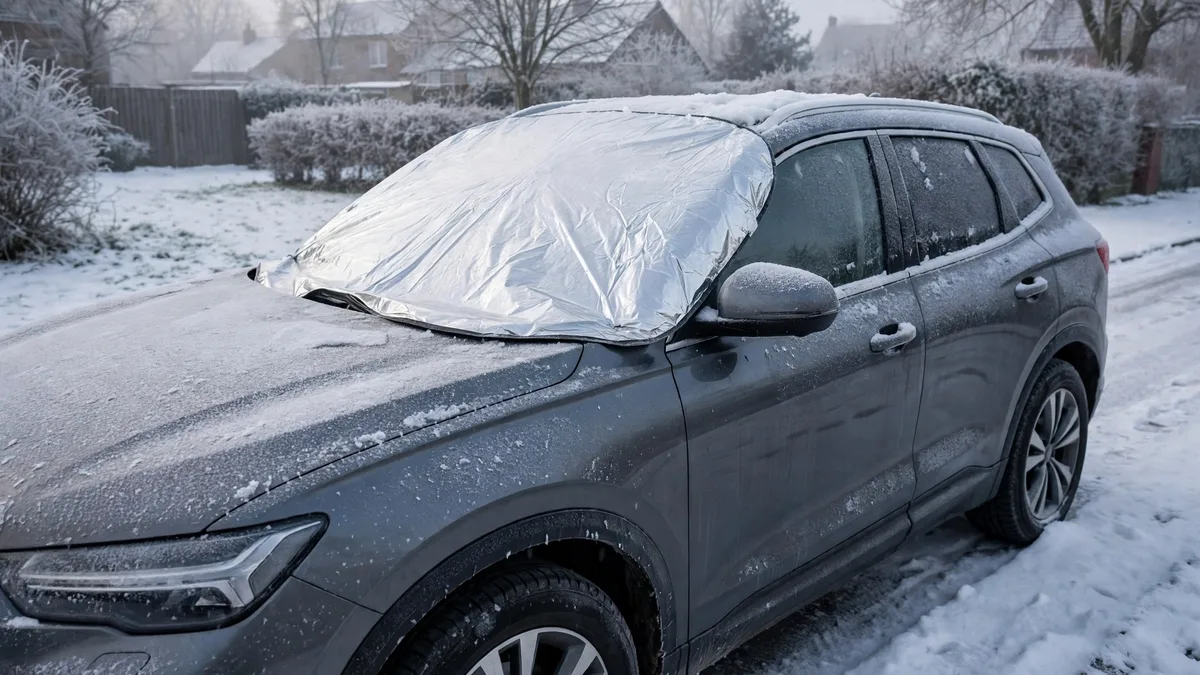
Start the car and switch on the demister and heated rear window before scraping, so warm air softens the frost from inside while you work outside. Never pour boiling water on a frozen windscreen: the sudden temperature change can crack the glass, and the water freezes again almost immediately in cold air. Brush loose snow off first, starting with the roof, then lift the wiper blades and clear the ice beneath them, because frozen wipers can tear when switched on. Check the wipers while you are there: a wiper that smears or chatters needs replacing, and our guide to the best vs worst windshield wipers of 2026 will help you pick a good set.
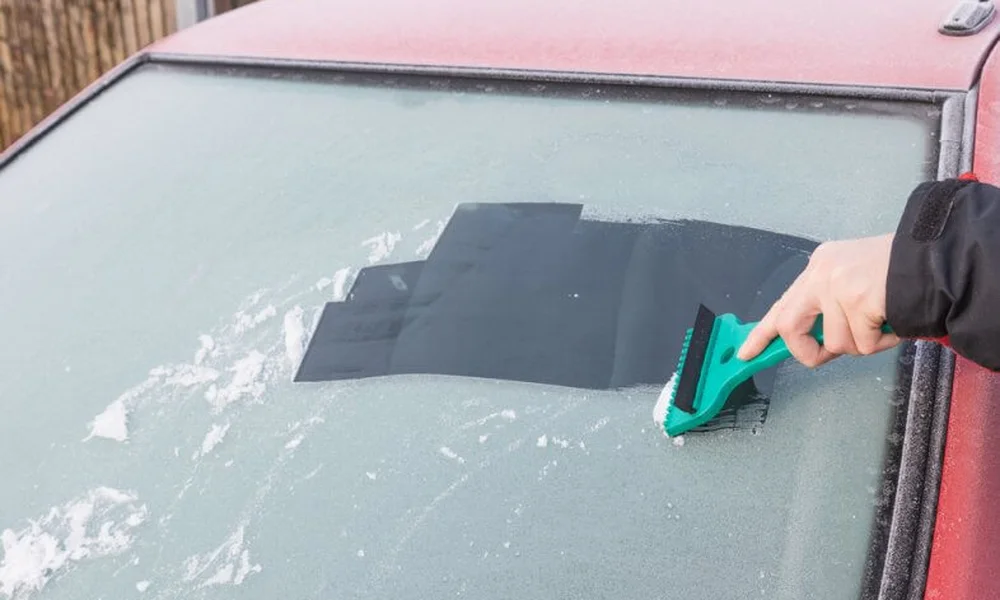
Scrape with short, firm, overlapping strokes, working from the top down so loose frost falls away from the area you have already cleared. Let the blade do the work: pressing harder does not clear frost faster, it just tires your arm and risks scratching the glass if grit gets trapped under the blade. If you hit thick ice, use the toothed edge to break it into smaller pieces first, then clear them with the smooth edge. Clear every window, not just a peephole in front of the driver, plus the mirrors, the lights, and the number plates. The whole job should take three to five minutes with a good scraper.
The Mistakes That Make Frosty Mornings Worse
The most common mistake is scraping with something never meant to touch glass. Credit cards, metal spatulas, and kitchen knives all scratch windscreens, and a scratch in your line of sight can fail a roadworthiness check. The second mistake is using the wipers to clear frost. Wipers move water, not ice, and running them over a frozen screen tears the rubber and can burn out the wiper motor. Clear the ice by hand first, then let the wipers do their proper job.
The third mistake is leaving the car running unattended while the screen clears itself: apart from the theft risk, idling wastes fuel and is slower than scraping. The fourth mistake is forgetting the roof, the lights, and the mirrors, which are all part of seeing and being seen. And the fifth is storing the scraper somewhere useless: a scraper in the garage is no help when the car is parked at work, so keep the main scraper in the boot and a compact spare in a door pocket. If you drive in winter regularly, our guide to the top coupes for winter driving in 2026 shows how the right car makes the whole season easier.
Your Frosty Morning Checklist
- Keep a long-handle brush combo in the boot and a compact scraper in a door pocket.
- Start the car, switch on the demister and the heated rear window before scraping.
- Brush snow off the roof first, then scrape the windscreen from the top down.
- Clear every window, the mirrors, the lights, and the number plates.
- Lift the wipers, clear the ice beneath them, and never use wipers on frost.
- Check the blade each autumn and replace a blunt or chipped scraper before winter.
Frequently Asked Questions
What is the best ice scraper for frosty mornings in 2026?
A long-handle scraper with a brush is the best all-round choice: it reaches across the windscreen, clears the roof, and sweeps snow away in one tool. Add a compact scraper as a spare in a door pocket, and you are covered for every frosty morning.
Can an ice scraper scratch my windscreen?
A clean plastic blade used properly will not scratch glass, but grit trapped under the blade can. Keep the blade clean, do not scrape over sand or grit, and never use a metal blade or a makeshift tool such as a knife or a credit card.
Is it better to use de-icer spray or an ice scraper?
A scraper is faster for most frost and costs nothing per use, while de-icer spray helps on thick ice and hard-to-reach spots. Many drivers use both: spray on the worst patches, then scrape.
How do I clear thick ice after freezing rain?
Use the toothed edge to break the ice into small pieces, then clear them with the smooth edge. Start the demister first so the glass warms from inside, and be patient: forcing thick ice risks scratching the glass.
Should I leave my wipers up overnight in frost?
Raised wipers stop them freezing to the screen, which protects the rubber, but it can strain the arms in strong wind. A simpler habit is to lift them briefly each morning and clear the ice beneath before switching them on.
Where should I keep my ice scraper?
Keep the main scraper in the boot or behind a seat where you can reach it, and a compact spare in a door pocket or the glovebox. Never store your only scraper in the garage, because frost can strike wherever the car is parked.
The Bottom Line
The best ice scraper for frosty mornings in 2026 is a long-handle brush combo with a stiff, wide plastic blade, backed up by a compact scraper kept in the car as a spare. It clears frost fast, reaches the whole windscreen, and sweeps snow off the roof. Buy it before the first hard frost and keep it where you can reach it.