A car floor mat for winter has one job: to survive salt, slush and freezing mornings, and to keep the carpet underneath dry when the weather does its worst. The worst car floor mats for winter in 2026 fail at it in ways that leave a car with a damp smell, a stained carpet, or a mat that has cracked into pieces by February. They stiffen in the cold until they curl, soak through on the first snowy day, or freeze to the carpet overnight. Drivers buy them hoping for a mat that handles winter. What they get is a mat that cracks, a mat that soaks, or a mat that becomes a sheet of ice under their feet.
Rubber That Cracks in the Cold
Winter is the hardest test a car mat will ever face, and the worst ones fail it by going stiff and cracking. Cheap rubber hardens in the cold, loses its flexibility, and cracks along the folds the first time it is lifted out to clean. A mat that was supple in the shop becomes a rigid sheet in January, and a rigid sheet cannot follow the shape of the footwell, so it curls at the corners and leaves gaps where slush runs straight onto the carpet. The damage is worst in the coldest weeks, when the mat is lifted out, flexed, and put back, because each flex opens the cracks a little further. A mat that cracks in winter is a mat that was never made for winter.
Look for a mat made from a flexible thermoplastic that stays supple in the cold instead of going stiff and cracking. A good all-weather liner uses a material that bends in freezing weather without splitting, and it should feel flexible when you lift it by one corner, even on a cold morning. Hold the mat up and bend it: if it resists or creaks, it will crack in winter. A mat that stays flexible in the cold is a mat that will survive the season, and a mat that goes stiff is a mat that will be in pieces by February.
Snowmelt That Freezes Into Ice
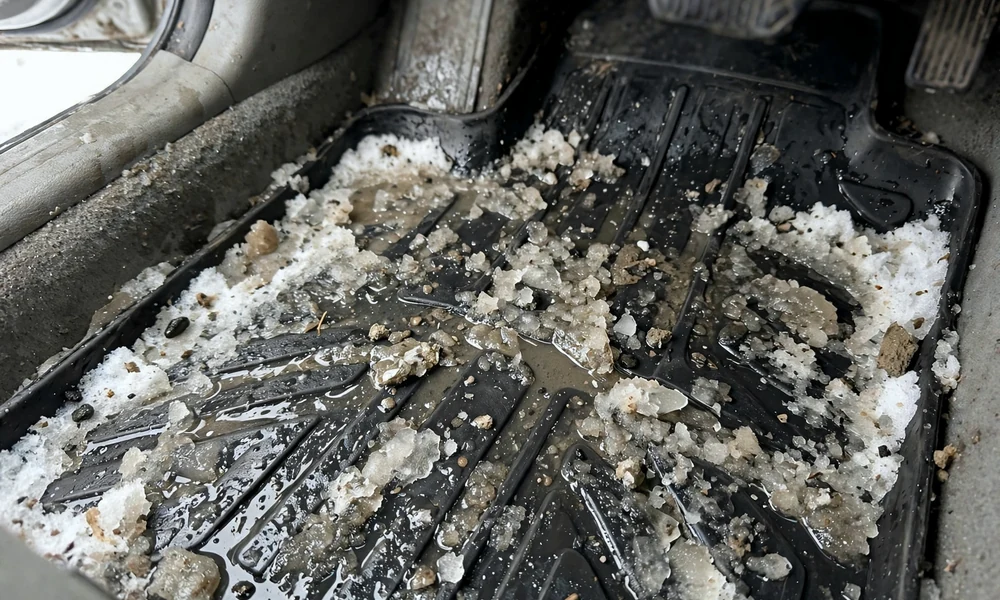
A winter mat has to deal with snow that melts, and the worst ones turn the melt into a worse problem. Slush from winter boots pools on the mat, and on a freezing night the pool turns into a sheet of ice, so the driver steps onto a skating rink in the morning. The ice makes the mat slippery underfoot, it lifts the mat away from the carpet, and when it finally melts it runs off the edges onto the carpet it was meant to protect. A mat that holds water is doing its job, but a mat that lets that water freeze into a sheet has turned a puddle into a hazard.
The answer is raised edges and deep channels that hold slush on the mat instead of letting it run off, with a surface that drains rather than pools. A deep-wall tray with drainage channels keeps meltwater contained until you lift the mat out and empty it, while a flat mat lets the water spread and freeze. Lift the mats out and empty them regularly in winter, and never let a pool sit overnight in freezing weather. A mat that contains the melt is a mat that protects the carpet, and a mat that lets it freeze is a mat that has made winter worse.
Salt That Eats Through Mats
Road salt is the quiet killer of winter car mats, and the worst ones have no defence against it. Salt carried in on boots sits on the mat, draws in moisture, and eats into the material, staining carpet mats white and corroding the backing until the mat falls apart. Carpet mats are the worst hit: salt crystals work into the pile, the pile flattens, and the salt stains the carpet underneath white, where no amount of cleaning will shift it. A mat that cannot handle salt is a mat that will look ruined by February, and a carpet that has been salt-stained is a carpet that hurts the car’s resale value.
Rubber and thermoplastic liners are the right answer for salt, because they are easy to clean and they hold water without absorbing it. Hose a rubber mat down, scrub the tread, and let it dry in the sun, and the salt comes off with the dirt. Carpet mats are quieter and look smarter, and they suit dry climates, but in a salty winter they are the wrong choice, however good they look in the shop. Many drivers keep carpet for summer and rubber for winter, which is the sensible answer. A mat that rinses clean is a mat that survives salt, and a mat that absorbs it is a mat that will be stained by spring.
Mats That Freeze to the Carpet
The strangest winter failure is also one of the most annoying: a mat that freezes to the carpet underneath it. Water soaks through a thin mat, pools between the mat and the carpet, and on a freezing night the two freeze together into a single sheet. In the morning the driver cannot lift the mat out to clean it, and when it finally comes free it takes a layer of carpet fibres with it. The damage is slow and easy to miss, because the mat looks fine from above while the carpet underneath is being torn and rotted. A mat that freezes to the floor is a mat that has failed in the most literal way possible: it has become part of the car.

The fix is a mat with a solid, sealed backing that water cannot pass through, and a weight that holds it flat without trapping water underneath. A good mat is heavy enough to stay put, thick enough to hold its shape, and cut to fit your exact model, with anchor holes that line up with the factory fixings in your footwell. Lift the mats out and dry them regularly in winter, and never put a damp mat back in the car. A mat that lifts out cleanly on a freezing morning is a mat that works, and a mat that has frozen to the carpet is a mat that should never have been bought.
Drainage Channels Clogged With Frozen Slush
Deep channels are what make a winter mat work, and the worst ones let those channels clog. Slush, grit and salt fill the channels, freeze solid overnight, and the mat loses its drainage entirely, so the next day’s melt has nowhere to go and runs off the edges onto the carpet. Some mats have channels that are too shallow to hold anything, and some have channels that are too narrow to clean, so the frozen slush cannot be chipped out without damaging the mat. A mat whose drainage has frozen solid is a mat that is no better than a flat sheet, and a flat sheet in winter is a mat that has already failed.
Look for deep, wide channels that can be hosed out, with a pattern that traps water and grit while giving your shoes grip on wet days. A good all-weather mat lifts out in seconds, mud and all, and hoses clean in minutes, and that easy cleaning is half the point of buying one. In winter, empty the mat after every snowy journey, before the slush has a chance to freeze in the channels. A mat with channels that drain is a mat that protects the car through winters, and a mat with channels that clog is a mat that will be frozen solid by January.
Mats That Go Stiff and Curl in Cold
A mat that curls is a safety problem, and winter makes curling worse. Cheap rubber hardens in the cold, curls up at the front, and can catch under the accelerator or brake pedal, while a mat that slides forward bunches up behind the pedals altogether. The driver-side mat must sit flat, must not overlap the pedals, and must not move when pressed firmly forward with the foot, and a mat that curls in the cold fails all three tests. A mat that slides, bunches or curls can interfere with the pedals, and that is a risk no driver should accept, whatever the weather.
Test the mat on a cold morning before you trust it: press it firmly forward with your foot and check that it stays flat and clear of the pedals. A good mat is heavy enough that it does not move when you push it with your foot, and the tread is deep enough to trap dirt and water. Check the anchor points before ordering, because a mat that does not fit your car is a mat you will replace within months, and a mat with no holes or clips for the factory hooks tells you everything about how seriously its maker took safety. A mat that stays flat in the cold is a mat that is safe, and a mat that curls is a mat that should be taken out before the next journey. Our guide to the best vs worst car floor mats of 2026 puts the two sides against each other properly, so you can tell them apart before you spend anything.
What to Buy Instead
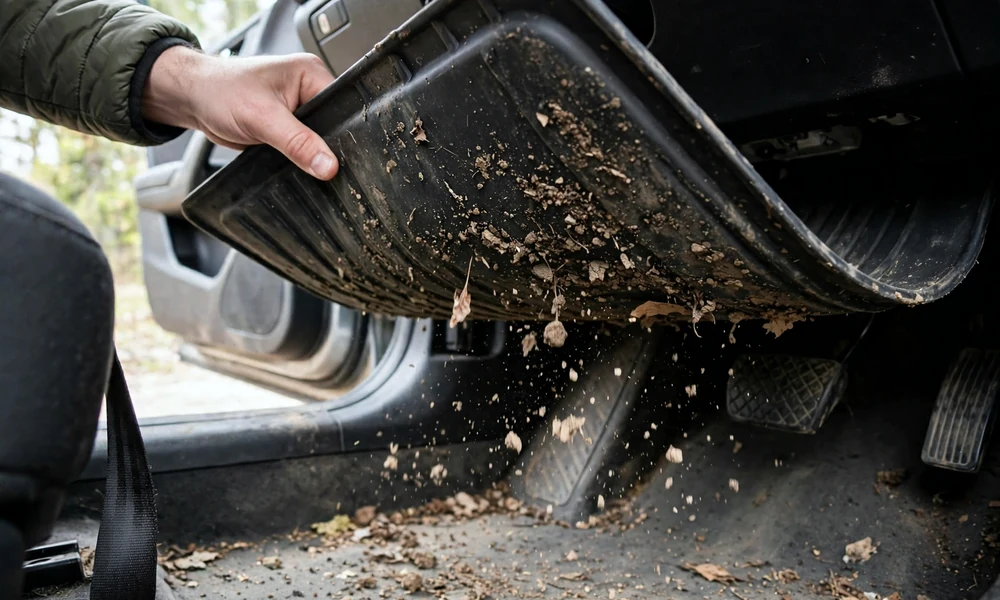
The car floor mats for winter worth buying share a short list of features, and none of them is expensive on its own. A custom-fit all-weather liner with raised edges and deep channels, made from a flexible thermoplastic that stays supple in the cold. A heavy mat with a grippy, sealed backing, anchor holes that line up with the factory fixings, and a weight that holds it flat. A mat that lifts out in seconds and hoses clean in minutes, because winter mats need emptying after every snowy journey. If a mat fails any one of those checks, keep looking.
Fit matters as much as build, and the mat should suit the car in front of you rather than the car in the photograph. A mat cut for your exact model beats a universal mat almost every time, because coverage at the edges is what stops water reaching the carpet. Spend the money once on a mat made for your exact car, with raised edges and proper anchors, and you will not think about floor mats again for years. If the rest of the car needs a winter clean too, our guide to the best car vacuums of 2026 covers the handheld models that reach under seats and into the boot.
The Bottom Line
The worst car floor mats for winter in 2026 share a pattern: rubber that cracks in the cold, snowmelt that freezes into ice, salt that eats through mats, mats that freeze to the carpet, drainage channels clogged with frozen slush, and mats that go stiff and curl in cold. Avoid those six failures and you avoid almost every winter-mat regret. Buy a custom-fit liner that stays flexible in the cold, check the anchors, and empty it after every snowy journey. Do that, and the mat you buy will be the one that protects your car through winters, not the one that cracks, soaks and freezes by February. And if you want the wider picture on mats of every kind, our guide to the best floor mats of 2026 covers the ones that earn their place and the ones that disappoint.