
A floor mat is the most used thing in the house that nobody thinks about. It sits by the front door, under the kitchen sink, or beside the bed, and it catches the mud, the water and the cold that would otherwise end up on the floor. A good floor mat does its job quietly for years: it traps dirt, it stays in place, and it still looks decent after a hundred washes or a thousand footsteps.
What Makes a Floor Mat Good
The first thing to judge is the grip. A floor mat that slides across the floor every time someone steps on it is worse than no mat at all, because it is a trip hazard and a constant annoyance. The best mats have a rubber or latex backing that grips the floor, or a weight heavy enough that they stay put. Grip is the first test, and it is easy to feel: step on the mat, twist your foot, and see if it moves.
The second thing is how well it traps dirt and water. A mat is a filter, and a good one catches mud, grit and water before they reach the floor. The best mats have a deep pile or a rough surface that scrapes shoes clean, and a backing that holds water instead of letting it through. A thin, flat mat looks neat but does almost nothing, while a thick mat with a deep texture does the real work.
The Main Types of Floor Mat
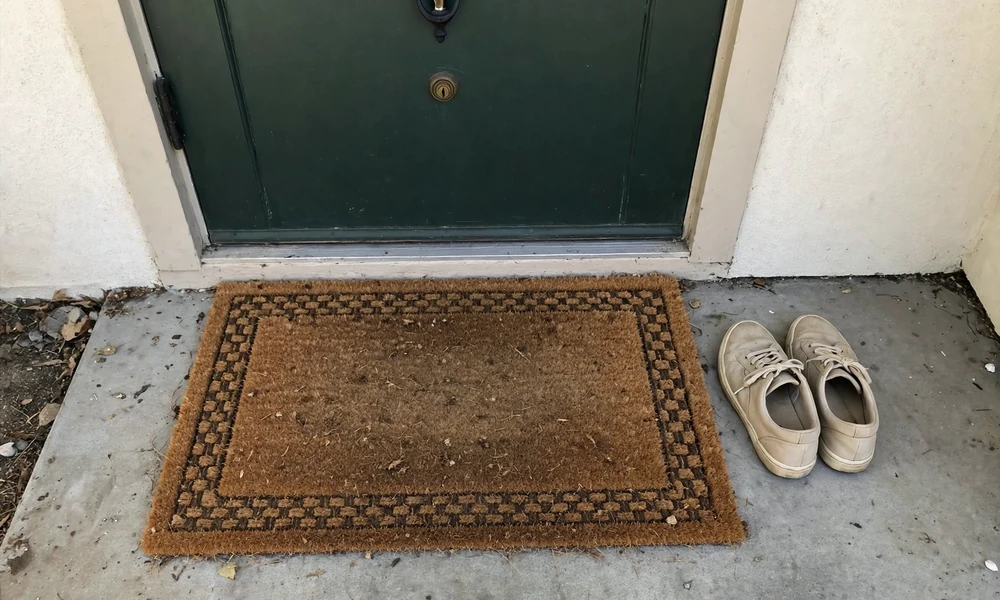
Doormats are the classic choice. They sit outside or just inside the front door, they scrape mud and grit off shoes, and they are the first line of defence for the floors inside. They come in coir, rubber, or a mix of both, and the best ones are thick, heavy and rough enough to clean a shoe in two wipes. The trade-off is the weather: a doormat left outside will get wet, and a wet coir mat will rot if it never dries.
Kitchen mats are the comfortable option. They sit in front of the sink or the cooker, where someone stands for a long time, and they cushion the feet while catching spills and splashes. They are usually made from foam or gel, with a waterproof top that wipes clean, and they are the best choice for anyone who cooks a lot. The downside is the size: a kitchen mat needs to fit the space in front of the sink, and a mat that is too big will trip people,
Bathroom mats are the practical option. They sit beside the bath or the shower, they soak up the water that drips off wet feet, and they stop the bathroom floor from becoming a skating rink. They are usually made from cotton, bamboo or memory foam, and the best ones dry quickly and wash well. The trade-off is damp: a bathroom mat that stays wet will smell, so it needs to dry between uses and be washed regularly.
Bedroom mats are the soft option. They sit beside the bed, so the first step of the morning lands on something warm and soft rather than a cold floor, and they are the best choice for a bedroom with hard floors. They are usually made from wool, cotton or a soft synthetic, and they are chosen for comfort more than for dirt. The downside is cleaning: a soft bedroom mat will need washing more often than a doormat, and a mat that cannot be washed will soon look tired.
Outdoor mats are the tough option. They sit on a patio, a deck or a porch, they handle rain, sun and mud, and they are made from rubber, coir or a weatherproof synthetic. They suit a back door, a garden room or a porch where shoes come off before going inside. The trade-off is the look: an outdoor mat is built to survive, not to impress, and a mat that looks smart will not last as long as a mat that looks tough.

How to Choose the Right Mat
Start with the place, not the mat. A front door needs a mat that scrapes mud and holds water, while a kitchen needs a mat that cushions feet and wipes clean. A bathroom needs a mat that soaks up water and dries quickly, while a bedroom needs a mat that feels soft under bare feet. A mat that does not match its place will fail, however good it looks. Match the mat to the place, and the mat will last.
Then check the practical details. Measure the space before buying, because a mat that is too big will bunch up and trip people, while a mat that is too small will not catch the dirt. Check the backing: a rubber backing grips a hard floor, while a mat on carpet needs a different grip. Check whether the mat can be washed, because a mat that cannot be washed will soon look dirty, and a mat that can be hosed down or put in the machine will last far longer. And check the thickness: a mat that is too thick will catch a door, while a mat that is too thin will not trap anything.
The Best Floor Mats of 2026
The best doormat for most homes this year is a heavy coir mat with a rubber backing, thick enough to scrape shoes clean and heavy enough to stay put. It traps mud and grit, it holds water without letting it through, and it still looks decent after a winter of use. It is the mat for the front door, it is the first thing a visitor sees, and it is the one that saves the floors inside. For the front door, this is the mat to buy.
The best kitchen mat of 2026 is a cushioned foam mat with a waterproof top, long enough to cover the space in front of the sink and soft enough to stand on for an hour. It catches spills, it wipes clean in seconds, and it makes cooking far more comfortable. It is the mat for anyone who spends time at the sink or the cooker, and it is the one that stops tired feet at the end of a long evening. For the kitchen, this is the mat that matters.
The best bathroom mat is a quick-drying cotton mat with a non-slip backing, soft underfoot and easy to wash. It soaks up the water from wet feet, it dries between showers, and it does not smell. It is the mat for the bathroom, it is the one that stops the floor from becoming slippery, and it is the one that can go in the washing machine when it needs a clean. For the bathroom, this is the mat to buy.
The best bedroom mat of 2026 is a soft wool mat that sits beside the bed, warm under bare feet and thick enough to feel luxurious. It makes the first step of the morning pleasant, it adds warmth to a room with hard floors, and it is the mat for a bedroom that needs a little softness. It needs washing now and then, but the comfort is worth it. For the bedroom, this is the one.
The best budget mat is a simple rubber-backed coir doormat, at a price that is less than a takeaway. It scrapes shoes clean, it stays in place, and it is genuinely useful. It will not cushion feet or impress guests, but for a front door it is all that is needed. Cheap does not have to mean useless, and this mat proves it.

What Else You Need
A mat works best with a little help. A bath mat beside the shower and a door mat at every entrance will keep the whole house cleaner, and a yoga mat is worth a look for anyone who exercises at home, because a good one grips the floor and cushions the knees. The right mats in the right places will cut the cleaning in half, and a house that is easier to keep clean is a house that stays cleaner. It is a small amount of thought for a large amount of saved work.
Common Mistakes to Avoid
The biggest mistake is buying a mat that is too small. A mat that does not cover the space where feet land will not catch the dirt, and a mat that is too small for the door will look lost. Measure the space first, and buy the mat that fits it. The second mistake is buying a mat with no backing: a mat that slides is a hazard, and a mat that needs straightening every day will be thrown away. The third mistake is never washing the mat: a mat that is never cleaned becomes a source of dirt rather than a defence against it. Wash the mat, hose it down, or shake it out regularly, and it will last for years.
Another common mistake is choosing a mat for its looks rather than its job. A pretty mat that does not trap dirt is a rug, not a mat, and a rug by the front door will soon look dirty. Choose the mat for the place it will live in, and let the looks follow the job. And do not forget the door: a mat that is too thick will catch the door and bunch up, so check the clearance before buying, and buy a low-profile mat if the door swings over it.
How Floor Mats Fit a Tidy Home
A floor mat is the simplest way to keep a house clean. It catches the mud at the door, the water in the bathroom, and the spills in the kitchen, and it does it without anyone thinking about it. A house with good mats in the right places is a house that needs less cleaning, and a house that needs less cleaning is a house that stays tidy with less effort. The mat is not exciting, but it is essential, and a good one is the kind of thing that is only noticed when it is missing.
The habit also pairs naturally with a little routine. A quick shake of the doormat in the morning, a wipe of the kitchen mat after cooking, and a wash of the bathroom mat once a week will keep the mats working and the house clean. It is a small amount of work for a large amount of saved cleaning, and it is the kind of routine that, once started, is hard to give up.
The Verdict
The best floor mat of 2026 is the one that matches its place. For the front door, a heavy coir mat with a rubber backing is the best choice. For the kitchen, a cushioned, wipe-clean mat is the one that matters. For the bathroom, a quick-drying cotton mat is the one to buy. Whatever the choice, measure the space first, check the backing, and buy a mat that can be washed. A mat chosen this way will not just sit on the floor; it will keep the house cleaner, the feet warmer, and the mornings easier. And that is worth more than any pattern on a mat.


