
The best bath mats in 2026 are the ones you never have to think about: they soak up water fast, stay put under wet feet, dry out before mould gets a chance, and still look good after dozens of washes. A bath mat is a small purchase, but it is the first thing your feet touch every morning and the last line of defence between a wet floor and a fall. Choosing well comes down to material, grip, size, and how honestly you will wash it.
Most people buy a bath mat the way they buy a towel: whatever matches the bathroom and feels soft in the shop. That is why so many mats slide across the tiles, stay damp for hours, or develop a musty smell within a month. Cotton absorbs fast but dries slowly, memory foam feels wonderful but needs careful washing, and wood and stone dry fast but feel very different underfoot.
Key Takeaways
- Cotton and terry mats absorb the most water, but they need regular washing and full drying between showers.
- A non-slip backing, or a separate grip pad, is essential on smooth tiles and polished stone floors.
- Memory foam feels soft and supportive, yet it dries slowly and needs a gentler wash cycle.
- Teak and stone mats dry fast and resist mould, suiting bathrooms where fabric would stay damp.
- Measure before buying: a mat should cover the step-out zone without bunching against the tub or door.
What Makes a Bath Mat Good
A good bath mat does three jobs at once: it absorbs water, it keeps you steady, and it dries out. Absorption is how much water the fibres or foam can hold before the mat feels soaked through: a thick cotton mat can hold several times its own weight in water. But absorption without drying is a problem, because a mat that stays damp becomes a home for mildew, and mildew is what makes a bathroom smell stale.
Grip is the job buyers underestimate. A mat that slides on a wet tile floor is worse than no mat at all, because it creates a false sense of security. Rubberised latex backing, suction cups, and a heavy weave all help, but the floor matters too. Drying depends on airflow as much as material: a mat left flat on a damp floor dries slowly, while the same mat hung over the tub dries far faster.
Materials at a Glance
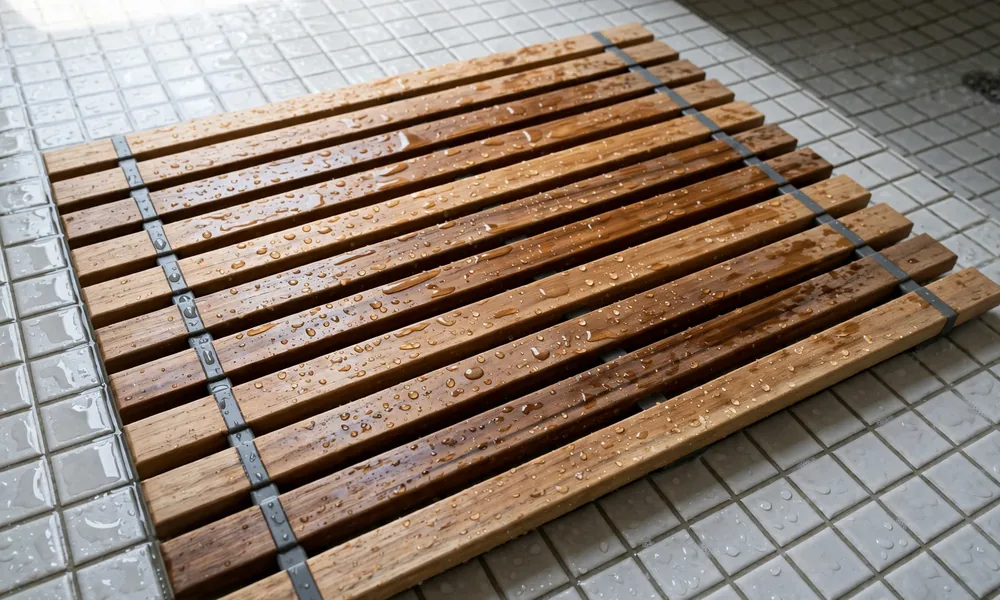
Cotton is the classic choice: soft, absorbent, machine washable, and cheap to replace. Terry cotton, with its looped pile, absorbs fastest of all, while flat-weave cotton dries faster and suits smaller bathrooms. Microfibre absorbs quickly and dries faster than cotton, though it feels less plush. Memory foam, usually a polyurethane core with a soft cover, is the comfort pick, moulding gently underfoot. Bamboo and teak slats let water drain straight through, so they never feel soggy, and diatomaceous earth stone mats absorb water into a porous surface that dries in minutes.
Bath Mats Compared
There is no single best bath mat for every bathroom, because the right one depends on your floor, your household, and how often you are willing to wash it. A family bathroom needs a mat that survives frequent hot washes; a guest bathroom can afford a plusher, slower-drying one. The table below sets out the trade-offs.
| Mat Type | Feel | Drying Speed | Typical Price |
|---|---|---|---|
| Cotton terry | Soft, plush | Slow | $10–$30 |
| Microfibre | Soft, light | Fast | $12–$30 |
| Memory foam | Very soft, cushioned | Slow | $20–$50 |
| Teak or bamboo | Firm, natural | Very fast | $30–$80 |
| Diatomaceous stone | Cool, hard | Very fast | $25–$60 |
| Chenille | Thick, shaggy | Slow | $15–$40 |
Cotton and Terry Mats
Cotton terry is the most popular bath mat material for a reason: it is soft, it absorbs a lot of water, and it goes straight in the washing machine. The loops of a terry pile trap water between the fibres, so the surface feels dry underfoot even after a long shower. Look for a good weight, around 800 grams per square metre or more, because a thin cotton mat saturates quickly and slides around. Check the backing is latex-free if anyone in the house has a latex allergy.
The weakness of cotton is drying time. A thick terry mat can take a full day to dry in a humid bathroom, and if several people use it in a row, it may never dry at all. Hang it over the tub after the morning rush, and keep a second mat in rotation so each one gets a full day to air.
Memory Foam Mats
Memory foam mats are the comfort pick. The foam core moulds to your feet, eases pressure on hard floors, and feels warm on a cold morning, which is why they are popular in homes with tile or stone floors. Most have a soft cover that absorbs the first splash, and they are low-profile enough to slide under doors.
The trade-off is care. Memory foam should not go through a hot wash or a tumble dryer, because heat breaks the foam down and leaves it lumpy. Most makers recommend a gentle cold wash, or hand washing, and air drying flat. If you love the feel but not the upkeep, a thick microfibre mat gives much of the softness with far easier washing.

Grip and Safety
Falls in the bathroom are far more common than most people think. Wet, smooth floors are the main cause, and older adults and young children are the most at risk: health agencies report that hundreds of thousands of people in the US are treated in emergency departments each year after bathroom falls, most of them getting in or out of the bath or shower. A bath mat is cheap prevention only if it stays where you put it.
Test grip before you trust a mat. Put it on your actual floor, wet the soles of your feet, and step on it firmly from different angles. A good mat should not shift, curl at the corners, or slide when you twist. Suction-cup backs grip smooth tiles well but poorly on textured stone, where a heavy rubberised backing works better. If a mat you love has no grip, a separate non-slip underlay cut to size fixes it for a few dollars. Replace any mat whose backing has cracked or gone smooth.
Drying, Mould and Hygiene
A bath mat lives in the dampest room in the house, so hygiene is not an afterthought. Mould and mildew grow where moisture lingers, and a mat that never dries is the perfect host. The signs are easy to spot: a musty smell, dark spots on the underside, or a tacky backing. Once mould has taken hold in the backing, the mat should be replaced.
The routine that prevents all of this is simple. Wash fabric mats every one to two weeks, and weekly if several people share the bathroom. Use warm water and normal detergent, skip fabric softener, which coats fibres and reduces absorption, and dry the mat fully before putting it back. Hang it to air after every shower. Wood and stone mats need a different routine: rinse them, let them drain, and oil teak occasionally. And if your washing machine is doing heavy duty on mats, towels, and bedding, our guide to the best vs worst washing machines of 2026 covers capacity and fabric care alongside price.

Sizing and Placement
Measure before you buy, because bath mat sizes vary more than most people expect. A standard mat is around 20 by 30 inches, which suits a single step-out zone in front of a tub or shower. A larger bathroom may suit a runner of 24 by 60 inches, while a small cloakroom needs a compact 17 by 24 inch mat. Leave a few inches of clearance so it does not bunch against the tub or door.
Placement matters as much as size. The mat should sit where wet feet land, not where it looks best in a photograph. In front of the tub, centre it on the spot where you step out; in a walk-in shower, place it just outside the glass or curtain, where the floor gets wettest. If your mat curls at the corners, flip it over for a day.
A bath mat is one part of a bathroom that works well. A good hair dryer finishes the routine a good shower starts, and our guide to the best vs worst hair dryers of 2026 compares the models that dry fast without damaging hair. At the sink, our guide to the best vs worst electric toothbrushes of 2026 sorts the useful brushes from the ones that are mostly marketing.
Common Mistakes When Buying a Bath Mat
The first mistake is buying for colour rather than material, which is how a beautiful mat ends up smelling musty within a month. The second is skipping the size check, so the mat bunches against the door or leaves the step-out zone bare. The third is ignoring the backing: a mat with no grip on a polished floor is a hazard, not a decoration. Other mistakes are easy too: washing memory foam on a hot cycle, using fabric softener on cotton, and keeping a mat for years after its backing has cracked.
Bath Mat Buying Checklist
- Choose the material for your household: cotton for washing, foam for comfort, wood or stone for fast drying.
- Check the grip on your floor with wet feet before you trust the mat.
- Measure the step-out zone and leave clearance around the tub, door, and toilet.
- Wash fabric mats every one to two weeks, and keep a spare in rotation.
- Hang the mat to air after every shower instead of leaving it flat on a wet floor.
- Replace the mat when the backing cracks, the smell survives washing, or mould appears.
Frequently Asked Questions
How often should you wash a bath mat?
Every one to two weeks, and weekly if several people share the bathroom. Wash it sooner if it smells musty or feels damp for hours after use, and always dry it fully before putting it back.
What is the best bath mat material?
Cotton terry absorbs the most and washes easiest, memory foam is the most comfortable, and teak or stone dry fastest and resist mould.
Are memory foam bath mats safe?
Yes, if they have a proper non-slip backing and are kept clean. A foam mat without grip can slide on smooth tiles. Wash it gently in cold water, never tumble dry it, and replace it if the foam goes lumpy.
How do I stop my bath mat smelling?
Hang it to air after every shower, wash it every one to two weeks, and skip fabric softener, which traps odours in the fibres. If the smell survives a hot wash, the mould is in the backing, and the mat should be replaced.
What size bath mat do I need?
A standard 20 by 30 inch mat suits most step-out zones in front of a tub or shower. Measure your floor and leave clearance around the tub, door, and toilet. Large bathrooms suit a runner, small cloakrooms a compact 17 by 24 inch mat.
Are wooden bath mats practical?
Yes, especially in humid bathrooms where fabric mats stay damp. Teak and bamboo mats drain fast, resist mould, and feel warm underfoot. They need occasional rinsing and oiling, and they suit showers better than baths, where a soft mat is kinder on bare feet.
The Bottom Line
The best bath mats in 2026 are matched to your floor, your household, and your laundry habits: cotton for easy washing, memory foam for comfort, wood or stone for fast drying. Check the grip with wet feet, wash it regularly, hang it to air, and replace it when the backing wears.


