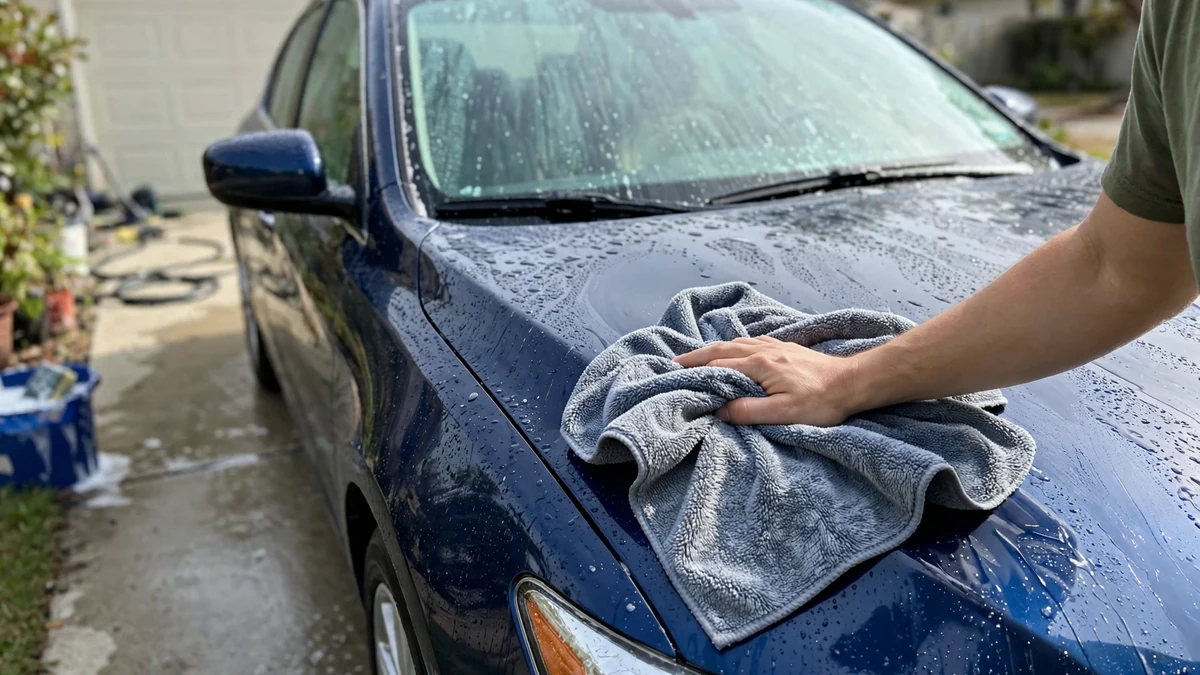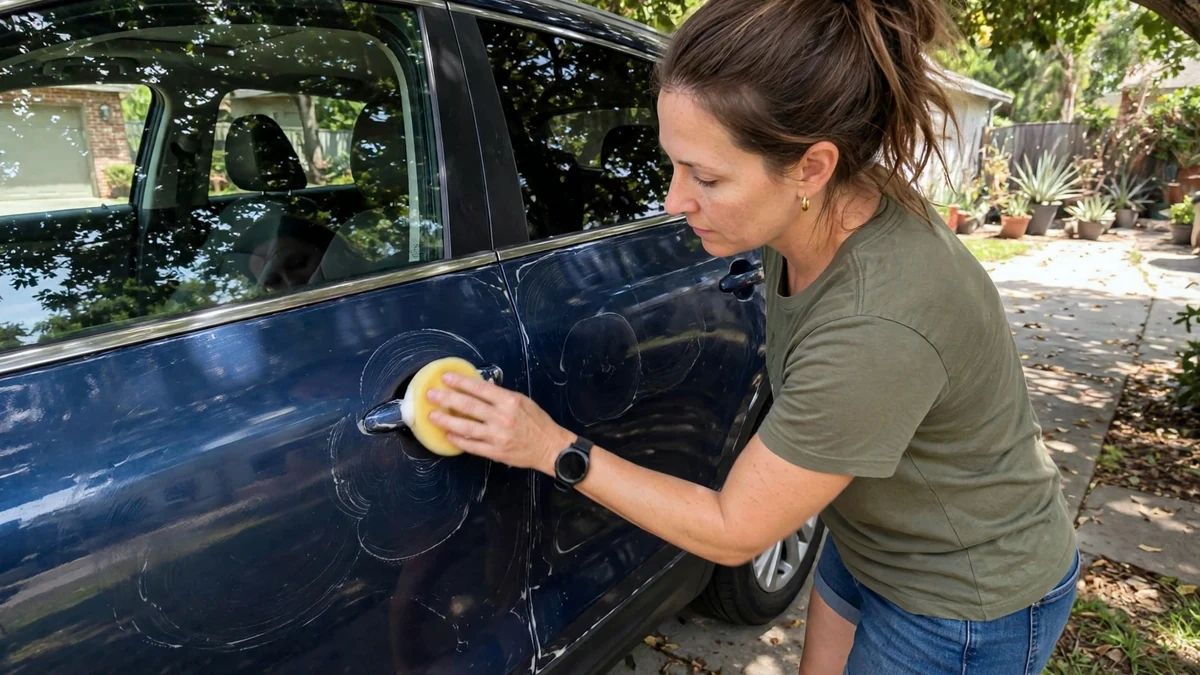
A car wax for beginners has one job: to be forgiving, easy to apply and hard to get wrong, so a first wax leaves the paint deeper and glossier instead of streaky and hazy. The worst car waxes for beginners in 2026 fail at it in ways that leave a new owner with sore arms and nothing to show for them. They streak in the sun, haze on dark paint, or vanish after the first shower, and they punish every small mistake a beginner is bound to make. People buy them hoping for a car that looks freshly detailed. What they get is a wax that streaks, a wax that smears, or a wax that washes off before the weekend is over.

Waxing Dirty Paint
The first mistake a beginner makes is also the most damaging: waxing a car that is not clean. Wax is a protective coating, not a cleaner, and it sits on top of clean paint as a thin layer, taking the punishment from sun, water and contamination so the clear coat underneath does not have to. Wax applied over dirt grinds that dirt into the paint, and it is the only waxing mistake that can actually damage the paint, so it must never be skipped. A beginner who waxes a dirty car locks the dullness in and makes it glossier for a week, then discovers the scratches when the wax wears off.
Start by washing the car properly and drying it completely, because wax applied over dirt grinds that dirt into the paint. Work in the shade on cool panels, and lay out everything you need before you start: the wax, a foam applicator, and at least two clean microfiber cloths, one for removing and one for a final buff. If the paint is dull or scratched, that work has to happen first, with a polish, before wax goes on, because wax does not repair damage. A clean car is the foundation, and a wax that demands perfection is a wax that will punish a beginner.
Too Much Wax on Every Panel
The second mistake a beginner makes is using far too much wax, and the worst waxes encourage it. A thick coat is harder to remove and more likely to streak, and a haze you can barely see is enough, so if the wax goes on white and thick, you have used too much. A beginner who coats the whole car at once discovers that the first panels have hardened while the last ones are still being done, and the hardened wax becomes stubborn to remove. A thick coat of a good wax will outlast a thin coat of a cheap one, but a thick coat is harder to remove and more likely to haze, so the beginner ends up with sore arms and a streaky finish.
Apply the wax one panel at a time, in thin, overlapping straight lines or small circles, and use far less product than you think you need. Let each panel haze for the time the label suggests, usually five to fifteen minutes, and test a small area with a fingertip: if the wax wipes away cleanly, it is ready to buff. Work panel by panel rather than coating the whole car at once, so no section is left to harden while you work elsewhere. A wax that applies thinly and evenly is a wax a beginner can use, and a wax that demands a thick coat is a wax that will punish them. Our guide to the best car wax of 2026 compares the main types on ease of use, durability and forgiveness.
Waxing in Direct Sun
Waxing in direct sun is the biggest beginner mistake, and the worst waxes make it worse. Heat makes wax dry too fast and bond unevenly, leaving streaks that are hard to remove, and a wax that dries in patches will haze on dark paint and leave white residue on black trim. A beginner who waxes on a sunny driveway discovers the streaks only when the car is finished, and by then the wax has bonded and the only fix is to remove it and start again.
Never wax in direct sun or on hot panels, and always work in the shade, in a garage, or on a cloudy day, making sure the panels are cool to the touch first. A wax that is applied to cool paint hazes evenly and buffs off without a fight, while a wax applied to hot paint dries too fast and bonds unevenly. Check your work in different light, because streaks and missed patches show up at an angle, and finish with a second clean cloth for a final pass. A wax that forgives a warm day is a wax worth buying, and a wax that streaks at the first sign of sun is a wax that will punish a beginner every summer.
Choosing the Wrong Wax Type
A beginner faces four types of wax, and the worst waxes make the choice harder than it needs to be. Paste wax gives the deepest shine but takes the most time and effort, and it must be removed before it hardens fully or it becomes stubborn. Spray wax is the fastest option by a wide margin, but it lasts only two to four weeks, and a beginner who buys spray wax expecting months of protection will be disappointed. Ceramic-infused waxes promise a year of protection for the price of a sandwich, but they rarely survive a month of rain, and they are selling a word, not a coating. A beginner who buys the wrong type for their time and their paint will be disappointed, however good the wax is.
Start with a liquid wax, which is the sensible default for most drivers: it spreads easily, cures faster than a paste, and is easier to apply evenly over a whole car. A liquid wax lasts six to ten weeks and is more forgiving than paste if you leave it on a little too long, which is exactly what a beginner needs. Use spray wax as a top-up over a paste or liquid base, not as a replacement for them, because it is the easiest way to keep a car looking freshly waxed all year.
Buffing With the Wrong Cloth
The cloth matters more than most beginners expect, and the worst waxes are sold with cloths that undo the work. A rough or dirty cloth will scratch the paint, a cloth that has picked up grit from a wheel arch will scratch paint on its next use, and a wax that is buffed with the wrong cloth will haze no matter how good the wax is. A good microfiber cloth is the difference between a streak-free finish and a hazy one, and a beginner who buffs with an old towel will discover the swirl marks only when the car is in sunlight. The cloth is the part of the routine that is easiest to get wrong, and it is the part that causes the most visible damage.
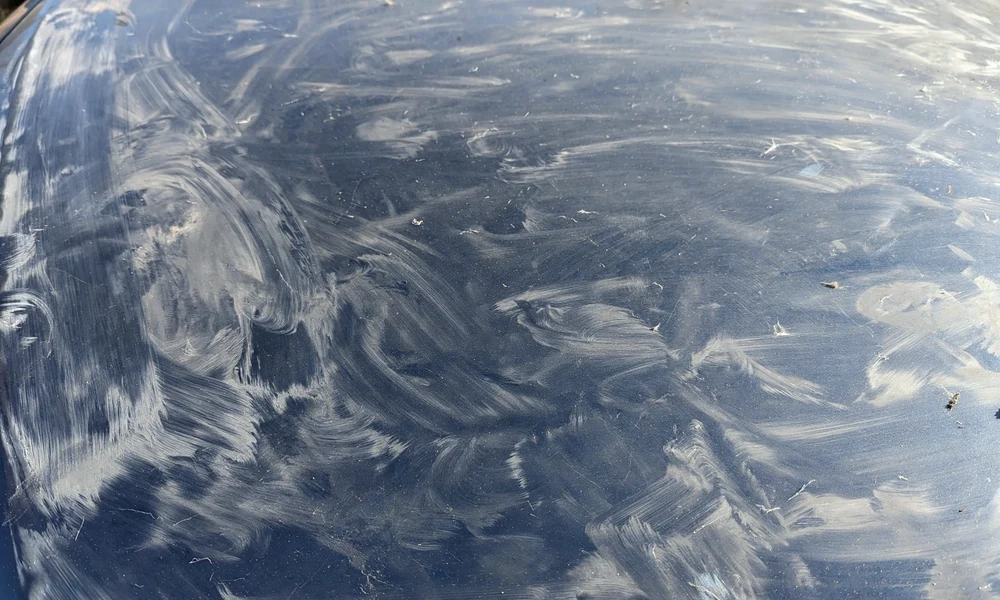
Buff with a clean, dry microfiber cloth, turning it often so you are always working with a fresh face, and finish with a second clean cloth for a final pass. Wash the applicator and cloths before they dry out, or the wax residue will stiffen them, and keep car cloths separate from household cloths, because a cloth that has picked up grit will scratch paint. A plush cloth is the safest drying and buffing tool, because the deep pile keeps stray grit away from the paint. A wax that is buffed with a clean cloth shines, and a wax that is buffed with a dirty one scratches. If you want the cloths that do the job properly, our guide to the best car wash kits of 2026 covers the kits that clean without scratching.
Wax on Trim and Glass
A beginner waxes the paint and forgets the trim, and the worst waxes punish that mistake. Wax that gets onto black plastic trim leaves white residue that takes a separate cleaner to remove, and wax that smears across the windscreen will haze in low sun and make night driving unpleasant. A wax that gets onto the wipers will streak every time it rains, and a wax that is applied too close to the edges will stain the rubber seals. The trim and the glass are the parts of the car a beginner forgets, and they are the parts where a bad wax shows up most visibly, because white residue on black trim cannot be missed.
Keep wax off the glass and off the trim, and if you do get it there, clean it properly before it dries. Mask the trim with tape if you are worried, and work carefully around the edges of the panels, because a wax that is applied thinly and evenly is less likely to reach the trim in the first place. Check that the wax is safe on your trim and your paint colour before you buy, because some waxes stain black plastic and rubber seals. A wax that stays on the paint is a wax that works, and a wax that ends up on the trim is a wax that will need a separate cleaner to fix.

What to Buy Instead
The car waxes for beginners worth buying share a short list of features, and none of them is expensive on its own. A liquid wax that spreads easily, cures forgivingly, and lasts six to ten weeks, with a thin, even application that buffs off without a fight. A wax that is safe on trim and glass, that suits your paint colour, and that comes with honest durability claims measured in months, not a year. A foam applicator and two clean microfiber cloths, and a habit of testing on one panel first, in the shade, on cool paint. If a wax fails any one of those checks, keep looking.
Fit matters as much as build, and the wax should suit the car in front of you rather than the car in the photograph. Dark colours show the warm depth of a carnauba paste best, while light colours benefit more from the sharp, glassy finish of a ceramic-infused wax. If you enjoy a quick routine, a spray wax you genuinely use every month will protect your paint better than a paste wax you never get around to opening. If you want the full routine, our guide to the best detailing kits of 2026 covers the kits that treat detailing as a system, from wash to protection.
The Bottom Line
The worst car waxes for beginners in 2026 share a pattern: waxing dirty paint, too much wax on every panel, waxing in direct sun, choosing the wrong wax type, buffing with the wrong cloth, and wax on trim and glass. Avoid those six failures and you avoid almost every beginner wax regret. Wash and dry the car first, work in the shade on cool panels, apply thinly one panel at a time, and test on one panel before you do the whole car. Do that, and the wax you buy will be the one that leaves the paint deeper and glossier for months, not the one that streaks, hazes and washes off in the first rain.