
How to pick the best detailing kits in 2026 comes down to one question: does the box give you everything you need for a full detail, inside and out, without a single piece that damages your paint? A detailing kit is more than a wash kit with extra bottles. It covers the whole car, from the wheels and the paint to the leather seats and the glass, and the best kits are the ones where every item has a job and nothing in the box is a gimmick. Get it right and a weekend detail leaves a car that looks like it just left a professional studio. Get it wrong and you own a shelf of products that fight each other and leave swirl marks that cost real money to fix.
Key Takeaways
- A true detailing kit covers wash, paint, wheels and interior, not just the outside.
- Machine polishers belong only in kits for confident users; beginners should start by hand.
- Interior products must match the material: leather cleaner for leather, fabric cleaner for cloth.
- The cheapest products in a kit are usually the most dangerous, especially cloths and compounds.
- Buy the kit that matches your time: a full kit needs a free afternoon, a maintenance kit needs an hour.
Detailing Is More Than Washing
Washing removes dirt. Detailing restores the car: a wash cleans the paint, while a detail cleans the paint, corrects its flaws, protects it, and does the same for the wheels, the glass and the whole interior. A detailing kit therefore needs products for each surface of the car, each safe for that surface: a product perfect for paint can ruin leather. A good kit is designed as a system, not a random collection. Before you buy, read our guide to the worst car detailing products, which names the products that waste money and harm paint, so you can recognise them inside a kit.
What a Complete Detailing Kit Contains
A complete kit has four groups of products, and a kit missing any one of them is not really complete. Check the box against this list, and be suspicious of any kit that fills the box with extra bottles while skipping a whole group.
Wash and decontamination
Every detail starts with a proper wash: the kit should include a pH-neutral shampoo, a thick wash mitt and a drying towel, exactly as a good wash kit does. The difference is what comes next: decontamination. Iron fallout remover dissolves the tiny metal particles that embed themselves in paint near roads and railways, and a clay bar or clay mitt lifts bonded contaminants that washing cannot shift. You will feel the difference by hand: paint feels rough before claying and like glass afterwards. Kits that skip decontamination skip the step that makes polishing work, because polishing over embedded grit grinds it into the clear coat.
Paint correction and protection
Paint correction is the part of detailing that most beginners find intimidating, and it is the part where the kit matters most. A good kit includes a light polish and a finishing pad, which remove the fine swirl marks washing leaves behind, and a sealant or wax to protect the corrected paint. Heavy cutting compounds should not be in a beginner kit: they can burn through paint in inexperienced hands. The polish in a good kit is gentle enough to use by hand and forgives a slow pass. Protection is the final layer: a sealant lasts for months while a spray wax lasts for weeks. Our comparison of the best and worst car waxes explains which formulas last and which wash off in the first rain.
Wheels and tyres
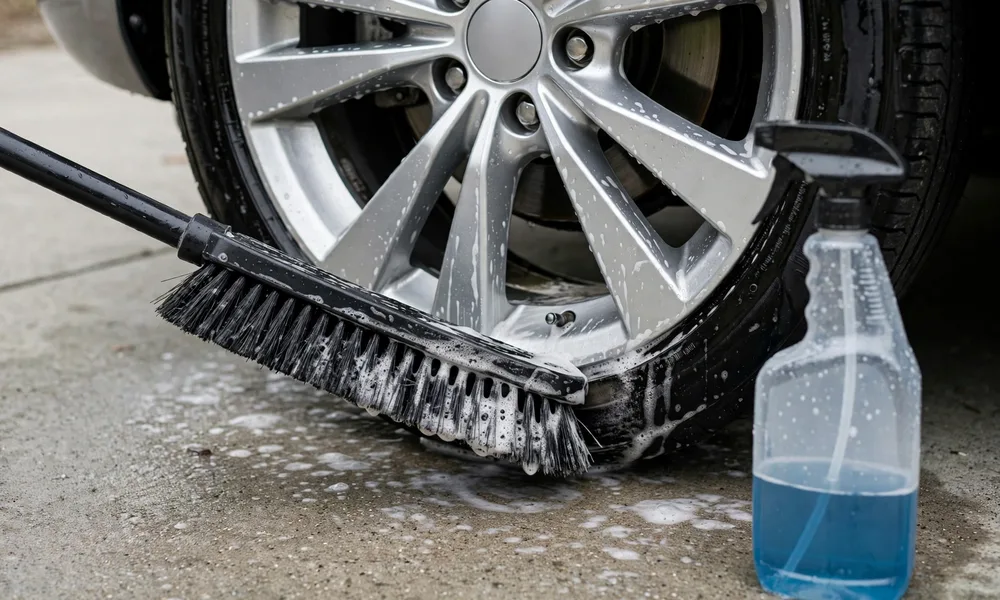
Wheels are the dirtiest part of the car, and they need their own tools. A detailing kit should include a dedicated wheel cleaner that is safe for the finish on your wheels, a long wheel brush that reaches between the spokes, and a separate tyre dressing that is water-based rather than silicone-heavy. Brake dust is abrasive, so the wheel cleaner needs time to work before you agitate it, and the wheel brush must never touch the paint. Cheap kits often include a single brush for everything, which will carry brake dust grit onto the paint.
Interior care
The interior is where cheap products show up fastest. A complete kit includes an interior cleaner for plastics and dashboards, a leather cleaner and conditioner, a fabric cleaner for cloth seats and carpets, and a glass cleaner that leaves no haze. One product cannot do all of these jobs: an all-purpose cleaner strong enough for carpets will dry out leather, and a leather conditioner on plastic leaves a sticky film that attracts dust. The best kits label each bottle for its surface and include soft brushes for vents and seams.
The Kit Types Worth Buying in 2026
Detailing kits fall into three broad types, and the right one depends on your experience, your time and the condition of your car.
Beginner kits
A beginner kit is built for a first full detail. It contains wash products, a clay mitt, a hand polish, a sealant, interior cleaner, glass cleaner and wheel cleaner, all chosen to be forgiving. These kits are the best value for most drivers, covering the whole car for the price of two or three separate buys and teaching the routine that matters: wash, decontaminate, polish, protect, then interior. They will not do heavy paint correction, and that is a feature, not a flaw.
Intermediate kits with a machine polisher
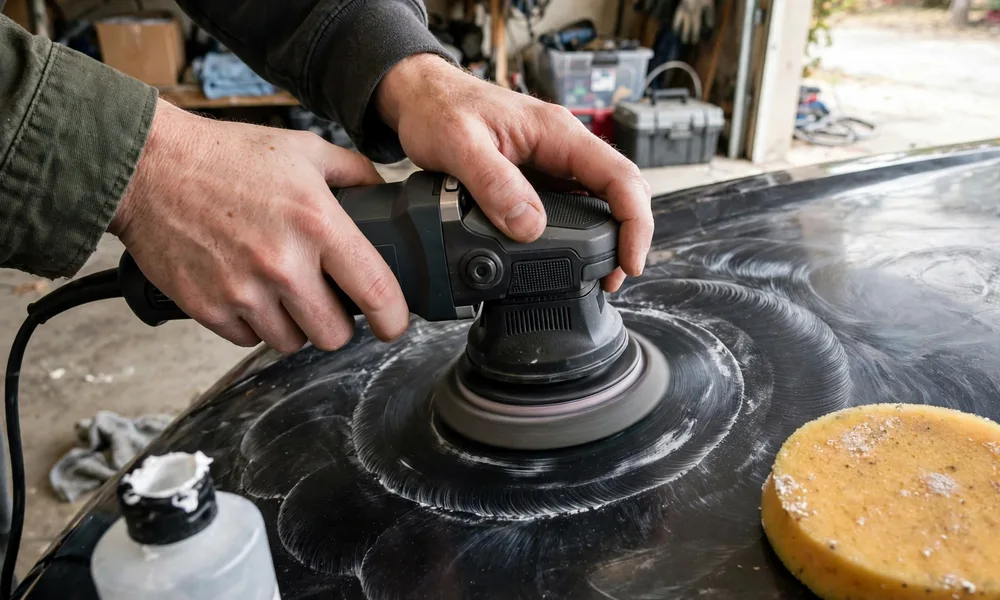
An intermediate kit adds a dual-action machine polisher, which is the tool that makes real paint correction possible at home. A dual-action polisher oscillates as well as spins, so it is far safer than a rotary polisher, but it still removes clear coat and it still needs respect. These kits suit drivers who have done a few hand details and want to remove swirl marks properly, and they usually include pads of different firmness and two polishes. The polisher is the most expensive part of the kit, so check its quality: a cheap machine vibrates badly and makes the job harder than doing it by hand. If you are not ready to learn machine polishing, do not buy this kit yet.
Maintenance kits
A maintenance kit is for a car that has already been detailed properly and just needs keeping up. It contains a gentle shampoo, a spray sealant or quick detailer, interior cleaner, glass cleaner and tyre dressing, and it is designed for an hour rather than an afternoon. They are also the right choice for a new car, where the paint is already in good condition. The mistake is buying a maintenance kit for a car that needs a full detail: no spray sealant will fix swirl marks.
| Kit type | Best for | Time needed | Machine polisher |
|---|---|---|---|
| Beginner kit | First full detail | Half a day | No |
| Intermediate kit | Swirl removal at home | Full day | Yes |
| Maintenance kit | Keeping a detailed car fresh | About an hour | No |
How to Use a Detailing Kit in the Right Order
Order is everything in detailing. Each step prepares the surface for the next, and doing them out of order wastes effort or causes damage. Start with the wheels, the dirtiest part, so their grime does not splash onto clean paint: spray the wheel cleaner, let it work, agitate with the wheel brush and rinse. Then wash the whole car with the two-bucket method, working from the roof down and rinsing the mitt after every panel. Once the car is clean and still wet, run the clay mitt over the paint with lubricant until it feels smooth, then rinse again. Dry the car, then polish one small panel at a time, wiping off the residue before it dries. Apply the sealant or wax and let it cure. Then move inside: vacuum first, then clean the plastics, the seats and the carpets, and finish with the glass. A good car vacuum is the first interior tool to reach for, because no cleaner works well on a carpet full of grit and crumbs. Finish with the trim and tyre dressing.

What to Avoid When Buying a Kit
The detailing shelf has more traps than the wash shelf, because the products are more specialised and the claims are bolder. The most common trap is the kit with a huge bottle count and no clear system: twenty bottles that overlap or duplicate the same job. Avoid any kit that includes a heavy cutting compound for beginners, because it can burn through clear coat in seconds. Avoid silicone-heavy tyre dressings, which look good for a day, attract dust and sling brown residue up your doors. Avoid spray-on ceramic coatings that promise years of protection for a few pounds: they rarely survive a month of rain. Avoid bargain microfibre cloths with short, rough fibres and stitched edges, the most common cause of new swirl marks in an otherwise good kit. And avoid all-in-one products that claim to wash, polish and wax in one step: they do all three jobs badly.
Detailing Kit Checklist
- Kit covers all five groups: wash, paint, wheels, interior and glass.
- Polish is gentle enough for the user: hand polish for beginners, machine only for the confident.
- No heavy cutting compound in a beginner kit.
- Interior products are labelled by surface: leather, fabric and plastic kept separate.
- Microfibre cloths are thick, soft and edgeless, with separate cloths for paint and interior.
- Wheel tools are separate from paint tools and never shared.
Frequently Asked Questions
How long does a full detail take?
A beginner kit takes about four to five hours for a first detail, including the interior. An intermediate kit with a machine polisher takes a full day, because paint correction is slow work. A maintenance kit takes about an hour.
Can I detail a car by hand without a machine?
Yes. A hand polish removes light swirl marks and restores gloss, and it is the safest way to learn. A machine is faster on deeper swirls, but it is not required for a car that looks great.
How often should I detail my car?
Twice a year is right for most cars: once in spring and once in autumn. A spring detail removes winter salt and grime, and an autumn detail protects the paint before the worst weather.
Is claying safe for my paint?
Yes, if the paint is clean and well lubricated: clay only removes bonded contamination and cannot scratch properly lubricated paint. The danger is claying a dirty car or using a clay bar that has been dropped on the ground. Always wash first and use plenty of lubricant.
Do I need different products for leather and fabric seats?
Yes. Leather needs a gentle cleaner and a conditioner that keeps it supple, while fabric needs a cleaner that lifts dirt from the fibres. Using a fabric cleaner on leather dries it out, and a leather conditioner on fabric leaves a greasy residue.
What is the biggest beginner mistake in detailing?
Skipping the wash and going straight to polishing: polishing over dirt grinds grit into the paint and creates the swirl marks you are trying to remove. Always wash, decontaminate and dry first, and work one small panel at a time.
The Bottom Line
The best detailing kits in 2026 treat detailing as a system: a proper wash, decontamination, gentle correction, real protection, and separate care for wheels, interior and glass. Match the kit to your experience and your time, avoid the gimmicks and the dangerous shortcuts, and the box will pay for itself the first time the paint catches the sun. Start with a beginner kit, move to a machine only when you are ready, and keep a maintenance kit on the shelf for the weeks in between.


