
The best car wash kits in 2026 do one job well: they let you wash a car at home without putting swirl marks into the paint. A good kit is a matched set of tools that work together, from the shampoo in the bucket to the towel that dries the roof, and every piece earns its place by protecting the clear coat while it cleans. Buy the right kit and a Saturday wash takes half an hour and leaves paint looking freshly detailed; buy the wrong one and you spend the same half hour dragging grit across the panels.
Key Takeaways
- A complete kit beats a pile of separate buys: matched shampoo, mitt, bucket and drying towel work as a system.
- The two-bucket method with a grit guard is the single best defence against swirl marks.
- A wash mitt always beats a sponge, because its fibres lift grit away from the paint instead of trapping it.
- Thick, pH-neutral shampoo cleans without stripping wax or sealant already on the paint.
- A large plush drying towel prevents water spots and is safer than a chamois or an old bath towel.
What a Good Car Wash Kit Actually Contains
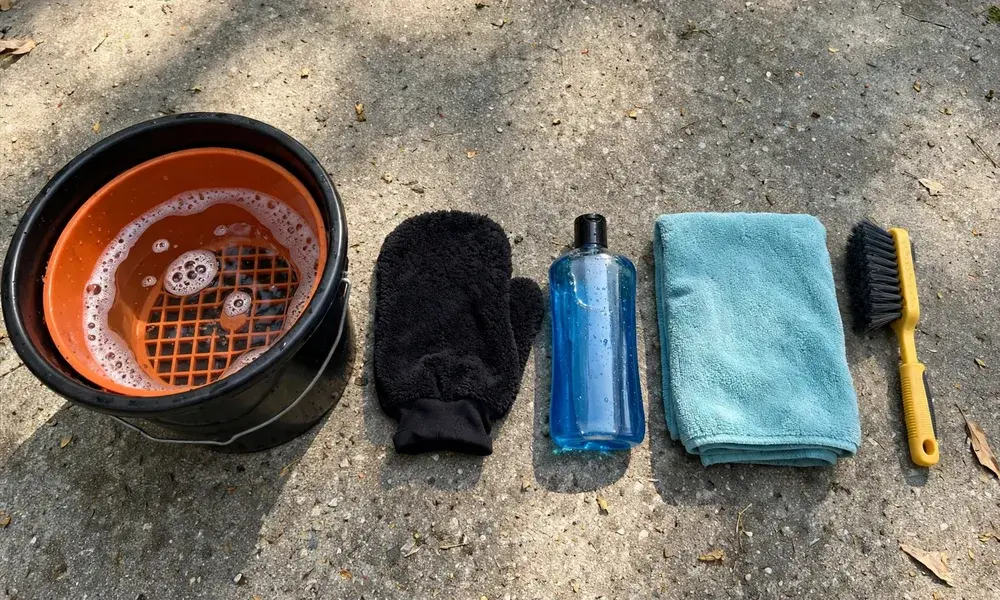
A car wash kit is only as good as its weakest piece. One rough cloth can undo the work of a great shampoo, and one gritty bucket can undo the work of a great mitt. The kits worth buying in 2026 all share the same core pieces.
The shampoo
Car shampoo is the heart of the kit. A good one is pH-neutral, which means it lifts road film and insect residue without stripping the wax or sealant underneath. It should foam well enough to lubricate the mitt as it moves across the paint, because that lubrication is what lets grit slide off instead of scratching. Cheap shampoos often rely on harsh detergents that leave the paint feeling squeaky, which usually means the protection is gone. Avoid anything labelled wash-and-wax: the wax is too diluted to protect anything. A dedicated shampoo beats a compromise in one bottle.
The wash mitt
The wash mitt is the piece that touches your paint the most, so it matters more than most buyers expect. A thick microfibre or chenille mitt holds plenty of soapy water and lets its long fibres pull dirt away from the surface and into the pile, where it stays until you rinse the mitt out. A flat sponge does the opposite: its smooth face presses grit against the paint and drags it along, which is how most swirl marks are born. The better kits include two, so you can keep a clean one in reserve for the lower panels. Rinse the mitt in clean water after every panel, and never let it touch the ground.
The bucket and grit guard
The bucket sounds like the least interesting part of the kit, but it is where paint safety is won or lost. A two-bucket setup is the standard for a reason: one bucket holds soapy water and the other holds clean rinse water, so the mitt is cleaned before it goes back into the shampoo. A grit guard, the plastic grid at the bottom of the bucket, traps dirt below the water line so the mitt cannot pick it back up. A grit guard is cheap to make and worth paying extra for in the kit. A single bucket with no guard is the most common reason a home wash leaves fine scratches.
The drying towel
Drying is the step most people rush, and it is the step where water spots and new scratches appear. A large, plush microfibre drying towel absorbs a whole roof in one pass and glides over the paint without dragging. Old bath towels and chamois leather are the worst choices here: bath towels have rough loops that catch on trim, and a chamois drags any remaining grit across the surface. The best kits include a towel of at least 800 GSM, and some include two so the second can finish the glass. Work from the roof down so water does not run onto dry panels.
The Kit Types Worth Buying in 2026
Not every driver needs the same kit. A flat-dweller with no driveway needs something different from a homeowner with a hose and a garage.
Starter kits
A starter kit is the right buy for someone washing a car properly for the first time. It usually contains shampoo, a wash mitt, a bucket with a grit guard, a drying towel and a wheel brush, and costs less than buying the pieces separately. The best starter kits keep the piece count low and the quality high, because a kit with twelve cheap items is worse than a kit with six good ones. Check that the mitt is real microfibre and not a thin sponge in a glove shape, and check that the towel is genuinely plush rather than a flat cloth.
Two-bucket kits
The two-bucket kit is the upgrade that makes the biggest difference to paint safety. It adds a second bucket and a second grit guard, and it turns washing into a proper routine: wash a panel, rinse the mitt in clean water, reload it with shampoo, and move on. The extra bucket costs little and removes the main source of swirl marks, which is a dirty mitt going back into clean shampoo. They suit weekly washers and owners of dark-coloured cars, where swirls show up first, and the results are visible in sunlight.
Foam cannon kits
A foam cannon kit is for drivers who want the thickest possible pre-wash. The cannon attaches to a pressure washer and coats the car in a blanket of foam that loosens dirt before any mitt touches the paint, which is the safest possible first step. Foam kits include the cannon and a snow foam shampoo, and they need a pressure washer to work at all. Used well, they cut the risk of scratching dramatically. Foam is a tool, not a shortcut, and it works best as the first step of a proper two-bucket wash rather than a replacement for it.
| Kit type | Best for | Needs | Swirl risk |
|---|---|---|---|
| Starter kit | First-time washers | Hose and driveway | Low |
| Two-bucket kit | Weekly washers, dark paint | Hose and two buckets | Very low |
| Foam cannon kit | Maximum pre-wash safety | Pressure washer | Very low |
How to Wash Without Scratching the Paint
The kit matters, but the method matters more. Even the best kit will scratch paint if it is used in the wrong order, and even a modest kit will keep paint clean if the method is right. Start by rinsing the whole car with clean water to remove loose dirt, paying attention to the wheel arches and the sills. Then work from the roof down, one panel at a time, using the mitt loaded with shampoo and no pressure at all. After each panel, rinse the mitt in the clean water bucket, rub it against the grit guard, and reload it with shampoo. Wash the dirtiest parts, the lower doors and the rear, last. Rinse thoroughly, then dry immediately with the drying towel, starting at the roof. Finish the glass with a separate cloth, and clean the wheels last with their own brush, because brake dust should never meet the wash mitt. Once the outside is clean, the inside deserves the same attention, and a good car vacuum makes the cabin match the paint.

Wash Kits Are Not Wax
One confusion is worth clearing up. A car wash kit cleans paint. A wax protects it. They are different jobs, different products and different steps, and no wash kit replaces a wax, just as no wax replaces a wash. Washing removes dirt; waxing adds a layer that makes water bead and shields the clear coat from sun and road salt. The right order is always wash first, then protect. Our guide to the best and worst car waxes covers that step, including which waxes last for months and which wash off in the first rain. If a wash kit promises to wax as you wash, treat that claim with suspicion: the wax in a wash shampoo is too diluted to protect anything. Buy a wash kit to wash, and buy a wax to wax.
What to Avoid When Buying a Kit
The car care shelf is full of kits that look generous and perform badly. The most common trap is the huge piece count: a kit with twenty items usually contains eighteen things you do not need and two that are too cheap to use. A kit that includes a sponge instead of a mitt should be rejected outright, because the sponge is the single most damaging item in car care. Watch out for thin, flat cloths sold as drying towels, since they hold almost no water and drag across the paint. Avoid shampoo with strong detergents, because it is usually a repackaged household cleaner that strips protection. And be wary of kits with tyre dressing and glass cleaner but no grit guard: they spent the budget on extras and skipped the part that protects your paint.

Car Wash Kit Checklist
- Shampoo is pH-neutral and made for cars, not a household detergent.
- Wash mitt is thick microfibre or chenille, never a flat sponge.
- Bucket has a grit guard, or the kit includes one to add.
- Drying towel is plush microfibre, at least 800 GSM, large enough for a roof.
- Wheel brush is separate from the wash mitt and kept for wheels only.
- Every item in the box has a clear job; no filler pieces padding the count.
Frequently Asked Questions
How often should I wash my car?
Every one to two weeks is right for most cars. Weekly washing stops road film and bird droppings from bonding to the paint, while a car left for a month risks stains that no shampoo will shift.
Can I use washing-up liquid instead of car shampoo?
No. Washing-up liquid is designed to strip grease from plates, and it strips wax and sealant from paint just as effectively, while drying out rubber seals and trim. A proper car shampoo costs little more.
Is a foam cannon worth it?
Yes, if you already own a pressure washer and wash weekly: the foam loosens dirt before any mitt touches the paint. Without a pressure washer, a two-bucket kit gives you almost the same safety for far less money.
Do I really need two buckets?
Yes, if you care about swirl marks. The second bucket is where the mitt is rinsed clean before it goes back into the shampoo, removing the main source of fine scratches. It is the cheapest upgrade in car care.
What is the safest way to dry a car?
Use a large, plush microfibre drying towel and work from the roof down in the shade, dragging it gently or patting it rather than scrubbing. Never use a chamois or an old bath towel, and never let the car dry in direct sun.
Can I wash my car in direct sunlight?
You can, but you should not: shampoo and water dry on hot panels before you can rinse them, leaving spots and residue. Wash in the shade or on a cloudy day, and work one small section at a time.
The Bottom Line
The best car wash kits in 2026 are the ones with fewer, better pieces: a pH-neutral shampoo, a thick microfibre mitt, a bucket with a grit guard and a plush drying towel. That combination, used with the two-bucket method and a roof-down routine, keeps paint clean and swirl-free for years. Spend your money on the mitt, the towel and the grit guard, not on piece counts and gimmicks. Keep the kit tidy between washes, too: a car organizer in the boot stops the bottles and towels from sliding around.


