Best Garden Hose Reels 2026
A garden hose left in a heap on the lawn is a trip hazard, a kink waiting to happen, and a hose that will not last the season. Drag it across the same corner every evening and the outer skin wears through. Leave it full of water in the sun and it stiffens, kinks, and splits at the fittings.
A good hose reel changes all of that. It keeps the hose coiled neatly, off the ground, and ready to pull out, and it winds the hose back in without a fight. These are the best garden hose reels of 2026, chosen for build quality, winding ease, capacity, and how well they survive real weather.
Key Takeaways
- Match the reel to the hose you already own, because a reel rated for 30 metres will not swallow a 50-metre hose.
- Wall-mounted reels suit one tap and one garden, while a wheeled cart suits a garden with beds on two sides of the house.
- A manual crank is simple and lasts for years, while a retractable reel is easier on the back but needs a spring you can trust.
- Metal drums and solid frames outlast thin plastic, especially in gardens that get full sun all summer.
- Wind the hose in slowly and evenly, since a rushed, uneven wind is what causes most kinks and jams.
Garden Hose Reels 2026 at a Glance
| Best for | Reel type | Hose capacity | Standout strength |
|---|---|---|---|
| Best overall | Wall-mounted manual reel | 30 metres | Simple, sturdy, and always in place |
| Best for small gardens | Retractable wall reel | 20 metres | Winds itself in with a tug |
| Best for large gardens | Wheeled cart reel | 50 metres | Rolls to the far beds |
| Best for vegetable plots | Freestanding post reel | 40 metres | Sits where the watering happens |
| Best for neat looks | Hideaway box reel | 25 metres | Hides the hose completely |
| Best on a budget | Basic wall bracket reel | 25 metres | Cheap, light, and easy to fit |
What a Hose Reel Is Really For
A hose reel does three jobs at once. First, it stores the hose in a neat coil, off the ground and out of the way of feet, wheels, and mower blades. Second, it protects the hose from kinks, sun, and dragging, which are the three things that shorten a hose’s life. Third, it makes watering quicker, because a hose that unrolls smoothly gets used and a tangled one gets left in the shed.
Most people buy a reel the wrong way round. They fall for a tidy-looking box, then discover their hose is too long for it or too stiff to wind. Start with the hose: how long it is, how wide it is, and how heavy it is when full of water. The reel has to fit those numbers, not the other way round.
It also helps to know what a reel is not. It is not the hose itself, and it will not fix a hose that is already cracked or perished. If the hose needs replacing first, our guide to the best garden hoses of 2026 covers the hose itself in detail, so you can match a fresh hose to a fresh reel.
Getting the Size Right
Capacity is where most hose reel purchases go wrong. A reel rated for 30 metres of standard 13-millimetre hose will hold far less of a thicker 19-millimetre hose, and a 50-metre hose will not fit a 30-metre drum no matter how neatly you wind it. Check the rating for your exact hose diameter, not just the headline length.
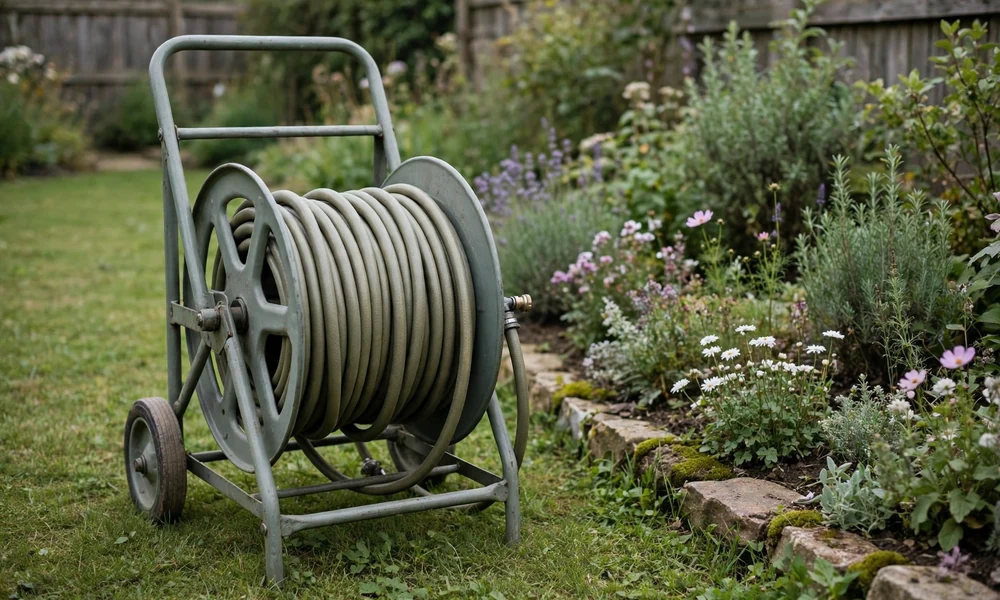
Measure the distance from the tap to the farthest bed you water, then add five metres so the hose reaches without pulling tight. A hose pulled taut at full stretch strains the reel, the tap, and the fittings, and it is the usual cause of leaks at the wall bracket. If two sides of the house both need water, a wheeled cart beats two wall reels.
The Main Types of Hose Reel
Hose reels fall into a handful of types, and each suits a different kind of garden. The right choice depends less on taste than on how far you water and how much effort you want winding to take.
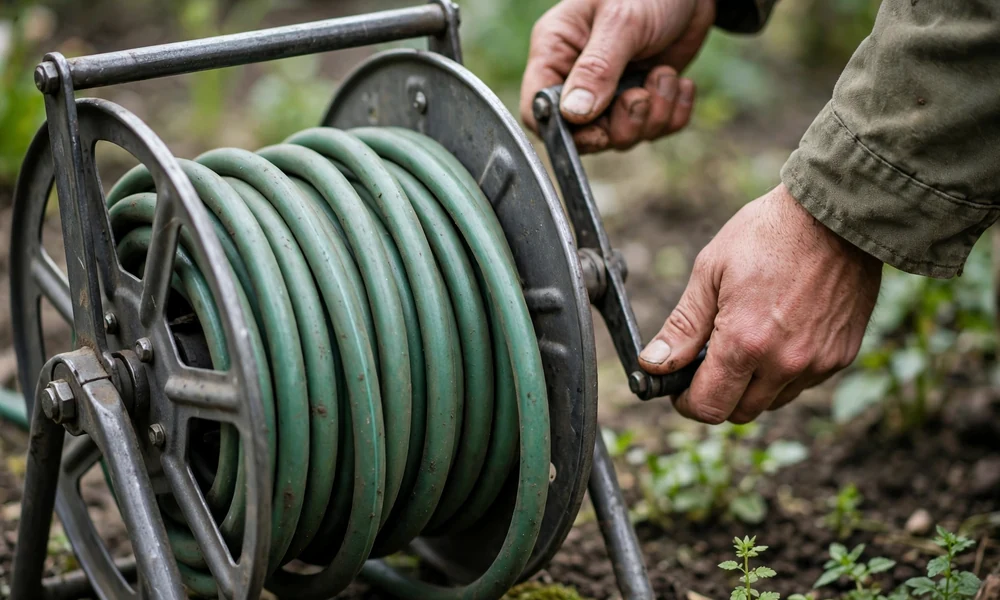
The wall-mounted manual reel is the safest choice for most homes: a drum fixed to the wall beside the tap, wound by a crank handle. Its strength is simplicity, since there is no spring to wear out and no battery to charge. Its weakness is effort, because a long hose takes a minute of steady cranking.
The retractable wall reel is the easy option. Pull the hose out, water, then give it a tug and the spring winds it back in. It is the best choice for small gardens and for anyone with a sore back. The trade-off is the spring: a cheap one weakens within a season, so look for a reel with a replaceable spring cassette or a long warranty.
The wheeled cart reel is the answer to a large garden. It rolls to the far beds, so one hose and one reel cover the whole plot. Cart reels are usually the biggest, holding 40 to 50 metres, and they suit heavy hoses that would strain a wall bracket.
Freestanding post reels and hideaway boxes cover the rest. A post reel stands where the watering happens, which suits a vegetable plot far from the house. A hideaway box keeps the hose out of sight on a tidy patio, though the box itself needs room and the hose inside still needs winding by hand or spring.
Materials and Build Quality
Metal drums are the classic choice, and they earn their price. Steel and aluminium drums hold their shape under a heavy hose, resist sun damage, and can be repaired if they are bent. Powder-coated steel is the sensible middle ground: it looks tidy, costs far less than stainless steel, and lasts well if the coating is not chipped.
Winding, Kinks, and Water Flow
A reel that winds badly is worse than no reel at all. The hose should feed onto the drum in even layers, guided by hand as you turn the crank. If the hose piles up on one side, it jams against the drum wall and the next pull-out fights you. Walk the hose back slowly, keep light tension on it, and let each layer sit beside the last.

Kinks usually start at the tap end, where the hose bends sharply as it leaves the reel. A leader hose, the short length between the tap and the reel, takes that bend instead, and a swivel fitting lets the drum turn without twisting the hose. Check the fittings too: brass fittings seal better and last longer than plastic ones, and they are worth the small extra cost.
Water flow is the number people forget. A long, narrow hose loses pressure by the time the water reaches the far beds, so a reel that forces a thin hose on a large garden will leave the sprinkler dribbling. If you water with a sprinkler at the far end, our guide to sprinklers that water evenly in 2026 explains the flow a sprinkler needs, so you can match hose, reel, and sprinkler together.
Mounting and Placement
A wall reel is only as strong as its fixings. Brick and concrete take heavy screws and wall plugs without complaint, while a wooden fence panel will flex and eventually pull loose under a full hose. If the only wall is a fence, fit a backing board across two posts to spread the load, or choose a freestanding reel instead.
Winter Care and Storage
Water left in a hose over winter expands as it freezes, and it will split the hose and crack a plastic reel. Before the first frost, disconnect the hose, drain it fully, and wind it loosely onto the drum. A hose drained and stored under cover will last years longer than one left full and frozen.
Common Mistakes to Avoid
The most common mistake is buying a reel too small for the hose: people remember the hose length in metres and forget the diameter, then discover half the hose will not fit on the drum. The second is mounting a heavy reel on a flimsy fence. The third is choosing a cheap retractable reel whose spring fails within a season. The fourth is winding the hose in a rush, which piles it on one side and jams the drum. The fifth is leaving the hose full of water over winter. Finally, do not buy a reel you cannot reach comfortably: a crank at shoulder height is a chore every single evening.
Before You Buy: A Short Checklist
- Measure the hose length and diameter, and buy a reel rated for both, not just the length.
- Measure the distance from the tap to the farthest bed, and add five metres.
- Decide between wall, cart, post, and retractable before you shop, based on the garden layout.
- Check the drum and frame material, and look for brass fittings and a swivel connection.
- Check the mounting surface, and confirm the fixings suit brick, concrete, or timber.
- Test the winding action for smoothness, and check whether the spring is replaceable.
- Plan where the reel will spend the winter, and confirm it can be drained and covered.
Frequently Asked Questions
What size hose reel do I need for a 30-metre hose? A reel rated for 30 metres of your hose diameter, with a little spare capacity. A 30-metre rating for 13-millimetre hose holds far less of a 19-millimetre hose, so check the rating for your exact diameter.
Are retractable hose reels worth it? Yes, in a small garden or for anyone who finds cranking hard work, provided the spring is good quality. A cheap spring weakens within a season, so buy a reel with a long warranty or a replaceable spring.
Why does my hose kink on the reel? Usually because it was wound in too fast or piled on one side of the drum. Wind slowly, guide the hose across the drum in even layers, and use a leader hose at the tap end.
Is a wheeled hose reel better than a wall-mounted one? It is better in a large garden, where one reel has to serve beds on more than one side of the house. In a small garden with one tap, a wall reel is simpler and always in place.
The Bottom Line
The best garden hose reel of 2026 is the one that fits your hose, your tap, and your garden, and then quietly does its job every evening. It is rated for your hose length and diameter, mounted on a surface that can hold it, and easy enough to wind that you actually use it.
Start with the tape measure, not the catalogue. Measure the hose, the distance to the farthest bed, and the wall you plan to use, then choose the type that fits: a wall reel for a small garden, a retractable reel for easy winding, a cart for a large plot, or a post reel for the vegetable beds. A reel chosen this way will outlast the hose it holds, and if you are still building the watering kit, our guide to garden tools that last more than a season covers the rest of the kit in the same spirit.