
Best Bathtubs for a Deep Soak in 2026
The best bathtubs for a deep soak in 2026 do one thing above all else: they let you sink in up to your shoulders and stay warm long enough to actually relax. A shallow tub forces you to choose between warm knees and a warm back, and that is not a soak, it is a compromise. Depth, length and the way the tub holds heat matter far more than a fancy tap or a glossy finish.
Buying a bathtub is not like buying a kettle. It stays in your home for decades, and swapping it later means ripping out tiles. Start with the room you have, not the tub you fancy: measure the space, check the depth you can realistically fill, and think about who will climb in and out of it every day.
This guide compares the best bathtubs of 2026 for a proper deep soak, from freestanding statement tubs to compact alcove models and deep Japanese-style soakers. Every type below is judged on soaking depth, comfort, heat retention, cleaning and how honestly it fits a real bathroom.
Key Takeaways
- Soaking depth matters most: look for at least 45 centimetres of water depth at the drain, and 50 or more for a true shoulder-deep soak.
- Freestanding tubs soak deepest and look best, but they need floor space around them and a freestanding tap or wall-mounted filler.
- Acrylic is the best all-rounder: warm to the touch, light enough for most floors, and easy to repair if it scratches.
- Stone resin holds heat longest, yet a full tub can weigh over 300 kilograms, so check your floor joists first.
- Measure twice: length, width, doorways for delivery, and the distance from the drain to the waste pipe all decide whether a tub fits.
What Makes a Bathtub Good for a Deep Soak
A deep soak starts with depth, not length. A long, shallow tub leaves your shoulders cold, while a shorter, deeper tub wraps you in warm water from neck to toe. The number to ask for is the soaking depth, from the drain to the overflow, because that is the highest the water can honestly reach. Anything under 40 centimetres is a wash, not a soak.
Shape decides comfort too. A gently sloped back lets you recline without sliding, while steep, flat ends force you to sit upright. Lumbar support sounds like a luxury until you have soaked without it, and armrests stop you drifting sideways in a wide tub when you relax.
Heat retention separates good tubs from great ones. Thin steel cools quickly, thick acrylic holds heat well, and stone resin holds it longest, staying warm to the touch before you even run the tap. Some tubs have foam insulation underneath, and a simple insulating blanket under a freestanding tub can add ten minutes to a comfortable soak.
The Best Bathtubs of 2026
These six types cover almost every bathroom, from a generous main suite to a compact flat. Pick the shape that fits your room first, then choose the material that suits your budget and your floor.
1. Freestanding Oval Acrylic Tub: Best Overall
The freestanding oval is the tub most people picture when they imagine a deep soak, and for good reason. Its curved ends cradle your back and legs, its depth usually reaches 48 centimetres, and acrylic feels warm the moment you step in. It needs about 20 centimetres of clear space on its long sides for cleaning, and a freestanding or wall-mounted tap, with the waste pipe planned before the floor goes down.
2. Freestanding Stone Resin Tub: Best for Heat Retention
Stone resin is ground stone mixed with resin, cast into a solid, seamless tub, and it is the warmest-feeling material you can buy. Water stays hot noticeably longer than in acrylic, the surface feels like polished stone, and the tub stands rock steady. The catch is weight: over 350 kilograms when full, so upstairs bathrooms need a structural check, and it costs two to three times as much as acrylic.
3. Built-In Alcove Tub: Best for Smaller Bathrooms
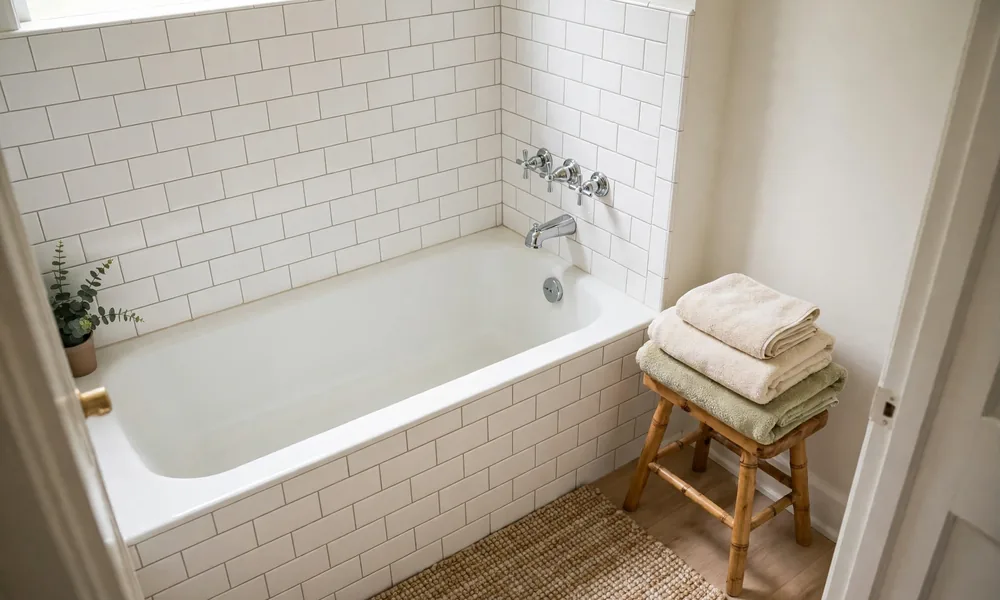
The alcove tub fits into a three-walled recess and is the workhorse of the British bathroom. Modern versions are far deeper than the shallow tubs of twenty years ago, with soaking depths of 45 centimetres and a sloped back that actually supports you. It is the cheapest to install, the easiest to clean around, and the only type that naturally takes a shower over it.
4. Corner Tub: Best for Wide Bathrooms
A corner tub uses the dead space where two walls meet, and its wide, triangular shape lets two people soak side by side or one person stretch out diagonally. Depths of 50 centimetres are common, and the broad rim doubles as a shelf for salts and a book. The catch is footprint, often 150 by 150 centimetres, and far more water per fill. In a wide bathroom where the bath is the main event, nothing else feels as generous.
5. Walk-In Soaker Tub: Best for Easy Access
A walk-in tub has a watertight door in its side, so you step in rather than climbing over a high rim, then sit on a built-in seat as it fills. Soaking depths reach 55 centimetres, and grab rails and a hand-held shower are common extras. The trade-offs are real: you wait for the tub to fill while sitting in it, and again for it to drain before you can open the door. For safety and independence, though, it is the best deep soaker on this list.
6. Japanese Deep Soaking Tub: Best for Small Spaces
The Japanese ofuro is short, deep and upright, often just 120 centimetres long but 60 centimetres deep, so you sit with your knees bent and the water up to your shoulders. It uses less water than a long tub while giving a deeper soak, and its compact footprint fits bathrooms where a standard tub would never go. The upright posture is not for everyone, and tall bathers may find their legs cramped, but for a small bathroom it packs more soak into less floor than any other shape.
Bathtubs Compared
| Tub type | Best for | Typical soaking depth | Water per fill |
|---|---|---|---|
| Freestanding oval acrylic | Best overall soak | 48 cm | 180 litres |
| Freestanding stone resin | Heat retention | 50 cm | 200 litres |
| Built-in alcove | Smaller bathrooms | 45 cm | 160 litres |
| Corner tub | Wide bathrooms | 50 cm | 250 litres |
| Walk-in soaker | Easy access | 55 cm | 190 litres |
| Japanese deep soaker | Small spaces | 60 cm | 140 litres |
How to Choose the Right Bathtub
Start with the tape measure, not the catalogue. Measure the longest wall, the width at the narrowest point, and the doorways and hallway, because a freestanding tub that cannot get through the front door is an expensive ornament. Leave at least 10 centimetres of clearance around a freestanding tub for cleaning, and check that the waste pipe can reach the drain without crossing a joist.
Material is the next decision. Acrylic suits most homes: warm, light, affordable and easy to repair. Steel enamel is tougher and cheaper, but it feels cold and chips if you drop something heavy. Cast iron holds heat beautifully and lasts a lifetime, yet it is so heavy that upstairs floors often need steel support.
Think about the tap before you buy the tub. A freestanding tub needs a floor-standing filler or a wall-mounted tap, both of which cost more and need plumbing planned early. An alcove tub takes a standard deck-mounted tap, which is cheaper and simpler. Check the overflow position too: a low overflow caps your soaking depth no matter how deep the tub looks.
Finally, be honest about who uses the bath. A household with small children needs a tub that is easy to reach into and quick to fill, which favours an alcove model. A household where the bath is an evening ritual can justify a deeper freestanding or Japanese tub, and if anyone struggles with mobility, a walk-in tub or a low-rim alcove tub with grab rails is worth more than any amount of style.
Keeping Your Bathtub in Good Shape
A good bathtub lasts decades if you look after it. Rinse the tub after every soak so oils and salts do not leave a film, and wipe it dry once a week to stop limescale building up around the taps and overflow. Use a non-abrasive cleaner: scouring pads scratch acrylic and dull stone resin, and once the surface is rough it stains far more easily.
Before You Buy: A Quick Checklist
- Measure the room, the doorways and the hallway, and leave clearance around the tub for cleaning.
- Check the soaking depth at the overflow, not the height of the rim: aim for 45 centimetres or more.
- Confirm the floor can carry the tub full of water plus the bather, especially for stone resin and cast iron.
- Plan the tap and waste pipe before ordering, particularly for freestanding tubs.
- Sit in the tub in the showroom, if you can, and check the back slope and the legroom.
- Ask about the guarantee, and keep the care instructions for your exact material.
Frequently Asked Questions
How deep should a bathtub be for a proper soak?
Aim for at least 45 centimetres of water depth at the overflow, which covers most adults to the shoulders when reclining. Tubs with 50 centimetres or more, such as deep freestanding and Japanese models, give a genuinely immersive soak. Anything under 40 centimetres will leave you topping up with hot water halfway through.
What is the best bathtub material?
Acrylic is the best all-rounder for most homes because it is warm, light, affordable and repairable. Stone resin holds heat longest and feels the most luxurious, while cast iron lasts longest but is very heavy. Steel enamel is the budget option, though it cools quickly and can chip.
Can I put a freestanding bathtub upstairs?
Usually yes for acrylic, which is light enough for a standard timber floor, but always check first. A freestanding tub full of water weighs 250 to 350 kilograms, and stone resin or cast iron can need extra joist support. Ask a plumber or structural engineer before ordering a heavy tub for an upstairs bathroom.
How much water does a deep bathtub use?
A standard deep tub uses 160 to 200 litres per fill, while a corner tub can use 250 litres and a compact Japanese tub as little as 140 litres. If you soak daily, that adds up, so a smaller, deeper tub is the most water-efficient way to get a proper soak.
Are walk-in bathtubs worth it?
For anyone with limited mobility, yes: the door, seat and grab rails make bathing safe and independent. The trade-off is time, since you sit in the tub while it fills and drains. For able-bodied buyers who simply want a deep soak, a standard freestanding or alcove tub is better value.
How do I keep bath water hot for longer?
Choose a tub with good heat retention, such as stone resin or thick acrylic, and insulate underneath if you can. Fill it with the hottest water you can tolerate, close the bathroom door, and warm the room before you get in. A bath tray keeps your book and drink within reach so you are not climbing out to fetch things, a bath pillow makes long soaks more comfortable, and bath foam adds bubbles that slow heat loss from the surface.
The Bottom Line
The best bathtub for a deep soak is the deepest one your bathroom and your floor can honestly support, in a shape you can recline in without sliding. For most homes that means a freestanding oval in acrylic, with a deep alcove tub as the practical pick for smaller rooms and a Japanese soaker as the clever choice when space is tight. Measure carefully, buy for depth rather than looks, and your next bath will feel like the soak it should have been all along.


