
A good bath tray is the difference between a quick wash and a proper soak. The right bath tray holds your book steady, keeps your tea out of the water, and gives your phone a safe perch — all while spanning the tub without wobbling. The wrong one slides, tips, or simply does not fit, and ends up leaning against the wall gathering dust. In 2026, bath trays have quietly become one of the most popular bathroom upgrades, and the choice is wider than ever: bamboo, walnut, teak, stainless steel, acrylic, and clever expandable designs that adjust to almost any tub.
This guide sorts the genuinely useful trays from the pretty-but-pointless ones, judging fit, stability, weight capacity, drainage, and how each material copes with daily steam. Whether your bath is a deep freestanding tub or a compact built-in, there is a tray here that will turn an ordinary soak into a small daily ritual.
Key Takeaways
- Measure your tub first: most trays fit widths of 70 to 105 centimetres, and an expandable tray is the safest bet for unusual sizes.
- Bamboo is the best all-rounder — light, naturally water-resistant, and warm to the touch — while walnut wins on looks and longevity.
- A tray needs a phone or tablet slot, a wine glass holder, and a non-slip base to be genuinely useful rather than decorative.
- Weight capacity matters: check for at least 5 kilograms if you plan to load it with a book, a drink, and a candle.
- Dry your tray after each bath and oil wooden ones monthly; a neglected tray warps, cracks, or grows mould within months.
Why a Bath Tray Changes the Soak
A bath is one of the few places where doing nothing is the whole point, yet most of us still balance a phone on the rim and reach for a glass on the floor. A bath tray fixes that in one move: it creates a stable, dry surface across the water, so everything you want is within reach and nothing you value risks a dunking. Readers can hold a book open without wet pages, tea drinkers can sip without sitting up, and a tablet can be propped at eye level instead of craned over.
There is a practical side too. A tray keeps candles off the tiled edge where they get knocked over, and gives bath salts, oils, and a flannel a home during the soak. For people with stiff joints, it holds everything within easy reach, which makes the whole routine safer and more comfortable.
The Main Types of Bath Tray
Bamboo trays
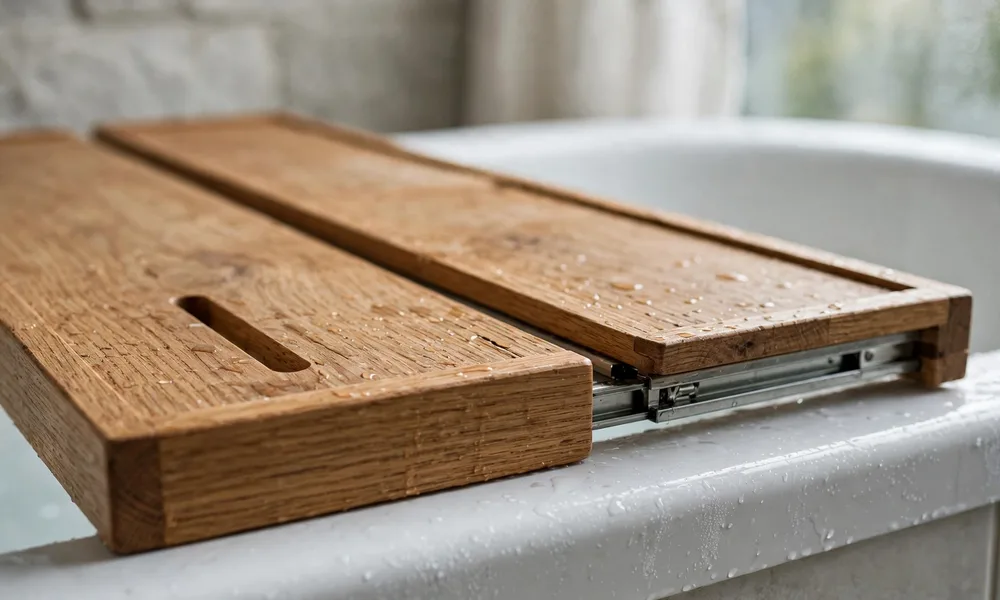
Bamboo is the default choice for good reason. It is light, naturally resistant to moisture, and warm to the touch. Most bamboo trays expand to fit different tub widths and include a book rest, phone slot, and wine glass cut-out as standard. The weakness is the finish: cheap lacquer bubbles and peels in steam, so look for a smooth, even seal and solid-feeling joints.
Solid wood trays
Walnut, teak, and oak trays are the premium end of the market. Walnut is the showpiece — deep brown grain, heavy and stable, beautiful enough to leave on the tub. Teak is the practical luxury: its natural oils resist water better than almost any other wood. Oak is sturdy but needs more regular oiling. Wooden trays are usually fixed-width, so measuring matters more, and they cost two to four times as much as bamboo — but they feel substantial and rarely flex under a heavy book.
Metal and acrylic trays
Stainless steel trays suit modern bathrooms and are the easiest to clean, but they are cold to touch and the heaviest, and cheap ones can rattle on a ceramic rim. Acrylic trays look almost invisible over the water, which suits minimalist bathrooms, but they scratch easily and every mark shows. Both work best as a sleek second option rather than the everyday workhorse.
What to Look for Before You Buy
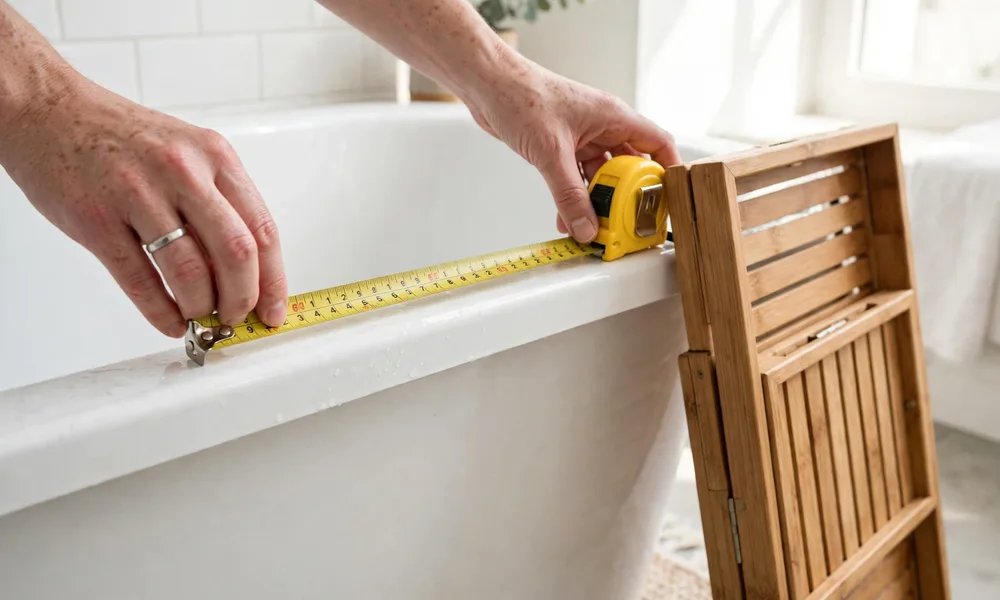
Fit comes first, and it is the step most people skip. Measure the outside width of your tub where the tray will sit, and compare it with the tray’s stated range. Expandable trays typically cover 70 to 105 centimetres, while fixed trays suit one width only. Check the depth too — anything under 20 centimetres feels cramped once a book and a mug are on it — and make sure the tray’s feet sit flat on your rim. Freestanding tubs with curved rims can defeat trays designed for flat built-in edges.
Stability is the second test. A good tray should not rock when you press one corner or slide when nudged. Look for silicone grips underneath and a little weight — feather-light trays shift too easily. Check weight capacity too: a tray rated for 5 kilograms or more will happily carry a hardback, a mug, and a candle, while an unrated tray may bow in the middle.
Then come the features that decide whether the tray gets used daily or once. A phone slot should fit a phone in a case, a wine glass holder should be a proper cut-out rather than a shallow dip, and a raised book rest with a page holder is genuinely useful for readers. Small drainage gaps stop water pooling after a splash, and a tray that folds flat or hangs on a hook is far more likely to be put away and kept dry.
Bath Trays Compared
| Type | Best for | Water resistance | Typical price | Watch out for |
|---|---|---|---|---|
| Bamboo, expandable | Most bathrooms | Good | Low to mid | Thin lacquer peeling in steam |
| Walnut, fixed | Luxury and looks | Good with oiling | High | Fixed width — measure carefully |
| Teak | Daily use, wet rooms | Excellent | High | Heavier than bamboo |
| Stainless steel | Modern bathrooms | Excellent | Mid to high | Cold to touch, can rattle |
| Acrylic | Minimalist spaces | Excellent | Mid | Scratches show easily |
The Best Bath Trays in 2026
Best overall: the expandable bamboo tray
For most people, an expandable bamboo tray is the right answer. It fits the widest range of tubs, weighs almost nothing, and comes with the full set of features at a modest price. Choose one with thick slats, a smooth seal, and metal sliding rails rather than plastic, and it will survive years of daily steam.
Best luxury pick: the solid walnut tray
If the bath is the centrepiece of the bathroom, a walnut tray is worth the splurge. The grain is beautiful, the weight keeps it planted on the rim, and it turns the bath into something that feels considered. Look for a proper book ledge and a deep wine glass cut-out, and accept that you will need to measure your tub exactly — walnut trays rarely expand. Oil it monthly and it will darken gracefully.
Best for small tubs: the compact teak tray
Small tubs punish big trays. A compact teak tray, usually around 60 to 70 centimetres long, fits neatly without overhanging the edges, and teak’s natural water resistance copes with the extra splashing of a tighter space. Check the grip pads carefully — on a narrow rim, they do most of the work.
Best budget buy: the simple slatted tray
A plain slatted bamboo tray without the book rest and glass holder costs very little and does the core job well: it holds a mug, a candle, and a paperback. The slats let water drain through instead of pooling, and the whole thing dries fast. Skip the very cheapest versions with rough edges and visible glue, which splinter within weeks.
Best for readers: the tray with a book rest
Readers should buy specifically for the book rest. The best versions hold a hardback open at a comfortable angle with a ledge deep enough to stop the book sliding, and a small lip that keeps pages from flipping in the steam. Test the angle if you can: a rest that is too flat strains the neck, while one too steep lets the book slide forward into the water.

How to Measure Your Tub
Measuring takes two minutes and saves a return. Measure the outside width of the tub at the rim where you will sit — tubs are not always the same width along their length. Check the number against the tray’s stated fit range, allowing a little overlap on each side so the tray rests securely. If your tub is wider than 105 centimetres, look for extra-wide expandable trays; if narrower than 70, a compact tray is the better bet.
Care and Cleaning
A bath tray lives in the wettest room in the house, and a little care goes a long way. Wipe it dry after each bath — standing water causes warping, mould, and peeling finishes. Once a week, wash it with warm soapy water and dry it thoroughly before storing it upright where air circulates. Wooden trays benefit from a light coat of food-safe mineral oil once a month. Never leave a wooden tray sitting in water, and never put one in the dishwasher. With that routine, a good tray lasts for years.
Your Bath Tray Checklist
- Measure the outside width of your tub and match it to the tray’s fit range.
- Check the rim shape — flat, curved, or rolled — and make sure the tray’s grips suit it.
- Confirm the phone and tablet slots fit your devices in their cases.
- Look for a weight rating of at least 5 kilograms and non-slip pads underneath.
- Choose a material you will maintain: bamboo for ease, teak for wet rooms, walnut for looks.
- Plan where the tray will live between baths so it dries fully and stays mould-free.
Frequently Asked Questions
Will a bath tray fit any bathtub?
Most standard tubs, yes — expandable trays cover widths from about 70 to 105 centimetres. Very wide freestanding tubs and very narrow vintage tubs may need a specialist tray, so measure before ordering.
Is bamboo or wood better for a bath tray?
Bamboo is lighter, cheaper, and naturally moisture-resistant, making it the best all-rounder. Solid wood, especially walnut and teak, is heavier, more stable, and more beautiful, but costs more and needs regular oiling.
Can a bath tray hold a laptop?
It can, but it should not be a habit. Most trays are rated for around 5 kilograms, and a laptop plus a drink approaches that limit. More importantly, a laptop over bathwater is an expensive accident waiting to happen — a tablet is the safer screen.
How do I stop my bath tray sliding?
Check the silicone grips underneath, and make sure the tray is long enough to rest firmly on both rims. If it still slides, adhesive non-slip pads on the underside usually fix it.
Do bath trays get mouldy?
They can, if left wet. Mould grows in joints that stay damp, so wipe the tray dry after each bath, store it where air circulates, and oil wooden trays monthly.
Are bath trays safe with candles?
Yes, provided the candle sits in a stable holder on a flat part of the tray, away from towels and the edge. Never leave a lit candle unattended in the bathroom.
The Bottom Line
A bath tray is a small, inexpensive upgrade that pays for itself every time you sink into the water with a book and a hot drink within reach. Measure your tub first, then choose an expandable bamboo tray for everyday reliability or a solid walnut one for beauty. Check the grips, weight rating, and device slots, and dry it after each bath. Do that, and the humble tray turns a routine soak into the best twenty minutes of the day. For the rest of the ritual, a good soak pairs naturally with the right bath foam for a proper soak, and the tray itself stays tidy when the bathroom has proper bathroom shelves for storage. If your bathroom is small, the same thinking applies to the shower, where the right shower caddy for small bathrooms keeps everything else within reach.

