
Best Floor Cushions 2026
A floor cushion is the simplest way to add seating to a room without adding furniture. It needs no legs, no frame, and no assembly, yet it turns a bare patch of floor into a place where people actually want to sit, read, play, or talk. The best floor cushions of 2026 are thick enough to protect your knees and hips from a hard floor, firm enough to hold their shape after months of use, and covered in fabric that survives washing, spills, and daily life.
Key Takeaways
- Thickness matters most, because a cushion of at least ten centimetres protects your hips and knees from a hard floor in a way a thin pad never will.
- Firm filling holds its shape far longer than soft filling, so look for dense foam, shredded foam, or a firm kapok and cotton blend rather than loose polyester alone.
- A removable, washable cover is not a luxury, since floor cushions collect dust, crumbs, and spills faster than any other seat in the house.
- Size should match the person and the use, with larger round cushions for lounging and smaller square cushions for children, reading, and meditation.
- Non-slip bases and a weight you can carry with one hand make a cushion practical, because a floor cushion that never moves is a cushion nobody uses.
Floor Cushions 2026 at a Glance
| Best for | Cushion type | Size | Standout strength |
|---|---|---|---|
| Best overall | Large round tufted cushion | 90 cm | Thick, steady, and comfortable for hours |
| Best for lounging | Oversized square cushion | 70 cm square | Room to stretch out and lean back |
| Best for children | Small square cushion | 45 cm square | Light enough for a child to carry |
| Best for reading | Round cushion with a back rest | 60 cm | Supports the lower back while you sit |
| Best for meditation | Firm round zafu cushion | 35 cm | Keeps the hips above the knees |
| Best for small rooms | Stackable flat cushion | 50 cm square | Stacks neatly when not in use |
What a Floor Cushion Is Really For
A floor cushion is not a pillow, and it is not a beanbag, although it borrows something from both. It is a firm, flat seat designed to sit directly on the floor, giving your body a soft layer between you and the boards, tiles, or rug underneath. People use them for extra seating when friends visit, for children doing homework, for reading in a quiet corner, for meditation, and for family film nights when the sofa is full.
The difference from a throw pillow matters here. A throw pillow is decoration that props you up on a sofa, and our comparison of the best and worst throw pillows of 2026 covers that smaller, softer world. A floor cushion is a seat in its own right, and it needs to be thicker, firmer, and tougher, because it carries your full weight on a hard surface with nothing underneath to help it.
It also differs from the cushions made for the garden. Outdoor cushions are built to survive sun and rain on patio chairs, and our guide to outdoor cushions that stay comfortable all summer covers foam and fabric that dry quickly after rain. Floor cushions live indoors, so they can use softer cotton and linen covers, thicker natural filling, and colours that would fade outdoors in a week.
Getting the Size Right
Size is the first decision, and it is easier than it looks. Measure the person who will use the cushion most, and think about how they will sit. A cushion for an adult who sits cross-legged needs to be wide enough that both knees rest on it, which usually means at least sixty centimetres across. A cushion for lounging, with legs stretched out, needs to be longer still, closer to ninety centimetres.
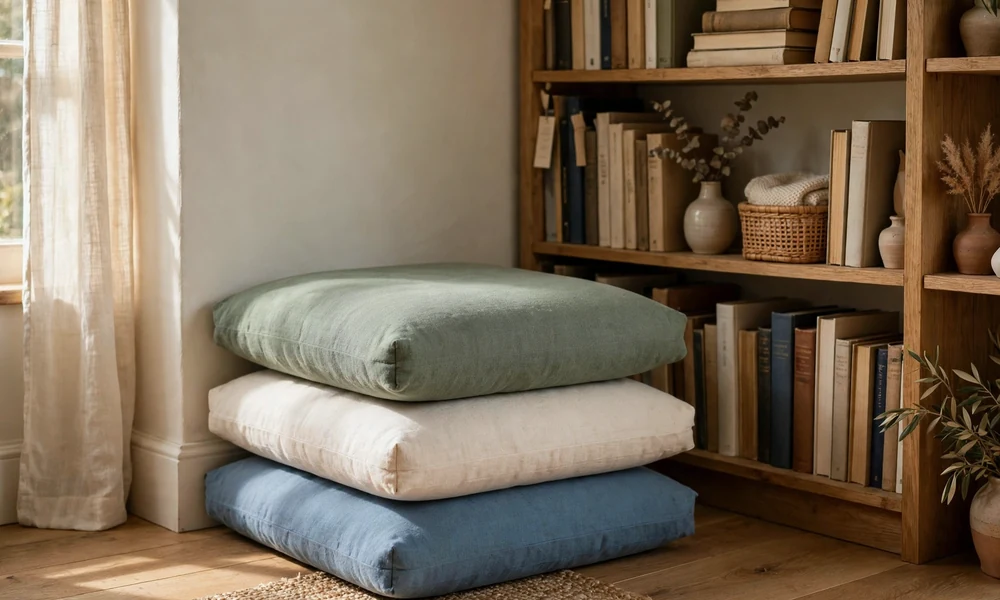
Thickness is just as important as width. A cushion under eight centimetres thick will feel fine for ten minutes and punishing after half an hour, because your weight compresses the filling until you are effectively sitting on the floor. Ten to fifteen centimetres is the sweet spot for most adults, giving enough padding for hips and knees without making the cushion wobbly. Children need less, and a cushion of six to eight centimetres is usually enough for a small child.
The Main Types of Floor Cushion
Floor cushions fall into a handful of types, and each suits a different kind of sitting. The right choice depends less on taste than on how long you will sit and what you will do while you sit.
The large round tufted cushion is the best all-rounder. It is wide, thick, and buttoned or stitched so the filling stays evenly spread, which stops it bunching to one side. It suits adults sitting cross-legged, children playing, and anyone who wants a comfortable seat that also looks like part of the room.
The round cushion with a back rest is the reading choice. It pairs a thick round seat with a soft back that leans against a wall or a sofa, giving your lower back the support a flat cushion cannot. It suits long reading sessions and anyone whose back complains after twenty minutes on the floor.

The stackable flat cushion is the small-room choice. It is thinner than the others, usually eight to ten centimetres, and designed to stack in a neat pile in a corner or under a bench. It trades some comfort for tidiness, which is the right trade in a flat where floor space is precious.
Filling: What Holds Its Shape
Filling decides whether a floor cushion stays comfortable for a year or goes flat in a month. The best fillings are dense and resilient, springing back after you stand up rather than staying dented where you sat.
High-density foam is the most reliable filling for a general floor cushion. It holds its shape, supports your weight evenly, and lasts for years without flattening. Its weakness is breathability, since solid foam can feel warm in summer, so look for foam with a layer of softer fibre on top if you sit for long stretches.
Loose polyester fibre is the filling to be wary of. It is cheap, light, and soft when new, but it flattens quickly under body weight and clumps into lumps after washing. A cushion filled only with loose polyester will look tired within months, however pretty its cover is.
Covers, Fabric, and Washing
A floor cushion lives on the floor, which means it meets dust, crumbs, pet hair, and spilled drinks far more often than a sofa cushion does. The cover is your defence, and the most important feature is that it comes off.
A removable cover with a sturdy zip is essential. It lets you wash the cover without washing the whole cushion, which is usually impossible for a large foam-filled seat. Check that the zip runs far enough around the cushion to get the cover off easily, and that it is hidden under a flap so it does not scratch the floor.
Comfort, Support, and Safety
Comfort on a floor cushion is about support, not softness. A cushion that is too soft feels lovely for five minutes and then lets your hips sink until your knees are higher than your hips, which strains your lower back. A firmer cushion keeps your hips level or slightly above your knees, which is the position your spine prefers.

A non-slip base matters on wooden and tiled floors. Some cushions have a dotted rubber underside, some have a heavier canvas base, and some rely on a rug underneath. If your cushion has no grip and your floor is smooth, put it on a rug, because a cushion that slides when you sit down is a cushion that will one day slide out from under you.
Floor Cushions and the Room Around Them
A floor cushion should suit the room it lives in, not just the person who sits on it. In a large living room, several large round cushions around a low table create a relaxed seating area that works for games, reading, and conversation. In a small room, two stackable cushions that live in a corner are better than four large ones that block the walkway.
The rug underneath matters more than people expect. A floor cushion on a bare wooden floor slides and feels hard at the edges, while the same cushion on a thick rug feels warmer, grips better, and looks settled. If you are choosing a rug for a room where floor cushions will be used, our guide to the best area rug size for your living room explains how to size it so the cushions and the rug work together instead of fighting for floor space.
Common Mistakes to Avoid
The most common mistake is buying a cushion that is too thin, because a thin cushion looks neat in a photograph and feels like sitting on the floor in real life. The second is buying a cushion whose cover cannot be removed, which turns every spill into a permanent stain. The third is choosing loose polyester filling because it feels soft in the shop, then watching it flatten within weeks.
Before You Buy: A Short Checklist
- Measure the person who will use it most, and buy a cushion at least sixty centimetres across for an adult sitting cross-legged.
- Check the thickness, and aim for ten to fifteen centimetres for adults and six to eight for children.
- Press the centre hard with both hands, and choose a cushion that springs back instead of staying dented.
- Check that the cover comes off on a sturdy zip, and that the fabric is washable cotton, linen, or a blend of the two.
- Look for a non-slip base, or plan to use the cushion on a rug.
- Count how many people will sit on the floor at once, and buy a set rather than a single cushion.
- Check the weight, and choose a cushion you can carry with one hand to wherever it is needed.
Frequently Asked Questions
How thick should a floor cushion be? Ten to fifteen centimetres is right for most adults, giving enough padding for hips and knees without making the cushion wobbly. Children need six to eight centimetres, and meditation cushions are often firmer and slightly thinner.
Can floor cushions be washed? The cover can be washed if it comes off on a zip, which is why a removable cover is essential. The filling itself should be aired and spot-cleaned rather than soaked, and foam filling should never go in a washing machine.
The Bottom Line
The best floor cushion of 2026 is the one that is thick enough to protect you from the floor, firm enough to hold its shape, and covered in fabric you can wash. It is wide enough for both knees, light enough to carry with one hand, and tough enough to survive daily life on the floor.
Start with the size and the filling, not the colour. Measure the person, press the centre to test the filling, check that the cover comes off, and then choose the colour that suits your room. A cushion chosen that way will be sat on every day, while a cushion chosen for looks alone will end up stacked in a corner.


