
What is the best area rug size for your living room in 2026? The short answer is: bigger than you think. Most living rooms look their best with a rug that is large enough for the front legs of the sofa and chairs to sit on it, and that leaves a clear border of bare floor around the edges. A rug that is too small is the most common decorating mistake in living rooms, making even beautiful furniture look scattered. Get the size right, and the whole room suddenly feels pulled together.
This guide walks you through exactly how to choose. We cover the standard rug sizes and which rooms they suit, how to measure your space and your furniture, the placement rules that designers actually use, and how material and pile affect the way a size feels underfoot. The advice applies whether you are furnishing a small flat or a large open-plan living room, and whether your budget is modest or generous, because size is a matter of measurement, not money.
Key Takeaways
- For most living rooms, an 8 by 10 foot rug is the best starting point, and a 9 by 12 foot rug suits larger rooms and sectionals.
- The front legs of your sofa and chairs should sit on the rug, with 18 to 24 inches of bare floor showing around the edges.
- Measure your furniture layout first, then choose the rug size, never the other way around.
- A rug that is too small makes a room look smaller and messier; a rug that is too big is rarely a problem.
- Leave a rug pad underneath for grip, comfort and protection, whatever size you choose.
Why Rug Size Matters More Than Pattern
A rug does two jobs in a living room. The first is practical: it softens hard floors, warms cold feet, absorbs sound and protects the floor beneath. The second is visual: it defines the seating area, anchors the furniture and sets the proportions of the room. A rug that is too small cannot anchor anything, because the furniture sits half on and half off it. A rug that is large enough pulls the sofa, chairs and coffee table into one clear group.
Pattern and colour matter too, but they cannot rescue a wrong size. A beautiful pattern on a rug that is two feet too short still looks like a postage stamp in the middle of the floor, while a plain rug in the right size makes the room feel generous and complete. That is why designers start with size and only then choose pattern. It is also why the most common regret among rug buyers is the size, not the colour: the rug looked smaller in the room than it did in the shop. Measuring first, with tape on the floor, prevents that mistake entirely.
Standard Area Rug Sizes and Which Room They Suit
Area rugs are sold in standard sizes, and knowing what each size suits saves a great deal of guessing. The table below covers the sizes you will actually find in shops in 2026, with the living room layouts each one suits best.
| Rug Size | Best For | Sofa Size | Typical Price Range |
|---|---|---|---|
| 4 x 6 ft | Small accent area, beside a chair | Two-seater or less | $60–$200 |
| 5 x 8 ft | Small living room, apartment seating | Two-seater sofa | $100–$400 |
| 6 x 9 ft | Compact living room | Two to three-seater sofa | $150–$600 |
| 8 x 10 ft | Most standard living rooms | Three-seater sofa | $250–$1,200 |
| 9 x 12 ft | Large living room, sectional sofa | Sectional or large three-seater | $400–$2,000 |
| 10 x 14 ft | Very large or open-plan room | Sectional plus chairs | $600–$3,500 |
| Round 8 ft | Round seating, bay window area | Curved or small grouping | $250–$900 |
The 8 by 10 foot rug is the workhorse of living rooms: it fits a standard three-seater sofa with two chairs and a coffee table, with room to spare. If your room is large, or your sofa is a sectional, step up to 9 by 12. When in doubt between two sizes, choose the larger one: an oversized rug rarely looks wrong, while an undersized one almost always does.
How to Measure Your Living Room for a Rug
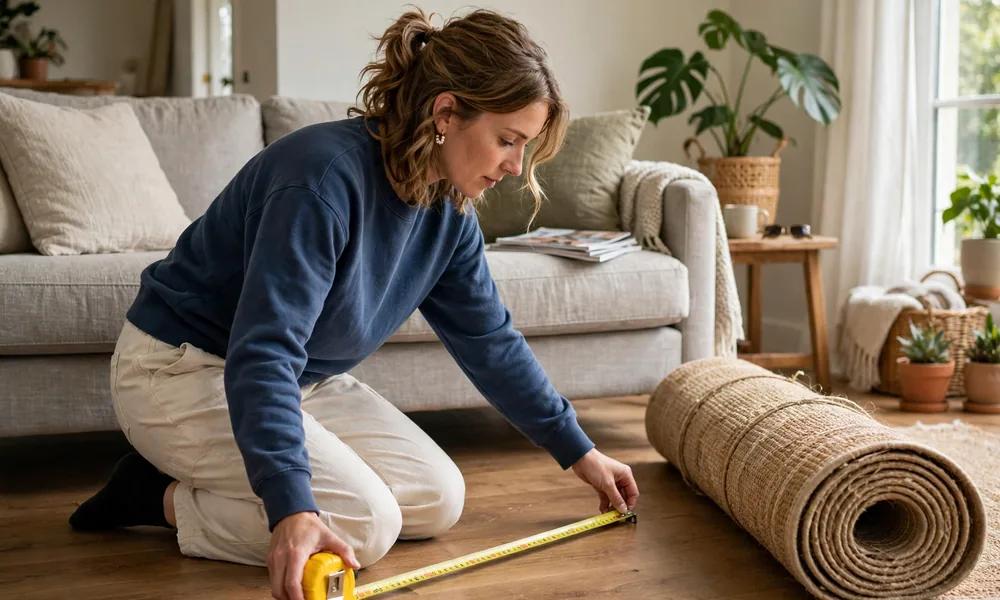
Measuring takes ten minutes and saves a return. Start by arranging your furniture the way you want it, then measure the seating area as a whole, not just the sofa. Include the chairs, the coffee table and the space people need to walk around them. A good rule is to add 24 inches to each side of the seating group, so chairs can be pulled out and feet still land on the rug.
Next, use painter’s tape to mark the rug’s outline on the floor. Tape the corners and walk around it for a day or two: sit on the sofa, pull out a chair, open a door, and check that nothing catches. This catches mistakes a tape measure alone misses, such as a rug that blocks a door swing. Measure the door clearance too: a thick rug plus a pad can stop a door from opening fully.
Placement Rules That Designers Actually Use
There are two classic ways to place a rug under living room furniture. The first, and most popular, is the front-legs-on rule: the front legs of the sofa and chairs sit on the rug, while the back legs stay on the bare floor. This works in most rooms and anchors the seating group without needing a huge rug. The second is the all-legs-on rule: every leg of every piece of seating sits on the rug. This looks the most luxurious, but it needs a rug at least 9 by 12 feet in most rooms, and it costs more.
A few practical rules help too. Leave 18 to 24 inches of bare floor between the rug’s edge and the wall, so the room has a visible border and the rug does not look like wall-to-wall carpet. In an open-plan space, use the rug to define the living area and separate it from the dining area. Keep the coffee table on the rug with at least 12 inches of rug showing on each side. If you are refreshing the whole room, our guide to duvet covers that make your bedroom feel new in 2026 shows how the same anchoring idea works in the bedroom.
Choosing Material and Pile for Your Living Room
Size is decided by measurement, but material is decided by how you live. Wool is the classic living room choice: soft, durable and naturally stain-resistant, though it costs more and sheds a little at first. Cotton is affordable and easy to clean, but it wears faster in high-traffic areas. Synthetic fibres such as polypropylene are the most practical choice for homes with children or pets, because they resist stains and cost far less than wool, though they can look flatter underfoot. Natural fibres such as jute and sisal bring texture and warmth, but they are rough under bare feet and hard to clean, so they suit low-traffic rooms better.

Pile height matters too. A low pile, under half an inch, is easiest to clean and lets doors swing freely. A medium pile is the best all-rounder for a living room. A high pile, or shag, feels luxurious but traps dust and pet hair and makes moving chairs difficult. Whatever material you choose, buy a rug pad: it stops the rug from sliding, adds cushioning, protects the floor, and can add years to the rug’s life. Keeping the floors around it clean matters too, and our comparison of Shark vs Bissell carpet cleaners in 2026 is useful if you want a machine that handles both rugs and fitted carpet.
What Size Rug for a Sectional, a Small Room, or an Open Plan?
Sectional sofas need the largest rugs, because their L-shape leaves awkward corners if the rug is too small. A 9 by 12 foot rug is the usual starting point, and a 10 by 14 is better for a large one. Place the rug so the sectional’s front legs sit on it along both arms of the L.
In a small room, a larger rug can make the space look bigger, because it unifies the floor and draws the eye across it; just leave a border of at least 12 inches so it reads as a rug, not fitted carpet. In open-plan rooms, size the rug to the seating group, not the room, and use it as a boundary between living and dining areas. Scent and atmosphere complete the room once the layout is right, and our guide to how to choose the right diffuser for your home in 2026 covers the finishing touches that make a living room feel inviting.
Rug Size Buying Checklist
- Measure your seating group, including chairs and coffee table, and add 24 inches on each side.
- Mark the rug outline on the floor with painter’s tape and live with it for a day before ordering.
- Choose 8 by 10 feet for a standard living room, 9 by 12 for a large room or sectional, and 5 by 8 only for genuinely small seating.
- Check door clearance over the rug and pad, and keep 18 to 24 inches of bare floor at the walls.
- Pick the material for your household: wool for durability, synthetic for pets and children, low pile for easy cleaning.
- Buy a rug pad in the same size, and budget for professional cleaning once a year.
Frequently Asked Questions
What is the best area rug size for a standard living room?
An 8 by 10 foot rug is the best size for most standard living rooms with a three-seater sofa, two chairs and a coffee table. For a larger room or a sectional sofa, step up to 9 by 12 feet.
Should the rug go under the sofa?
Yes, at least partly. The front legs of the sofa should sit on the rug, which anchors the seating group. In larger rooms, putting all the legs on the rug looks even better, but it needs a bigger rug.
How much floor should show around a rug?
Leave 18 to 24 inches of bare floor between the rug and the wall in a standard room, and at least 12 inches in a small room. This border frames the rug and stops it from looking like wall-to-wall carpet, while also making the room feel larger.
Is it better to buy a rug that is too big or too small?
Too big, almost always. A rug that is a little too large rarely looks wrong. A rug that is too small makes the room look smaller and messier, and it is the most common reason rugs get returned.
What size rug do I need for a sectional sofa?
Start with 9 by 12 feet for a standard sectional, and 10 by 14 for a large one. Mark the outline with tape before you buy, because the corner of the L is where a too-small rug shows first.
Do I need a rug pad under an area rug?
Yes. A rug pad stops the rug from sliding, adds cushioning underfoot, protects the floor beneath, and extends the rug’s life. Buy one in the same size as the rug, trimmed slightly smaller so it does not show at the edges, and choose a felt and rubber pad for hard floors.
The Bottom Line
The best area rug size for your living room in 2026 is the one that fits your furniture, not the one that fits your first guess. For most rooms that means 8 by 10 feet, and for large rooms and sectionals it means 9 by 12. Measure the seating group, mark the outline with tape, check the doors, and choose the larger size when you are torn between two.


