
Best Luggage Tags 2026
A luggage tag is a small thing until it is the only thing standing between you and a lost suitcase. When two black cases circle the carousel and yours is the one with the brown leather tag, you spot it in seconds. When a bag goes astray, the tag is the fastest way for an airline to get it back to you.
The best luggage tags of 2026 are easy to read at a glance, tough enough to survive baggage handling, and discreet enough that they do not advertise your home address to a crowded terminal. These are the ones worth buying, chosen for visibility, durability, privacy, and the way they fasten to a bag.
Key Takeaways
- Pick a tag you can spot from several metres away, because a bright colour or a distinctive shape is what finds your bag on a crowded carousel.
- Choose a strap or loop that cannot slip off, since a tag that falls off in transit is worse than no tag at all.
- Keep your home address off the outside of the tag, because anyone who handles your bag can read it.
- Match the tag to the bag, as a heavy leather tag suits a hard suitcase while a light silicone tag suits a backpack or a cabin bag.
- Buy tags in sets if you travel as a family, so each person has a colour and no two bags look the same.
Luggage Tags 2026 at a Glance
| Best for | Tag type | Material | Standout strength |
|---|---|---|---|
| Best overall | Leather loop tag | Full-grain leather | Durable, smart, and easy to spot |
| Best for families | Silicone tag set | Flexible silicone | Bright colours, one per person |
| Best for privacy | Metal tag with flap | Brushed steel | Details hidden until opened |
| Best for frequent flyers | Smart tag with tracker pocket | Rubber and fabric | Holds a tracker as well as details |
| Best for backpacks | Slim fabric tag | Woven fabric | Light, flat, and snag-free |
| Best on a budget | Plastic window tag | Hard plastic | Cheap, clear, and replaceable |
What a Luggage Tag Is Really For
A luggage tag does two jobs. First, it identifies your bag as yours, quickly and from a distance, so you can pick it out among dozens of similar cases. Second, it carries your contact details, so that if the bag is lost, delayed, or left behind, the airline or a fellow traveller can reach you.
Most people buy a tag the wrong way round. They choose the prettiest one, then discover the strap is flimsy, the window fogs up, or the writing rubs off after one flight. Choose for the fastening and the readability first, and let the looks follow.
Visibility: Finding Your Bag Fast
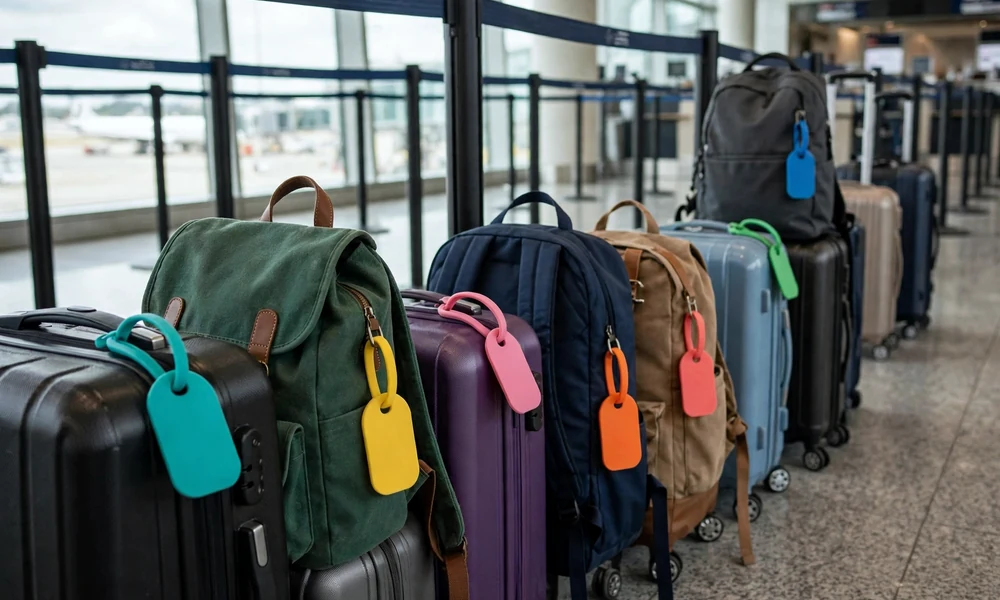
Visibility is the first thing a tag should give you. Suitcases look alike, especially the black and navy hard cases that dominate every carousel. A tag in a bright colour, an unusual shape, or a bold pattern breaks that sameness and lets you claim your bag without hovering over every case that passes.
Colour is the simplest way to do it. A teal, yellow, or coral tag stands out against dark luggage and grey airport floors, and it is visible from several metres away. If you travel as a family, give each person a colour and the whole group can spot its own bags at once.
Durability: Surviving Baggage Handling
Baggage handling is rough. Bags are stacked, dropped, dragged, and squeezed through belts and chutes, and the tag takes much of that punishment. A tag that cannot survive a single return flight is a false economy, however cheap it was.
Leather is the classic durable choice. A full-grain leather tag with a stitched edge and a solid buckle ages well, resists tearing, and looks better after a few trips than it did when new. It suits a hard suitcase or a smart leather bag, and it is the tag most likely to still be attached after a long journey.
Silicone is the practical alternative. It flexes instead of cracking, it does not scratch other bags, and it survives rain and rough handling without showing the wear. A silicone tag is also light, which matters on a cabin bag where every gram counts, and it is easy to wipe clean after a muddy trip.
Privacy: What to Write, and What Not To
A luggage tag is a public document. Anyone who handles your bag, from check-in staff to a stranger on the carousel, can read whatever is written on it. That is why privacy matters as much as durability, and why the best tags are designed to hide your details.
Never put your full home address on the outside of a tag. Your name and a mobile number are enough for an airline to reach you, and a mobile number works wherever you are in the world. If you want to give more, put your home address on the inside of a tag with a flap or a covered window, where only someone who opens it can read it.
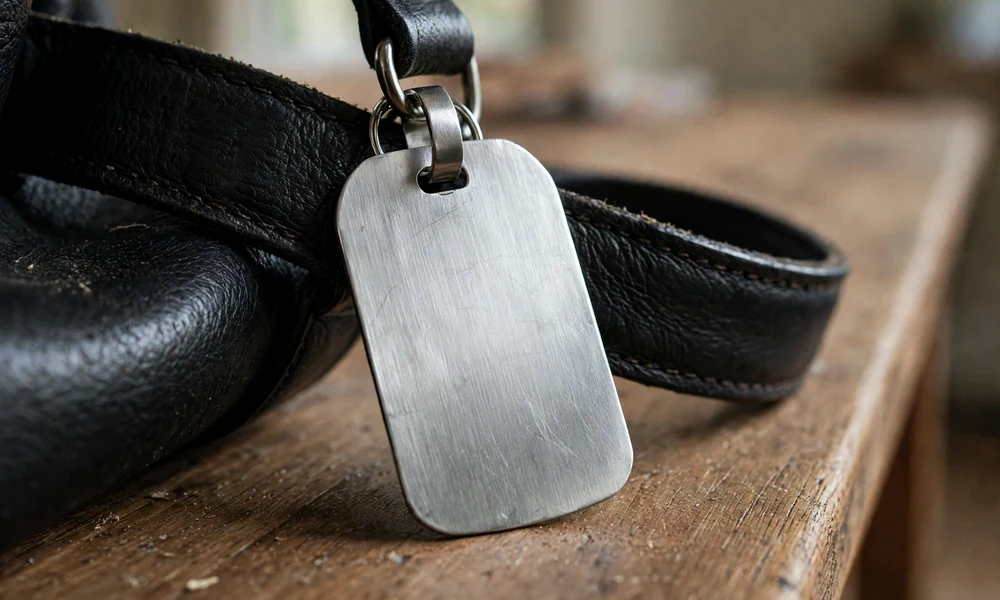
A tag with a privacy flap is the safest design. The outside shows your name, or a colour and a shape, while the contact card sits behind a cover. A metal tag with a hinged flap does the same job in a sturdier form, and it keeps the card dry in rain.
The Main Types of Luggage Tag
Luggage tags fall into a handful of types, and each suits a different kind of traveller. The right choice depends less on taste than on how often you fly, what you carry, and how much privacy you want.
The leather loop tag is the safest choice for most travellers: a stitched leather tag with a buckle or a loop that threads through the handle. Its strength is durability and looks, and its weakness is price, since good leather costs more than plastic or silicone.
The silicone tag set is the best choice for families and frequent flyers. The tags come in bright colours, they are light and flexible, and they are cheap enough to buy in a set of six or eight. Their weakness is that they look casual, so they suit a holiday bag better than a business case.
The metal tag is the choice for travellers who want a tag to last for years. It is heavy, smart, and almost impossible to tear, and it suits a hard suitcase or a leather bag. Its weakness is weight, and the fact that it can scratch a polished case if it swings.
The smart tag with a tracker pocket is the newest type. It holds a small Bluetooth tracker as well as your contact card, so you can follow your bag on your phone as well as identify it. If you already use a tracker, our guide to the best luggage trackers of 2026 explains the trackers themselves, and a tag with a pocket keeps the tracker and the tag together.
Matching the Tag to the Bag
A tag should suit the bag it hangs from, not just the traveller who bought it. A heavy leather tag on a light cabin bag is out of balance, while a flimsy plastic tag on a heavy checked case looks temporary and is likely to fail.
For a hard suitcase, choose a leather or metal tag with a strong loop, since the case is heavy and the tag will be pulled and dragged. For a soft duffel or a weekend bag, a silicone or fabric tag is lighter and will not scratch the fabric. Our guide to duffel bags that survive weekend trips in 2026 covers the bags themselves, and the same thinking applies to the tag: match the toughness to the trip.
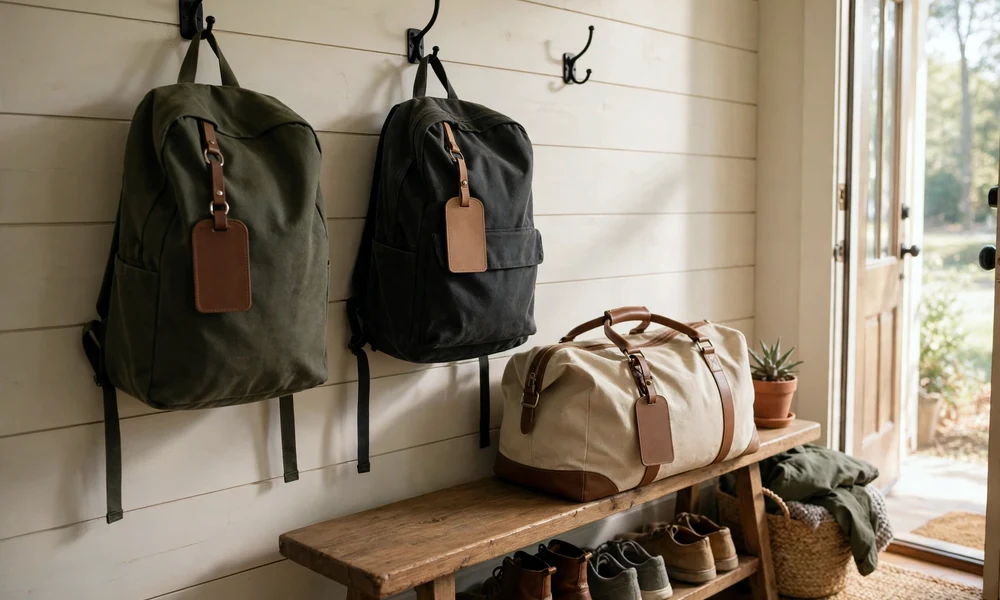
For a weekender bag, a tag in a colour that matches the bag, or contrasts with it, makes the bag easy to find in a car boot or a hotel room. Our guide to the best weekender bags of 2026 covers the bags that suit short trips, and a good tag is the finishing touch that makes the bag yours.
Before You Buy: A Short Checklist
- Choose a colour or shape you can spot from several metres away on a crowded carousel.
- Pull the strap or loop firmly, and reject any tag whose fastening stretches, slips, or feels thin.
- Check that the contact card is covered or behind a flap, so your details are not on public display.
- Write your name and mobile number with the country code, and keep your home address inside the tag.
- Match the tag to the bag: leather or metal for a hard case, silicone or fabric for a soft bag or backpack.
- Buy a set if you travel as a family, with a different colour for each person.
- Keep a spare tag in your hand luggage, and check the card before every trip.
Frequently Asked Questions
Should I put my home address on a luggage tag? No, not on the outside. Your name and mobile number are enough for an airline to reach you. If you want to give an address, put it inside a tag with a flap, where only someone who opens it can read it.
Are leather luggage tags worth the price? Yes, if you travel often. A good leather tag lasts for years, resists tearing, and looks smart on a hard case or a leather bag. For occasional travel, a silicone set is better value.
Can a luggage tag fall off in transit? Yes, if the fastening is weak. Thread the tag through the handle itself, not a zip pull, and choose a leather loop, a steel cable, or a thick silicone strap. Pull it firmly before you travel.
What colour luggage tag is easiest to spot? A bright, solid colour such as teal, yellow, or coral stands out against dark luggage and grey airport floors. A different colour for each traveller makes a family group faster at the carousel.
The Bottom Line
The best luggage tag of 2026 is the one you can spot in seconds, that stays attached through baggage handling, and that gives a stranger just enough information to return your bag without giving away your home address. It is bright enough to find, tough enough to survive, and discreet enough to trust.
Start with the fastening, not the colour. Choose a tag with a loop you trust, a card you can read, and a flap that hides your details, then pick the colour and material that suit your bag. A tag is a small purchase, but it is the cheapest insurance a traveller can buy, and the one that pays off on the day a bag goes missing.
Travel documents matter as much as the bag itself, and a passport holder is the other small accessory that keeps a trip running smoothly. Our guide to the best versus worst passport holders of 2026 covers the holders that protect your passport without hiding it, and it is worth reading before your next trip.


