
Most photographs now live on a phone, scrolled past in seconds and forgotten just as fast. A photo album slows that down. It turns a folder of files into something you can hold, open on a sofa, and hand to someone else. The best photo albums of 2026 are not the fanciest ones, and they are not the biggest. They are the albums that protect printed photographs, keep them in order, and still look good on a shelf after years of being opened, closed, and opened again.
What Makes a Photo Album Good
The first thing to judge is how well an album protects the photographs inside it. Prints fade when they sit in sunlight, bend when they are loose in a drawer, and stick together when damp gets in. A good album keeps prints flat, dry, and out of direct light. Its pages should feel firm rather than flimsy, its pockets should hold a print without letting it slide around, and its cover should close properly so dust cannot settle on the pages. If an album feels loose or wobbly when you pick it up, it will not protect photographs for long.
The Main Types of Photo Album
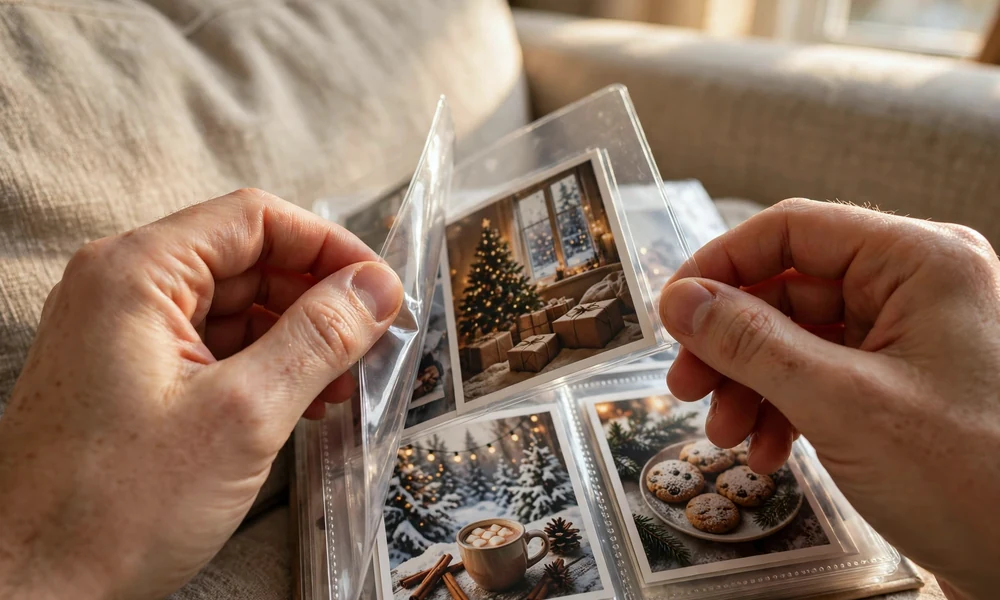
Pocket albums, also called slip-in albums, are the simplest kind. Each page has clear plastic pockets, usually sized for standard four-by-six prints, and you slide one photograph into each pocket. They are quick to fill, easy to rearrange, and kind to photographs, because the plastic keeps fingerprints off the surface. Their weakness is looks. A pocket album is practical rather than beautiful, and the plastic can glare in bright light. For a family album that gets opened often, though, a pocket album is hard to beat.
Self-adhesive albums work differently. Each page has a sticky surface covered by a clear plastic sheet. You peel the sheet back, press the photograph onto the page, and smooth the sheet down again. This style lets you place photographs in any arrangement, add captions underneath, and mix print sizes on one page. It looks lovely when done well. The risk is that the adhesive can yellow over time, and a photograph pressed onto a sticky page is hard to move later without damage. These albums suit careful, creative layouts rather than quick filling.
Bookbound albums look the most like a proper book. They have thick, plain pages, often in black or cream, with a linen or leather cover and a stitched spine. Photographs are usually fixed with small corner mounts or photo tape, which means they can be removed later without harm. A bookbound album is the best choice when the album itself matters as much as the photographs inside it, for example as a wedding album or an anniversary gift. It costs more, and it takes longer to fill, but it is the kind that gets kept for decades.
How to Choose the Right Album
Start with the size of your prints. Most home printers and high-street printing services produce four-by-six prints, and most pocket albums are built around that size. Larger prints, such as five-by-seven or eight-by-ten, need a larger album with bigger pockets or plain pages, and they cost more per page. If you already have a box of prints, measure a few before you buy anything. An album bought for the wrong print size is an album that never gets used.
Next, think about who will open the album and how often. An album for small children needs sturdy pages and a cover that survives being dropped, because it will be opened with sticky hands and read on the floor. An album for grandparents needs large, clear photographs and pages that turn easily, because stiff pages and tiny pockets frustrate tired hands. An album that stays on a shelf and comes out on special occasions can be more delicate, because it is handled gently and rarely. The best album matches the hands that will use it, not just the photographs it holds.
Getting Your Photographs Ready
An album is only as good as the prints inside it, so it pays to choose the photographs before you choose the album. Go through the folder on your phone and pick the strongest images, not every image. A blurry photograph does not improve by being printed, and a photograph that looked fine on a small screen can look soft or dark on paper. Crop out the clutter at the edges, straighten a tilted horizon, and brighten photographs that were taken indoors. Our guide to the best photo editing apps of 2026 covers simple tools that make phone photographs look their best before printing, without needing a computer or any special skill.
Printing at home gives you control over size and paper, and it is convenient when you only need a few prints. A home printer is at its best with small batches, where you can check each print as it comes out. For larger batches, a printing service is usually cheaper per print and more consistent in colour. Whichever route you take, use proper photo paper rather than ordinary paper, because ordinary paper soaks up ink, dulls colours, and fades far faster. If you print at home often, our guide to the best photo printers of 2026 compares printers that handle photographs well, from compact models for occasional prints to larger ones for regular use.

Albums for Everyday Family Life
For everyday family photographs, a pocket album is usually the best starting point. It holds a lot of prints, it is quick to fill after a holiday or a birthday, and it does not ask for careful layout or craft skills. Choose one with at least two hundred pockets, because a family year produces more photographs than anyone expects. Keep the album somewhere easy to reach, such as a living-room shelf, rather than in a cupboard, because an album that is easy to reach is an album that gets opened.
Order matters in a family album. Photographs in date order tell a story that a random jumble cannot, and children love seeing themselves grow from one page to the next. Add a short note under a few key photographs, with a date and a name, because memories fade faster than photographs do. In ten years, nobody will remember who the toddler in the corner was, or where that beach photograph was taken, unless someone wrote it down. A pencil note on the back of a print, or a caption on the page, is worth more than a perfect layout.
Albums for Weddings and Milestones
A wedding album deserves a slower approach. The photographs are the record of a day that cannot be repeated, and the album will be shown to people who were not there, for many years. A bookbound album with thick pages and a leather or linen cover suits it best, because it feels like a keepsake rather than a storage box. Choose photographs that tell the day in order, from getting ready to the last dance, and leave out near-duplicates. Twenty strong photographs tell the story better than two hundred similar ones.
Albums for Travel
Travel photographs suit a ring-bound album, because a trip rarely fits neatly into a fixed number of pages. You can add pages for a long journey, remove pages that did not work, and keep tickets, maps, and postcards alongside the photographs. A travel album works best when it mixes photographs with small keepsakes: a train ticket, a restaurant card, a pressed flower. Those little things are what bring a trip back, long after the photographs alone have stopped doing it.
Albums for Children and Babies
A baby album is a gift to the child as much as to the parents. A ring-bound album works well here, because a baby album grows month by month, and new pages can be added as the child grows. Include the ordinary photographs as well as the special ones: bath time, first steps, a favourite toy. The ordinary photographs are the ones that matter most later, because the special occasions are the ones everyone remembers anyway.
Photo Albums and Scrapbooks
Photo albums and scrapbooks are close cousins, but they are not the same thing. A photo album is built around the photographs, with the layout kept simple so the images speak for themselves. A scrapbook is built around the craft, with decorated pages, stickers, cuttings, and handwritten stories sharing space with the photographs. Some people love the craft, and some people only want their photographs safe and in order. If you enjoy cutting, sticking, and decorating, our guide to the best scrapbooks of 2026 covers books made for that kind of creative page, with thicker pages and covers that suit heavier decoration.
Looking After Your Albums
Albums last longest when they are stored upright on a shelf, like books, rather than stacked flat in a pile. Stacking presses the pages together and can make photographs stick to the page opposite, especially in a warm room. Keep albums out of direct sunlight, because sunlight fades prints even through a closed cover, and keep them away from damp rooms such as bathrooms and basements. A dry living-room shelf is the best home for a photo album.
Mistakes to Avoid
The most common mistake is buying an album that is too small. A small album fills up, the rest of the prints stay in a box, and the box never gets sorted. Buy the larger album, even if it looks empty at first, because an album with room to grow is an album that stays in use. The second mistake is printing every photograph. A hundred photographs from one day is a chore to look through, and the best photographs get lost among the ordinary ones. Choose the strongest twenty or thirty, and the album becomes something people actually want to open.
The third mistake is leaving prints in a drawer while waiting for the perfect album. There is no perfect album, and the prints fade and bend while you wait. Buy a good, simple album, fill it with the photographs you have, and start enjoying it. You can always make a fancier album later for the photographs that matter most, but the photographs sitting in a drawer are doing nobody any good at all.
The Bottom Line
There is no single best photo album for everyone, because the best album depends on the photographs, the occasion, and the hands that will open it. A pocket album is the most practical choice for everyday family photographs. A bookbound album is the best choice for a wedding or a milestone. A ring-bound album is the most flexible choice for travel and for a growing baby album. A self-adhesive album is the best choice for a careful, creative layout.
The simplest way to choose is to count your prints, measure their size, and think about who will open the album most. Then buy the album that fits those answers, fill it while the memories are fresh, and put it somewhere easy to reach. A photo album only works when it is opened, and the best photo album of 2026 is the one that gets opened again and again.


