Top Handheld Showerheads for Low Water Pressure in 2026
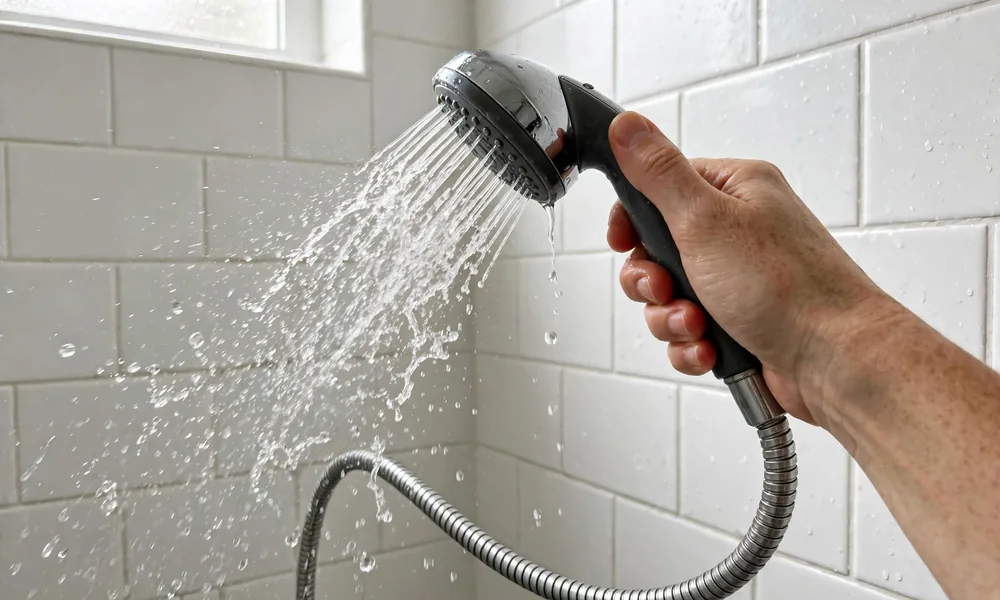
The top handheld showerheads for low water pressure in 2026 solve a problem fixed shower heads cannot: when the water arrives weakly, a handheld head lets you bring the spray to your skin instead of waiting for it to fall on you. A good handheld uses small nozzles, air injection or a pressure-boosting chamber to turn a thin flow into a firm, even spray, and because you hold it, every drop lands where you aim it.
Low pressure is common in older homes, top-floor flats and houses with long pipe runs, and it turns a morning shower into a long, cold rinse. The fix does not need a plumber or a pump: a well-chosen handheld screws onto your existing hose or shower arm in minutes, and the right one can make a 30 psi supply feel twice as strong.
Key Takeaways
- Handheld heads beat fixed heads on weak supplies, because you hold the spray close to your skin instead of letting it fall and spread.
- Look for small silicone nozzles, air-injection or a pressure chamber: all three make a modest flow feel stronger without using more water.
- A 60-inch hose suits most people; choose 72 inches or more if you bathe children or pets, or your shower is tall.
- A slide bar mount is the most flexible choice, letting every household member set the height in seconds.
- Measure your pressure first: below 40 psi counts as low, and under 30 psi needs a head built specifically for weak supplies.
Why a Handheld Works Better on Low Pressure
A fixed shower head has one job it cannot escape: it must throw water across the gap between the wall and your body, and weak pressure cannot bridge that gap. The spray spreads, slows and cools before it reaches you. A handheld head removes the gap entirely. Hold it a few inches from your skin and even a modest flow feels firm, warm and direct, because the water has no distance to lose energy over.
The engineering inside matters too. Small, closely spaced nozzles speed the water up as it leaves the head, so a thin stream feels strong. Air-injection heads mix air into the stream, making each droplet feel fuller while using less water, and pressure-chamber heads even out the flow so the spray stops pulsing when someone else opens a tap.
There is a practical side as well. A handheld rinses shampoo from long hair in half the time, washes children and pets without a jug, and cleans the shower walls without you climbing in with a cloth. Our broader guide to shower heads for low water pressure covers fixed models too, but everything in this guide is a handheld you can hold, aim and dock.
The Top Handheld Showerheads of 2026
These six handheld types cover every low-pressure home, from a rented flat to a family bathroom. Choose by hose length and mounting first, then by spray settings.
1. High-Pressure Handheld: Best Overall
The high-pressure handheld is the simplest upgrade and the best all-rounder for weak supplies. Its face is packed with small silicone nozzles that speed the water up, and most models offer three spray settings: a full rain, a focused massage and a gentle mist. It fits a standard half-inch hose and installs in minutes. Look for a metal hose connection rather than plastic, because that joint takes the most strain.
2. Air-Injection Handheld: Best for Saving Water
An air-injection handheld mixes air into the stream as the water leaves the head, so each droplet feels bigger and fuller than the water alone would allow. The result is a strong-feeling spray at 1.5 gallons per minute or less, which saves water and heating bills while still rinsing shampoo quickly. These heads suit homes on a meter or with a small hot-water tank, where every litre counts.
3. Filtered Handheld: Best for Hard Water
Hard water clogs nozzles with limescale, and a filtered handheld fights back with a replaceable cartridge that catches sediment and softens the spray. Silicone nozzles you can rub clean are essential here, and a removable faceplate lets you soak the head in vinegar every few months. Filtered models cost more to run, since cartridges need replacing, but they keep the spray even for years in hard-water areas.
4. Slide-Bar Handheld: Best for Shared Bathrooms
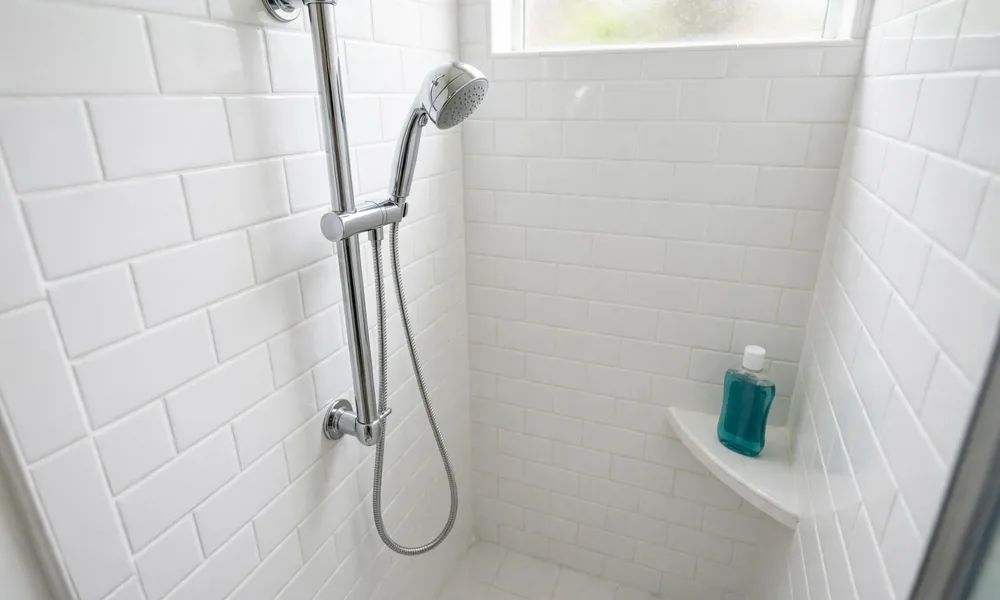
A slide-bar handheld docks onto a vertical rail, so anyone can slide it up or down and angle it in seconds. Tall adults, children and anyone who prefers to sit can each set the height that suits them, and the head works as a fixed shower when docked and a handheld when lifted off. Installation needs two screws into tile or a suction mount for renters, so measure first.
5. Long-Hose Handheld: Best for Kids and Pets
A long-hose handheld comes with a 72-inch or 84-inch hose, giving you the reach to wash a child, rinse a dog or clean the far corner of the tub without stretching. The extra length also helps in tall showers and over-bath setups, where a standard 60-inch hose pulls tight. Choose a metal hose over plastic: it kinks less, lasts longer and does not go stiff in cold water.
6. Budget Handheld: Best Value
A budget handheld proves that a pressure boost does not need a premium price. The best cheap models still use small silicone nozzles and offer at least two spray settings, and they fit the same standard hose as expensive heads. What you give up is finish and longevity: plastic threads instead of brass, a shorter hose, and a mount that may need replacing after a year.
Handheld Showerheads Compared
| Handheld type | Best for | Hose length | Spray settings |
|---|---|---|---|
| High-pressure handheld | Best overall | 60 inches | 3 |
| Air-injection handheld | Saving water | 60 inches | 3 |
| Filtered handheld | Hard water | 60 inches | 2 to 3 |
| Slide-bar handheld | Shared bathrooms | 60 to 72 inches | 3 |
| Long-hose handheld | Kids and pets | 72 to 84 inches | 2 to 3 |
| Budget handheld | Best value | 48 to 60 inches | 2 |
Hose Length, Spray Settings and Mounting
Hose length is the first choice to get right, because it decides what the head can reach. A 48-inch hose suits a compact stall where the head stays docked. A 60-inch hose is the standard and suits most adults, while 72 inches or more is the pick if you wash children or pets, have a tall shower, or use the head over a bath, where extra reach stops the hose pulling tight.
Spray settings matter more on a handheld than on a fixed head, because you feel each one up close. A full rain setting covers the most skin, a massage setting concentrates the spray for sore shoulders, and a mist setting is gentle on sensitive skin. A pause button is the most useful extra: it stops the flow while you lather, saving hot water without changing the temperature.
Mounting decides how the head behaves when your hands are busy. A wall bracket is the simplest and cheapest, holding the head at one fixed height. A slide bar costs more but adjusts for every user, and it is the best choice for a shared bathroom. A suction mount suits renters who cannot drill, though it needs a smooth tile to grip, and a loose mount that lets the head slip out mid-shower is the most common complaint about cheap handhelds.
Getting More Pressure From a Weak Supply
Before you buy, measure your pressure with a cheap gauge that screws onto an outside tap: most homes sit between 40 and 60 psi, and anything below 40 counts as low. If only the shower is weak while the taps run fine, the problem is often the head itself, a clogged filter in the hose, or a flow restrictor. Check your local water rules before removing a restrictor, and clean the filter washer where the hose meets the head.
If every tap runs slowly, the supply is the issue, and a handheld head is still your best first step: it makes the most of the water you have. Keep the hose short and the head close to your skin, choose a low-flow model with air injection, and descale the nozzles monthly in hard-water areas. A shower mat is a sensible companion, since a stronger spray means more water on the floor, and our general guide to shower heads explains flow rates and fittings in more detail.
Before You Buy: A Quick Checklist
- Measure your water pressure first: below 40 psi is low, and under 30 psi needs a head built for weak supplies.
- Pick a hose length that reaches everywhere you need it: 60 inches for most showers, 72 inches or more for kids, pets or tall showers.
- Choose your mounting: a slide bar for shared bathrooms, a wall bracket for simplicity, a suction mount for renters.
- Check the spray settings in person if you can: you need a full rain, a massage and a pause button at minimum.
- Confirm the fitting: most handhelds use a standard half-inch connection, but check your hose and shower arm first.
- Look for silicone nozzles and metal threads, and keep the receipt in case the mount or hose fails early.
Frequently Asked Questions
Do handheld showerheads work with low water pressure?
Yes, and they work better than fixed heads on a weak supply. Because you hold the spray close to your skin, the water loses no energy crossing the shower, and small nozzles or air injection make a modest flow feel firm. Choose a model designed for low pressure and keep the hose free of kinks.
What hose length should I choose?
A 60-inch hose suits most adults in a standard shower. Choose 72 inches or more if you bathe children or pets, have a tall shower, or use the head over a bath. A hose that is too short pulls tight and strains the connection, while one that is too long trails on the floor.
Can I install a handheld showerhead myself?
Yes, in most cases. A handheld head screws onto your existing hose or shower arm by hand, and you need only an adjustable spanner and plumber’s tape. A slide bar needs two screws into tile, so renters should use a suction mount or a bracket that clamps to the existing arm instead.
How do I clean a handheld showerhead?
Rub the silicone nozzles with your fingers weekly to clear limescale, and soak the head in white vinegar for an hour every month or two in hard-water areas. Remove the filter washer at the hose connection and rinse it, since grit there is the most common cause of a weak or uneven spray.
Are handheld showerheads good for hard water?
Yes, if you choose the right one. Look for silicone nozzles that wipe clean, a filtered model with a replaceable cartridge, and a removable faceplate for soaking. Avoid heads with rigid plastic nozzles, which trap limescale and cannot be cleaned without tools.
Handheld or fixed shower head: which is better?
For low water pressure, a handheld is better, because you control the distance and the aim. For a spa-like rainfall feeling in a home with strong pressure, a fixed head wins. Many households end up with both, using a slide-bar handheld that docks and works like a fixed head when you want it to.
The Bottom Line
The top handheld showerhead for low water pressure is the one that matches your supply, your hose length and your household: a high-pressure handheld with a 60-inch hose for most homes, a slide-bar model for shared bathrooms, and a long-hose or filtered version when kids, pets or hard water are part of the picture. Measure your pressure, pick the mounting that fits your shower, and your next shower will feel like the water finally arrived.