Best Water Dispensers for Hot and Cold Water in 2026
A water dispenser is one of those appliances you do not think about until you have one. Cold water on tap in seconds, hot water for tea without waiting for a kettle, and no more hauling heavy bottles from the shop. The best water dispensers in 2026 give you chilled and near-boiling water from one neat unit, from a big refillable bottle or straight from the mains. This guide covers freestanding and countertop dispensers for drinking water at home and in the office, bottled and plumbed, with hot and cold taps. It does not cover party drink dispensers, which serve lemonade to a crowd, or soap dispensers. Here is how to pick one that suits your household.
Key takeaways
- Choose bottled or plumbed first: bottled installs anywhere, while plumbed costs less per litre and never runs out.
- Bottom-load dispensers hide the bottle in a cabinet, so you never lift 19 litres above your waist.
- Hot water should reach 85 to 95 degrees for tea, and a child lock on the hot tap is essential with small children.
- Cold water matters most in summer: look for a compressor model that holds 4 to 10 degrees even on a hot day.
- Clean the taps and drip tray every week, and descale the hot tank every few months.
Why a dispenser beats a kettle and a fridge jug
The case for a dispenser is convenience. A kettle makes hot water, a jug in the fridge makes cold water, but both make you wait and both need constant refilling. A dispenser keeps both ready: cold water the moment you press the tap, hot water the moment you want tea. For a family that drinks several litres a day, that saves dozens of trips to the kitchen and waits for the kettle. Offices benefit even more, because a dispenser replaces the shared kettle queue and the pile of single-use bottles.
There is also a taste and quality argument. A dispenser fed by a large bottle gives you the same water every time, without the chlorine taste that puts many people off tap water, and without the plastic waste of small bottles. A plumbed dispenser with a built-in filter does the same job from your mains supply, which is cheaper per litre and means no bottle deliveries. Neither replaces a good kitchen faucet, which you still need for cooking, but a dispenser takes the drinking-water job away from the tap entirely.
How a water dispenser actually works
A water dispenser is a simple machine with two jobs: keep one tank cold and one tank hot. In a bottled model, water flows from the bottle into the two tanks by gravity. The cold tank is chilled by a compressor, like a fridge, or by a thermoelectric chip in smaller models. The hot tank holds water at 85 to 95 degrees, ready for tea or coffee. Two taps on the front, usually marked red and blue, draw from either tank, and a drip tray catches spills. In a plumbed model, the tanks are fed directly from your mains water through a filter, so there is no bottle to change, ever. The filter usually lasts six to twelve months.
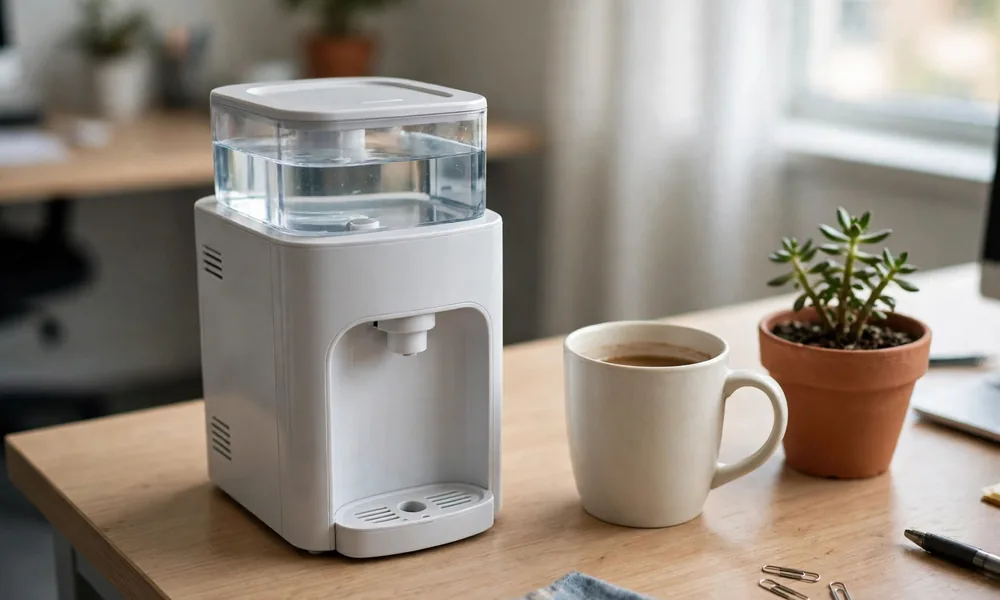
Top-load and bottom-load are the two bottled designs, and the difference matters more than most buyers expect. A top-load dispenser puts the bottle upside down on top, which is simple and cheap, but changing it means lifting 19 kilograms above waist height and flipping it over without spilling. A bottom-load dispenser hides the bottle in a cabinet at the base and pumps the water up, so changing it means sliding a bottle in at floor level. It costs more and has a pump that can wear out, but it is far easier to live with. Countertop dispensers are small units for a worktop or a desk, ideal where a full-size unit would dominate the room.
The main types of water dispenser, compared
Water dispensers fall into four broad types. Top-load bottled dispensers are the cheapest and most common, but changing the bottle is heavy work. Bottom-load bottled dispensers cost more, hide the bottle in a cabinet, and are much easier to refill, which makes them the best choice for most homes. Plumbed-in dispensers connect to the mains through a filter, so they never run out and cost the least per litre, but they need a plumber to install and a filter change every six to twelve months. Countertop dispensers are small, quiet and cheap, and suit a desk, but they hold less water, chill more slowly, and may only offer cold or room-temperature water.
| Type | Install | Running cost | Hot water | Best for |
|---|---|---|---|---|
| Top-load bottled | None | Medium | Yes | Budget buyers |
| Bottom-load bottled | None | Medium | Yes | Most homes |
| Plumbed-in | Plumber | Low | Yes | Offices, big families |
| Countertop | None | Low to medium | Sometimes | Desks, small flats |
For most homes, the bottom-load bottled dispenser is the right default. It gives you hot and cold water, it is easy to install, and changing the bottle takes a minute at floor level. A plumbed-in model is better if you drink a lot of water and hate ordering bottles: the running cost is far lower, and you never run out mid-weekend. Top-load models are worth considering only if budget decides, because they do the same job for less money. Countertop models suit a desk, but check the hot water: many only reach 70 degrees, which is not hot enough for a proper cup of tea.

Size, placement and noise
Size is the first practical check: a freestanding dispenser is around a metre high with the bottle on top, and about 30 centimetres wide. Measure the spot before you buy, and remember you need clearance above it to lift the bottle on and off, which adds another half metre for a top-load model. Place it near a power socket and, for a plumbed model, near a water supply. Leave space around the back for ventilation, because the compressor needs airflow. Compressor models hum gently when chilling, which is fine in a kitchen but can irritate in a quiet office. Thermoelectric models are silent but chill more slowly.
Hot water safety and the child lock
Hot water from a dispenser is near boiling, so safety is the most important feature in any home with children. Every good dispenser has a child lock on the hot tap: a button you must press at the same time as the tap, or a two-step action a small child cannot do by accident. Test it before you buy, because some locks are so stiff that adults struggle, and some are so loose that a toddler can defeat them. Teach children that the red tap is never to be touched. The hot tank should have a thermostat and a thermal cut-out, so it cannot overheat. A dispenser without a child lock has no place in a family home.
Cleaning, descaling and keeping the water fresh
A dispenser only tastes good if it is clean, and cleaning is the chore most owners neglect. Wipe the taps and the drip tray every week, because they are the parts your glass and hands touch. Every time you change the bottle, wipe the bottle seat and the spike, and check the drip tray for standing water, which goes stale and smells. Every three to six months, descale the hot tank, because limescale builds up on the heating element in hard-water areas and makes the hot water slower and worse tasting. Use a food-safe descaler or white vinegar, and rinse thoroughly. For plumbed models, change the filter on schedule.
Running costs: bottles, filters and electricity
Running costs decide whether a dispenser saves you money or quietly costs more than expected. Bottled water costs more per litre than filtered mains water, but far less than small bottles from a shop. A family drinking 20 litres a week will spend noticeably more on bottled water than on a plumbed filter, but the plumbed model costs more to install and needs a new filter every six to twelve months. Electricity is the smaller cost: a compressor dispenser uses roughly the same power as a small fridge, and many models have an energy-saving mode that drops the hot tank temperature overnight. For most households that already buy bottled water, a dispenser pays for itself within a year.
Dispenser versus bottles, jugs and the tap
It is worth comparing a dispenser honestly with the alternatives. Small shop-bought bottles are the most expensive way to drink water and the worst for plastic waste, so a dispenser beats them easily. A filter jug in the fridge is cheaper and gives you cold, filtered water, but it holds only a litre or two, needs constant refilling, and gives you no hot water. An insulated water bottle is the best companion to a dispenser: fill it in the morning and it stays cold all day, ideal for work or the gym. A mini fridge can chill bottles, but it takes up more space, uses more electricity, and still leaves you waiting for the kettle. If you drink a lot of water and have space for a floor-standing unit, a dispenser is the most convenient option. If you drink little water and live alone in a small flat, a filter jug may be all you need.
How to choose: a six-point checklist
- Choose bottled or plumbed first: bottled installs anywhere, while plumbed costs less per litre and never runs out.
- Pick bottom-load if anyone in the house will struggle to lift a 19-litre bottle above waist height.
- Check the temperatures: cold water at 4 to 10 degrees, and hot water at 85 to 95 degrees for tea.
- Test the child lock on the hot tap: easy for an adult, impossible for a small child.
- Measure the space, including headroom to lift a bottle on top, and leave room behind for ventilation.
- Check the cleaning routine: removable drip tray, accessible bottle seat, and a filter you can change yourself.
Frequently asked questions
Do water dispensers need plumbing?
Not the bottled kind: a top-load or bottom-load dispenser works anywhere with a power socket, and you just change the bottle when it runs out. Only plumbed-in dispensers need a plumber.
How often should I clean a water dispenser?
Wipe the taps and drip tray every week, clean the bottle seat every time you change the bottle, and descale the hot tank every three to six months. Change plumbed filters every six to twelve months.
Is hot water from a dispenser hot enough for tea?
A good dispenser holds hot water at 85 to 95 degrees, hot enough for black tea and coffee. Cheaper countertop models may only reach 70 degrees, so check the temperature before you buy.
How much electricity does a water dispenser use?
Roughly as much as a small fridge for the cold side, plus more for the hot tank. Many models have an energy-saving mode that lowers the hot tank temperature overnight.
Are bottom-load dispensers better than top-load?
For most people, yes: changing the bottle at floor level is far easier than lifting 19 litres above your waist. Top-load models are cheaper and simpler, with no pump to wear out.
Can I use a water dispenser in an office?
Yes, and offices are where dispensers make the most sense. For a busy office, a plumbed-in model is best, because it never runs out and costs less per litre than ordering bottles.
The bottom line
A water dispenser gives you cold water in seconds and hot water without waiting for a kettle, every day, from one neat unit. Pick bottled or plumbed first, choose bottom-load if anyone will struggle with a heavy bottle, and check the hot temperature, the child lock and the space before you buy. Clean it regularly, descale the hot tank, and change the filter on schedule. For a household or office that drinks a lot of water, it is one of the simplest upgrades you can make.