A bath mat is the first thing your feet touch every morning and the last thing they touch at night. It is a small, unglamorous rectangle of fabric, rubber, or wood, and it does a job nobody notices until it fails: soaking up water, keeping you upright on a wet floor, and drying out before mould gets a chance. Get it right and you never think about it again. Get it wrong and you are stepping onto a cold, soggy, sliding mat that smells faintly of a damp towel left too long in a bag.
This is a head-to-head comparison. On one side, the best bath mats of 2026: the ones that absorb fast, grip hard, dry quickly, and still look good after dozens of washes. On the other side, the worst: the ones that slide across the tiles, stay wet for hours, go grey and smelly, and turn a simple step out of the shower into a small daily hazard. The gap between the two sides is not about money. It is about material, backing, and a few details that are easy to miss in a shop.
What Actually Makes a Bath Mat Good
Four things decide whether a bath mat is good or bad, and every failure in this article comes back to at least one of them.
Absorbency. A bath mat has one job above all: take water off your feet fast. Thick cotton, microfibre, and memory foam all absorb well when they are new. The difference shows up over time. Good mats keep absorbing after fifty washes. Bad ones go flat, lose their loft, and start pushing water around instead of soaking it up. A mat that cannot absorb is just a wet rug on your floor.
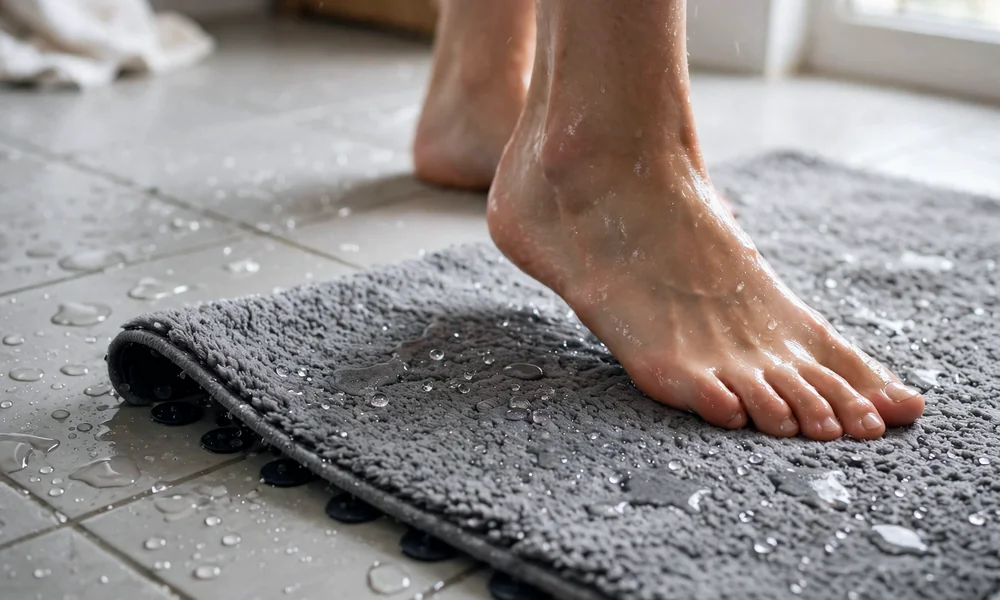
Grip. A bath mat on a wet tiled floor must not move. The best mats have a full rubber or latex backing, or hundreds of small suction cups, that hold them flat and still under wet feet. The worst have a thin, smooth backing, or none at all, and they skate across the tiles the moment you step on them with wet feet. A sliding mat is not an annoyance. It is a fall waiting to happen, especially for children and older people.
Drying speed. A mat that stays wet grows mould and smells. The best mats dry within a few hours: open-weave cotton, quick-dry microfibre, and slatted wood all let air circulate. The worst are dense, heavy mats with no airflow underneath, which stay damp until the next shower and never fully dry at all. If your bathroom has no window and poor ventilation, drying speed matters more than softness.
Washability. A bath mat gets dirty. It collects hair, dust, soap residue, and dead skin, and it needs regular washing. The best mats survive a machine wash and tumble dry without falling apart, and they come out looking the same as when you bought them. The worst shed, shrink, lose their backing in flakes, or come out of the wash permanently misshapen. Check the label before you buy: if it says hand wash only, or dry clean, walk away.
The Best Bath Mats of 2026
The best mats share one trait: they were designed for a real bathroom, with real water, real feet, and a real washing machine. Nothing about them is precious. They work hard, wash well, and dry fast.
Thick Cotton Bath Mats
Classic thick cotton remains the best all-rounder for most bathrooms. A good cotton mat is heavy, plush, and thirsty: it drinks the water off your feet in seconds, feels warm and soft underfoot, and goes straight into the washing machine whenever it needs a refresh. The best ones are made from long-staple cotton with a dense pile, so they stay thick and absorbent after dozens of washes instead of going thin and stringy.
What separates the best from the mediocre is the backing. A good cotton mat has a full latex or rubber backing that covers the whole underside, not just a few strips, and the backing is bonded properly so it does not peel off in the wash. That backing is what keeps the mat still on wet tiles. Without it, even the thickest cotton mat is a skating rink. Buy the heaviest cotton mat you can find, check that the backing is complete and flexible, and you have a mat that will last years.
Memory Foam Bath Mats
Memory foam mats are the comfort pick, and the good ones earn their place. A thick memory foam core moulds gently to your feet, feels warm on cold mornings, and absorbs a surprising amount of water for its weight. The best versions wrap the foam in a soft microfibre cover that wicks water away from the surface, so your feet feel dry even when the mat is doing heavy work underneath.
Teak and Bamboo Slatted Mats
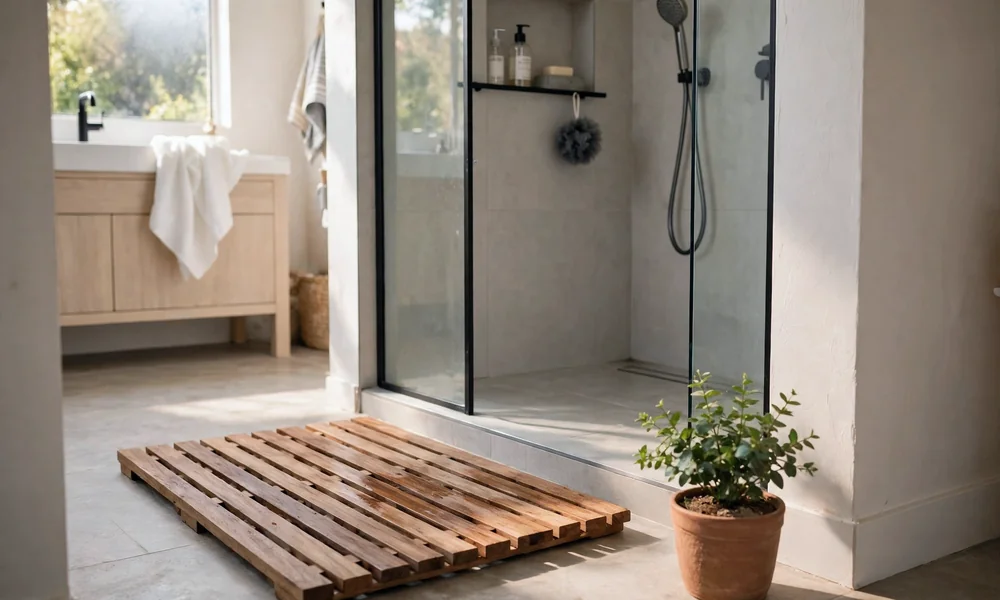
Wooden slatted mats are the best choice for wet rooms, walk-in showers, and bathrooms where a fabric mat would never dry. Water falls straight through the slats, air circulates underneath, and the mat is dry within the hour. Teak is the best wood for the job because its natural oils resist water and mould, and a well-made teak mat will last for years with nothing more than an occasional rinse.
The Worst Bath Mats of 2026
The worst mats are not always the cheapest. Some cost real money and look wonderful in the shop, all plush pile and pretty colours. What unites them is a design that ignores how bathrooms actually work: constant water, bare wet feet, poor ventilation, and a washing machine that is not gentle.
Thin Mats With No Backing
The most common bad bath mat is the thin, flat one with no backing at all, sold in every home store for the price of a coffee. It looks fine on the shelf, feels soft enough in your hand, and fails the moment it meets a wet floor. With no grip underneath, it slides under your feet as you step out of the shower, bunches up against the skirting board, and turns into a trip hazard in the middle of the night.
Heavy Mats That Never Dry
The opposite failure is the mat that absorbs too well and dries too slowly. Extra-thick, ultra-plush mats feel wonderful for the first week, then become a problem. They hold so much water that a small bathroom with no window cannot dry them between showers, and the damp core becomes a home for mould and bacteria. The first sign is a faint musty smell when you walk in. The second is black spots on the underside. The third is a mat you do not want to stand on barefoot.

Cheap Memory Foam That Falls Apart
Not all memory foam mats are good, and the cheap ones are among the worst bath mats you can buy. A low-density foam core compresses permanently within weeks, so the mat goes flat where your feet always land and stays puffy everywhere else. The cover, usually thin polyester, pills and thins, and the foam underneath starts to crumble into small pieces that come out in the wash.
Decorative Mats That Are Not Bath Mats
The last worst offender is the decorative mat: the pretty, flat-weave, patterned rectangle that is sold as a bath mat but is really a small rug. It absorbs little, grips nothing, and is usually made from materials that should never meet standing water. Some are not even washable. They exist to look good in a photograph, and they do, right up until the first shower, when they slide, soak through to the floor, and take a day to dry.
The giveaway is the label. If it says “decorative use” or “do not machine wash”, it is not a bath mat, whatever the shelf tag claims. A real bath mat is a working object: absorbent, grippy, washable, and quick to dry. If a mat fails two of those four tests, it belongs in a hallway, not a bathroom.
Best vs Worst: The Head-to-Head
Put the two sides together and the pattern is clear. The best mats respect water. They absorb it, grip through it, and dry out after it. The worst mats fight water and lose: thin mats that saturate instantly, thick mats that never dry, foam that crumbles, and decorative rugs that were never meant to get wet in the first place.
Price is a poor guide. A good cotton mat and a bad thin one can sit on the same shelf at nearly the same price, and the difference only shows up after a few weeks of daily showers. The real tells are in the label and the underside: a full rubber backing beats a smooth back every time, machine washable beats hand wash only, and a medium weight that dries in hours beats an ultra-thick mat that stays damp until tomorrow.
The Verdict
The verdict is straightforward: buy a thick cotton mat with a full rubber backing for most bathrooms, a good memory foam mat if you want comfort and your bathroom dries well, or a teak slatted mat if you have a wet room or a windowless bathroom. Check that it is machine washable, check that the backing covers the whole underside, and choose a weight your bathroom can dry between showers. Do that, and your mat will last years and your floor will stay dry.
Avoid thin mats with no backing, ultra-thick mats in bathrooms with no ventilation, cheap foam that flakes, and decorative mats that are not really bath mats at all. These are not minor flaws. They are the exact failures that turn a small purchase into a daily annoyance and a genuine slip risk, and there is no reason to live with them when the good versions cost so little more.
Who Each Side Is For
The best mats are for anyone who showers every day and wants to step out onto something warm, dry, and still. They suit families, because a good cotton mat survives the washing machine week after week. They suit older people and children, because a mat that does not move is a mat that does not cause falls. They suit small, windowless bathrooms, because a mat that dries fast never gets the chance to smell.
The worst mats are for nobody, really, though they do suit one narrow case: a rarely used guest bathroom, where a thin mat will never face enough water to fail. Even there, a good cotton mat costs little more and will not embarrass you in front of a guest. The honest summary is that the worst mats are not a budget option. They are a repeat purchase waiting to happen, and the second purchase is usually the good mat you should have bought first.
If you only remember one thing, remember this: a bath mat is safety equipment that happens to be soft. Buy the one that grips, absorbs, and dries, and the first step of your morning will take care of itself. For more bathroom picks, see our guide to the best bath mats of 2026, the best bath mats for guest bathrooms, and the best bath towels for small bathrooms.