
A kids sneaker is not a small adult sneaker. It is a different shoe with a different job: it has to survive the playground, the football pitch and the walk to school, keep a growing foot supported through a whole day of running and jumping, and still be comfortable enough that a child forgets it is there. The best kids sneakers of 2026 do all of that without falling apart in a month, and the worst ones fail on the basics long before the colours or the brand name ever matter.

What Makes a Kids Sneaker Different
A general sneaker is designed for an adult who walks, stands and occasionally runs. A kids sneaker assumes the opposite. It assumes the shoe will be dragged along the ground, kicked against walls, soaked in puddles, tied and untied a dozen times a day, and outgrown within months. The sole is therefore not a detail. It is the heart of the shoe. The best kids sneakers have a thick, grippy rubber sole that bends where a foot bends, with a toe cap that protects the front from the constant scuffing that comes with playground games.
Children’s feet are also still growing, and they grow fast. A child can go up a full shoe size in four to six months, and a shoe that fits perfectly in September can pinch by Christmas. That is why the best kids sneakers are built with a little more room in the toe, a flexible upper that moves with the foot, and a fit that can be adjusted as the foot grows. If you want a sneaker for yourself as well, our guide to the best sneakers of 2026 covers the wider market, but for a child the fit and the durability matter far more than the latest style.
How to Choose: The Four Things That Matter Most
Start with fit. A kids sneaker should fit with about a thumb’s width of space between the longest toe and the end of the shoe, and the heel should sit snugly without slipping when the child walks. The widest part of the foot should line up with the widest part of the shoe. If the shoe is too narrow, the child will complain of sore feet by lunchtime. If it is too long, the child will trip. Measure both feet, because one foot is almost always slightly bigger than the other, and always fit the bigger one.
Next, look at durability. Check the sole first. It should be rubber, not foam, and it should be stitched or firmly bonded to the upper, with no gaps you can pull open with a fingernail. Look at the toe: a reinforced rubber toe cap or a double layer of material will survive months of dragging, while a single thin layer of canvas will wear through in weeks. Look at the heel too. A sturdy heel counter keeps the foot steady and stops the back of the shoe collapsing after a few weeks of wear.
Comfort comes third, and it is easy to get wrong in a shop. A child will tell you a shoe feels fine after standing in it for ten seconds, then complain after ten minutes of running. Ask the child to walk, run a few steps and jump in the shop. The shoe should bend easily where the toes bend, not in the middle of the arch. The inside should feel smooth, with no rough seams over the toes or around the ankle. A padded collar around the ankle stops rubbing, and a cushioned insole absorbs the shock of landing from a jump.
Finally, check weight and breathability. A heavy sneaker tires a small leg quickly, so the best kids sneakers feel light in the hand. Pick the shoe up: if it feels heavy, it will feel heavier on a child’s foot after a full school day. Breathability matters just as much. A mesh upper lets air in and keeps feet cooler and drier, while a solid leather or plastic upper traps heat and sweat. For summer and for sport, mesh is the better choice; for wet winter days, a water-resistant upper earns its place.
The Best Kids Sneakers by Age
For children aged three to five, simplicity wins. The shoe should be easy to put on without help, with a wide opening, a strap fastening and a light, flexible sole. At this age the foot is still learning to balance, so a flat, stable sole matters more than cushioning. The shoe should be tough enough for nursery and the park, and easy to clean, because it will get muddy. Our guide to the best toddler shoes of 2026 covers the youngest feet in more detail, but the rule is the same: simple, light and easy to get on.
For children aged six to nine, the sneaker needs to work harder. School means a full day on the feet, plus break-time football, climbing frames and after-school clubs. The sole needs to grip on wet playgrounds and sports hall floors. The upper needs to survive daily scuffing. This is also the age when children start to care about how their shoes look, so a pair they actually like will be worn happily rather than left in the cupboard. Let the child choose the colour, but keep the final say on the fit.
Fit, Growth Room and the Thumb Test
The thumb test is the simplest fit check there is, and it works. With the child standing up, press your thumb down on the front of the shoe, just past the longest toe. You should feel about a thumb’s width of space before the end of the shoe. Less than that, and the shoe will be too small within weeks. Much more than that, and the foot will slide around inside it. Always test with the child standing, because feet spread under body weight, and always test both feet.
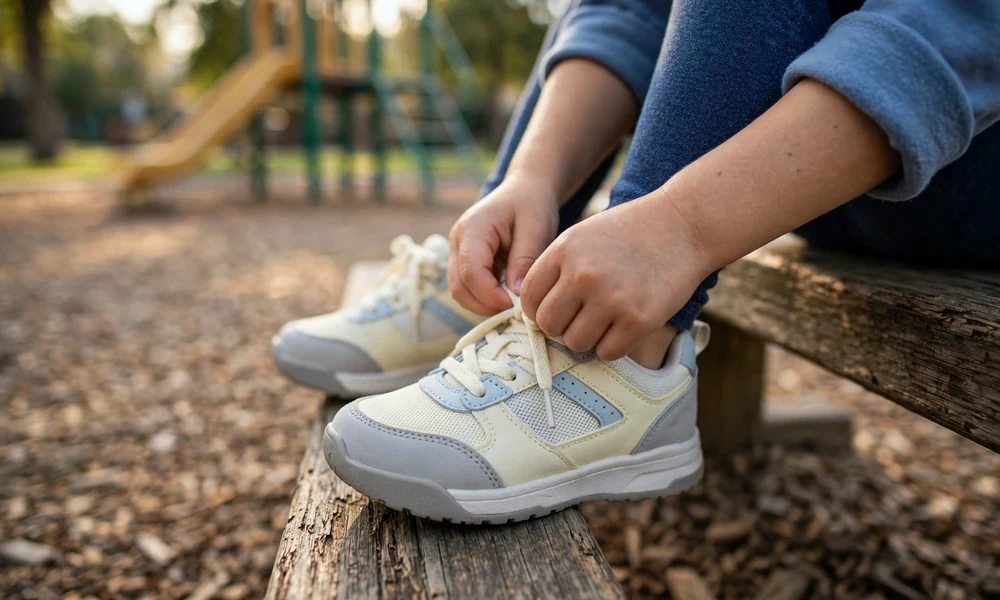
Everyday Durability: What Survives the Playground
Check the sole’s tread before you buy. Deep, widely spaced lugs grip mud and grass, while a smooth sole slips on wet ground. For running and sport, a lighter sole with a little spring helps a child move faster, and our guide to the best running shoes of 2026 explains how tread and cushioning work in more detail. For everyday school wear, grip and toughness matter more than speed, so choose the sole that matches the child’s real day, not the sport they play once a week.
Fastenings: Laces, Straps and the Learning Curve
Learning to tie laces is a milestone, and the right shoe can help or hinder it. A strap-fastening shoe lets a young child dress themselves and get out of the door on time, which matters every school morning. But a child who never wears laces never learns to tie them, so many parents switch to laces around the age of six or seven, when the child is ready to practise. Elastic laces are a good bridge: they hold the shoe firmly, they never come undone, and the child can still practise real laces on a spare pair at home.
Comfort, Support and Growing Feet
A child’s foot is not a small adult foot. The bones are still forming, the arch is still developing, and the foot needs room to move and grow. The best kids sneakers support the foot without squeezing it. The arch support should be gentle, not rigid, and the shoe should flex easily when you bend it in your hands. A shoe that is stiff through the middle forces the foot to work against it with every step, and that is how blisters and sore feet begin.
What to Avoid When Buying Kids Sneakers
Avoid sneakers with a smooth, flat sole and no grip. A child runs, stops suddenly, turns sharply and climbs, and a sole that cannot grip will slip at the worst moment. Avoid shoes that are stiff through the middle, because a stiff shoe fights the foot with every step. And avoid shoes bought a size too big to grow into: a shoe that is far too large makes a child trip, rubs the heel raw and changes the way they walk.
Avoid buying on looks alone. A bright colour or a popular character on the side will not make an uncomfortable shoe comfortable, and a child who dislikes wearing a shoe will find a reason not to wear it. Let the child choose between two or three pairs that all fit well, so they get the colour they want and you get the shoe they need. And avoid the cheapest pair in the shop if the sole is foam and the upper is thin plastic: it will cost more in replacements than a better pair would have cost in the first place.
Trying Them On: The Shop Test That Matters
Take the child with you. A shoe bought without the child is a gamble, and the odds are poor. Let the child walk around the shop, run a few steps if there is room, and sit and stand in the shoes. Ask how they feel, but watch what the feet do: a child who keeps pulling at a shoe, or who walks oddly in it, is telling you something the words do not. A good fit looks easy. The child walks normally, the heel stays put, and the shoe bends where the toes bend.
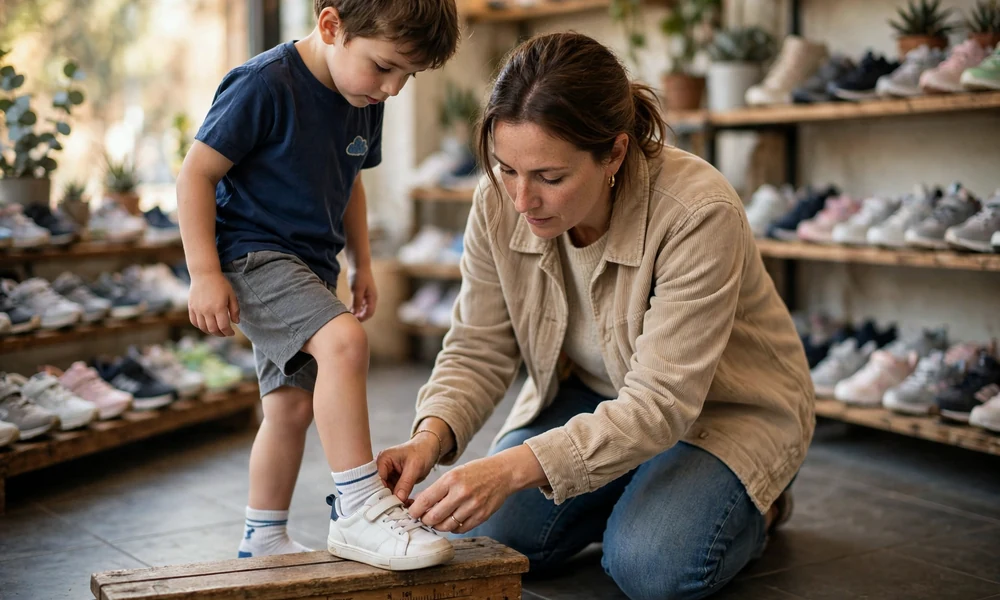
Try both shoes on, not just one, and walk in both. Check the inside of the shoe for rough seams before the child puts it on: run a finger around the toe and the heel. If you feel a ridge, the child will feel it too. And keep the receipt. Even a well-chosen pair can reveal a problem after a day of real wear, and a shop that takes returns makes that easy to fix.
Frequently Asked Questions
How often do kids need new sneakers? Most children outgrow a pair every four to six months, and active children can wear a pair out even faster. Check the fit every couple of months, and sooner after a growth spurt. If the toes are at the end of the shoe, or the sole is worn smooth, it is time for a new pair, even if the shoes still look smart.
Should kids sneakers have arch support? A little, yes. Gentle arch support helps a growing foot stay steady, but rigid support is not needed for most children. A flexible shoe with a lightly cushioned insole suits most feet. If a child has flat feet, heel pain or a limp, ask a doctor or a podiatrist rather than trying to fix it with a shoe.
Are expensive kids sneakers worth it? Sometimes. A well-made pair lasts longer, fits better and survives the playground, so it can cost less per month than two cheap pairs. But price alone is no guarantee: some mid-priced sneakers are excellent, and some expensive ones are bought for the brand. Judge the shoe in your hands, not the price on the box.
The best kids sneaker is the one that fits your child, survives their day and feels comfortable from the first step to the last. Choose a grippy sole, a flexible upper, a fastening your child can manage and a fit with room to grow, and the shoes will be worn happily for months rather than weeks. Choose on looks alone, and you will be choosing again far sooner than you planned.


