Paint Palettes That Mix Colour Clean in 2026
Paint palettes that mix colour clean in 2026 are the quiet workhorses of every painting: a flat surface where raw paint becomes the exact colour you need, without muddying, drying out or sliding off the edge. A good palette keeps colours separate until you want them mixed and cleans up without a fight. A bad one stains, warps, or lets paint dry in minutes. This guide is about the palette itself — the mixing surface — and how to choose one that keeps your colours clean.
Key Takeaways
- A paint palette is the surface you mix paint on — not the paint itself, and not the brush that applies it.
- Wood suits oils, ceramic suits watercolour, and glass or a stay-wet tray suits acrylics.
- Separate wells for each colour plus a large open mixing area, or colours will muddy.
- Mix no more than three pigments at a time: beyond that, mixtures turn grey no matter how good the palette is.
- Clean the palette at the end of every session, because dried paint stains the surface and spoils the next mix.
What a Paint Palette Actually Is
A paint palette is the flat surface an artist lays paint on and mixes it into new colours before it reaches the canvas or paper. It is the wooden board with a thumb hole, the white ceramic dish with wells, the sheet of glass, or the pad of tear-off paper. One surface, one job: hold the paint, keep colours apart, and give you space to mix. That narrow definition matters, because painting has neighbouring products that do different jobs. The paint itself is a separate choice: our guide to watercolour paints that blend beautifully covers transparent layering, and our guide to acrylic paints that cover bold and bright covers opaque colour on canvas. The brush is separate too: our guide to top paint brushes for clean edges covers the tool that carries the mixture to the surface. The palette sits between the two. Keep those three apart and the choice is simple: pick the palette for the paint you use and the way you work.

The Main Types of Paint Palette
Six palette types cover almost every painter. The right one depends on your paint and where you work.
Wooden Thumb-Hole Palettes
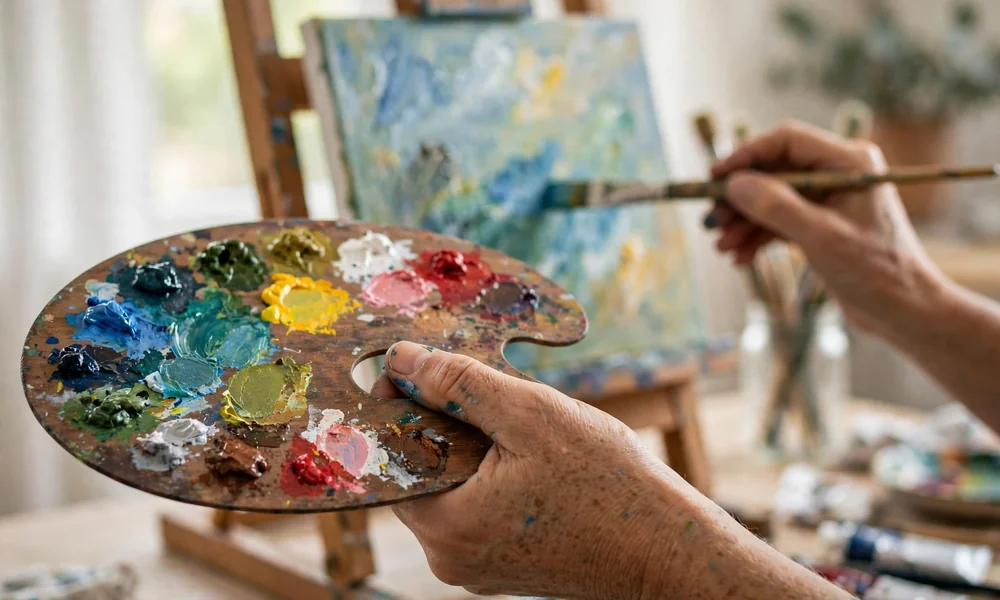
The wooden palette is the classic: a kidney-shaped board, usually beech or birch plywood, with a thumb hole and a curved edge that rests on the forearm. Wood is naturally mid-toned, which helps you judge colours honestly. Wooden palettes suit oils and acrylics best, and they improve with use as a thin skin of dried oil seals the surface. Their limits are water and weight: a palette left wet will warp, and a large one is heavy. Oil it before first use, wipe it after every session, and never soak it.
Ceramic and Porcelain Palettes
A ceramic palette is a heavy white dish or tile with round wells around a flat mixing area, and it is the best choice for watercolour. The white surface shows the true colour of a wash, and the wells hold puddles of watery paint without them running together. Ceramic cleans easily, will not stain or warp, and never reacts with the paint. Its limits are weight and fragility: it stays on the desk and cracks if dropped. Buy deep wells if you paint large washes.
Glass Palettes
A glass palette is a sheet of toughened glass, often backed with white or grey paper, used flat on a table. Glass is perfectly smooth and non-porous, so paint mixes cleanly, scrapes off in seconds, and never stains — the best palette for acrylics and oils in the studio. Grey paper underneath helps you judge values; white shows colour truly. Glass is heavy, must stay flat, and a chipped edge is sharp, so tape the edges. Keep a blade scraper beside it.
Plastic Palettes
A plastic palette is a light, cheap moulded tray with wells and mixing areas, and it is the best choice for beginners, children and travel. Plastic is unbreakable, easy to wash, and light enough to carry anywhere. Its weakness is staining: strong pigments dye the plastic over time, and a stained surface makes fresh mixtures harder to judge. Buy a sturdy one, wash it promptly, and replace it when staining starts to lie about colour.
Stay-Wet Palettes
A stay-wet palette is a sealed tray with a damp sponge and a sheet of permeable membrane paper, designed to keep acrylic paint workable for days instead of minutes. Acrylic dries fast, and a stay-wet palette solves that: paint on the membrane stays moist as water wicks up from the sponge, while the sealed lid stops evaporation. It suits anyone who paints acrylics in short bursts across several days, or who must match a colour tomorrow. Its limits are maintenance: the sponge must stay damp, the membrane needs replacing, and paint left too long still skins over.
Tear-Off Paper Palette Pads
A tear-off palette pad is a bound block of coated paper sheets: mix on the top sheet, then tear it off and start clean. It is the fastest palette to clean — there is no cleaning — and the coated paper resists soaking, so paint sits long enough to mix. Paper pads suit messy colour work, plein air painting and anyone who hates washing up. Their limits are cost and stability: every sheet is used once, and a pad needs a board underneath or it flexes and spills.
Paint Palettes Compared
| Palette type | Best paint | Best for | Watch out for |
|---|---|---|---|
| Wooden thumb-hole | Oil, acrylic | Held in hand, long sessions | Warps if left wet |
| Ceramic / porcelain | Watercolour | True colour, washes | Heavy, breaks if dropped |
| Glass | Acrylic, oil | Clean mixing, studio work | Stays on the table |
| Plastic | Any, beginners | Travel, children, budget | Stains and scratches |
| Stay-wet | Acrylic | Paint kept for days | Needs damp sponge care |
| Tear-off paper pad | Acrylic, watercolour | No cleaning, outdoors | Sheets used once |
Looking After Your Palette
A palette lasts for years if it is cleaned and stored properly. Scrape oil and acrylic off glass and wood with a blade, then wipe the surface with a rag; wash ceramic and plastic under warm water with a little soap. Never leave a wooden palette soaking in water, and never stack a ceramic palette under heavy boxes. Store a stay-wet palette with its lid on and the sponge damp, and replace the membrane sheet when it tears or stains. A clean, flat palette is a pleasure to mix on; a stained, warped one fights you at every colour.
How to Choose the Right Palette
Start with your paint, not the palette. Watercolour needs a white surface with wells, so ceramic is the natural choice. Acrylic needs a surface that keeps paint workable and cleans fast, so glass or a stay-wet palette suits it best. Oil needs a surface that can be scraped clean and oiled, so wood or glass works well. Next, think about where you paint: at a desk, ceramic or glass is ideal; outdoors, a plastic palette or paper pad earns its place. Then think about how you hold it: standing at an easel, a wooden palette balances on your arm; sitting, a flat palette on the table is steadier. Finally, think about cleaning: if you will not wash it every time, a tear-off pad is the honest choice, because a palette you never clean lies to you about colour.
How to Mix Colour Clean on a Palette
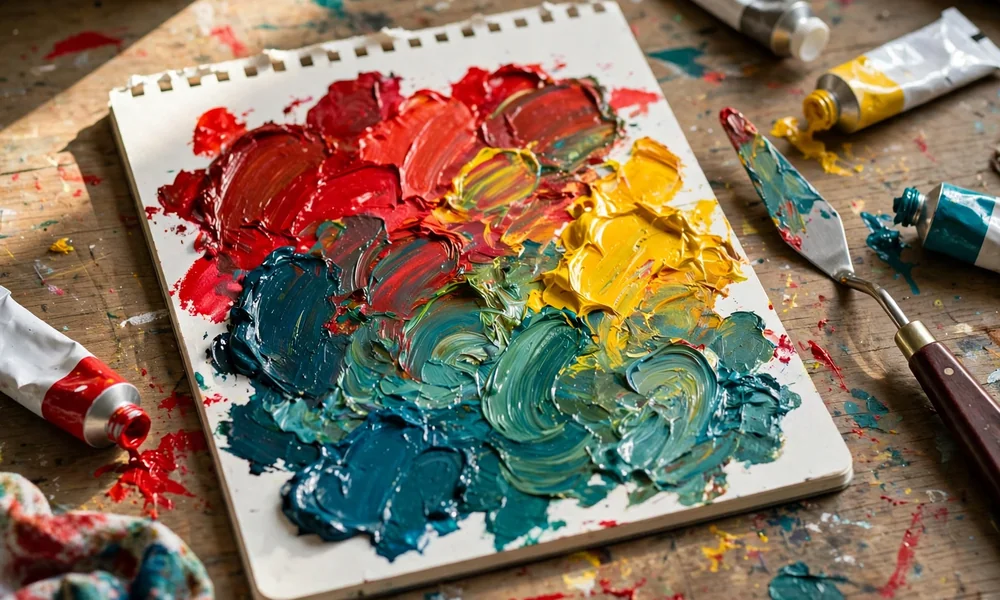
Clean mixing starts with layout. Put each colour in its own well or zone around the edge, in the same order every time, and keep the centre clear as your mixing area. Mix with a palette knife, not a brush, for large amounts: a knife blends thoroughly and wipes clean in one stroke. Mix no more than three pigments at a time — beyond that, mixtures turn grey. Test every mixture on scrap first, because paint dries darker than it looks wet. Keep two jars of water nearby, one for rinsing and one clean jar for mixing, so dirty water never clouds a fresh colour. Leave a little of each mixture on the palette as you work, so you can match it again if the painting needs a second pass.
Mistakes That Muddy Your Colours
The most common mistake is mixing on a dirty palette: old paint, dried flecks or a stained surface all leak into the next mixture and turn it grey. Scrape the palette clean at the end of every session. The second mistake is mixing too many colours: three pigments is the practical limit, and five or six ingredients will always be mud. Use single-pigment colours and keep mixtures simple. The third mistake is mixing in the wells instead of the open area, which contaminates the neat piles. Keep wells for pure colour and the centre for mixing. The fourth is leaving acrylic on an open palette during a break: it skins over in minutes, and the skin folds into the next mix as lumps. Cover it, use a stay-wet tray, or mist it with water first.
Checklist: Before You Buy
- Ceramic for watercolour, glass or stay-wet for acrylic, wood or glass for oil.
- Separate wells or zones, plus a large open mixing area in the centre.
- A wooden palette should balance on your arm if you stand at an easel.
- A smooth, non-porous surface, so paint mixes clean and scrapes off easily.
- Buy a palette knife: knives mix thoroughly and wipe clean in one stroke.
- If you will not wash it every time, buy a tear-off pad instead.
Frequently Asked Questions
What is the best paint palette for a beginner?
A lidded plastic palette is the best starting point: cheap, unbreakable, light and easy to wash. Upgrade to ceramic for watercolour or glass for acrylic once you know which paint you will stick with.
Do I need a different palette for watercolour and acrylic?
Yes, ideally. Watercolour needs a white palette with deep wells; acrylic needs a flat surface that keeps paint workable and cleans fast. One palette can serve both, but mixtures are cleaner on the right surface.
How do I stop acrylic drying on my palette?
Use a stay-wet palette, which keeps acrylic workable for days. On an open palette, mist the paint with water, work in small sections, and cover it whenever you step away.
Why do my mixed colours turn muddy?
Usually too many pigments were mixed, or the palette was dirty. Limit mixtures to three pigments, mix in the clean centre rather than the wells, and scrape the palette clean after every session.
What is the difference between a palette and a palette knife?
A palette is the surface you mix paint on; a palette knife is the flat blade you mix it with. The knife blends thoroughly, wipes clean in one stroke, and can also apply paint for texture.
Can I use a dinner plate as a paint palette?
Yes, in a pinch: a white ceramic plate is a good palette for watercolour. But a real palette has wells to keep colours apart and a shape made for mixing, so it is worth the small cost.
The Bottom Line
The best paint palettes in 2026 are matched to the paint: white ceramic for watercolour, a stay-wet tray or glass for acrylic, and a wooden thumb-hole palette for oils. Keep colours in their own zones, mix in the centre with a palette knife, use no more than three pigments, and clean the palette when you finish. It is a simple tool, but it decides whether the colour on your brush is the colour you imagined. Choose for your paint, keep it clean, and it will serve you for years.