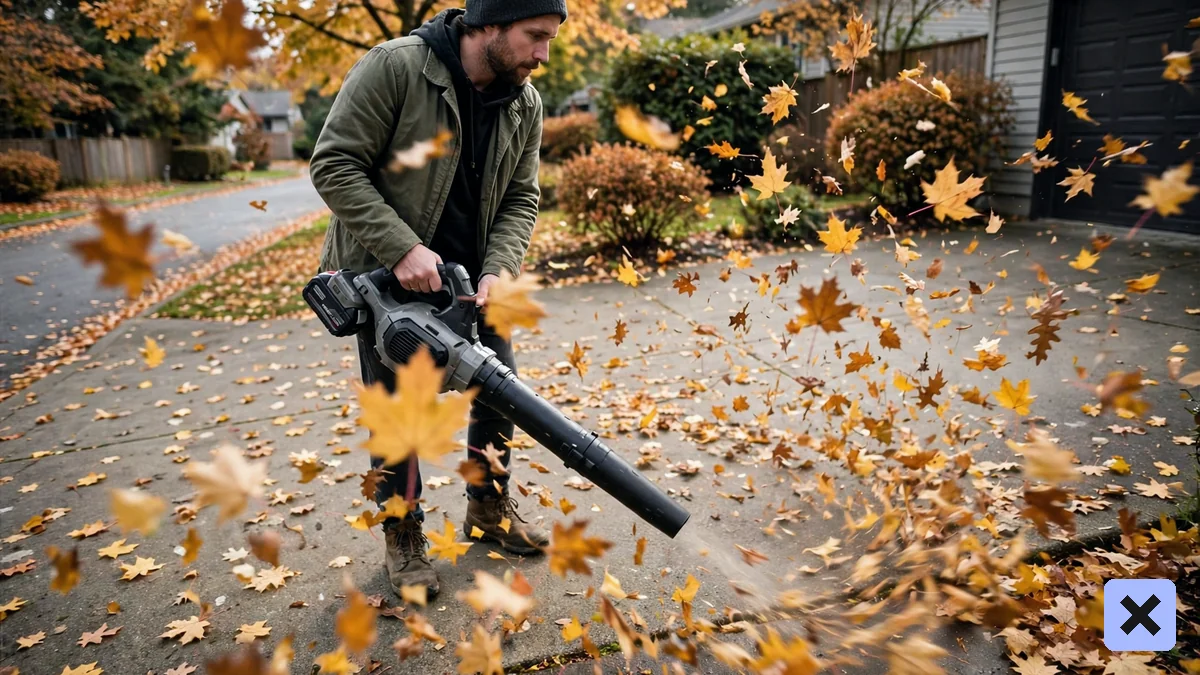
A leaf blower looks like the simplest tool in the garden shed. It is a tube with a motor, it costs less than a decent pair of boots, and it asks nothing of you except a charged battery or a pull of a cord. Yet the difference between the best and the worst leaf blowers of 2026 is the difference between a driveway cleared in ten minutes and an afternoon spent chasing the same dry leaves around the garden while the battery dies.
This comparison puts the best leaf blowers of 2026 head to head against the worst, judging them the way you would actually use them: how much air they move, how long they run, how heavy they feel after twenty minutes, and how loud they are. The best vs worst robot lawn mowers of 2026 show what good garden machinery looks like at its best, and this guide uses those strengths as the benchmark, then shows exactly where the bad blowers fail.
Key Takeaways
- Air volume matters more than top speed: a blower that moves a lot of air clears wet leaves, while a fast narrow jet only scatters dry ones.
- Battery blowers are quietest and easiest to start, but check the runtime on full power, not on the low setting.
- Petrol blowers are the strongest for large gardens, yet they are heavier, louder, and need fuel and servicing.
- A comfortable blower is balanced, with a handle that lets your arm hang naturally and a tube that points where you look.
- The worst blowers die after fifteen minutes, vibrate so hard your hand goes numb, and cannot shift a wet leaf at all.
How a Leaf Blower Actually Works
A leaf blower works by moving a large volume of air through a narrow tube. The motor spins a fan, the fan pushes air into the tube, and the air comes out fast enough to lift leaves and push them along the ground. Two numbers decide how well that works: air speed, in miles per hour, and air volume, in cubic feet per minute. Speed decides how hard the jet hits one leaf; volume decides how many leaves move at once, and how well the blower handles wet, heavy leaves stuck to the ground.
The part buyers most often overlook is the difference between those two numbers. A blower with a very high speed and a low volume feels powerful on one dry leaf, but it only moves a narrow strip, so clearing a whole lawn takes forever. A blower with a high volume pushes a wide wall of air, so leaves roll along in a broad wave. The best lawn mowers of 2026 show the same lesson in a neighbouring tool: the machines that finish the job are the ones built around real capacity, not the ones with the biggest number on the box.
The Best Leaf Blowers of 2026
The best leaf blowers share a simple quality: they make a dull job feel easy. They start at the push of a button, move leaves in broad waves, and run long enough to finish a real garden. They are the tools you reach for without dreading the noise, the weight, or the faff of getting them going.
Real Power, Where It Counts
A good blower moves leaves, not just air. The best battery models now push enough volume to shift wet autumn leaves off a lawn and out of a flower bed, and the best petrol models clear a large garden in a single session. The test is simple: point the blower at a pile of damp leaves. A good one rolls the whole pile forward in a steady wave, and holds its power as the battery drains instead of fading to a sigh after five minutes.
Runtime That Finishes the Job
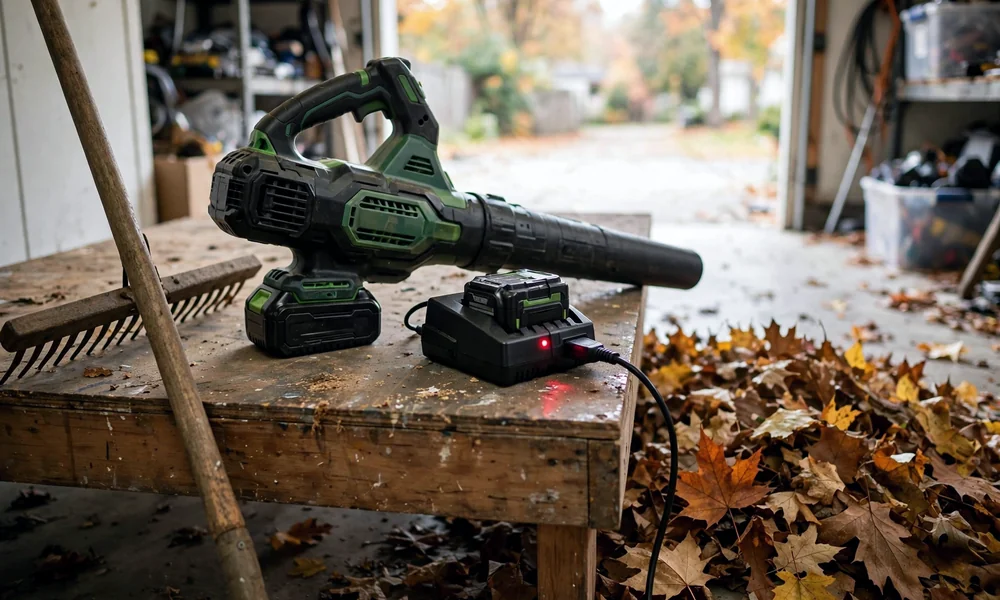
The best blowers run long enough to matter. A good battery blower gives you twenty to thirty minutes of real work on a useful power setting, and a second battery in the charger means you can keep going while the first one refills. The honest number to check is the runtime on full power, because that is the setting you will actually use on wet leaves. Petrol blowers have no such limit: a full tank runs for an hour or more, which is why they still rule the biggest gardens.
Comfort You Notice After Twenty Minutes
A good blower is comfortable in a way you only notice after twenty minutes of use. The handle sits where your hand falls naturally, the tube points where you are looking without you having to twist your wrist, and the weight is balanced so the nozzle does not drag your arm down. The best models add a cruise control or a variable trigger, so you can hold a steady airflow without squeezing hard the whole time. Pick a blower up and hold it at your side for a minute: if your shoulder is already aching, the garden will feel twice as big as it is.
Quiet Enough for the Neighbours
The best blowers are also the ones your neighbours do not hate. Battery blowers are far quieter than petrol, and the best of them are quiet enough to use early on a Saturday without a guilty conscience. Low noise is not just politeness: a quieter blower is easier on your own ears, and you can use it for longer without the ringing that follows a loud petrol machine. Noise is measured in decibels, and a small difference on paper is a big difference in real life, because the scale is logarithmic.

The Worst Leaf Blowers of 2026
The worst leaf blowers do not announce themselves. They arrive in tidy packaging, look much like the good ones, and promise the same clean driveway. By the second weekend, the problems start. The battery dies halfway through the job, the motor screams without moving a wet leaf, the handle vibrates until your hand goes numb, and the nozzle cracks the first time it knocks against a wall.
Batteries That Die Halfway Through
The most common fault in a bad battery blower is a runtime that exists only on the box. The headline figure is measured on the lowest setting, with no load, in a warm room. Out in a cold garden on full power, the same battery can die in fifteen minutes, leaving half the lawn still covered. Some cheap blowers fade gradually, losing power as the charge drops, so the last ten minutes are a slow dribble of air that moves nothing.
Noise Without Power
A bad blower can be loud and weak at the same time, which is the worst of both worlds. The motor screams at a high pitch, the fan whines, and the jet that comes out of the tube is thin and narrow, so it scatters dry leaves without ever gathering them into a pile. Wet leaves do not move at all: the jet passes over them and they stay stuck to the grass. If a blower hurts your ears and still leaves the leaves where they were, the design has failed twice.
Vibration, Weight, and Bad Balance
Bad blowers often fail at the handle, which is the part you hold for the whole job. A poorly balanced blower drags its nose down, so your wrist has to fight it the entire time. Cheap motors vibrate hard, and the buzz travels up through the handle until your hand goes numb. A blower should feel like an extension of your arm, not a weight hanging off it.
Flimsy Tubes and Short Lives
The final failure of a bad blower is the shortest life. Thin plastic tubes crack the first time they knock against a wall or a fence post, and the crack turns into a split that leaks air and kills the power. Cheap switches stick or fail, and battery contacts loosen. Petrol models have their own version of the same story: a pull cord that frays and a carburettor that refuses to start after a winter in the shed. The worst blowers look like a bargain and turn into a chore, until they end up in the back of the shed, replaced by the rake they were meant to outlast.

The Middle Ground: A Decent Blower With One Flaw
There is also a middle ground worth naming: a decent blower with one flaw. A blower that moves plenty of air but has a short runtime, or a blower with a great battery but a tube that is slightly too short, can still be a good buy if the flaw is one you can live with. The best garden hoses of 2026 show the same pattern in a neighbouring tool: the winners are the ones that make an ordinary weekend easier, and the losers are the ones that make it harder. Judge a flawed blower by whether the flaw touches the work. A short runtime can be fixed with a spare battery. A weak motor cannot be fixed at all, because it touches every leaf you try to move.
The Verdict
The verdict is clear: buy the best leaf blower you can afford, and judge it by its air volume, its runtime on full power, and its balance, not by its top speed or its headline battery figure. For most households, that means a good battery blower with a large battery and a spare, used on the power setting the job actually needs. It is the easiest way to get a clear garden, a quiet Saturday, and years of reliable use without learning a new skill. For large gardens with heavy leaf fall, a good petrol blower is the better buy, used with ear protection and serviced once a year. A good leaf blower should make you wonder how you ever cleared the garden without it.
Who Each Leaf Blower Is For
A good battery blower is for small and medium gardens, suburban driveways, and anyone who wants to start work at the push of a button. It suits homeowners who clear leaves weekly, people who value quiet mornings, and anyone who already owns batteries from the same tool range. A good petrol blower is for large gardens, rural properties, and anyone with heavy leaf fall under big trees. A backpack blower is for the biggest jobs, where the weight sits on your shoulders instead of your arm. Either way, a good blower is one of the few garden purchases that genuinely makes every autumn easier.
Frequently Asked Questions
What is more important: air speed or air volume?
Air volume matters more for most gardens. Speed decides how hard the jet hits one leaf, but volume decides how many leaves move at once and how well the blower handles wet leaves. A blower with high volume and moderate speed clears a lawn faster than a blower with high speed and low volume.
How long should a battery leaf blower run?
Look for twenty to thirty minutes of real work on a useful power setting. The headline figure is often measured on the lowest setting, so check the full-power runtime in the small print. A second battery doubles your working time and is worth buying if your garden is large.
Are petrol leaf blowers better than battery ones?
Petrol blowers are stronger and run longer, which suits large gardens and heavy leaf fall. Battery blowers are quieter, lighter, easier to start, and need almost no servicing, which suits most suburban gardens. For a small or medium garden, a good battery blower is usually the better choice.