An iced cappuccino is the frothy cold coffee that most people have never made at home: espresso, cold milk and ice, finished with a thick cap of cold foam that sits on top of the glass instead of melting into it. It looks and tastes like a cafe drink, provided the foam holds. Most homemade versions fail there: the foam is thin, it collapses within a minute, and what is left is a small iced latte with cocoa on top.
This guide explains how an iced cappuccino works, how to make cold foam without steam, and how to keep the cap standing until the last sip. It covers the ratio that keeps coffee flavour present under the foam, which milks froth best cold, the tools that make cold foam reliably, and the mistakes that flatten it.
Key Takeaways
- An iced cappuccino is espresso, cold milk, ice and a thick cap of cold foam, and the foam is what makes it a cappuccino rather than a small iced latte.
- Use a double shot of espresso in a small glass, about 250 millilitres, with less milk than a latte so the coffee flavour stays present.
- Cold foam is made by frothing cold milk, not steaming it: a French press, a handheld frother or a jar shaken hard all work.
- Cold whole milk and barista oat milk froth best cold, while skimmed milk makes thin foam that collapses quickly.
- Spoon the foam on last, dust it lightly, and serve at once, because cold foam starts to settle the moment it meets the drink.
What an Iced Cappuccino Actually Is
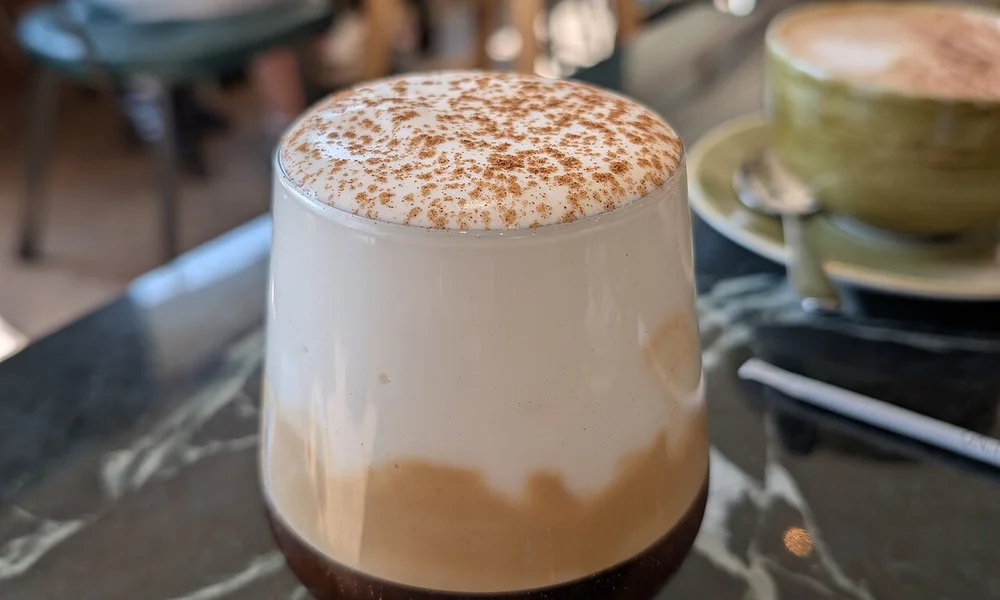
An iced cappuccino is espresso, cold milk, ice and cold foam, built in a small glass. The drink underneath is stronger and less milky than an iced latte: a double shot of espresso, about 100 millilitres of cold milk, and ice, with a deep cap of foam spooned on top. The foam is the point: thick enough to hold a dusting of cocoa, tall enough to see above the rim, and firm enough to survive the first sips without sliding into the milk.
The drink is often confused with its hot namesake and with the iced latte, and the differences matter. A hot cappuccino is equal thirds of espresso, steamed milk and foam, served hot in a small cup, and our guide to why a great cappuccino is worth making at home covers that drink. An iced latte has far more milk and no foam cap. The iced cappuccino borrows the foam from the hot version and the chill from the latte, with its own ratio: less milk than a latte, more foam than either, and espresso strong enough to carry both.
Why the Foam Collapses
Cold foam collapses for three reasons. The first is warm milk: above fridge temperature it froths weakly, making large, unstable bubbles that pop within a minute. The second is the wrong milk: skimmed and thin plant milks make foam that looks fine for thirty seconds, then thins to nothing for want of fat and protein. The third is pouring the foam instead of spooning it, which mixes it into the drink so no cap forms.
Keep everything cold and handle the foam gently. Use milk straight from the fridge and chill the frothing jug or jar too. Froth only as much as one cap needs, about 80 millilitres, since a small amount froths thicker. Spoon the foam on in two layers, letting the first settle before adding the second. Serve at once and do not stir: the first sip should come through the cap.
The Ratio That Keeps It Balanced
The ratio is what separates an iced cappuccino from a small iced latte. For a 250 millilitre glass, start with a double shot of espresso, about 60 millilitres, then 90 to 100 millilitres of cold milk, then ice to just below the rim, then a foam cap of about 60 millilitres spooned on top. That is roughly one part espresso, one and a half parts milk and one part foam. If the glass is larger, add ice and foam, not milk, or the drink turns into a latte with a garnish.
Taste through the foam and adjust the next glass. If the coffee disappears under the cap, use less milk or a stronger shot, and keep the glass small. If it tastes sharp, the espresso may be over-extracted or the roast too dark. If the foam slides off, the milk below may be too warm, or the foam was poured, not spooned. Note the ratio that works, since a different milk needs a slightly different balance.
Iced Cappuccino Styles at a Glance
| Style | Build | Flavour | Best for |
|---|---|---|---|
| Classic iced cappuccino | Double shot, cold whole milk, thick cold foam | Strong, creamy, cocoa-dusted | Everyday drinking |
| Freddo cappuccino | Double shot shaken with ice, cold frothed milk | Light, airy, very cold | Hot afternoons |
| Iced cappuccino with oat milk | Double shot, barista oat milk, oat cold foam | Gentle, sweet, smooth | Dairy-free mornings |
| Sweet iced cappuccino | Double shot, vanilla syrup, cold milk, foam | Soft, sweet, dessert-like | An afternoon treat |
| Strong iced cappuccino | Triple shot, less milk, thick foam cap | Bold, intense, coffee-led | Slow sipping |
Choosing the Milk for Cold Foam
Cold whole milk is best for cold foam: its fat and protein hold small, stable bubbles, so the foam stands tall to the last sip. Semi-skimmed froths acceptably, but the cap is thinner and settles faster, so make it fresh and serve at once. Skimmed is the worst option, frothing into large, fragile bubbles that collapse within a minute; if you use it, accept a thinner cap and a smaller glass.
Plant-based milks vary more cold than hot. Barista-style oat milk is best for cold foam: it froths thickly, holds its shape, and tastes gently sweet against the espresso. Soy milk froths well but can taste beany, almond milk makes thin foam that fades fast, and coconut milk froths poorly and overwhelms the coffee. Our guide to the milk frothers worth the counter space covers the tools that make cold foam reliably, and it is worth reading before buying a frother.

Making Cold Foam Without Steam
Cold foam needs no steam and no machine, though a few tools make it easier. A French press is the most reliable cheap method: pour in cold milk, pump the plunger for about thirty seconds, and the milk doubles into a thick, spoonable foam. A handheld frother works in a jug in the same time, if the milk is cold and the frother is held still. A jar with a tight lid works too: fill it a third full, shake hard for thirty seconds, and spoon out the foam.
Whichever method you use, the rules are the same. Keep the milk cold, froth only a small amount, and stop as soon as the foam is thick: over-frothing makes stiff bubbles that sit like meringue. Let the foam rest for ten seconds, then spoon it on in two layers. Do not pour it, stir it in, or leave the drink standing: cold foam is at its best in the first five minutes.
Ice, Glass and Serving
Use large cubes: small ones melt fast and thin the small amount of milk the drink holds. Fill the glass with ice before the milk goes in, so the drink chills fast and the foam has a cold surface to sit on. Use a small glass, about 250 millilitres: a large one stretches the drink into a latte and the foam cap looks lost. A short, wide glass holds the foam better than a tall, narrow one.
Serve the moment the foam is on, and dust lightly if you like. Cocoa is the classic dusting, and a pinch is enough: too much falls through the foam. Cinnamon suits a sweeter version. Do not add syrup to the finished drink, as it sinks through the foam and pools at the bottom; add it to the hot espresso instead, so it dissolves fully. For the coffee itself, our guide to the best espressos for rich, bold sipping covers the beans that hold up best under cold milk and foam.

The Build, Step by Step
Chill the glass for five minutes and fill it with large ice cubes. Pour the cold milk over the ice, leaving room for the espresso and the foam. Pull a double shot, stir any syrup into the hot espresso, then pour it slowly over the ice so it chills at once. Froth 80 millilitres of cold milk until it doubles, rest it ten seconds, then spoon it on in two layers and dust lightly.
Serve at once and do not stir. The first sip should come through the foam, and the cap should still be standing when the glass is half empty. To take away, use a lidded cup with room for the foam and drink within ten minutes: a takeaway iced cappuccino is a race against the foam settling, and a warm car will win it.
Checklist: A Frothy Iced Cappuccino Every Time
- Pull a double shot of espresso into a small glass, about 250 millilitres, so the coffee stays present.
- Use milk straight from the fridge, and chill the frothing jug or jar before you start.
- Froth only 80 millilitres of milk at a time, until it doubles in volume and turns thick.
- Spoon the foam on in two layers, never pour it, and dust it lightly with cocoa.
- Fill the glass with large ice cubes, and use a short, wide glass that holds the foam.
- Serve at once and do not stir, so the first sip comes through the foam cap.
Frequently Asked Questions
How is an iced cappuccino different from an iced latte?
It has less milk, a smaller glass, and a thick cap of cold foam on top. An iced latte is mostly cold milk with espresso, while an iced cappuccino is a stronger drink where the foam is the point of it.
Can I make cold foam without a frother?
Yes. A French press is the most reliable method, and a jar with a tight lid works too. Pour in cold milk, pump or shake hard for thirty seconds, and spoon out the foam that forms on top.
Why does my cold foam collapse?
It is usually warm milk, the wrong milk, or foam that was poured instead of spooned. Use milk straight from the fridge, choose whole milk or barista oat milk, and spoon the foam on in two layers.
Which milk makes the best cold foam?
Cold whole milk makes the thickest, longest-lasting foam, and barista-style oat milk is the best plant-based option. Skimmed milk and almond milk make thin foam that fades within a minute.
Should I stir an iced cappuccino?
No. Stirring breaks the foam cap and mixes it into the drink. Drink through the foam, so the first sip is creamy and the coffee arrives underneath it.
How long does an iced cappuccino stay good?
About ten minutes at its best. The foam starts to settle the moment it meets the drink, so make it fresh, serve it at once, and do not leave it standing in a warm room.
The Bottom Line
The best iced cappuccino is a small, strong, cold drink with a foam cap that stands tall: a double shot, a little cold milk, large ice, and foam spooned on last. Keep the milk cold, froth a small amount at a time, and serve it at once. Once the routine is learned, a homemade iced cappuccino tastes like the cafe version every time.