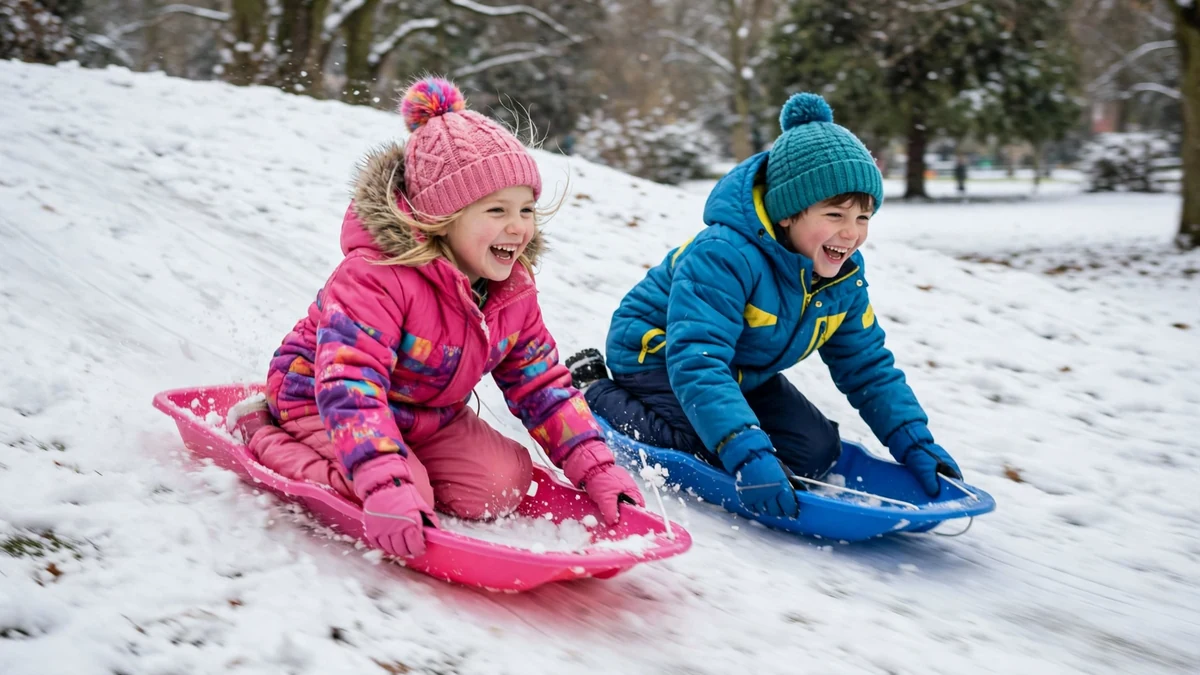
A kids sled is one of the simplest winter toys there is, and that is exactly why it is so easy to get wrong. There is no engine, no battery and no screen, just a child, a slope and gravity, which means the sled itself has to do all the work. The best kids sleds of 2026 are the ones that steer straight, stop when they should, hold up to being dragged back up the hill fifty times in an afternoon, and fit the child riding them. The worst ones tip over on the first bend, crack in the cold, or go so fast on a gentle slope that a fun afternoon turns into a frightened one.
What Makes a Kids Sled Different
An adult sled is built for speed and for a rider who knows how to steer, brake and bail out. A kids sled is built for the opposite: a rider who is still learning, who will sit in the wrong place, lean the wrong way and forget to lift their feet at the bottom. The best kids sleds are therefore wider, lower and more forgiving than adult ones, with a shape that resists tipping and sides that keep small legs inside. A sled that needs expert balance is not a kids sled, no matter what the box says.
Size is the first difference that matters. A sled that is too big is hard for a child to carry uphill, hard to turn, and easy to overload with two children when it was only built for one. A sled that is too small leaves legs dangling over the edges, where they catch in the snow and spin the sled around. Check the maker’s age and weight limits before you buy, and take them seriously. They are not suggestions. A sled rated for a child up to twenty-five kilograms will behave very differently with a forty-kilogram rider on it, and the difference shows up at the worst moment, halfway down the hill.
The second difference is how the sled is controlled. Small children cannot steer with their feet the way adults do, so the best kids sleds give them something simple to hold: a rope at the front, raised handles on the sides, or a steering wheel on the larger models. The rope matters more than it looks. It is how a parent pulls the sled back up the hill, how a child holds on during the ride, and how the sled is carried home. A rope that is too short forces a parent to stoop, and a rope that frays after a week is a sign of the quality of everything else. Warm hands matter here too, because a child who cannot grip the rope cannot steer, and our guide to the best kids gloves of 2026 covers the waterproof pairs that keep small hands warm enough to hold on through a whole afternoon of sledding.
How to Choose a Kids Sled
Start with the material. Most kids sleds are plastic, wood or foam, and each suits a different kind of winter. Plastic sleds are light, cheap and fast on packed snow, and a child can carry one uphill without help. They are the best choice for most families, especially for younger children. Wooden sleds are heavier and slower, but they are steadier, they last for years, and they glide well on softer snow. Foam sleds are the softest and lightest of all, which makes them a good first sled for a toddler, but they wear out faster and they are harder to steer on icy snow.
Weight comes third. A sled that a child cannot carry is a sled that a parent ends up carrying, and a parent carrying two sleds up a hill is a parent who stops going sledding. For children under six, the sled should weigh less than two kilograms, light enough to drag by its rope. For older children, three or four kilograms is fine, and the extra weight can actually help the sled stay stable at speed. Wooden sleds are the heaviest, which is one reason they suit older children and family outings better than solo trips with a small child.
The Best Kids Sleds by Age
For children aged five to eight, the sled becomes theirs. A light plastic toboggan or a round saucer is ideal: easy to carry, easy to steer by leaning, and forgiving when it spins. This is the age for the local park hill, for races with friends, and for learning the basic rules: sit, hold on, feet up, and wait until the slope is clear. Keep the hills gentle and short, and stay close enough to reach the child quickly if the sled goes off course.
Plastic Sleds and Wooden Sleds
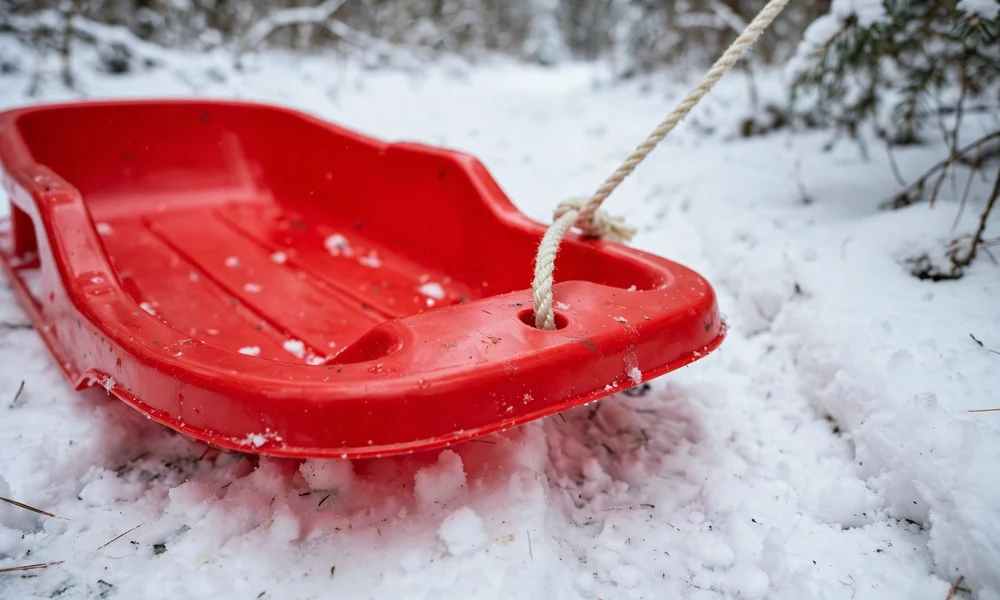
The plastic toboggan is the workhorse of the sledding hill. It is a long, shallow tray with a curved front, sometimes with a rope and sometimes with side handles. It is fast on packed snow, light enough for a child to carry, and cheap enough to replace if it cracks. Its weakness is the cold: cheap plastic turns brittle below freezing and can split after a hard knock. Look for thick plastic that flexes slightly when you press it, rather than thin plastic that feels like it would snap. A toboggan that survives being dropped on a frozen pavement will survive a winter of sledding.
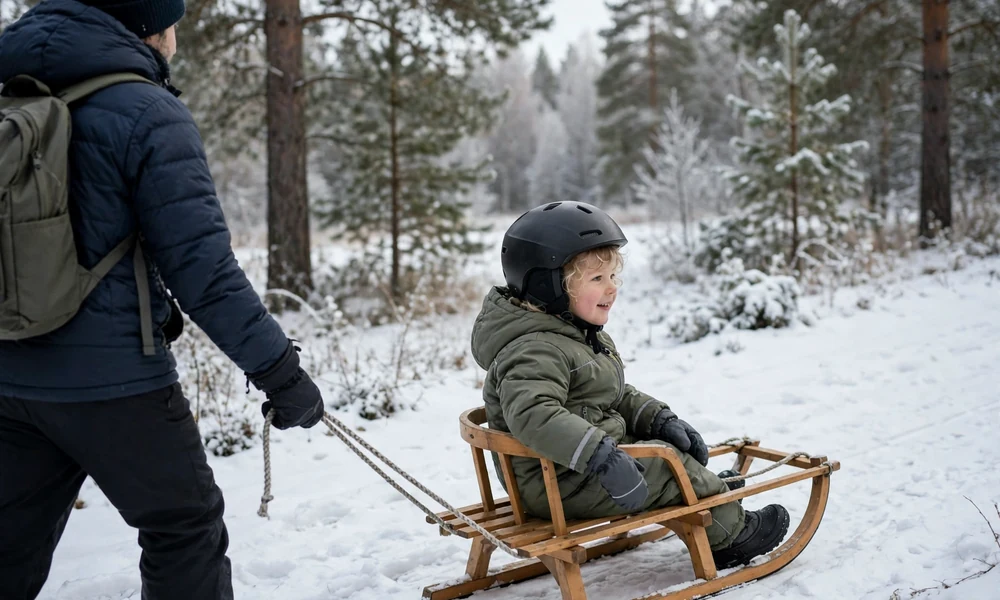
The wooden sled is the slowest to buy and the longest to keep. A classic wooden sled with metal runners is steady, steers well, and can carry a child for years, then a second child after that. It is heavier to pull uphill, and the runners need a little care, wiped dry after use so they do not rust, but it is the best choice for families who sled often and want one sled that lasts. It is also the best choice for pulling a small child along a flat path, because the runners glide and the seat is high enough to keep the child out of the snow.
Staying Safe on the Hill
Safety on a sled is mostly about the hill, not the sled. Choose a slope that is gentle, wide and free of trees, fences, rocks and roads, with a long flat area at the bottom where the sled can slow down on its own. Walk the slope before the first run, and kick away any hidden lumps of ice. A slope that ends in a road, a car park or a frozen pond is not a sledding slope, however good the snow looks. If you would not want a child running down it at full speed, do not let them slide down it either.
An adult should always be watching. Young children should never sled alone, and even older children should sled where an adult can see the whole slope. One child at a time on a sled built for one, and one sled at a time down the hill: wait until the rider before has cleared the bottom before the next one starts. Most sledding accidents happen when two sleds meet, or when a child walks back up the hill in the path of a sled coming down. Mark a clear walking path up the side of the slope, away from the sliding line, and stick to it.
A helmet is strongly recommended for every child on a sled, and it is essential on any slope with bumps or ice. A ski or snowboard helmet is ideal, and a well-fitting cycle helmet is far better than no helmet at all. It should sit level on the head, fit snugly, and not slide over the eyes. Warm clothing matters too: a child who is cold stops concentrating, and a child who is not concentrating steers badly. A full snowsuit keeps a child warm and dry through hours of falling in the snow, and our guide to the best kids snowsuits of 2026 covers the one-piece suits that hold up best to a whole afternoon of sledding. Check the sled’s age and weight limits every season, because a child grows fast and a sled that fitted last winter may be too small now.
What to Wear for Sledding
Feet matter more than most parents expect. A child spends half the sledding trip walking back up the hill, and wet, cold feet end the day early. Warm waterproof snow boots with a good grip are essential, because the walk back up a snowy slope is where most slips happen, and our guide to the best snow boots of 2026 covers the pairs with the grip and warmth a sledding hill demands. Gloves should be waterproof too, and it is worth taking a spare pair, because gloves get wet faster than anything else a child wears.
What to Avoid When Buying a Kids Sled
Avoid sleds with no way to steer or stop. A flat sheet of plastic, a bin lid or a piece of cardboard will slide, but the child has no control at all, and a sled with no control is a sled heading for whatever is at the bottom of the hill. The same goes for inflatable rings and tubes on icy slopes: they are fast, they spin, and they cannot be steered. They have their place on a wide, gentle hill on soft snow, but they are the wrong choice for a first sled.
The First Run
Make the first run of the season a slow one. Walk the hill together, check the snow, and send the sled down empty first to see how fast it goes and where it stops. Then let the child ride, sitting with their feet up and their hands on the rope or handles, while you watch from the side. If the sled pulls to one side or spins, it is the slope or the sitting position, not the child, so adjust before the next run. A child who enjoys the first run will spend the whole afternoon on the hill. A child who is frightened on the first run will not come back.

Frequently Asked Questions
Do kids need a helmet for sledding? A helmet is strongly recommended, and it is the simplest safety step you can take. Sleds are fast, slopes are bumpy, and a fall onto hard snow or ice can hurt. A well-fitting ski helmet is ideal, and it also keeps the child’s head warm. Make the helmet part of the sledding routine, like the gloves and the boots, and there will be no argument about wearing it.
The best kids sled is the one that fits your child, your hill and your winter. Choose a sturdy sled in the right size, with a rope or handles a child can hold, a helmet on their head, and a safe slope with a clear run-out. Get those right, and a simple piece of plastic or wood will give your family more joy per pound than almost anything else you buy this winter.


