
A kids bathrobe is one of those small things that changes bath time completely. A child who steps out of a warm bath into a cold room will shiver, drip and complain, and the whole evening routine turns into a rush to get them dry and dressed. A child who steps into a soft, warm bathrobe stays warm, dries off gently and actually enjoys the slow wind-down before bed. The best kids bathrobes of 2026 do that job without fuss: they soak up water quickly, feel soft against young skin, stay on while a child moves around, and survive being washed again and again without going stiff, thin or scratchy.

What Makes a Kids Bathrobe Different
The fabric matters more than the colour or the character on the hood. A kids bathrobe spends its life soaking up water, so absorbency comes first. Terry cloth is the classic choice because its loops pull water away from the skin quickly, and a good terry robe can dry a child without rubbing. Fleece is warmer and lighter, which suits cold houses and winter evenings, but it absorbs less water, so it works best as a warm layer after a quick towel dry. Waffle weave is the light option: it dries fast, packs small for holidays and suits children who get hot easily, though it feels thinner than terry. Cotton is the safest bet for sensitive skin, because it breathes, washes well and rarely irritates, while synthetic blends can feel warm and soft at first but often go bobbly and stiff after a few washes.
The hood is the third difference, and it is the one children care about most. A hood keeps wet hair warm, stops drips running down the neck and makes the robe feel like a cosy den rather than a towel with sleeves. Animal-ear hoods, with soft ears sewn onto the top, are the ones children actually ask to wear, and a robe a child wants to wear is a robe that gets used every night instead of sitting on a hook. Our guide to the best vs worst bathrobes of 2026 looks at the wider market, including adult styles, but for a child the hood, the weight and the fit matter far more than the brand name on the label.
How to Choose the Right Robe
Start with absorbency. A bathrobe that looks fluffy but leaves a child damp is not doing its job. Hold the fabric up to the light and look at the loops or the weave: dense, even loops absorb well, while flat, sparse fabric will push water around instead of soaking it up. If you can, feel the inside as well as the outside. The inside is what touches the skin, and a robe that is soft on the outside but rough on the inside will be pulled off within minutes. A good test at home is simple: after a bath, wrap the child in the robe for two minutes without towelling first, and see how dry they are. A good robe does most of the drying on its own.
Next, check the weight. A kids bathrobe should feel light on small shoulders. A heavy adult-weight robe will slide off, pull at the neck and make a child feel weighed down, especially a younger child. Look for a robe that feels substantial in the hand but light when worn. Fleece and waffle robes are usually the lightest, while thick terry is the heaviest, so a thick terry robe suits a bigger child better than a toddler. If the robe feels heavy when you pick it up, it will feel heavier on a wet child.
Fit comes third, and it is easy to get wrong because children grow so fast. A kids bathrobe should end around the knee, with sleeves that reach the wrist when the arms are held out straight. A robe that is too long will trip a child on the stairs; a robe that is too short will not keep them warm. Most makers size by age, but ages vary wildly, so check the length in centimetres rather than trusting the age label. Buy for the child you have now, not the child they will be next year: a robe that is a little roomy is fine, but a robe bought two sizes too big will be outgrown in comfort long before it is outgrown in length.
The Best Kids Bathrobes by Age
For babies and toddlers, softness and safety come first. A toddler robe should be very light, very soft and short enough to walk in without tripping. A hood is almost essential at this age, because it keeps a wet head warm and stops the child cooling down too quickly. Avoid heavy fabrics and long belts for toddlers, and choose a robe with a simple tie or poppers that a parent can fasten quickly with one hand. Bright colours and animal ears help here more than anywhere else, because a toddler who loves their robe will stand still long enough to be dried.
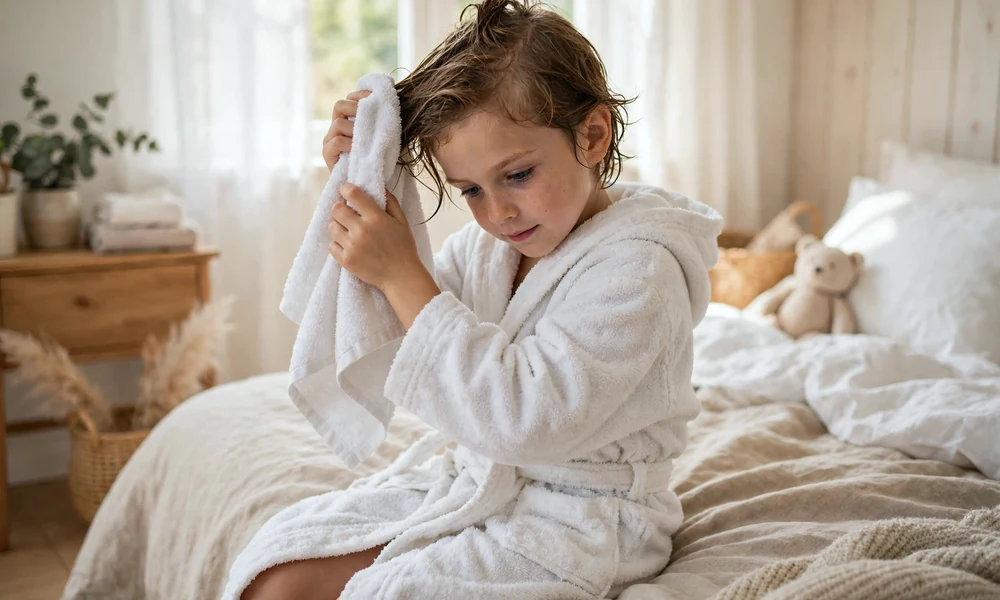
For children aged eight to twelve, the robe needs to grow up. Older children want a robe that looks less like a baby item and more like something they would choose themselves, so plain colours, waffle weave and shawl collars start to appeal. The robe also needs to be longer and more absorbent, because an older child stays in the bath longer and comes out wetter. This is the age to let the child choose: a robe they picked themselves will be worn far more often than one chosen for them, and the choice teaches them to think about what feels comfortable rather than just what looks good.
Why Terry Cloth Works So Well
Terry cloth is the workhorse of kids bathrobes. Its loops give it a huge surface area, which is why it absorbs so much water so quickly, and a good quality terry robe feels plush without being heavy. The downside is drying time: a thick terry robe takes longer to dry on a rack than a thin one, so it needs a good airing between baths or it will start to smell damp. Choose terry for children who have long baths and need serious drying power, and hang it where air can reach it rather than bunched up on a hook.
Why a Hood Matters
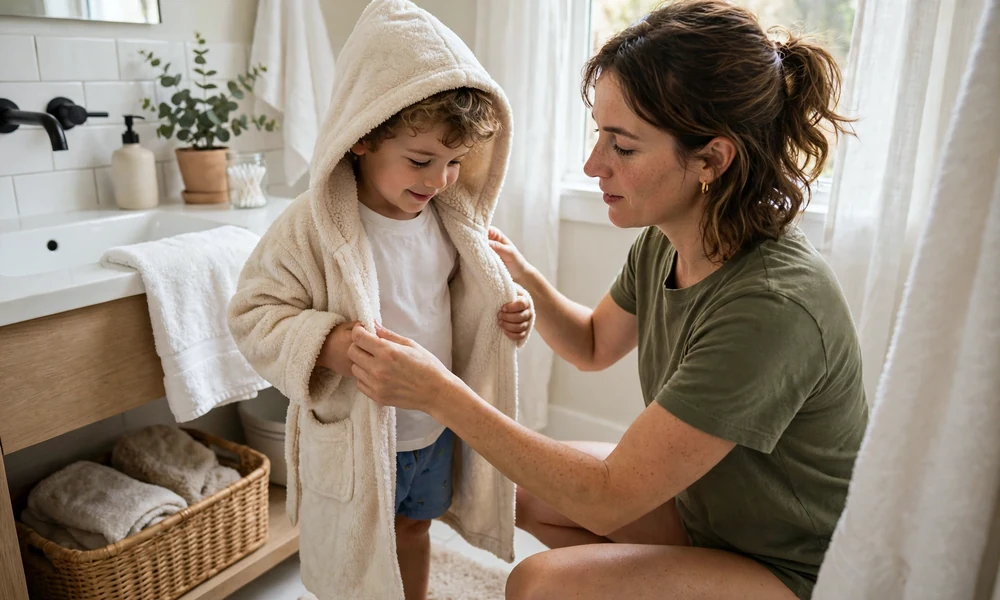
A hooded robe is the best choice for younger children. The hood dries wet hair, keeps the head warm and turns the robe into something a child actively wants to wear. It also means one less towel is needed, because the hood does the job of a hair towel. The only downside is bulk: a hood adds weight and takes longer to dry, and a very large hood can flop over a small child’s eyes. Look for a hood that sits comfortably without slipping forward, and check that the ears or decoration on it are sewn on firmly rather than glued.
Sizing, Ties and Safety
Safety is the part of buying a kids bathrobe that is easiest to overlook and most important to get right. The belt should be attached to the robe, short enough not to trail on the floor and wide enough to stay tied. Long, loose belts are a catching and tripping risk, and a belt that comes off entirely becomes a toy that gets lost. Check the stitching where the belt meets the robe: it should be sewn firmly with no loose threads. The same goes for the hood: any decoration, ears or buttons on the hood should be sewn on so firmly that a child cannot pull them off.
What to Avoid When Buying a Kids Bathrobe
Avoid robes that are sold mainly on a character or a picture. A robe with a big printed character on the back may delight a child on the day it arrives, but the print often cracks and peels after a few washes, the fabric underneath is frequently thin, and the child will outgrow the character long before they outgrow the robe. Choose the fabric and the fit first, and let the character be a bonus rather than the reason you buy. A plain robe in a colour the child loves will last longer and be worn more often than a thin robe with a favourite face on it.
Building the Bath-Time Routine
The robe works best as part of a simple routine that a child can follow without being told every step. Hang the robe on a low hook the child can reach, in the bathroom or just outside it, so it is there the moment they step out of the bath. Warm it first on cold evenings by laying it on a radiator for a few minutes or popping it in a warm tumble dryer for a short spin: a warm robe on a cold night is a small kindness a child remembers. After the bath, wrap the child in the robe, put the hood up, and let the robe do the drying while teeth are brushed and pyjamas are laid out.
Keep the routine the same every night, because children settle faster when they know what comes next. Bath, robe, teeth, story, bed is a sequence a child can learn by heart, and the robe becomes the signal that the noisy part of the evening is over and the quiet part has begun. Our guide to bath towel sets for families covers the towels that pair with a robe, and having a matching set for the whole family makes the routine feel shared rather than imposed. A robe that is always in the same place, always clean and always warm is a robe a child will reach for without being asked.
After Bath Time: Pyjamas and Towels
Once the child is dry, the robe hands over to pyjamas, and the two should work together rather than fight each other. A robe that is too tight over pyjamas will be pulled off the moment the child is dressed, so check the fit with pyjamas on, not just on bare skin. Light, breathable pyjamas suit a warm house, while thicker ones suit a cold one, and the robe should be easy to slip off without a struggle. Our guide to the best kids pyjamas of 2026 covers that next step, from soft cotton sets to warmer winter styles, so the whole evening routine, from bath to bed, is covered.
Frequently Asked Questions
How many bathrobes does a child need? Two is the practical answer. One robe is in use while the other is in the wash, and a child is never left without a warm robe on a cold evening because the only one they own is still damp. Two robes also last longer than one, because each is washed half as often, and they can be different fabrics: a thick terry robe for winter and a light waffle robe for summer, for example.
The best kids bathrobe is the one your child actually wants to wear. Choose a soft, absorbent fabric, a fit that ends around the knee with sleeves at the wrist, a hood or collar your child likes, and a belt that stays tied. Get those four things right and the robe will be worn every night, washed twice a week and replaced only when it is finally outgrown, which is the best review any bathrobe can earn.


