A bathrobe is the first thing you reach for after a shower, and it decides whether you step out feeling warm and wrapped up or cold and still damp. A good robe wraps you in warmth, soaks up the water left on your skin, and lets you move around the house in comfort. A bad one slips open, soaks through in minutes, and leaves you colder than you were before you put it on.
The difference between the best and the worst bathrobes in 2026 is not mainly about price. The best robes are the ones whose fabric, weight, and fit suit your mornings and the way you live, with a finish that survives washing without going stiff or losing its shape. The worst are the ones that look plush and luxurious in the shop and turn thin, scratchy, or misshapen within a season. If you are buying for one person in particular, our guide to the best bathrobes for women in 2026 covers the styles, lengths, and fabrics that suit women best.
Key Takeaways
- A good bathrobe absorbs the water left on your skin after a shower, because thick cotton loops pull moisture in instead of letting it soak through to your clothes.
- Turkish cotton terry is the best all-round fabric for warmth and absorbency, while waffle knit suits warm mornings and fleece suits cold rooms.
- Look for a robe that reaches at least to the knee, with a belt that stays tied and sleeves that do not get in the way of making breakfast.
- Thin satin robes are the worst value of all, because they offer no warmth, no absorbency, and a belt that slips open every time you move.
- Wash a robe in warm water without fabric softener, because softener coats the fibres and kills absorbency long before the robe wears out.
What Makes a Bathrobe Good or Bad
Fabric is the first thing to check, and it matters more than brand, colour, or price. Natural fabrics such as cotton and bamboo absorb water properly, because their fibres pull moisture in and hold it until the robe is hung to dry. Turkish cotton terry has dense loops that soak up the water left on your skin after a shower, which is why it feels warm and dry the moment you put it on. Waffle knit cotton is lighter and dries faster, which suits warm bathrooms and summer mornings. Fleece is soft and warm, though it absorbs less water, so it suits the bedroom more than the bathroom. Silk and satin feel smooth and look elegant, but they absorb almost nothing and offer no warmth at all.
Weight is the second thing, and it decides whether the robe feels like comfort or like a burden. A good robe has enough weight to feel warm and substantial without dragging on your shoulders or making you sweat. A light waffle robe suits summer and warm houses, a medium terry robe suits most of the year, and a heavy fleece robe belongs in a cold house in winter. A robe that is too heavy feels stifling within minutes, while one that is too light offers no warmth on a cold morning.
The fit and finish are the third thing, and they decide how the robe feels after a year of use. A good robe reaches at least to the knee, so it keeps you warm without tripping you on the stairs, and it has a belt with loops that hold it in place instead of letting it slip open. The sleeves should be wide enough to move in but not so long that they dangle into the sink, and the pockets should be deep enough to hold a phone or a pair of glasses. The best robes have finished seams that stay flat, a collar that sits properly, and a fabric that stays soft instead of pilling into hard little balls.
The Best Side: Bathrobes That Earn Their Place
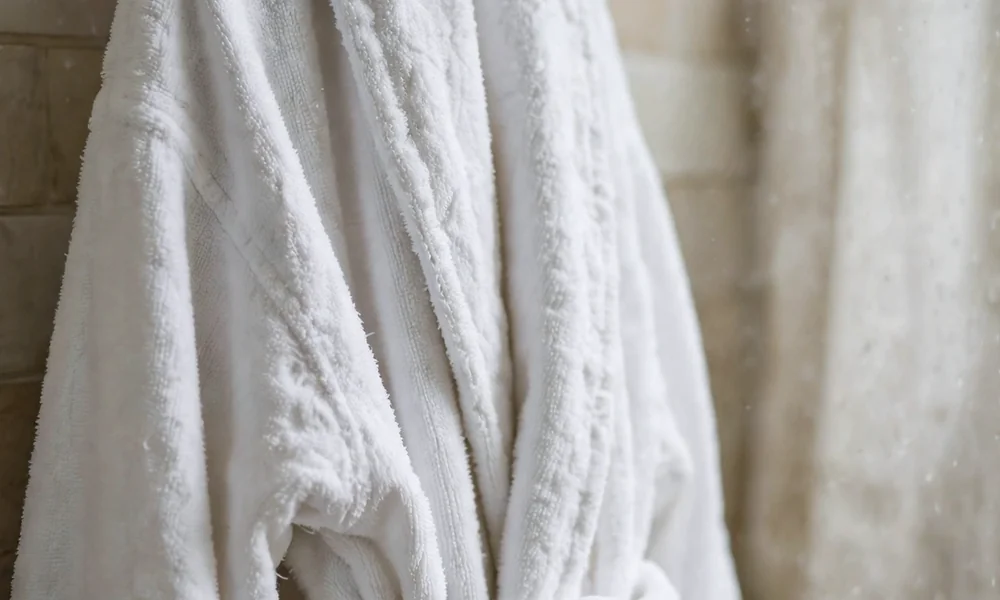
Turkish cotton terry robes are the best choice for most homes, and the most absorbent option that still feels soft. The best of them are made from long-staple Turkish cotton, with dense loops that soak up the water left on your skin and a weight that feels warm without being heavy. Turkish cotton gets softer with every wash, keeps its shape for years when you wash it gently, and dries you properly without rubbing.
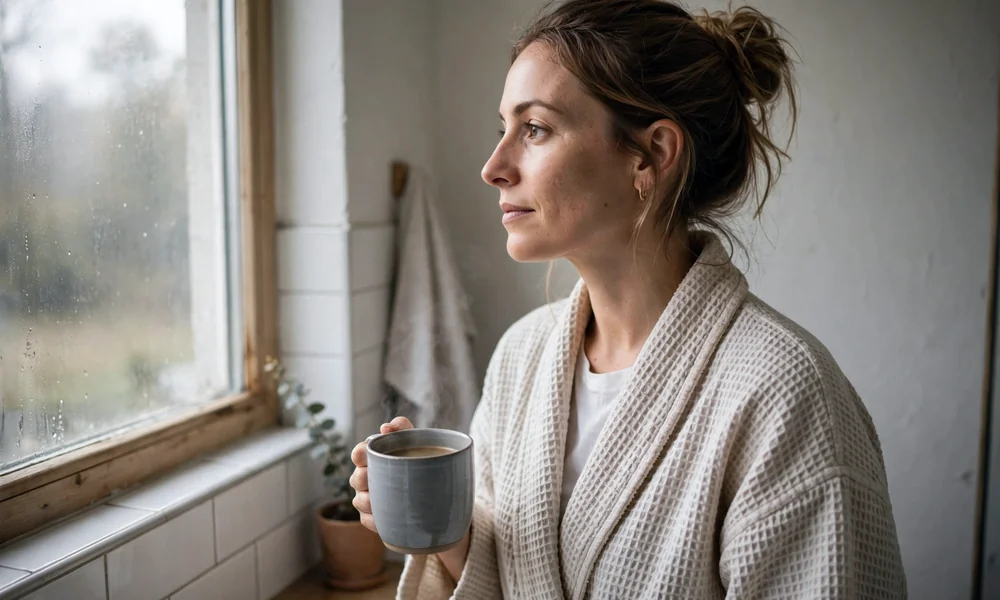
Waffle knit robes are the best choice for warm mornings and for people who hate feeling weighed down. The waffle pattern traps air in small pockets, which lets the robe breathe and dry far faster than a thick terry robe, and the light weave makes it easy to wear for an hour while you have breakfast or get ready. A good waffle robe still absorbs well, even though it feels thinner than terry, and it packs small for travel.
Fleece robes are the best choice for cold houses and for anyone who wants instant warmth on a winter morning. The best fleece is thick, dense, and double-sided, with a plush surface that feels warm the moment it touches you. Good fleece washes well, dries fast, and never needs ironing, which makes it ideal for slow weekends and cold bedrooms. Look for a heavyweight fleece with a hood and deep pockets, because thin fleece goes flat and pills within weeks.
Hooded robes are the best choice for anyone who steps out of the shower with wet hair and wants to stay warm. The hood keeps your head and neck warm while your hair dries, which makes a real difference on a cold morning, and it doubles as a comfortable pillow when you curl up on the sofa. The best hooded robes are made from thick terry or fleece, with a hood that sits properly instead of flopping over your eyes.
The Worst Side: Bathrobes to Avoid
Thin satin robes are the worst value in the bathroom, because they fail in every way that matters. They look smooth and elegant on the rail, then feel cold against wet skin, absorb almost no water, and let the damp soak straight through to whatever you are wearing underneath. The belt is usually a thin ribbon that slips open every time you move, so you spend the morning retying it instead of relaxing.
Robes that are too short are the worst kind of mismatch, because the robe itself may be well made and still leave you cold. A robe that ends above the knee leaves your legs bare on a cold morning, and it rides up every time you sit down, which means you are constantly pulling it back into place. The mistake usually comes from buying the first robe that fits your shoulders without checking the length, when a knee-length robe would have kept you warm and let you move freely.
Cheap fleece robes that pill are the worst robes to live with, because they look worse every single week. They start out soft and brightly coloured, then shed fibres, pill across the whole surface, and fade unevenly after a few washes. Within a season the robe looks old and tired, however little you have used it.

Robes with a slipping belt are the worst choice for anyone who wants to relax at home. A belt that will not stay tied means the robe gaps open every time you reach for something, and without a proper belt loop there is no way to keep it closed. Within days you will be holding the robe shut with one hand while you try to make breakfast with the other, which defeats the whole point of wearing it. A wide belt with proper loops solves the problem, so check the belt before you fall in love with the fabric.
Matching the Robe to Your Mornings
Cold houses need fleece or thick terry, because no other fabric gives as much warmth for so little fuss. A heavy robe in a cold house is a small luxury that costs nothing extra, and it will keep you warm from the shower to the breakfast table. Warm houses need waffle knit or light cotton, because they breathe and let heat escape instead of trapping it against your skin. For the gym or travel, a light waffle robe is the practical choice, since it packs small and dries fast in a bag.
Children and guests change the rules, because their robes get washed far more often than yours. Choose a machine-washable cotton or fleece robe with bound edges that can survive a hot wash and a tumble dry, and avoid anything that pills or sheds fibres a child might breathe in. Colour matters too: white robes show every mark but can be bleached clean, while darker robes hide stains but fade faster. Keep a spare robe for guests, so the everyday robe can be washed on rotation without anyone going without. The rest of your morning routine matters too, and our guide to the best shower heads for low water pressure in 2026 explains how to fix a weak shower before you even reach for the robe.
How to Keep a Bathrobe Soft for Years
A good bathrobe lasts for years when it is washed properly and dried fully, though cheap robes can fail within a single season. Wash in warm water with a mild detergent, skip the fabric softener entirely, and dry on low heat or on a line, because softener coats the fibres and kills absorbency, while high heat makes cotton go stiff and brittle. Hang the robe on a wide hook or a rail after every use so it airs properly, and never leave a damp robe bunched up in a pile, because that is how musty smells start. Add a cup of white vinegar to the rinse now and then to strip away detergent buildup and bring back softness, and replace the robe when it has gone thin in the elbows, pills no matter how often you wash it, or no longer keeps you warm. Keeping yourself warm after the shower is only half the morning, and our guide to the best hair dryers for every hair type in 2026 explains how to dry your hair quickly without damaging it.
The Verdict
Choose the fabric first, the weight second, and the fit third. The best bathrobes of 2026 are the ones whose fabric matches your mornings, whose weight keeps you warm without overheating you, and whose belt and fit stay put all day. Turkish terry wins for most homes, waffle knit wins for warm mornings, fleece wins for cold houses, and a hooded robe wins for anyone who steps out of the shower with wet hair. The worst robes are the thin satin ones that absorb nothing, the cheap fleece ones that pill within a season, and any robe too short or too loose to stay closed. A robe that fits your home, your body, and your washing machine is a small purchase that pays you back every single morning.